

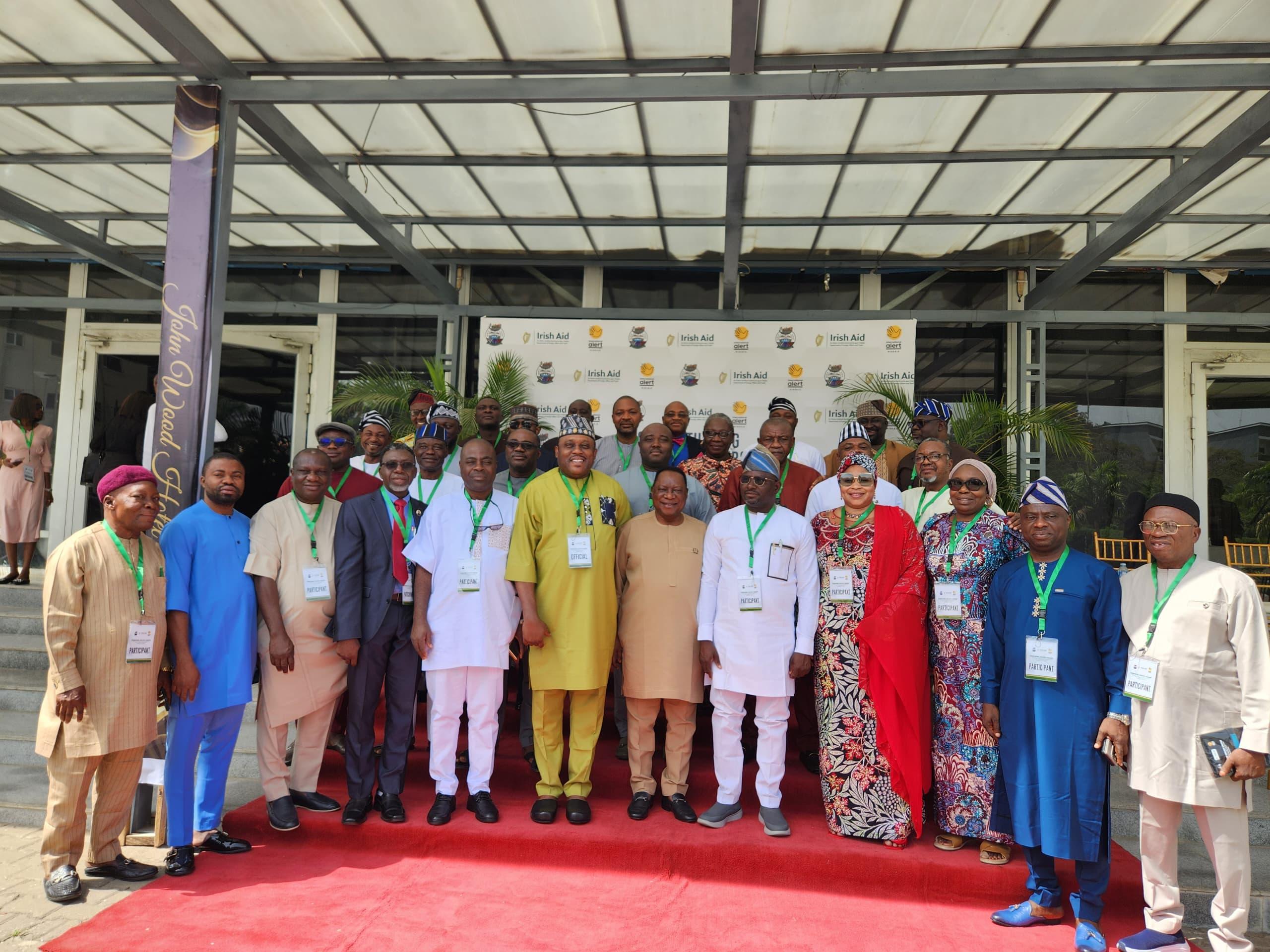
Benue State Governor, Rev. Fr. Dr Hyacinth Iormem Alia, has reaffirmed his administration’s commitment to strengthening climate resilience and environmental governance.
He spoke while declaring open a one-day training for members of the 10th Benue State House of Assembly on “Strengthening Legislative Leadership for Developing Climate Change Resilience and Carbon Budgeting”, organised in collaboration with International Alert, with support from Irish Aid, in Abuja, Nigeria’s capital.
Represented by his Principal Private Secretary, Dr Emmanuel Chenge, the Governor said Benue, Nigeria’s food basket, remains highly vulnerable to climate pressures, citing recurring floods in Makurdi, Agatu, Guma, and Logo; rising temperatures; declining soil fertility; and shrinking agricultural productivity.
He warned that these pressures are also worsening security challenges as drought-induced migration deepens farmer–herder tensions.
“These challenges threaten our agriculture-dependent economy, our infrastructure, and the well-being of our people. They therefore demand urgent, coordinated and visionary action. Climate governance begins with strong laws, effective oversight, and a clear budgeting framework,” he said.
Governor Alia listed ongoing interventions, including the establishment of the Benue State Council on Climate Change, the development of the State Climate Change Policy and Action Plan, flood-control infrastructure, deployment of solar lighting, and support for climate-smart agriculture.
He urged lawmakers to “strengthen oversight, pass climate-responsive laws, support carbon budgeting and sensitise communities on sustainable environmental practices.”
Director-General of the Benue Climate Change Council, Mr Aondofa Daniel Mailumo, warned that climate risks are escalating amid a widening climate-finance gap.
He stressed that stronger legislation is needed to unlock domestic and international funding, regulate land use, and institutionalise climate-risk assessments.
“Climate change requires a dual approach: mitigation and adaptation… Government budget allocations for environmental and climate-related programs remain limited, often fluctuating and insufficient to meet the scale of interventions required.” Mailumo said.
In his remarks, Country Director of International Alert Nigeria, Dr Kingsley Udo, described the engagement as strategic for bridging policy and implementation gaps.
He commended the Benue government for providing “a visionary, multi-stakeholder platform” and reaffirmed his organisation’s support through the “Powering Peace through Climate Action Project.”
According to him, “Today’s meeting is therefore timely and strategic… we are collectively taking an important step toward building a coordinated, accountable, and sustainable climate governance framework for Benue State.”
Speaker of the State Assembly, Hon. Alfred Emberga, said the training will enhance lawmakers’ capacity to enact climate-responsive laws, warning that indiscriminate tree-felling, flooding, and erratic rainfall threaten food production.
He said, “Our agricultural sector… is under threat from changing weather patterns, droughts, and floods. We must act now to protect our farmers, our food security, and our environment.”
“The Benue House of Assembly, on its part, will continue to work with the Council on Climate Change to introduce bills that will help combat the effects of climate change on Benue State,” he committed.
Similarly, the Deputy Speaker, Hon. Lami Danladi Ogenyi, provided a gender lens, noting that climate shocks disproportionately burden rural women.
She said climate impacts “make the women work harder… our mothers, widows and children fatherless and homeless,” pledging strong support for gender-responsive budgeting.
Panel and breakout sessions enabled legislators, civil society, and experts to identify gaps, strengthen accountability frameworks, and consolidate recommendations for improving climate governance.
The training is expected to deepen lawmakers’ understanding of the Climate Act, strengthen collaboration with the Climate Change Council, and boost political commitment to climate-resilient policies for a safer, more sustainable Benue State.