

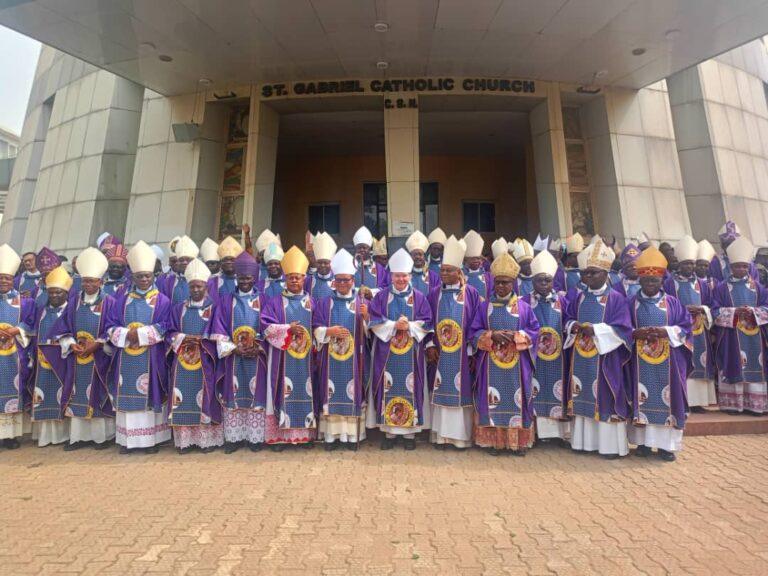
The President of the Catholic Bishops’ Conference of Nigeria (CBCN), Archbishop Lucius Ugorji, says Nigeria’s 2025 Tax Act, which took effect on January 1, 2026, is aimed at reforming the country’s fiscal framework by harmonising existing tax laws, streamlining compliance processes and promoting economic growth.
READ ALSO: Catholic Secretariat Urges Leaders to Restore Peace Nationwide
Archbishop Ugorji stated this during the opening session of the 2026 First Plenary Meeting held at the Catholic Secretariat of Nigeria Resource Centre in Abuja.
He explained that the reform is projected to deliver several benefits, including reduced tax burdens for low-income earners and Small and Medium Enterprises, as well as Value Added Tax (VAT) relief on essential goods such as food, education, and medicine. The Act also provides incentives aimed at encouraging business growth and investment.
According to him, the new legislation introduces digital processes in tax administration, mandating electronic filing, proper record-keeping, and online payments to enhance transparency, accountability, and efficiency in revenue collection.
However, the CBCN President acknowledged concerns surrounding the implementation of the reforms, particularly the challenges small businesses may face in adapting to new regulations and compliance requirements.
“concerns, including potential burdens on small businesses that have to adapt to new regulations and compliance costs. The reforms have also come to terms with implementation hurdles, administrative inefficiencies and the need for robust taxpayer education to ensure success”.
Beyond fiscal matters, Archbishop Ugorji addressed Nigeria’s growing security challenges and called for responsible political leadership.
He noted that to “effectively tackle insecurity, government must go beyond declaring a national emergency on security and reactive interventions to invest more in modern technological equipment for surveillance; strengthen the intelligence and technological capacities of security agents to enable them act proactively in detecting and preventing terrorist attacks. The government has also to ensure that perpetrators of insurgency, banditry or kidnapping and their sponsors are swiftly arrested, prosecuted and held accountable under the law to deter others.
He condemned illegal mining activities, describing them as acts of national economic sabotage and a major source of funding for terrorist groups, thereby posing grave threats to national stability.
“unlicensed miners result in severe environmental degradation, soil and water contamination, loss of biodiversity, and public health crisis.
On democratic governance, the CBCN President urged the National Assembly to review its position on electoral reform to strengthen public confidence in Nigeria’s democracy. He advocated for provisions in the Electoral Act to mandate the real-time electronic transmission of election results from the Bimodal Voter Accreditation System (BVAS) at polling units directly to the INEC Result Viewing (IReV) portal at the Commission’s headquarters, to prevent human interference with the expressed will of the electorate.
The theme of the 2026 First Plenary Meeting is “The Common Good and Leadership in Nigeria.”
In his remarks, the Archbishop of Abuja, Ignatius Kaigama, called for greater mutual respect and a renewed commitment to the common good, urging citizens to reject violence and embrace unity. He also advocated stronger collaboration between civil authorities and religious institutions to foster national development.
“become a catalyst for a renewed world, where the weapons of war give way to the courage of peace.”We beg God to grant us the discernment to recognize and cooperate with leaders, both civil and religious, who genuinely seek the common good and are ready to help us travel our desert of insecurity, economic hardship, corruption, and uncertainty. While we all pray fervently, we must also act responsibly; defend the dignity of the poor, advocate for the millions of unemployed youths, support the displaced, and use our votes wisely. We must substitute self-interest with God’s values and put the interest of the common good first. Let us continue to pray the “Prayer for Nigeria in Distress” composed by the Catholic Bishops, trusting that God will walk with us through this economic, social, and political desert. May we choose service over power, integrity over wealth, transparency and accountability over corruption, and Christ over all. May the Lord grant to the Bishops a happy and fruitful conference, for the good of the Church and Nigeria, our nation”.
Similarly, the Apostolic Nuncio to Nigeria, Michael Crotty, commended the CBCN for its continued advocacy for peace and lasting solutions to violence and insecurity. He urged competent authorities to urgently and decisively fulfill their constitutional duty of protecting lives and property.
Also speaking, former Director-General of the National Orientation Commission, Mike Omeri, called on leaders at all levels to reflect deeply on leadership and the pursuit of the common good across Nigeria.
“We need a leadership that is rooted in purpose, guided by character, and committed to the common good. The priority of such leaders who inspire and motivate, and who deliver change with courage and conviction, shall be serving others; and therefore I believe that there is still one Nigerian out there who is capable, equipped and empowered by faith to serve Nigeria and the citizens for the common good. It may still happen in our lifetime. However, together, we search for that leader and can still build a Nigeria where leadership is a beacon of hope, where the common good is a shared pursuit, and where our collective future is bright with promise”.
The Catholic Bishops’ Conference of Nigeria remains the umbrella body for Catholic Bishops in the country, serving as the highest organ of the Catholic hierarchy in Nigeria. It unites, coordinates, and provides a common voice for the Church while promoting the common good through prayer, study, and collective action.
Ukamaka Okafor, Abuja.