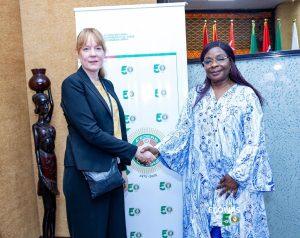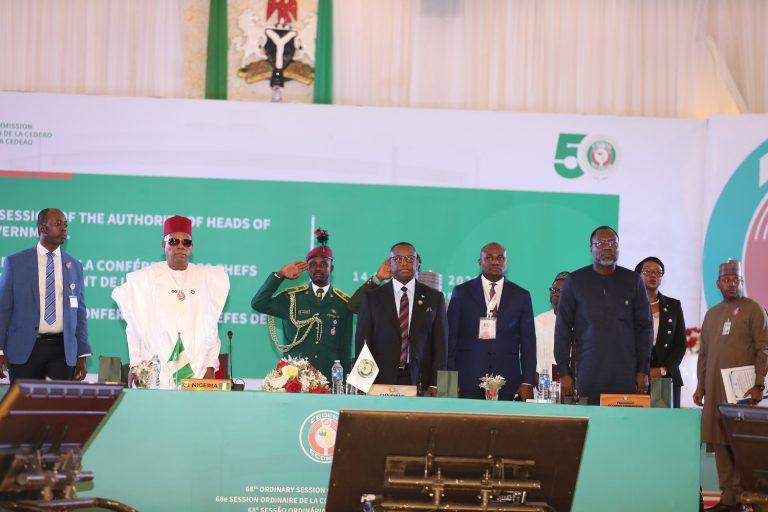
The Oil and Gas Free Zones Authority (OGFZA) has renewed calls for a 10-year tax relief for operators in Nigeria’s oil and gas free zones, cautioning that the immediate implementation of the new tax law could unsettle long-term investments across the sector.
The Managing Director and Chief Executive Officer of OGFZA, Mr Bamanga Jada, made the call in Onne, Rivers State, at a town hall meeting with the Federal Inland Revenue Service (FIRS) and OGFZA licensees.
Jada said the proposed relief would give operators the much-needed “adaptation space” to adjust their operations and ensure compliance with evolving tax requirements.
“Accordingly, OGFZA supports the call for a ten-year extension of existing tax incentives, coupled with a phased implementation to mitigate potential disruptions. Many of our licensees, including prominent foreign investors, formulate strategies spanning 10, 15 or even 25 years, based on prevailing incentives,” he said.
He noted that such a transitional window would strengthen policy consistency, which he described as critical to sustaining investor confidence and advancing President Bola Ahmed Tinubu’s Renewed Hope Agenda.
The OGFZA chief disclosed that Nigeria’s oil and gas free zones have attracted over $24 billion in investments, host more than 200 enterprises, and have created hundreds of thousands of direct and indirect jobs nationwide.
“Energy-oriented free zones have been pivotal in driving development in several countries, as seen in the Jebel Ali Free Zone in Dubai and the Sohar Free Zone in Oman. These initiatives have attracted billions of dollars in investments, created massive employment opportunities and positioned their economies as global leaders,” Jada said.
Similarly, OGFZA-regulated free zones in Nigeria have secured more than $24 billion in investments, host over 200 enterprises, and have generated hundreds of thousands of direct and indirect jobs. This highlights the value of strong incentives and effective regulation in accelerating industrialisation,” he added.
Jada further revealed that exports from Nigeria’s oil and gas free zones have surged under the current administration, reaching 496,537,804 metric tonnes, with products now supplied to markets in Brazil, the United States, France, India, the United Kingdom and the Republic of Korea.
“Our operators now supply markets in Brazil, the United States, France, India, the United Kingdom, the Republic of Korea and beyond, in line with the President’s Renewed Hope Agenda,” he said.
He commended President Tinubu for his commitment to tax reforms and economic transformation, while also acknowledging the Minister of Industry, Trade and Investment, Dr. Jumoke Oduwole, for her guidance and advocacy in support of the sector.

Reaffirming OGFZA’s commitment to collaboration, Jada said the Authority would continue to work closely with FIRS, in line with their memorandum of understanding, to ensure tax reforms are implemented efficiently and fairly.
In his remarks, the Executive Chairman of FIRS, Dr. Zacch Adedeji, described the 2025 tax reforms as a significant step towards modernising Nigeria’s fiscal framework. Represented by his Special Adviser on Tax Incentives, Dr. Cletus Adie, Adedeji stressed that compliance and transparency remain central to the reforms.
“For export processing and free trade zones, the focus is not on taxing income or profits, but on promoting transparency, accountability and proper reporting,” he said.
He explained that the introduction of a tax clearance certificate as a mandatory requirement for licence renewal was aimed at strengthening oversight, citing what he described as “continuous recalcitrant behaviour by some enterprises,” which had made a structured administrative approach necessary, in line with Section 72(4)(f) of the Nigerian Tax Administration Act.
Stakeholders at the meeting unanimously urged the Federal Government to exempt operators in special economic and free zones from the new tax law provisions for a transitional period to enable a smooth adjustment to the reforms.
Olusola Akintonde