Home Blog Page 1020

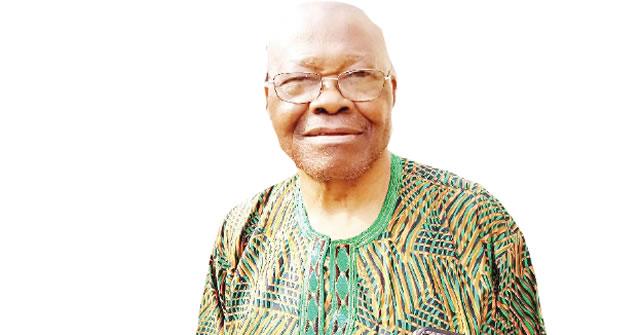
President Tinubu Hails Jemibewon at 85

0

President Bola Ahmed Tinubu has congratulated retired Major-General David Medayese Jemibewon on his 85th birthday, commending his decades of service to Nigeria.

In a statement by the Presidency on Sunday, President Tinubu joined the family and friends of the retired general to celebrate the special occasion.

He saluted the courage, discipline, and patriotism of Jemibewon, who served the nation in many capacities as a military officer.

After retiring from the army, General Jemibewon returned to school to study law and later practised as a lawyer.

He also served as Military Governor of the Western State from August 1975 to March 1976, as General Officer Commanding First Infantry Division, and later as Adjutant General of the Nigerian Army.

Jemibewon further served as Minister of Police Affairs from 1999 to 2000 and is credited with undertaking specific reforms in the force.

President Tinubu prayed “that God Almighty will keep the General in good health and grant him many more years.”

PIAK

Universities: Kwara Governor Identifies Funding as key Challenge

0

Kwara State Governor and Chairman of the Nigeria Governors’ Forum (NGF), AbdulRahman AbdulRazaq, has identified inadequate funding as a major challenge affecting Nigerian universities, especially in the area of medical education.

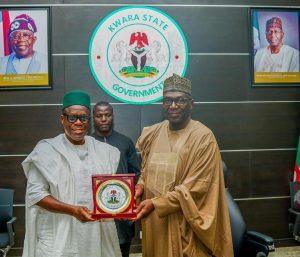
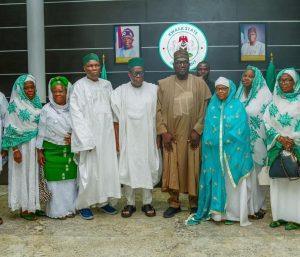
He said this while receiving the National President of the Ansar-ud-Deen Society of Nigeria, Prince Mosediq Adeniji-Kazeem, during a courtesy visit to the Ahmadu Bello House in Ilorin, Kwara State capital.

Governor AbdulRazaq said his administration has been offering strategic support to tertiary institutions in the state to enhance health professional training and improve infrastructure. He noted that his government is focused on strengthening university-based medical training in Kwara.

“In Kwara State, we have about eight private universities. We are deliberately supporting them by upgrading their access to teaching hospitals,” he said. “When we came in, there was only one medical school, the University of Ilorin Teaching Hospital. Now, we have transformed the General Hospital in Ilorin into the Kwara State University Teaching Hospital.”


He added that the state government has designated other public health facilities as teaching hospitals, including Sobi Specialist Hospital for Al-Hikmah University, General Hospital Omu-Aran for Thomas Adewumi University, and is in talks with another university seeking to take over the General Hospital in Offa.

“These steps are deliberate and targeted at expanding opportunities for medical education in Kwara. The biggest challenge for many universities remains funding, and that is why we are stepping in to ease the burden where possible,” AbdulRazaq stated.

He praised the Ansar-ud-Deen Society for its role in promoting education and religious harmony in Nigeria and pledged continued collaboration, especially in tertiary education. He said the state would consider the society’s request for an intra-campus road at Summit University, Offa.

Earlier, Prince Adeniji-Kazeem thanked the Governor for supporting education and healthcare development, especially his donation of a building for the Faculty of Health Sciences at Summit University.

“The university has been growing in leaps and bounds, and your support has been pivotal in that progress,” he said.

He commended AbdulRazaq for redefining public service through transparency and integrity, describing him as a model for political leadership in Nigeria.

“Some people often say politicians play tricks and games, but you have proven that people of integrity can make a difference in politics. We need more individuals like you to restore trust in public service,” the legal luminary said.

Prince Adeniji-Kazeem also highlighted Ansar-ud-Deen’s long-standing contributions to education in Nigeria, describing its mission as a complement to government efforts.

The delegation included the society’s Deputy President, Ibrahim Adebayo Yusuf; National Missioner, Sheikh Abdulrahman Ahmad; National Secretary, Rahmon Salaudeen; and veteran labour leader, Najim Usman Yasin.

PIAK

Rivers State: Customs, NAFDAC Intercept N20.5bn Illicit Drugs

0

The Nigeria Customs Service (NCS) and the National Agency for Food and Drug Administration and Control (NAFDAC) have intercepted 16 containers loaded with illicit pharmaceutical products valued at over ₦20.5 billion in Rivers State, at the Port Harcourt II Area Command, Onne, in what officials described as a major breakthrough against smuggling.

The two agencies have also set up a committee to implement the 2024 Memorandum of Understanding (MoU) aimed at deepening regulatory collaboration.

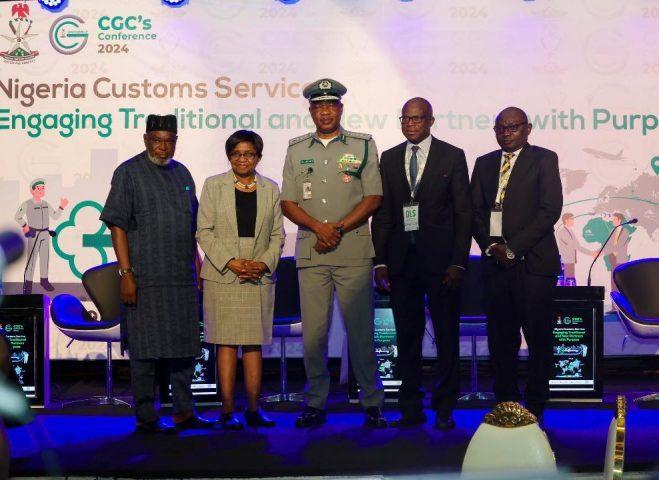
The Comptroller-General of Customs, Adewale Adeniyi, announced the seizure during a press briefing held at the Command’s headquarters in Onne, Rivers State, Southern Nigeria.

He attributed the successful operation to intelligence-driven enforcement and the renewed synergy among national security and regulatory bodies.

“Our anti-smuggling operations align with President Bola Ahmed Tinubu’s policy on border security, public health, and national safety. We remain committed to ensuring that Nigeria’s borders are not exploited by criminal elements,” the CGC stated.

Comptroller Adeniyi explained that the smugglers attempted to disguise the illicit drugs as regular imports such as tomato paste, ceiling fans, and plumbing materials, employing what he described as “sophisticated concealment tactics.”

Items seized from the 16 containers include 1.3 million bottles of Codeine syrup (100ml each), 9.3 million tablets of Really Extra Diclofenac, 12.6 million tablets of Royal Tramadol (225mg), and other unregistered and dangerous pharmaceuticals, including Trodol, Hyergra, Bisoveu, and Bassuka.

“This seizure sends a clear message to criminal networks: the Nigeria Customs Service, in partnership with our enforcement counterparts, maintains zero tolerance for smuggling. We will bring the full weight of the law to bear on all perpetrators,” Adeniyi warned.

The intercepted containers were officially handed over to Professor Mojisola Adeyeye, the Director-General of NAFDAC, for regulatory action in accordance with due process.

In her remarks, Professor Adeyeye commended the vigilance of the Customs Service and its partner agencies, stressing the public health threat posed by the illicit consignment.

“Frankly, it was shocking. These products could destroy lives: Codeine, Tramadol, and counterfeit painkillers. The fact that some were hidden in tomato paste shows clear criminal intent. This isn’t business; this is murder for profit,” she said.

She confirmed that all seized items would undergo comprehensive regulatory procedures, including laboratory testing, documentation, and destruction.

“We are WHO-certified, with international-standard laboratories and well-trained personnel. These products will never make it into the Nigerian market,” she affirmed.

Professor Adeyeye warned importers of falsified medicines, branding them “merchants of death” and reiterating that Nigeria would not serve as a dumping ground for substandard or unapproved pharmaceutical products.

In his welcome address, the Customs Area Controller (CAC) of PH II Onne Command, Comptroller Muhammed Babandede, described the event as brief but historic. He highlighted the critical role of institutional collaboration in achieving the seizure, particularly the contributions of the NDLEA, NAFDAC, the Department of State Services (DSS), and the Office of the National Security Adviser (ONSA).

“The seizure involved eleven 40-foot containers of illicit medicines, four micro containers of bottled water, and one container of salt. This success reflects the strength of our collaboration, which aligns with the Service’s policy of unity through cooperation, consolidation, and innovation,” Babandede stated.

The Onne interception comes shortly after a separate major seizure at Apapa Port last week, where 25 containers of substandard medical devices were impounded.

Reaffirming their joint commitment, all agencies pledged to enhance intelligence-sharing, surveillance, and enforcement operations in line with national security objectives and global best practices.

PIAK

NUJ FCT Mobilises Journalists for Press Freedom Walk

0

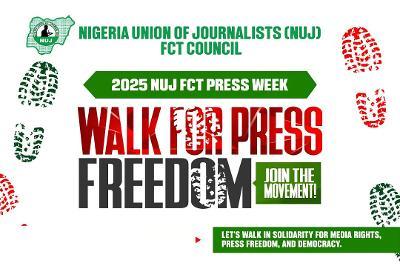
The Nigeria Union of Journalists (NUJ), Federal Capital Territory (FCT) Council has called on all journalists in Abuja to participate in the 2025 Press Week symbolic “Walk for Press Freedom.”

Chairman of Council, Grace Ike, described the walk as the highlight of the 2025 Press Week, themed “Journalism in a Changing World: Media, Press Freedom, Democracy & Society.”

The walk, scheduled for Monday, 21st July 2025, at 0600GMT in Abuja, will advocate press freedom and highlight the vital role of journalists in Nigeria’s democracy.

It will also demonstrate solidarity, raise awareness on challenges facing the media, and engage colleagues, stakeholders, and supporters of the free press.

Ike urged all NUJ FCT members to turn out in large numbers, saying it was important to “Amplify the collective voice of journalists and affirm our commitment to upholding press freedom in Nigeria.”

Explaining the significance of press freedom, she stated that “Freedom of the press is the cornerstone of democracy,”adding that “Without a free press, truth is silenced,” and stressed that “Free press is non-negotiable.”

Ike further said, “Press freedom protects our right to know,” noting that “Journalists speak for the voiceless — support their freedom,” while warning that “Censorship kills democracy — defend press freedom.”

She also declared that “A free press holds power accountable,” emphasising that “Press freedom is essential for justice and transparency,” and stating that “Information is power — keep press free.”

Reaffirming her position, Ike maintained that “When the press is free, society thrives,” and urged everyone to “Stand up for truth, stand up for press freedom.”

PIAK

US Passes First Major National Crypto Legislation

0

Lawmakers in the US have passed the country’s first major national cryptocurrency legislation.

It is a major milestone for the once fringe industry, which has been lobbying Congress over regulation for years and poured millions into last year’s election, backing candidates that included Donald Trump.

The bill sets up a regulatory regime for so-called stablecoins, a kind of cryptocurrency backed by assets seen as reliable, such as the dollar.

Trump is expected to sign the legislation into law on Friday, after the House passed the bill on Thursday, joining the Senate, which had approved the measure last month.

Known as the Genius Act, the bill is one of three pieces of cryptocurrency legislation advancing in Washington that is backed by Trump.

The president once derided crypto as a scam but his opinion shifted as he won backing from the sector and got involved in the industry as a businessman, with ties to firms such as World Liberty Financial.

Supporters of the legislation say it is aimed at providing clear rules for a growing industry, ensuring the US keeps pace with advances in payment systems. The crypto industry had been pushing for such measures in hopes it could spur more people to use digital currency and bring it more into the mainstream.

The provisions include requiring stablecoins, an alternate cryptocurrency to the likes of Bitcoin, to be backed one-for-one with US dollars, or other low-risk assets. Stablecoins are used by traders to move funds between different crypto tokens.

The use of these coins, which are viewed as less volatile, has grown rapidly in recent years.

Critics argue the bill will introduce new risks into the financial system, by legitimising stablecoins without erecting sufficient protections for consumers.

For example, they said it would deepen tech firms’ participation in bank-like activities without subjecting them to similar oversight, and leave customers hanging in a convoluted bankruptcy process in the event that a stablecoin firm should fail.

They had also tried to rally opposition to the bill by arguing that voting in favour was effectively condoning Trump’s business activities – including his family’s promotion of their own crypto coins.

But it nevertheless drew significant support from Democrats, about half of which supported the bill, as well as the majority of Republicans.

“Some members may believe passage of this bill, even with flaws, is better than the status quo. We believe this is a fundamental misunderstanding of the risks involved with these instruments,” a coalition of consumer and advocacy groups wrote in a letter to Congress this spring.

They warned that passage would “allow the proliferation of assets that consumers will wrongly perceive as safe”.

Analysts had expected Congress to pass all three bills earlier this week, but unexpected hiccups led to delays.

The two other bills have passed the House and are headed to the Senate, where Republicans hold a narrow majority. Those bills would prevent the US central bank from establishing a digital currency and set up a regulatory framework for other forms of crypto.

The advance comes as Trump is reportedly working on an presidential order that could allow retirement accounts to be invested in private assets, such as crypto, gold and private equity.

The value of Bitcoin hit a new record this week, passing $120,000 (£89,000).

But Terry Haines of Washington-based analysis firm Pangaea Policy, said he did not expect the other two bills, which are more significant, to go further.

“This is the end of crypto’s wins for quite a while – and the only one,” he wrote. “When the easy part, stablecoin, takes ~4 to 5 years and barely survives industry scandals, it’s not much to crow about.”


BBC/Jide Johnson.


Kogi Farmers Receive Agricultural Inputs

0

The International Fund for Agricultural Development (FGN/IFAD)-assisted Value Chain Development Programme (VCDP-AF) has begun distributing farm inputs to 330 farmers across Kogi State, North Central, Nigeria

The Commissioner for Agriculture and Food Security, Mr. Timothy Ojomah, launched the exercise on Saturday in Lokoja.

He was represented by Hajia Mariat Ibrahim, the Director of Administration at the ministry.

Ojomah praised the VCDP for its tireless support to farmers and its contributions to Kogi’s agricultural development and economic growth.

He commended Gov. Ahmed Ododo for his sustained commitment to farmers through agricultural initiatives that enhance food security in the state.

The commissioner reaffirmed the government’s dedication to creating an enabling environment for sustainable agricultural growth.

Earlier, Dr. Stella Adejoh, State Coordinator of FGN/IFAD-VCDP, said the initiative aims to enhance productivity and food security in rice and cassava production.

She said the programme covers five local government areas: Lokoja, Ajaokuta, Olamaboro, Kabba-Bunu, and Ibaji.

According to Adejoh, 330 farmers are beneficiaries in this current phase of the 2025 wet season farming.

“This brings the cumulative number of supported farmers to approximately 5,600 across the five participating LGAs,” she said.

She added that the farm input distribution is inclusive, targeting women, youths, and vulnerable groups.

Adejoh explained that farmers contribute 50 percent of input costs, while VCDP covers the remaining 50 percent.

She thanked Governor Ododo for his proactive payment of counterpart funding and support for the VCDP programme.

She advised farmers to utilise the inputs on their farms and warned against selling them, assuring that monitoring will be conducted.

Mr. George Ogirima, Managing Director of Kogi Agricultural Development Programme (ADP), applauded the governor’s agricultural policy focus.

He praised the VCDP for visible project execution across the five benefiting LGAs.

Ogirima also commended Dr. Adejoh and her team for their commitment to advancing agriculture in Kogi.

Beneficiaries, including Mr. Salihu Abdullahi from Lokoja and Mrs. Esther Joseph from Olamaboro, expressed appreciation for the support.

The farmers pledged to use the inputs effectively to ensure a bountiful harvest this wet season.

“We are grateful to VCDP and the government. This support will reduce our hardship and boost our harvest,” Joseph said.

Inputs distributed included improved rice seeds, Urea and NPK fertilisers, selective and non-selective herbicides, and insecticides.

Nigeria Moves to Commercialise Indigenous Phytomedicines – NIPRD

0

The Director-General of the National Institute for Pharmaceutical Research and Development (NIPRD), Dr Obi Adigwe, has said that the Nigerian government is now taking concrete steps to develop and commercialise phytomedicines in Nigeria.

Speaking in an interview on Sunday in Abuja, Adigwe described the current administration’s efforts as a marked shift from years of neglect and empty promises.

According to him, the government has demonstrated its commitment by establishing a ministerial committee on the development and commercialisation of phytomedicines, with NIPRD appointed to lead the process.

Phytomedicines—also known as herbal or botanical medicines—are plant-based products used for the treatment and prevention of diseases. While rooted in traditional practices, they are increasingly supported by scientific validation to guarantee their safety and efficacy.

Majority of Nigerians Rely on Phytomedicines

Adigwe noted that an estimated 70 to 75 percent of Nigerians rely on phytomedicines such as agbo, magani, and ogwu igbo when ill. Despite this widespread use, the sector had historically received minimal institutional support.

“For a long time, phytomedicines only got lip service, but this administration is taking bold, concrete steps,” he said.

“I must commend the Ministers of Health for driving this vision.”

Read Also: Kwara Government Renews Fight Against Sexual Violence

NIPRD’s Track Record in Innovation

Highlighting NIPRD’s achievements, Adigwe recalled the institute’s development of a sickle cell remedy derived from indigenous plants.

He also cited NIPRD’s scientific leadership during the COVID-19 pandemic, when it conducted the world’s first scientific analysis of the controversial COVID Organics herbal preparation.

“That particular product put Nigeria on the map in terms of science and ensured that millions of dollars were not wasted on a product without scientific backing,” he said.

A Whole-of-Government Approach

Adigwe revealed that the newly inaugurated committee includes stakeholders from academia, the pharmaceutical industry, traditional medicine practitioners, public service, and the diaspora.

He said this composition reflected a multi-sectoral approach aligned with President Bola Tinubu’s Presidential Initiative to Unlock the Healthcare Value Chain (PVAC).

“We are not just developing products in isolation.

“We’re integrating agriculture, small and medium enterprises, trade and investment, foreign partnerships—everything that can make phytomedicines a catalyst for health and economic development,” he explained.

He stressed that countries like China and India had successfully used phytomedicines to boost both public health and industrial growth.

With appropriate policy backing, research funding, and philanthropic support, Nigeria could achieve similar success.

Philanthropy and National Research

Adigwe called on wealthy Nigerians to support health research by funding scientific innovation rather than limiting philanthropy to food donations.

“We have billionaires here with the same capacity as John Rockefeller.

“Instead of limiting philanthropy to food handouts, they can invest in scientific research that benefits future generations,” he urged.

He said the new framework would benefit not only NIPRD, but also Nigeria’s over 200 universities, more than 150 local pharmaceutical manufacturers, and millions of Nigerians who rely on traditional remedies.

Citizen Participation Encouraged

To ensure inclusiveness, Adigwe noted that the committee was conducting nationwide data collection and encouraging public input from users of traditional medicine.

“If you’ve used ‘agbo or ogwu igbo’, your opinion counts.

“We have a questionnaire on the NIPRD website, www.niprd.gov.ng, and we want every Nigerian to participate,” he concluded.

Manny Pacquiao, Mario Barrios Fight Ends In Draw

0

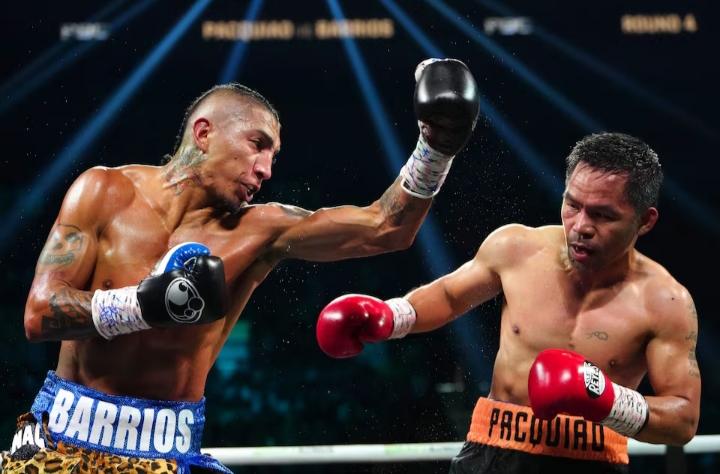
Manny Pacquiao’s bid to become the oldest welterweight champion in boxing history fell short Saturday night as he failed to beat Mario Barrios at the MGM Grand Garden Arena in Las Vegas.

But he didn’t lose, either.
Instead, the 46-year-old Pacquiao and the 30-year-old Barrios fought to a majority draw, with one judge giving Barrios a 115-113 win and the other two judges scoring it a 114-114 draw.

The result allowed Barrios (29-2-2, 18 KOs) to retain his WBC welterweight belt.
“I thought I won the fight,” Pacquiao said afterward. “I mean, it was a close fight. My opponent was very tough. It was a wonderful fight. It was good.”

Pacquiao (62-8-3, 39 KOs) already holds the record for oldest welterweight champion, winning the belt via split-decision over Keith Thurman in 2019. The Filipino legend was enshrined into the International Boxing Hall of Fame last month.

Pacquiao dominated Saturday’s fight early on, showing energy against his younger foe.
Ultimately, though, CompuBox stats had Barrios landing more punches (120-101) and more jabs (45-20), though Pacquiao landed 81 power punches to Barrios’ 75.
Pacquiao held the lead on all three cards after 10 rounds, but Barrios took all three rounds on all three scorecards to avoid the upset. Age and stamina were definitely on Pacquiao’s mind after the fight.

“I need to continue my training for longer going into a championship fight,” said Pacquiao, who lost his senatorial bid in the Philippines in May. “Because of the election, I started late, but it’s OK. Of course I’d like a rematch. I want to leave a legacy and make the Filipino people proud.”

Don’t tell that to Barrios.
“His stamina is crazy,” the champion said. “He’s still strong as hell and his timing is real. He’s still a very awkward fighter to try to figure out.”
As for a rematch, Barrios is ready.
“I’ll do the rematch. Absolutely. This was huge for boxing. I’d love to do it again.”

Boxing: Usyk Knocks Out Dubois In Fifth Round

0

Nearly two years after their first bout, Oleksandr Usyk has successfully defended his heavyweight title with a knockout of Daniel Dubois with 1:52 remaining in the fifth round of their title fight at Wembley Stadium.

Dubois attempted to be the aggressor early in the fight, a strategy that would eventually backfire against an elite counter puncher like Usyk. As the fight went on, the Ukrainian began to time up Dubois, eventually dropping him with a powerful strike in the fifth round.

The London native was able to get back to his feet, but only for a matter of moments. Soon after, Usyk connected with a right hand before loading up a lethal left that sent the London native tumbling to the canvas again. This time, Dubois could not beat the 10-count.

The 38-year-old Usyk is now the first boxer in the four-belt era to become undisputed champion three different times.

Undercard results:

Lasha Guruli defeated James Francis via fifth-round TKO
Aadam Hamed beat Ezequiel Gregores on points
Solomon Dacres beat Vladyslav Sirenko by unanimous decision
Daniel Lapin beat Lewie Edmondson via decision
Lawrence Okolie defeated Kevin Lerena by unanimous decision.

Cunning, composed and calculated – these three words describe the dominant performance Oleksandr Usyk put forth at Wembley Stadium, knocking out Daniel Dubois to become the first boxer in the four-belt era to become undisputed champion three different times.

According to CompuBox, Daniel Dubois threw a total of 179 punches which is 20 more than he attempted in their first fight back in August of 2023. Oleksandr Usyk threw less punches than last fight but was more efficient, landing 46 per cent of his power punches.

In the deciding fifth round, Usyk landed eight of the 11 power punches he threw and the last one was lethal.

Oleksandr Usyk took a moment to celebrate with his wife after his knockout victory over Daniel Dubois at Wembley

Foundation Awards Scholarships, Charity Support to 137 Anambra Students

0

The Dr. Chioma Awuzie Foundation (DCAF) has awarded scholarships and initiated a charity programme benefiting 137 economically disadvantaged students from six tertiary institutions across Anambra State, in a move the Foundation says reaffirms its commitment to education and empowerment.

The institutions included in this year’s initiative are the Federal Polytechnic, Oko; Nnamdi Azikiwe University, Awka; Nwafor Orizu College of Education, Nsugbe; Federal College of Education (Technical), Umunze; Chukwuemeka Odumegwu Ojukwu University, Igbariam; and Anambra State Polytechnic, Mgbakwu.

During the presentation ceremony held at the Federal Polytechnic, Oko Auditorium, DCAF founder Dr. Chioma Irene Awuzie marked her 52nd birthday by honouring 19 outstanding students with one-time academic scholarships and providing support through the Foundation’s charity programme for an additional 118 students.

“These young men and women have shown exceptional courage and a commitment to their studies despite facing significant personal and financial challenges,” said Dr. Awuzie. She emphasised that the scholarships represent more than mere financial aid — they serve as lifelines enabling talented yet underserved Nigerian students to pursue their dreams.

In addition to scholarships, the Foundation provided gift items and empowerment tools aimed at supporting women and youth, alongside feeding hundreds of guests and community members during the celebration.

Dr. Awuzie detailed five key areas in which DCAF intervenes: educational access, charity and community outreach, women and youth empowerment, healthcare and medical outreach, and maternal support and childbirth palliatives. She stated, “With today’s awards, our total number of beneficiaries has surpassed 100 students from six public tertiary institutions in Anambra State.”

DCAF has established itself as a vital resource for indigent students, struggling mothers, aspiring entrepreneurs, and entire communities. Dr. Awuzie described this year’s event as a comprehensive initiative that included feeding hundreds, distributing food and gifts to widows and the underprivileged, and providing support to pregnant women and elderly citizens.

“While these gestures may seem simple, for the recipients, they signify that someone cares,” she remarked.

Awuzie also underscored the Foundation’s ongoing commitment to economic empowerment, which has recently included providing cassava processing machines, startup grants to women, and donating commercial vehicles to aid unemployed youth.

“These practical supports enable recipients to establish small businesses and achieve financial independence,” she added.

Following a successful free medical outreach that assisted over 500 residents of Awada-Obosi, the Foundation intends to extend similar services to other rural and peri-urban communities.

Dr. Awuzie highlighted the importance of childbirth palliatives provided to expectant mothers, ensuring safer deliveries in host communities. “These efforts reflect our belief that true impact occurs when we empower both the mind and body, nurturing intellect while restoring dignity,” she explained.

Acknowledging the immense responsibility of the Foundation, Dr. Awuzie called for collaboration from industry leaders, development partners, government bodies, and the community to ensure the ongoing sustainability of their initiatives.

“With your partnership, we can scale our mission, reach more students, and work towards a Nigeria where no one is left behind due to poverty,” she concluded.

Professor Moses Chendo, Dean of Post Graduate Studies at Chukwuemeka Odumegwu Ojukwu University and event chair, commended Dr. Awuzie for her impactful contributions. “Her generosity and passion have made notable differences in many lives, turning ambitious goals into realities and providing access to education for families in need,” he said.

Beneficiary John Chioma Okoro, an Accountancy student at the Federal Polytechnic, Oko, expressed gratitude for the Foundation’s timely support. “This scholarship has come to our aid when we needed it the most,” he remarked.

PIAK