Mnena Iyorkegh, Saleem Kankimes
The United Nations Educational, Scientific and Cultural Organlsation (UNESCO), has commended Nigeria’s Ministry of Education for its unwavering dedication and commitment to transforming Nigeria’s education sector and institutionalising peace learning landscape.
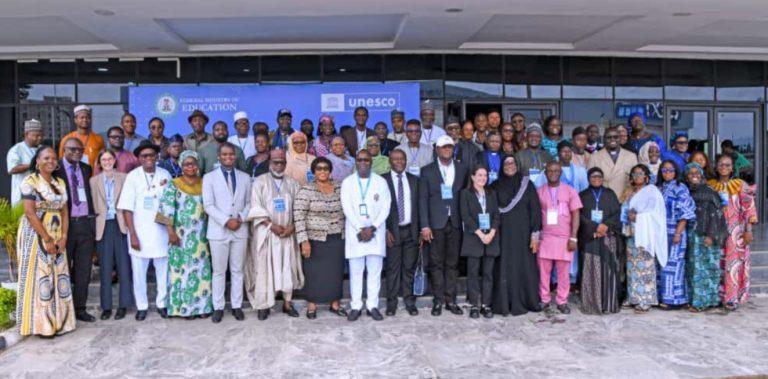
The Head of Office UNESCO in Nigeria, Mr. Jean-Paul Ngome-Abyaga, stated this at the National Multi stakeholder Consultative Engagement on the National Peace Education Initiative (NPEI).
The National Peace Education Initiative (NPEI) seeks to equip young Nigerians with values and critical thinking skills that promote dialogue, unity, and resilience in a diverse nation.
The UNESCO Head of Office, who was represented by the Regional Education Advisor and Head of Education Sector, UNESCO, Mr. Albert Mendy, stressed that education remains one of the most powerful tools to reshape mindsets, promote non-violence, and build lasting unity.
“At the heart of UNESCO mission is a simple but powerful conviction that peace begins in the minds of women and men and educating women is one of the strongest tools we have to nurture. Education also helps strengthen the commitment of learners to non-violence and peace, in particular by addressing hateful and violent narratives. Education guides more than impact knowledge, it shares acceptance and It opens the way for value, understanding, and active representation”, he said.
He added that UNESCO will continue to offer support in fostering peace and tolerance to Nigeria through education.
“In 2023, UNESCO updated a recommendation on education for peace, human rights and system of development, which is expected to serve as a helpful guidepost in defining educational objectives that enable more peaceful processes. UNESCO will not face costs in supporting Nigeria to develop and implement a national peace education initiative that truly reflects our shared values and aspirations. Together, we can nurture a generation that not only learns about peace, that leads people'”, he added.
Inclusive education
The Director Planning, Research and Development Department, Nigeria’s Ministry of Education, Mrs. Ubianugu Anigbodu, reiterated its commitment to promoting peace and inclusion through education.
She commended UNESCO for its collaboration and the participants from across the education sector for their dedication to institutionalizing peace education in Nigeria’s school system.
“Education is not only a tool for knowledge acquisition, but also a powerful means of shaping character, fostering tolerance, and nurturing understanding among diverse groups. Education remains a vital tool for shaping character, fostering tolerance, and building a peaceful society”, she said.
For his part, the Director General Institute for Peace and Conflict Resolution in Nigeria, (IPCR) Dr. Joseph Ochogwu, reaffirmed their dedication to advancing peace education and fostering non-violence through collaborative learning initiatives in Nigeria. He highlighted the Institute’s ongoing efforts in promoting peace through educational partnerships.
“The Institute of Peace and Conflict Resolutions initiatives ranging from peace education programs and workshops to the National Peace Academy’s capacity building courses have continued to equip educators, students, and community leaders with the tools to prevent violent extremism and build a culture of tolerance and reconciliation across the nation”, he said.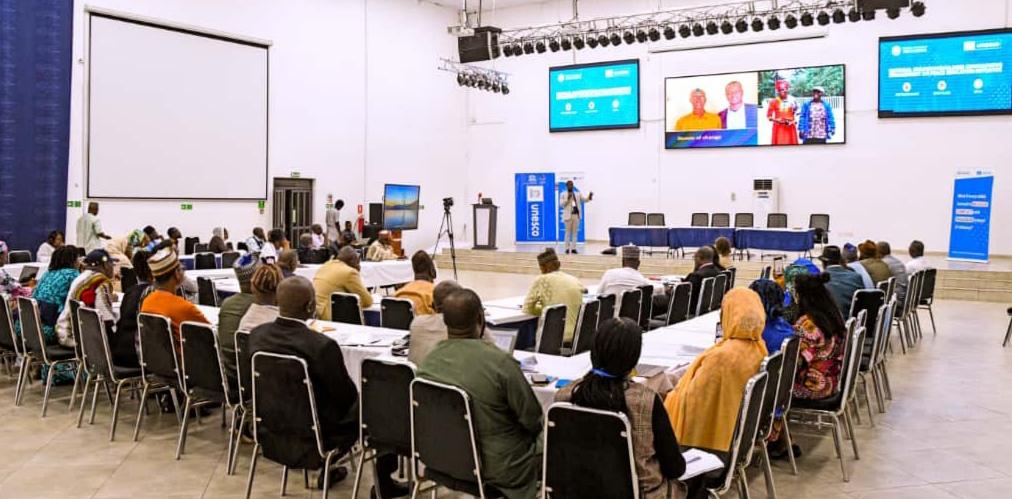
The Executive Secretary Nigerian Educational Research and Development Council Prof. Salisu Shehu emphasized the sacred value of human life as the foundation for peace education in Nigeria.
Speaking at the National Multi stakeholder Consultative Engagement on the National Peace Education Initiative (NPEI), Prof. Salisu underscored that all faiths uphold the sanctity of life and reject violence in any form.
“Institutionalising peace education is not only important but an existential necessity for human survival, social harmony, and environmental balance. The address reinforced that promoting peace means safeguarding life itself and ensuring coexistence among individuals, communities, and the wider society”, she added.
Fostering global citizenship
Meanwhile the International Program Officer Untied State Embassy in Nigeria, Ilana Weinberg have expressed strong support for Nigeria’s National Peace Education Initiative (NPEI), describing education as a transformative step towards fostering global citizenship, tolerance, and human dignity.
” US is committed to partnering with Nigeria education stakeholders to developing a curriculum that equips young people with the knowledge, empathy, and critical thinking skills needed to promote peace, solidarity, and respect for human rights. Understanding historical atrocities such as the Holocaust, colonialism, and genocide is vital in helping learners recognize the dangers of hate, discrimination, and extremism”, she said.
The National Multi Stakeholder Consultative Engagement on the Peace Education Initiative (NPEI), brought together key stakeholders from government institutions, civil society, and the education sector to deliberate on strategies for institutionalizing peace education within the national education framework at fostering peace, unity, and social cohesion across Nigeria.