Home Blog Page 259

Gombe Establishes Commission for Technology and Innovation Growth

The Governor of Gombe State, North-East Nigeria, Muhammadu Inuwa Yahaya has signed into law the establishment of the Gombe State Information Technology and Digital Economy Commission (GITDEC).

Describing the move as a strategic response to the rapidly evolving global digital landscape, Governor Yahaya hailed the creation of the Commission as a bold step towards positioning Gombe State as one of Nigeria’s leading tech-driven economies.

“This Commission will serve as the engine room for innovation, digital inclusion, and economic empowerment across our state,” the Governor stated.

GITDEC is mandated to lead policy development and implementation in key areas such as ICT advancement, digital literacy, e-governance, and innovation.

The Commission will also promote skills acquisition across all age groups, support tech start-ups and innovation hubs, attract investment in the digital sector, and ensure robust cybersecurity and data protection across government platforms.

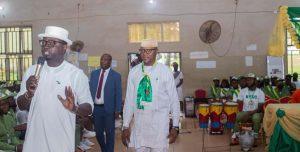
The Secretary to the State Government, Professor Ibrahim Abubakar Njodi, formally handed over a copy of the newly assented law to the Commissioner for Science, Technology and Innovation, Professor Abdullahi Bappah Garkuwa, for immediate implementation.

In his remarks, Professor Garkuwa described the establishment of the Commission as a significant milestone in Gombe State’s journey towards digital transformation.

He emphasised that the Commission would bridge the gap between traditional governance and modern technological solutions, thereby creating new opportunities for young people, women, and entrepreneurs.

“This is about unlocking the full potential of our people and economy through smart, inclusive innovation,” Professor Garkuwa remarked.

The signing of the GITDEC law follows a series of recent partnerships between the Gombe State Government and both national and international technology organisations, including the National Information Technology Development Agency (NITDA) and the Uniccon Group.

These collaborations aim to strengthen digital infrastructure and expand capacity building across the state.

With this development, Gombe State joins the ranks of forward-thinking states leveraging the digital economy as a catalyst for innovation, job creation, and sustainable development.

Chad Ends Partnership with African Parks Conservation Group

0

The Chadian government has terminated its agreement with African Parks, the conservation organisation responsible for managing two of the country’s protected sites.

It cited concerns over poaching and insufficient cooperation as the reason for the termination.

Environment Minister Hassan Bakhit Djamous confirmed in an official letter on Monday that the 15-year mandate covering the Ennedi Natural and Cultural Reserve and the Greater Zakouma Ecosystem, which includes Zakouma and Siniaka-Minia national parks, would end.

The ministry said; “the charity had failed to curb poaching effectively and had not fully collaborated with authorities in the management of the reserves.”

African Parks, a non-profit organisation founded in 2000 to protect Africa’s national parks and promote conservation, said; it had begun talks with the ministry to understand the government’s position and explore the best way forward to support the continued protection of these landscapes that are critical to conservation.”

Prince Harry, Duke of Sussex, who has served on the board of African Parks since 2016 and as president until 2023, is a member of the organisation’s governing board. African Parks oversees 22 national parks and protected areas across 12 African countries and manages more than 20 million hectares of land with the aim of making parks “ecologically, socially and financially sustainable.”

The Chadian government linked the resurgence of poaching in the reserves to limited investment by the charity.

African Parks also came under scrutiny earlier this year after allegations of community abuse in a park it manages in the Republic of Congo.

The decision marks a significant change in Chad’s approach to managing its natural reserves and conservation partnerships in the region.


BBC/Shakirat Sadiq

VP Shettima Visits Bauchi

Nigeria’s Vice President, Kashim Shettima, has arrived in Bauchi State on a working visit to the State.

His plane touched down at the Abubakar Tafawa Balewa International Airport at 08:35 GMT.

READ ALSO: President Tinubu Returns To Abuja After Working Visit To Lagos

VP Shettima was received by the State Governor, Bala Mohammed and some members of the State Executive Council.

The Vice President is to declare open the first Bauchi Investment Summit.

The summit is aimed at showcasing the vast business potentials of the State in various sectors.

Dignitaries expected at the event included former Presidents Olusegun Obasanjo and Goodluck Jonathan.

Details later


PIAK


FCTA Launches Integrated Vaccination to Strengthen National Immunisation Drive

0

The Federal Capital Territory (FCT) Primary Health Care Board (FPHCB) is set to flag off an integrated vaccination campaign across the FCT, targeting the prevention of measles and rubella among children aged nine months to 14 years.

The exercise will also feature the administration of additional vaccines, including the Oral Polio Vaccine (OPV) for children aged 0 to 59 months, the Human Papillomavirus (HPV) vaccine for nine-year-old girls, and routine immunisations for children aged 0 to 23 months.

According to the board, the campaign aims to strengthen immunity among vulnerable age groups and curb the spread of preventable childhood diseases within the territory.

READ ALSO: FCT Minister to Rehabilitate 40 More Schools

The Executive Secretary of FPHCB, Dr Ruquayya Wamakko urged the media to disseminate information about the exercise to hard-to-reach communities.

“All eyes are on the FCTA on what it will do to fight measles rubella, and the media must help project the vaccination exercise to the FCT populace and ensure turnout,” Wamakko said.

“When we prevent these diseases at the community level, there will be less crowding in FCT health facilities,” she added.

FCT Routine Immunisation Officer, Mr Tanko Chadwafwa said measles is a highly infectious viral disease characterised by fever, maculopapular rash, cough, conjunctivitis, and coryza (runny nose).

He warned that It could lead to severe complications such as pneumonia, encephalitis, and even death, especially among young children and immunocompromised individuals.

Chadwafwa said the 2025/2026 integrated Measles Rubella campaign is being implemented to close immunisation gaps.

“The aim of the campaign is to reduce measles and rubella incidence to five cases per million by 2026, and one case per million by 2030, while increasing population immunity through vaccination,” he explained.

“The government’s target is to achieve 95 per cent measles rubella vaccination coverage post-campaign among children aged 9 months to 15 years in all implementing states.

“It is also to strengthen the immunisation system by improving Result Index performance and surveillance,” he added.

Deputy Director of Health Education, FPHCB, Mrs Chinyere Umeh gave details of the operational plan, saying “26 team members will cover Abaji with a population of 58,028.

“104 in Bwari for 386,906, 72 in Gwagwalada for 200,519, 46 in Kuje for 103,780, 39 in Kwali for 114,774, and 365 in the Municipal Area Council for 722,007 residents.

Umeh called on the media to assist in reaching as many people as possible.

“The media has the capacity to reach a large number of people simultaneously, and the majority of residents depend on it for information,” she said.

Umeh also urged parents to give consent for school-based vaccinations, adding: “Vaccination officers will also be going around schools to ensure that all children are captured during this exercise.”


NAN/PA

Anambra First Lady Advocates Early Detection To Curb Breast Cancer

0

The wife of the Anambra State Governor, Dr. Nonye Soludo, has urged women to prioritise early detection and regular screening in the fight against breast cancer.

Dr  Soludo described the disease as a “generational threat” to women’s health worldwide.

In a statement released to mark Breast Cancer Awareness Month, she called on women to prioritise routine self-examinations and undergo regular screenings at certified medical facilities.

The Governor’s wife emphasised that ‘early diagnosis significantly increases the chances of successful treatment and survival,’ urging communities and healthcare stakeholders to intensify awareness campaigns and support systems for women.

READ ALSO: Nigerian Government Intensifies Drive Against Cancer Spread

The global health campaign, observed every October, is aimed at promoting education, awareness, and action in the fight against breast cancer.

Dr Soludo said; “October is Breast Cancer Awareness Month, a vital period dedicated to educating people about the dangers of breast cancer and how to prevent them.

“Beyond the annual commemoration, we must recognise the real and present danger breast cancer poses to our generation.”

The First lady, who leads the wellness-focused initiative Healthy Living with Nonye Soludo, highlighted alarming statistics that reflect the high mortality rates associated with late-stage breast cancer diagnoses.

She called for intensified efforts to promote early testing and lifestyle changes that could lower cancer risks.

“The numbers are frightening. But we all have a role to play. Learning how to conduct self-exams and going for regular medical checks are two crucial steps that can save lives,” she said. “Early detection remains the most effective weapon we have for treatment and survival,” Dr Soludo said.

She also called on governments al all levels, healthcare providers, civil society, and the media to expand awareness campaigns, particularly in underserved communities.

“This deadly disease has taken so much from us, and it continues to do so. We must do all we can to stop it. Please help spread the word this October and beyond,” Dr Soludo stated.

She explained that maintaining a healthy lifestyle is one of the most effective ways to reduce cancer risk.

Her advocacy aligns with global recommendations, including those from the World Health Organisation (WHO), which emphasise early diagnosis as key to improving survival rates.

According to the WHO, breast cancer occurs when cells in the breast grow uncontrollably, forming a tumor that can become life-threatening if not detected and treated early. Most cases begin in the milk ducts or lobules and may spread to other parts of the body if left untreated, a process known as metastasis.

Breast cancer is currently the most commonly diagnosed cancer worldwide and the leading cause of cancer-related deaths among women.

As awareness efforts intensify globally this October, advocates like Dr Soludo continue to stress that knowledge, vigilance, and proactive healthcare are vital in reducing the disease’s burden.

Minister Hails NYSC Members as Nigeria’s Pride

0

The Minister of Youth Development, Ayodele Olawande, has reaffirmed the Nigerian Government’s commitment to the National Youth Service Corps (NYSC), describing corps members as the pride and strength of the nation.

Olawande made the remark on Tuesday during a visit to the NYSC Permanent Orientation Camp in Umuawulu/Mbaukwu, Anambra State, as part of his official tour of development projects in the South East.

The Minister was received with full ceremonial honours by the NYSC Anambra State Coordinator, Mrs Pauline Ojisua, camp officials, and a spirited gathering of 2025 Batch B Stream II Corps members.

The reception featured a Quarter Guard parade and the renditions of the national, NYSC, and Anambra State anthems.

Addressing the Corps members, Olawande praised their patriotism and commitment to national service.

He said; “We commend you for your discipline, patriotism, and dedication to the ideals of the NYSC

“You remain exemplary ambassadors of unity and service. Wherever you are posted, continue to be shining lights.” 

In a gesture of goodwill, Olawande donated a cow to support the Corps members’ upcoming camp carnival.

He was accompanied by the Anambra State Commissioner for Youth Development, Patrick Agha Mba.

The visit concluded on a high note, with an enthusiastic Guard of Honour and three hearty cheers from Corps members, who expressed their appreciation for the minister’s encouragement and support.

PIAK

Nigeria Adopts Kampala Declaration for Sustainable Agriculture

The implementation of the Kampala Declaration (2026–2036) on agriculture and food security would intensify sustainable food production, promote agro-industrialisation, reduce post-harvest losses, and increase intra-African trade in the agricultural sector.

The Minister of Agriculture and Food Security, Sen. Abubakar Kyari, made this disclosure during the Community of Practice Summit on the Comprehensive Africa Agriculture Development Programme (CAADP) with the theme: “From Kampala to Abuja: Transforming Agrifood Systems in Nigeria”, held in Abuja, Nigeria’s capital.

Sen. Kyari stated that the aim was to increase investment portfolio, facilitate regional integration through inter/intra-Africa trade, promote inclusivity, advance research and development, encourage innovative technology, as well as strengthen the institutionalisation of good governance.

He noted that “the need to drive food system transformation cannot be over-emphasised. We must move beyond business-as-usual approaches and embrace bold reforms that will make our food systems more productive, resilient, inclusive, and sustainable. This transformation is essential to ensure food security in the country.”

The Minister explained that “the federal government has made tremendous efforts by providing clear policy direction and fostering stronger collaboration with the states in the implementation of the Malabo Declaration.

“Over the past decade, the African Union’s assessment of Nigeria’s progress during the Biennial Review has shown that our country is making significant strides in the agricultural ecosystem.”

He pointed out that the Ministry has set up an Agricultural Sector Working Group comprising research institutions, private and public sectors, development partners, non-governmental organisations, and stakeholders from civil society organisations.

According to him, “the group serves as a critical governance mechanism to scale up best practices, monitor progress, identify gaps, stimulate actions for results, promote accountability, and mobilise collective action towards the achievement of our shared responsibility.”

He mentioned that “the federal government has provided 2,000 tractors and related implements to boost agricultural production. We have equally launched the Special Agro-Industrial Zone (SAPZ) in Kaduna, Cross River, and Ogun States, with others coming on board.

Under this project, the country has committed to substantial investments of $538.05 million, leveraging the private sector in the establishment of industrial hubs and agricultural transformation centres. The zone will further stimulate a total sum of $1 billion by 2027,” the Minister added.

Kyari revealed that “recently, at the just concluded African Food System Summit in Dakar, I hosted a deal room with investors and other critical stakeholders on the Nigeria Postharvest Systems Transformation Programme (NiPHaST), which aims to cut massive annual post-harvest inefficiencies valued at ₦3.5 trillion and strengthen value chains for secured national food sovereignty.

“The outcome of this investment drive will create a more efficient, sustainable, and equitable food system, ultimately contributing to farmers’ income, livelihood improvement, waste reduction, value chain enhancement, economic development, and food security.”

He stated that “in this perspective, our collective understanding and ownership of this process is essential. This is achievable by working together to drive the domestication of the framework at the sub-national level. We can sustain the momentum of progress and ensure that our agricultural policies and actions continue to deliver tangible benefits for all Nigerians.”

He emphasised that “the need for synergy between the Federal and State Governments is not just beneficial; it is indispensable for achieving sustainable food security, resilient livelihoods, and the transformational change envisioned by the Kampala Declaration. Through effective coordination and shared responsibilities, all tiers of government can impactfully streamline policies, mobilise resources, and implement interventions.”

The Minister appealed to “Commissioners of Agriculture, Livestock, Fisheries, and Rural Development; you hold a crucial role in shaping the direction and impact of our agricultural policies and programmes at the sub-regional level. Our challenges require not only innovative solutions but also coordinated action and unwavering commitment at every level of government.”

He assured that “the Federal Government stands ready to support and collaborate with you as we align our efforts with the Comprehensive Africa Agricultural Development Programme (CAADP) and our national priorities. Together, let us set realistic targets, pool endowments, and drive the reforms needed to build robust, equitable, and sustainable food systems across all our sub-regions.”

Earlier, in his remarks, the Permanent Secretary in the Ministry, Dr Marcus Ogunbiyi, stated that the implementation of CAADP has already had a transformative impact on the agricultural landscape in Nigeria and across Africa.

He added that by providing a strategic framework for agricultural development, CAADP has enabled countries to align national policies with continental priorities, resulting in numerous positive outcomes.

In her goodwill message, the Head of German Cooperation, Dr Karen Yansen, stated that the Kampala Declaration (2025) is evidence-based and aimed at strengthening governance systems through integrated monitoring, promoting inclusivity and equity.

PENCOM Reaffirms Commitment to Strengthen Pension System

The National Pension Commission (PENCOM) has reaffirmed its commitment to implementing bold reforms aimed at improving pension payments and securing the financial future of Nigerian pensioners.

The Director-General of PENCOM, Omolola Oloworaran, made this commitment during the 2025 Customer Service Week celebration in Abuja, themed “Mission Possible.”

Represented by the Acting Commissioner of Inspectorate, Mr. Samuel Uwandu, the DG stated that the Commission remains dedicated to building a transparent and sustainable pension system in Nigeria.

“The theme also resonates deeply with PENCOM’s vision of ensuring that every Nigerian worker, whether in the public, private, or informal sector, enjoys a secure and dignified retirement.

“What was once thought impossible has become possible through the tireless efforts of the pension industry to improve service delivery and demonstrate unwavering commitment,” she said.

She further explained that through regulation and reform, PENCOM seeks to enhance the lives of all pensioners who have entrusted their future to the pension system.

“Our duty is to ensure we justify that trust through efficiency, transparency, and responsiveness to those we serve.”

In pursuit of this goal, the Commission recently unveiled a new phase in pension administration known as Pension 2.0. This initiative represents a bold step toward modernising and expanding the pension industry, built on three key principles: innovation, inclusion, and integrity.

Under Pension 2.0, the Commission has introduced several landmark regulatory instruments. Among these is the Guideline on the Administration of Retirement Savings Accounts in Foreign Currency, which provides a framework for Nigerians working in foreign companies and those living abroad to participate in the Contributory Pension Scheme (CPS).

This innovation ensures that the pension system remains responsive to the realities of a global workforce and supports the inclusion of Nigerians in the diaspora.

The DG also disclosed that PENCOM is working to address lingering arrears in pension and gratuity payments.

“As of now, our October payment has already been made. There is no retiree who has been properly accredited that has not received their payment. We are working closely with the President and the current administration to ensure that every retiree, including police retirees, receives their money on time,” she said.

She added that the Commission is also working to increase the amount paid to pensioners to ensure they receive a living pension rather than just a token stipend.

“We are proposing a 75% to 100% increase in monthly pension benefits. In addition, we will pay gratuities to those who are qualified to receive them.”

According to PENCOM, this move marks a significant improvement over the existing structure and is designed to provide retirees with a dignified standard of living in retirement.

Nigeria’s Strategic Policies to Strengthen Food Security 

At independence in 1960, Nigeria was a food-secure nation, a net exporter of food, and had a strong agricultural sector, contributing significantly to its GDP.

The nation was agriculturally self-sufficient, with regional commodity-based policies ensuring adequate food production for its population.

Agriculture was the mainstay of the Nigerian economy, playing a foremost role in food security, rural employment, and foreign exchange earnings.

Nigeria was not only self-sufficient but also a major global agricultural producer and exporter, especially of cash crops like cocoa, groundnuts, and palm oil.

In fact, agriculture contributed a significant 67 per cent growth to its GDP between 1960 and 1961.

Nigeria’s agricultural growth began an abysmal decline in the early 1970s due to the oil boom, which led to the rise of crude oil revenue.

There was then a drastic shift of labour and resources away from farming to the urban oil sector. This shift caused a dramatic drop in the contribution of agriculture to exports and GDP.

This decline continued for many years under subsequent administrations in Nigeria.

On assumption of office as the President of Nigeria, one of President Bola Tinubu’s core agenda was food security. This informed his declaration of a state of emergency on food security in July 2023.

The Pronouncement transformed Nigeria’s approach to achieving food security, from mere policy discussions and boardroom strategies to practical, on-the-ground initiatives aimed at overhauling agricultural production, stabilising markets and improving food access for Nigerians.

The food security challenge in Nigeria before President Bola Tinubu’s administration was deeply challenging, characterised by severe food insecurity in 2022, with roughly 66 million Nigerians struggling to access adequate food and nearly 19 million suffering from acute hunger.

Persistent food inflation, insecurity in farming regions due to terrorism and clashes, and climate change-induced floods severely undermined food production and distribution.

Nigeria’s heavy reliance on imports like wheat, fish, and dairy surged from low agricultural mechanisation and ineffective past schemes.

In a major step to cushion the impact of the fuel subsidy removal in May 2023, which led to soaring food and transport costs, the Nigerian government ordered the release of 42,000 metric tonnes of assorted grains and 60,000 metric tonnes of rice from the National Strategic Grain Reserves.

The measure helped steady supplies and prevented the possibility of acute shortages across the country.

To combat insecurity on farmlands, the Nigerian government stepped up multiple initiatives with the Nigerian military conducting intensified aerial and ground patrols across farming regions, especially in conflict-prone States such as Borno, Kebbi, Benue and Plateau, to protect farmers from attacks by terrorists, bandits, and armed herdsmen.

In one of the most ambitious efforts in Nigeria’s history to address long-standing inadequate farming machinery, the Tinubu-led government partnered with Belarus to acquire 10,000 tractors over five years under the Belarus Agricultural Mechanisation Programme.

So far, 2,000 tractors have been delivered and deployed, with plans underway to establish local assembly plants and service centres to accelerate delivery, enhance maintenance, and ensure sustainability.

Complementing this is the Greener Hope National Agricultural Mechanisation Programme, a collaborative initiative involving South Korea, Taiwan, and Brazil, designed to create a modern agricultural mechanisation framework in Nigeria, including training, technology transfer, and the establishment of equipment hubs.

This is to accelerate the modernisation of the country’s farming practices and reduce dependence on outdated manual methods, as well as foster sustainable growth. Furthermore, the Nigerian government launched the National Agriculture Growth Scheme Agro-Pocket, an innovative digital platform designed to eliminate middlemen and curb corruption by directly connecting farmers with suppliers.

Through this programme, peasant farmers who are the backbone of Nigeria’s food production would enjoy the timely delivery of improved seeds, fertilisers, and other essential inputs, stimulating increased agricultural output nationwide.

To effectively tackle the challenges of seasonal farming and climate variability and promote food security, the Nigerian government, through the Public-Private Partnership model, initiated a key project, entitled “Irrigate Nigeria”, which is to boost irrigation farming through modern pumping machines and sustainable irrigation systems.

Additionally, the Ministry of Water Resources is implementing strategic irrigation schemes across key agricultural States, modernising dam and irrigation infrastructure, and training thousands in pump installation and water management technologies.

In a bold and necessary reform given the country’s recurring herder-farmer conflicts and the chronic underdevelopment of its livestock sub-sector, the Nigerian government in 2024, created the Ministry of Livestock Development, this bureau has attracted significant investments through the unveiling of the National Livestock Master Plan, a comprehensive 15-year strategy aimed at transforming the livestock sector into a key driver of food security, rural prosperity, and national economic growth.

Looking forward, Nigeria must accelerate agricultural transformation by rapidly scaling mechanisation through local assembly and maintenance of machinery, developing rural infrastructure like roads and storage facilities to curb post-harvest losses, and securing farmlands against banditry and farmer-herder conflicts.

Similarly, the nation must strengthen value chains for its farm outputs and export to create jobs and increase revenue and entrench climate-smart agriculture with investments in irrigation, drought-resistant seeds, and early warning systems to safeguard farmers from climate shocks.

Listen on Spotify

ACCI Commends Stakeholders for Successful Abuja Trade Fair

The Abuja Chamber of Commerce and Industry (ACCI) has commended exhibitors, participants, sponsors, and partners for their invaluable contributions to the success of the 20th Abuja International Trade Fair (AITF).

The fair ended with a strong call for innovation and sustainability in business.

Speaking on behalf of the ACCI President, Dr Emeka Obegolu, at the closing ceremony, the Chamber’s First Deputy President, Prof. Adesoji Adesugba, described the 13-day fair as highly successful, bigger, and more impactful than previous editions.

He noted that the fair provided an exceptional platform for start-ups, small and medium-sized enterprises (SMEs), and multinational corporations to showcase innovations, build networks, and expand their market reach.

“For two decades, we have consistently driven initiatives that promote trade, business growth, and sustainable economic development in the FCT and across the nation,” Prof. Adesugba stated.

He highlighted the roles of the Chamber’s four specialised centres, the Abuja Trade Centre (ATC), Business, Entrepreneurial Skills and Technology (BEST) Centre, Policy Advocacy Centre (PAC), and Dispute Resolution Centre (DRC), as key platforms advancing entrepreneurship, capacity building, policy reform, and conflict resolution in support of business prosperity.

Prof. Adesugba also applauded the efforts of various trade groups cutting across sectors such as oil and gas, transport, manufacturing, SMEs, law and development, and climate change, describing them as vital partners in fostering collaboration and driving economic policy advocacy.

He expressed gratitude to all exhibitors, sponsors, and participants for their dedication, while giving special recognition to the ACCI Executive Committee and Council, the Director General, Mr Agabaidu Jideani, and the Chamber’s management team for their tireless efforts in organising a memorable 20th edition.

Prof. Adesugba further appreciated the media for their extensive coverage and support in amplifying the fair’s objectives and achievements.

The ceremony also featured the presentation of awards to outstanding exhibitors and participants in recognition of their creativity, innovation, and contributions to the fair’s success.

In his closing remarks, ACCI Director General, Mr Agabaidu Jideani, thanked all stakeholders for their enduring partnership and officially announced that the 21st Abuja International Trade Fair will take place from September 26 to October 6, 2026.

“We are confident that next year’s fair will be bigger, better, and even more impactful,” Jideani said, assuring that the Chamber remains steadfast in its commitment to advancing business interests and national economic development.