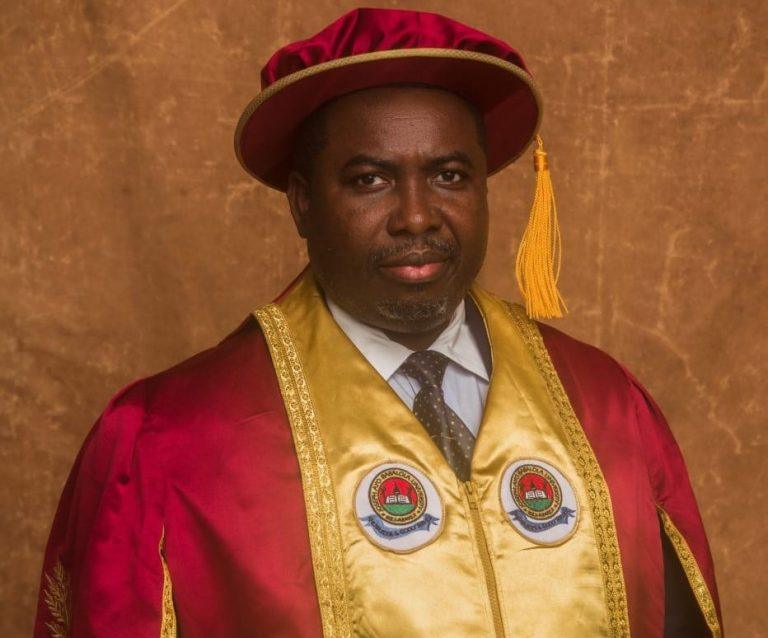
The Nigerian Senate has confirmed Professor Joash Amupitan (SAN), the nominee of President Bola Tinubu, for the position of chairman of the Independent National Electoral Commission (INEC).
Professor Amupitan, a professor of law, was confirmed by the upper chamber after his screening exercise on Thursday at the Plenary.
The screening commenced around 12:50 pm after the Senate had suspended its rule to admit strangers into the hallowed chamber.
The National Assembly had, on Wednesday, through a statement by Bullah Audu Bi-Allah, Director of Information at the National Assembly, on behalf of the Office of the Secretary, Research and Information, said the screening exercise will take place at the Senate Chamber, with full media coverage expected.
Fifty-eight-year-old Professor Amupitan is a professor of law at the University of Jos (UNIJOS), Plateau state, where he also serves as the Deputy Vice-Chancellor (administration).
President Bola Tinubu, earlier last week, formally wrote to the Senate, seeking the confirmation of Professor Amupitan as the new Chairman of the Electoral Commission following the exit of Professor Mahmood Yakubu.
Professor Amupitan, accompanied by Kogi State Governor Ahmed Ododo and other dignitaries, first presented his credentials before responding to questions from lawmakers.
This was part of the confirmation process for his appointment as the next INEC Chairman.
Professor Amupitan was ushered in by the Presidential Adviser on National Assembly Matters (Senate), Senator Abubakar Lado.
Senate President Godswill Akpabio welcomed Professor Amupitan, his family members, and other guests present before outlining the procedure for the screening.
On October 9, the Council of State unanimously approved his nomination as the next chairman of INEC following the exit of Professor Mahmood Yakubu.
On October 14, President Bola Tinubu formally wrote to the Senate to screen and confirm him.
The Nigeria Civil Aviation Authority (NCAA) has expressed concern over comments made by Senator Orji Uzor Kalu, who alleged lapses in pilot preparation, claims of substance use among flight crew, and shortcomings in the Authority’s oversight duties.
In a press statement signed by the Director General, Captain Chris Najomo, the NCAA said the Senator should provide factual clarifications in the public interest.
Najomo stated that Nigeria’s aviation oversight system consistently meets the International Civil Aviation Organization (ICAO) audit requirements under the Universal Safety Oversight Audit Programme (USOAP), placing the country among those maintaining effective safety supervision systems.
“Contrary to the impression created, the Nigerian Civil Aviation Authority maintains a rigorous and internationally recognized system for certifying and monitoring the medical and professional fitness of all pilots operating in Nigeria.
“No pilot is permitted to operate a Nigerian-registered aircraft without holding both a valid pilot licence and a current medical certificate, as required by the Nigerian Civil Aviation Regulations (Nig. CARs) Part 8.4.1.4.
“Holders of Commercial Pilot Licences (CPL) and Airline Transport Pilot Licences (ATPL) are, by the provisions of Nig. CARs 2.3.5.1 and 2.3.7.1, required to possess a Class 1 Medical Certificate before they are allowed to operate.”
According to the Authority, medical certificates are issued only after extensive aero-medical examinations by NCAA-authorised Aviation Medical Examiners (AAMEs) and approved by in-house aero-medical assessors.
“The scope of these examinations is extensive. It covers cardiovascular, neurological, psychological, metabolic, respiratory, and visual assessments to ensure that the pilot is fit to operate an aircraft safely. Nig. CARs Part 2.11.2.6(b) details the physical and mental requirements that must be met before a medical certificate is issued.”
The regulation specifies that an applicant must not suffer from any condition that could suddenly impair their ability to perform flight duties.
The process also screens for psychoactive substance use, behavioural disorders, abnormal blood pressure, cardiovascular or neurological diseases, and other conditions that could compromise safety.
Medical certificates are valid for twelve months for pilots under 40, and six months for those aged 40 and above, after which renewal requires a new series of tests.
In addition, Nig. CARs Part 8.5.1.5 expressly prohibits any crew member from acting as a flight crew member within eight hours of consuming alcohol, while under its influence, or after using any psychoactive substance that could affect alertness, judgement, or performance.
The NCAA conducts on-the-spot alcohol and drug tests when there is reasonable suspicion of intoxication, and also carries out random, unannounced testing. Test results, it added, are admissible as legal evidence.
“NCAA inspectors conduct daily ramp inspections at airports across the country. These inspections are not limited to aircraft alone; they include direct engagement with the flight crew.”
“During these inspections, inspectors verify crew licences, medical certificates, and general fitness for duty. Any irregularity is immediately addressed, and appropriate enforcement action is taken in line with the Authority’s zero-tolerance policy for safety violations.”
Najomo cited the recent suspension of a ValueJet pilot in August 2025 for initiating departure procedures without proper clearance as an example of the NCAA’s commitment to discipline and safety.
“It is therefore inaccurate to suggest that pilots operate under the influence of substances or without adequate checks. The processes in place are not only thorough but also consistent with global standards prescribed by the International Civil Aviation Organization (ICAO).”
Addressing the Senator’s comments about modern aircraft automation, the NCAA clarified that while advanced autopilot and autoland systems exist, they do not replace pilots.
“Take-offs are entirely manual operations carried out by the flight crew. Autopilot functions are only activated after take-off, usually when the aircraft reaches a safe altitude.”
“Similarly, although some aircraft have autoland capabilities, these are used only under specific weather and airport conditions and always under pilot supervision.”
The Authority further explained that Nigeria currently has no airport certified for Category III (CAT III) operations — the standard required for fully automatic landings in low-visibility conditions — meaning all landings within Nigerian airspace are manually executed.
Reaffirming its commitment to aviation safety, the NCAA emphasised its pride in Nigeria’s safety record and the professionalism of its pilots.
“The NCAA remains proud of its safety oversight record and the professionalism of Nigerian flight crews. The Authority continues to uphold the highest standards of safety through continuous inspections, random substance testing, enforcement actions, and strict adherence to ICAO provisions.”
The statement concluded that air transport safety in Nigeria remains paramount and uncompromised, adding that while the concerns raised by Senator Kalu are noted, they do not reflect the reality of the nation’s aviation regulatory framework.
“The NCAA remains open to constructive engagement with the National Assembly and all stakeholders to strengthen the safety, security, integrity, and global reputation of Nigeria’s air transport industry.”
Nigeria’s Minister of Environment, Balarabe Lawal has affirmed that the forthcoming 30th Session of the United Nations Climate Change Conference (COP30) will further deepen bilateral cooperation between Nigeria and Brazil.
He said the conference, scheduled to take place in Belém, Brazil, from November 10 to 21, 2025, will strengthen collaboration, particularly in Climate change action under the Paris Agreement.
The Minister made this known during an official working visit by the Brazilian Ambassador to Nigeria, His Excellency Carlos Garcete, and his delegation to the Federal Ministry of Environment in Abuja.
Mr Lawal highlighted the longstanding bilateral ties between Nigeria and Brazil, which span over six decades and cover diverse sectors including trade, culture, tourism, economic development, and environmental sustainability.
He expressed optimism that COP30 would present new opportunities for collaboration between both nations, particularly in climate change adaptation and mitigation, biodiversity conservation, ecosystem management, and sustainable development.
“The COP30 in Brazil presents a unique opportunity for both countries to strengthen our shared commitments to environmental sustainability and climate action. Nigeria looks forward to exploring areas of mutual benefit, especially in line with President Bola Tinubu’s Renewed Hope Agenda, which emphasizes sustainable economic growth, climate resilience, and ecosystem health,”the Minister stated.
Mr Lawal also commended the Government of Brazil for the recent resumption of direct flights between Nigeria and Brazil, describing it as “a strategic move that will boost trade, tourism, and people-to-people exchange.”
In his remarks, Ambassador Carlos Garcete noted that Brazil was the only South American country present at Nigeria’s independence celebrations in 1960 and that both nations have enjoyed a strong and evolving partnership ever since.
He emphasised the importance of strengthening trade relations—particularly in the non-oil sector—and assured the Minister of his Embassy’s full support in facilitating visa processing for Nigerian delegates attending COP30.
“The Embassy of Brazil is committed to supporting Nigeria’s active and successful participation at COP30. We also celebrate the resumption of direct flights as a step toward even greater cooperation between our nations,”Ambassador Garcete said.
Both parties reiterated their commitment to enhancing cooperation in addressing global environmental challenges and leveraging multilateral platforms like COP30 to achieve shared sustainable development goals.
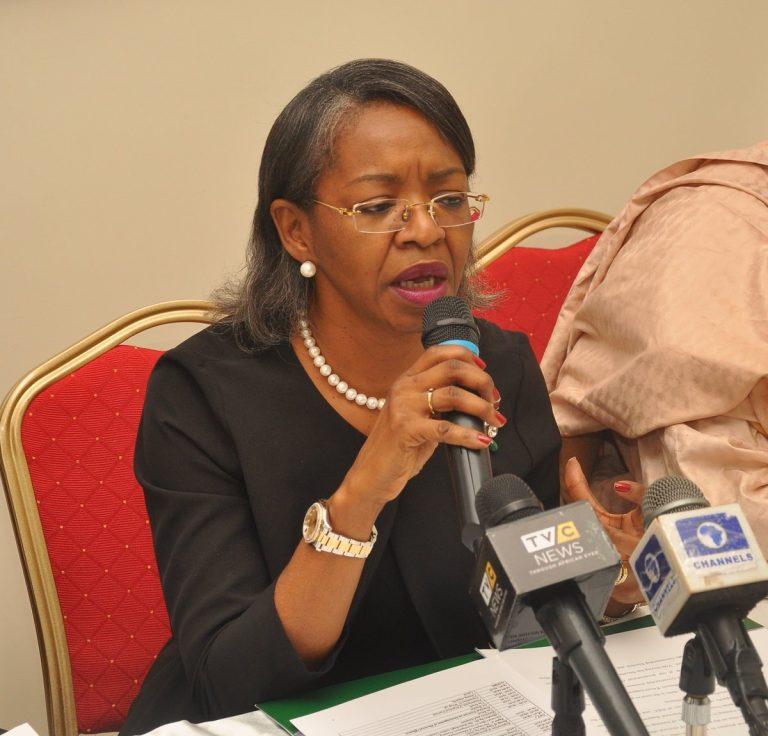
Ahead of the November 8 Governorship Election in Anambra State, the Acting Chairman of the Independent National Electoral Commission, INEC, Mrs. Agbamuche-Mbu, has outlined preparations for the polls at a meeting with Civil Society Organisations (CSOs) and Media Executives.
Mrs. Agbamuche-Mbu announced that 10 out of 13 key activities in the election timetable had already been completed, with the remaining three: Publication of Notice of Poll, End of Campaigns, and Election Day, on course and without delay.
She noted that all non-sensitive materials had been delivered to the state and that voter education and sensitisation were ongoing.
Mrs. Agbamuche-Mbu said that INEC’s Media Accreditation Portal for the Anambra election, which opened on September 1, had received applications from 43 media organisations seeking accreditation for 363 personnel.
She reminded journalists that the portal would close at midnight on October 24, with no extension, stressing that the accreditation tags issued by the Commission carry security codes that can be verified by security agencies.
The Acting Chairman also briefed stakeholders on other ongoing electoral activities, including preparations for the FCT Area Council Elections scheduled for February 2026, as well as the nationwide Continuous Voter Registration (CVR) exercise, which will run until August 2026.
She noted that the impressive turnout for the CVR reflected Nigerians’ faith in democracy and the Commission’s efforts to ensure that all eligible citizens are able to exercise their franchise.
Mrs. Agbamuche-Mbu reaffirmed INEC’s commitment to inclusivity, transparency, and credibility, assuring them that the Commission would continue to engage stakeholders regularly to strengthen public trust in the electoral process.
“Our democracy is stronger when citizens are informed, engaged, and confident in the process,”she said. “We will continue to work hand in hand with the media, civil society, and all stakeholders to safeguard the vote and deepen our democratic culture,” Agbamuche Mbu remarked.
Speaking on behalf of the Civil Society Organisations, the Executive Director of Peering Advocacy and Advancement Centre in Africa (PAACA), Mr. Ezenwa Nwagwu, emphasised that sub-national elections, such as the upcoming Anambra poll, depend greatly on the competence and integrity of Resident Electoral Commissioners and Electoral Officers who oversee them.
He expressed confidence that under the Acting Chairman’s leadership, INEC would consolidate on the innovations introduced in recent electoral cycles, especially the deployment of technology that enhances transparency.
Speaking on behalf of media leaders, the President of the Nigeria Union of Journalists (NUJ), Comrade Yahaya Alhassan, commended INEC for sustaining its tradition of open engagement with the press, which he described as a critical stakeholder in the success of the electoral process.
He described the media as a vital partner in democracy, not only as observers but as facilitators of transparency and public confidence.
“The media must continue to inform citizens, hold political actors accountable, and ensure that the electoral process is reported with accuracy, fairness, and responsibility,” he said.
He called for stronger collaboration between INEC and journalists covering elections, including training, improved access to information, and support for fact-checking to counter misinformation.
The Progressive Governors Forum, PGF, has reaffirmed its commitment to improving policy coordination, communication, and governance across All Progressives Congress (APC)-led states.
This was contained in a Communique issued at the end of the Quarterly Strategy Meeting of Commissioners for Information of APC-Governed States, held from October 15–16, 2025 in Maiduguri, Borno State.
Held under the theme “FGN–PGF Synergy 2025: One Message, One Future,”the meeting provided a strategic platform for peer learning, policy review, and exchange of innovative communication practices aimed at enhancing governance impact and ensuring message harmony across APC states.
According to the Communiqué, “the Commissioners commended the exemplary leadership and developmental strides of APC Governors, describing them as visionary leaders whose policies and initiatives continue to improve livelihoods, foster resilience, and strengthen economic growth across the federation.”
The Forum also reaffirmed its collective resolve to amplify the achievements of Progressive Governors and ensure that their governance successes are effectively communicated to the Nigerian public.
The meeting emphasised the need to deepen synergy between the Nigerian Government and the Progressive Governors Forum (FGN–PGF) as a strategic mechanism for achieving coherent governance and accelerated development.
The Commissioners resolved to enhance coordination, joint policy implementation, and message alignment between both tiers of government to ensure measurable impact and shared progress.
The Communique also noted the presentation and adoption of the PGF National Value Reorientation Campaign Report, describing it as ‘avital initiative to rekindle patriotism, civic responsibility, and ethical values among Nigerians.’
The Commissioners pledged to domesticate the proposed National Value Reorientation Charter in their respective states and drive its implementation through localised advocacy and community engagement.
In addressing national issues that impact APC-governed states, the Forum resolved to develop a harmonised communication framework to ensure coordinated messaging, crisis communication preparedness, and unified public engagement to safeguard the image and credibility of APC governments.
The Commissioners further agreed to adopt a Monitoring and Evaluation (M&E) framework with clear performance indicators to track progress and measure the effectiveness of media and communication initiatives. The system, coordinated by the PGF Secretariat, will facilitate documentation of results, periodic assessment, and exchange of best practices among member states.
At the meeting, the Forum unanimously constituted its leadership as follows:
Chairman: Prof. Usman Tar (Commissioner for Information, Borno State)
Secretary: Dr. Erasmus Ekpang (Commissioner for Information, Cross River State)
Head, Communication and Public Engagement: Ahmed Maiyaki (Commissioner for Information, Kaduna State)
The Forum expressed profound gratitude to the Governor of Borno State, Professor Babagana Umara Zulum for hosting the Strategy Meeting and for the warm hospitality extended to all delegates.
It equally appreciated the Minister of Information and National Orientation, Alhaji Mohammed Idris Malagi, for his presence and valuable contributions, as well as the PGF Secretariat for its efficient coordination and commitment to strengthening information synergy across APC states.
The Forum resolved to convene its next Quarterly Strategy Meeting in Abuja during the first quarter of 2026.
Signed:
Prof. Usman Tar – Chairman, Forum of Honourable Commissioners for Information & Honourable Commissioner for Information, Borno State
Folorunso S. Aluko – Director General, Progressive Governors Forum
Ahmedabad in India has been recommended as the host city for the 2030 Commonwealth Games, edging out Abuja, Nigeria, in the final selection process.
The announcement was made on Wednesday by Commonwealth Sport.
The recommendation, made by an evaluation commission of the governing body, will be formally ratified at the Commonwealth Sport General Assembly in Glasgow on November 26.
If confirmed, it will mark the second time in 20 years that India will host the prestigious multi-sport event, following Delhi’s successful staging in 2010.
Located in western India, Ahmedabad is one of the country’s fastest-growing cities, home to over five million residents.
It also boasts world-class sporting infrastructure, including the Narendra Modi Stadium, the largest stadium on the planet with a capacity of 132,000, which hosted the 2023 Cricket World Cup final.
In a statement, Dr. P. T. Usha, President of the Commonwealth Games Association of India, hailed the recommendation as a milestone for Indian sport.
The Kano State Government has secured landmark investments in renewable energy following the signing of a Memoranda of Understanding (MoUs) with two leading companies — Tricell Solar Solutions and IRS Green Energy Limited.
This was contained in a statement issued by the Governor’s Spokesperson, Sunusi Bature Dawakin Tofa.
The agreements, signed in collaboration with the Rural Electrification Agency (REA) for technical advisory and coordination support, were formalised during the Nigeria Renewable Energy Innovation Forum (NERIF) 2025, held on Tuesday in Abuja.
Representing the Kano State Governor, Alhaji Abba Kabir Yusuf, at the signing ceremony, the Director-General of Kan-Invest, Nazir Halliru, said the investments mark a major step in government’s ongoing efforts to expand access to clean and affordable energy, promote local manufacturing, and create job opportunities for the people of Kano State.
Under the new arrangements, IRS Green Energy Limited will establish a solar panel manufacturing plant with an annual capacity of 600MW, while Tricell Solar Solutions will set up another with a 500MW capacity — positioning Kano as a regional hub for renewable energy production and green industrialisation.
The forum was declared open by the Vice President, Senator Kashim Shettima, while the Managing Director/CEO of the Rural Electrification Agency, Abba Aliyu, reaffirmed the Agency’s commitment to partnering with state governments to advance Nigeria’s renewable energy ambitions through policy continuity, investor confidence, and coordinated development efforts.
The Kano State Government expressed its appreciation to the REA and its private sector partners for their confidence in the state, pledging continued collaboration and a conducive investment environment to ensure successful implementation.
With this development, Kano State is positioning itself as a renewable energy and green manufacturing hub in West Africa, driving progress, prosperity, and sustainability for generations to come.
Trust and dialogue between the Nigeria Police Force and the communities they serve have been reaffirmed as the cornerstone for strengthening transparency, accountability, and collaboration in effective policing across the country.
These submissions were made at the Learning Exchange Workshop on the Mutual Accountability and Community Scorecard (MACS) Initiative, organised by International Alert Nigeria in partnership with the Nigeria Police Force (NPF), with support from the UK Foreign, Commonwealth and Development Office (FCDO).
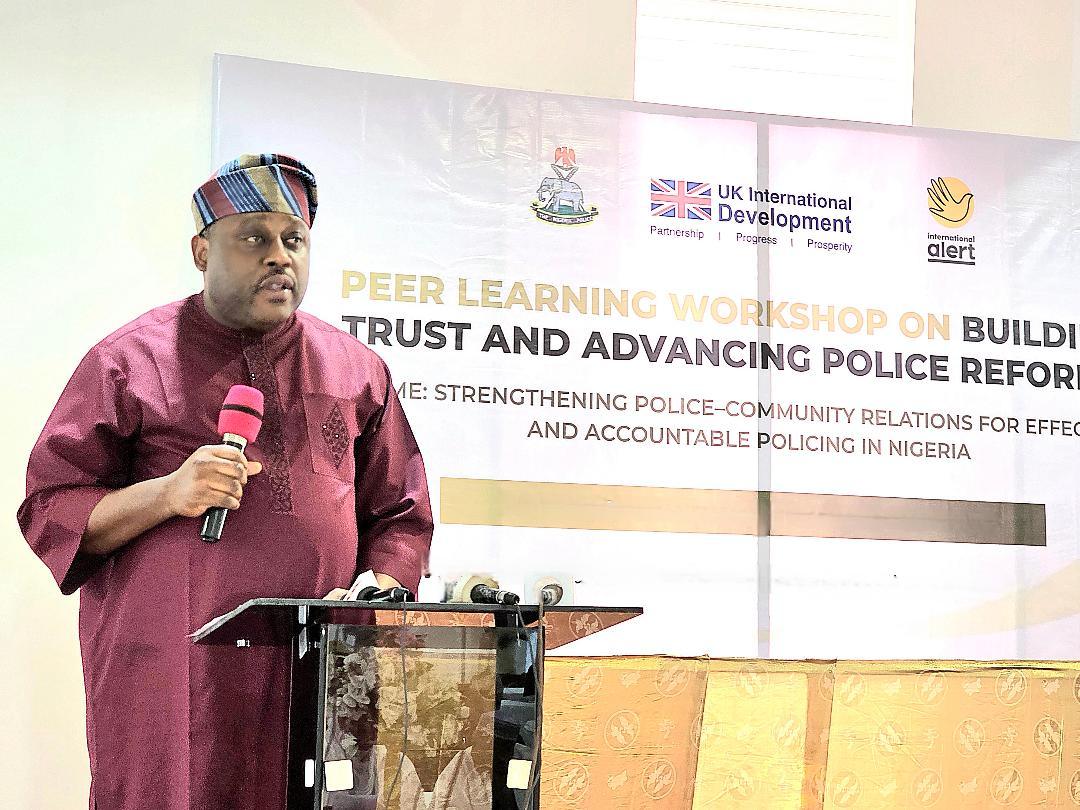
In his welcome address, Mr Kingsley Udo, Country Director of International Alert Nigeria, described the gathering as “a new phase in Nigeria’s policing reform journey designed to deepen community trust, transparency, and reform communication within the nation’s policing architecture.
“Across Nigeria, citizens continue to call for a policing system that is transparent, accountable, and responsive to community needs. The Nigeria Police Force has, in recent years, taken bold steps towards reform and improved professionalism — but sustaining these reforms requires deliberate collaboration, communication, and accountability between the police and the communities they serve,”Udo said.
He noted that the MACS Initiative had produced tangible results in strengthening police-community relations and accountability, adding that the second phase of the project supported Police Public Relations Officers (PPROs) across seven states — Abia, Bauchi, Benue, Borno, Kaduna, Zamfara, and Edo — as well as the Federal Capital Territory, to apply the framework in their operations.
“The outcomes have been impressive: stronger dialogue between police and citizens, increased trust, and practical solutions to improve accountability and service delivery. Through the MACS Initiative, we have seen stronger dialogue, increased trust, and practical solutions to improve service delivery,” he said.
According to him, the next phase of the initiative will focus on deepening inclusivity at community levels. “We are looking at trickling down to the neighbourhood — where vigilantes, children, women, and men can sit together and talk,” he said, “Trust is key. Without trust, there will be fear; and where there is fear, there can be no love. We want to dispel fear and pull everyone together. We don’t want conflicts to recede into violence. We want the police to be not just our friends, but our brothers and sisters next door.”
Mr. Kingsley Udo, Country Director of International Alert
Policing For Safer Communities
In a goodwill message, the Force Public Relations Officer, CSP Benjamin Hundeyin, described the workshop as “another important step forward in strengthening police-community relations for effective, accountable, and people-centred policing in Nigeria.”
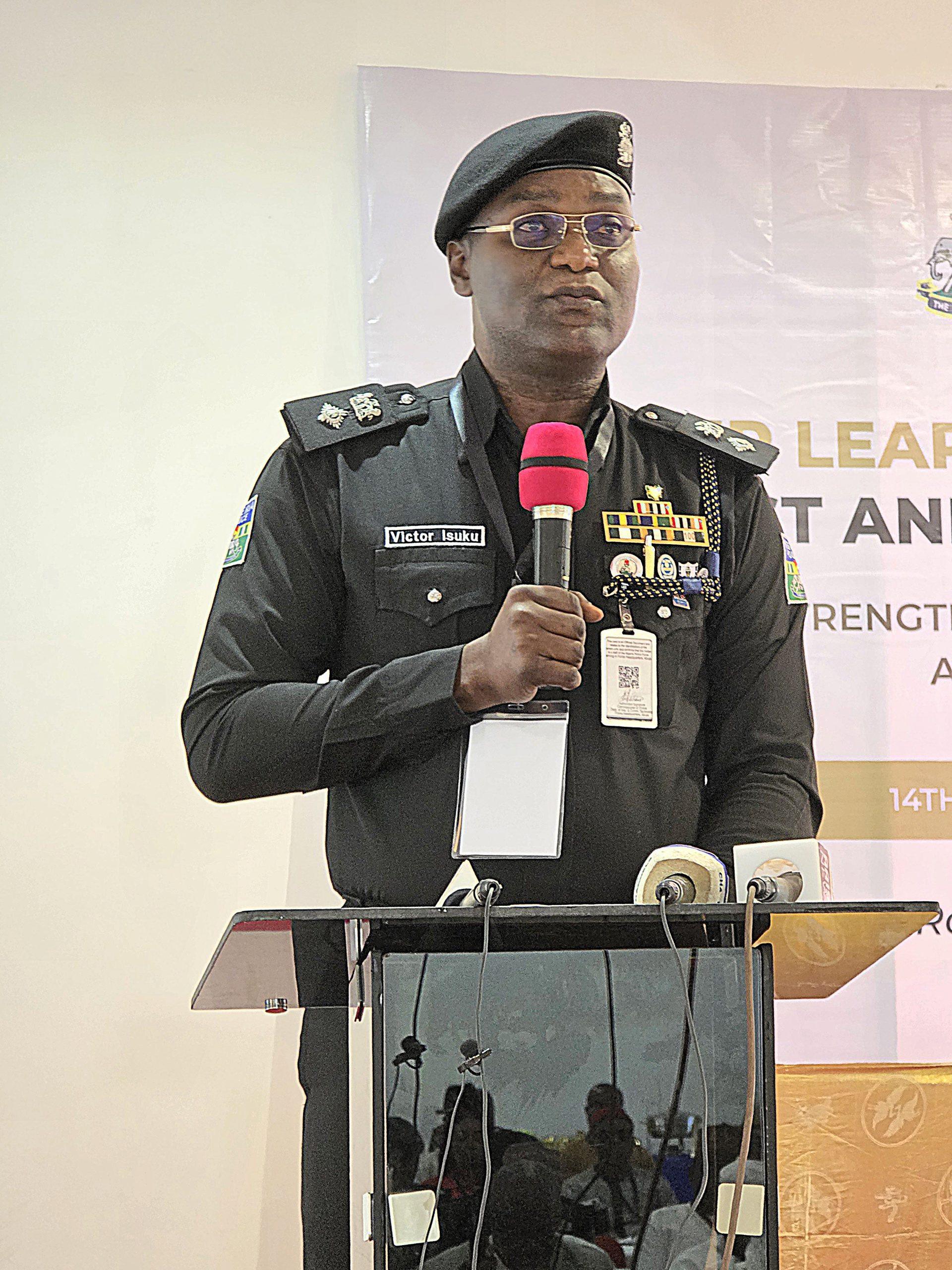
Represented by the Deputy Force Public Relations Officer, CSP Victor Isuku, Hundeyin said the initiative demonstrates the Police Force’s commitment to reform through partnership, learning, and dialogue.
“The Nigeria Police Force cannot do it alone; that is why this partnership is more than timely — it is necessary. When the police and the people work together, when there is honesty, trust, and openness, our communities become safer and more peaceful,”he said.
He commended International Alert and the FCDO for their continued partnership with the Police, adding that the Force has taken deliberate steps to bridge the gap with citizens through the Police Act 2020, which addresses long-standing concerns.
“…Issues of stereotyping, bail, arrest, and search of persons and premises — all these are captured in the current Police Act. I urge the youth to take time to go through this Act, so that when they are informed, they will know what to do whenever their rights are being violated,”he stressed.
Hundeyin further revealed that Complaint Response Units (CRUs) have now been established across all police commands to make redress and accountability more accessible. “You don’t need to come to the Force Headquarters,” he said. “Across all commands, there are CRUs, and the contact details of all PROs are published online for easy access.”
He described the MACS Initiative as “a product of mutual trust that promotes collaboration, not confrontation,” stressing that true security is built through cooperation between law enforcement and citizens.
“As Police Public Relations Officers, we stand at the frontline of this relationship. It is our duty to bridge understanding, to communicate with empathy, and to show through our actions that the Nigeria Police Force is truly here to serve and protect with integrity,” he affirmed.
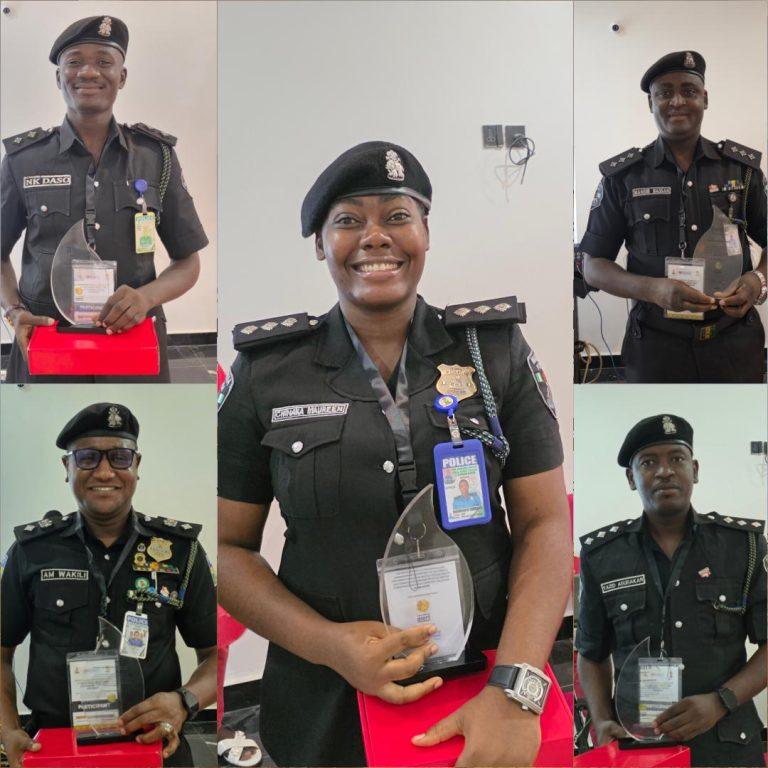
Sharing the impact report, DSP Maureen Chioma Chinaka, Police Public Relations Officer, Abia State Command, described the initiative as “a journey of learning, unlearning, and relearning” for both the police and citizens, fostering empathy and shared responsibility.
“It’s been a journey of understanding ourselves in a noisy world where everybody is speaking and nobody is taking time to listen,…We learned that instead of pointing fingers, we can hold each other’s hands and walk the path of peace, unity, accountability, and friendship,”she said.
She explained that in Abia State, the MACS framework had already yielded measurable impact, with more citizens now volunteering information and collaborating with the police without fear.
“We have people boldly coming to the police to say, ‘this is my experience,’ because they now trust that the police can act with integrity. Instead of throwing stones, communities are learning to build doors of unity and accountability,” she noted.
Chinaka said the initiative had helped bridge stereotypes and fostered mutual respect. “In one of our community engagements in Abia, we saw community members hugging and shaking hands with police officers — that was the height of collaboration and love. That is what this initiative is about — transforming fear into trust and confrontation into collaboration,” she recounted.
She urged her colleagues to remain “open-minded, willing to learn, unlearn and relearn,” and to embrace accountability as a shared journey toward peace and inclusivity in line with the Inspector General of Police’s vision of building “a service-driven, law-abiding, and people-friendly police force.”
Shared Responsibility
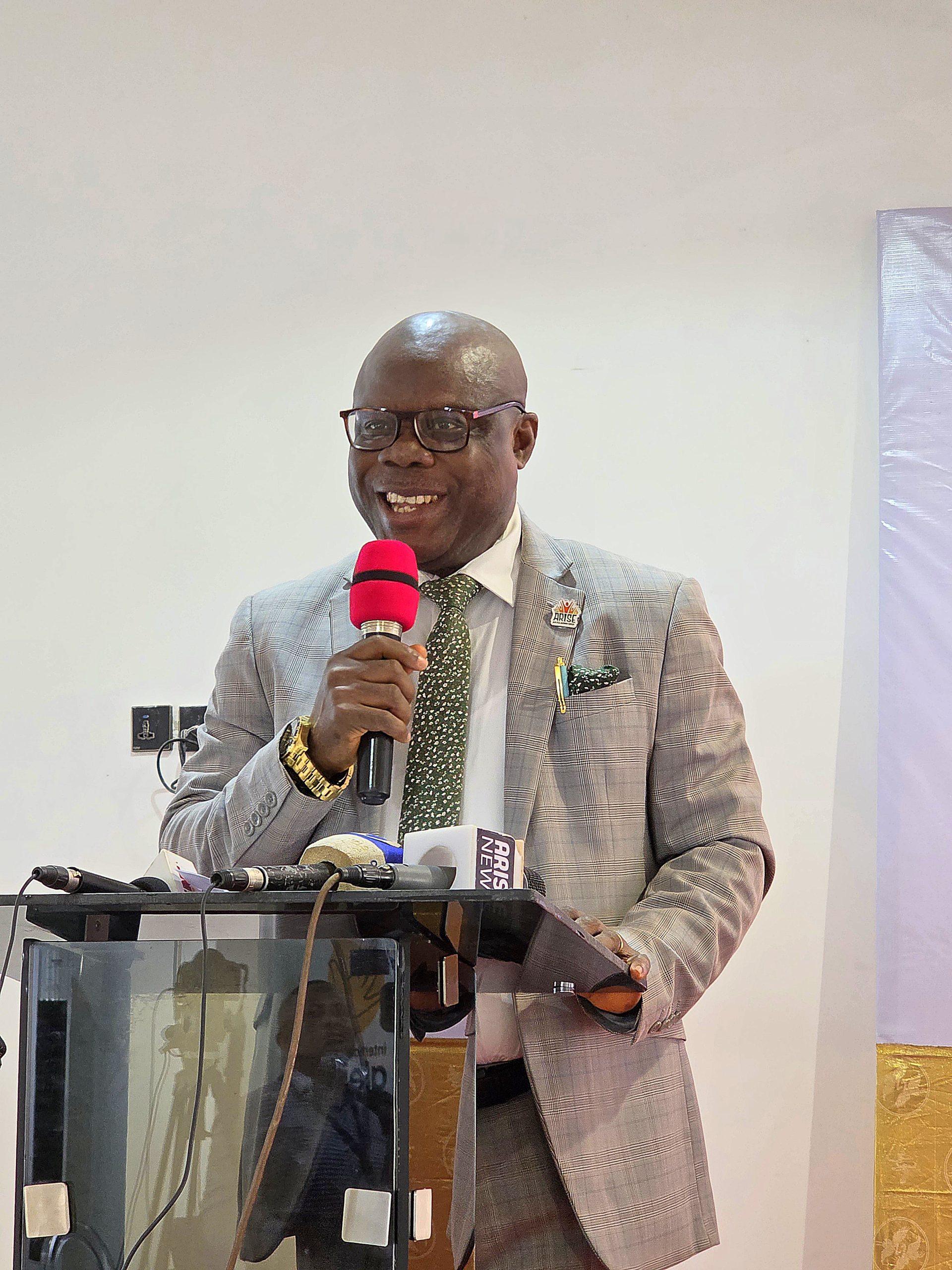
Declaring the workshop open, the Akwa Ibom State Commissioner for Information, Aniekan Umanah, described hosting the event as “timely and significant,” given the state’s prioritisation of peace and internal security under Governor Umo Eno’s administration.
“This event came to the state at the appropriate time, particularly when His Excellency the Governor is working seriously to ensure that Akwa Ibom maintains its pride of place as the most peaceful state in Nigeria,” he said.
Represented by the Permanent Secretary, Akparawa James Edet, Umanah commended the Police for its collaboration with development partners, noting that “security occupies a central place in the administration’s development priorities.”
Akparawa James Edet, Permanent Secretary
“It is on record that for the first time, His Excellency created a special Ministry for Security and Waterways. The ministry is partnering with all security agencies to ensure we continue to enjoy the peace we are known for,” he said.
A cross-section of participants
He lauded the synergy between the Police, security agencies, and the state government, commending the Ministry of Information’s role in sustaining civic vigilance through media engagement. “Security is not just the business of the police alone. It is the business of everyone, including journalists and the community,” he said.
“The government holds regular security council meetings, supports intelligence sharing, and provides necessary logistics to keep our state safe. We must continue to join hands with the government and security agencies to sustain peace in our state and in Nigeria,” he added.
The two-day Learning Exchange Workshop, themed “Strengthening Police-Community Relations for Effective and Accountable Policing in Nigeria,”brought together Police Public Relations Officers from across the country, traditional rulers, civil society groups, and youth leaders.
It featured the presentation of awards to outstanding Police Public Relations Officers from MAC-implementing states.
The convergence reaffirms a collective vision for accountable policing rooted in dialogue, partnership, and shared responsibility, aligning with Nigeria’s ongoing police reform agenda and the Renewed Hope vision for safer, stronger communities.
Nepal has appealed to FIFA to overturn their 2-0 defeat to Malaysia in 2027 Asian Cup qualifiers in March this year, claiming that their opponents fielded an ineligible player.
Last month, the world governing body FIFA banned seven Malaysian foreign-born players for a year and fined the FA of Malaysia (FAM) $440,000, saying they had submitted forged ancestry documents.
One of the seven, Hector Hevel, scored Malaysia’s opening goal in the match played in Johor, Malaysia.
“We have reached out regarding an ineligible player in the match. Thus, the result has to be overturned,” Indra Man Tuladhar, CEO of All Nepal Football Association, told AFP.
FIFA accused the FAM of submitting doctored or false documents that said the seven players had Malaysian ancestry, making them eligible to represent the country. FAM denied knowingly doing anything wrong.
FIFA said an investigation showed that none of the players actually had a parent or grandparent born in the Southeast Asian nation.
The seven banned players had all played in Malaysia’s 4-0 Asian Cup qualifying win against Vietnam in June.
Nepal is currently at the bottom of Asian Cup qualifying Group F with no points from four games.
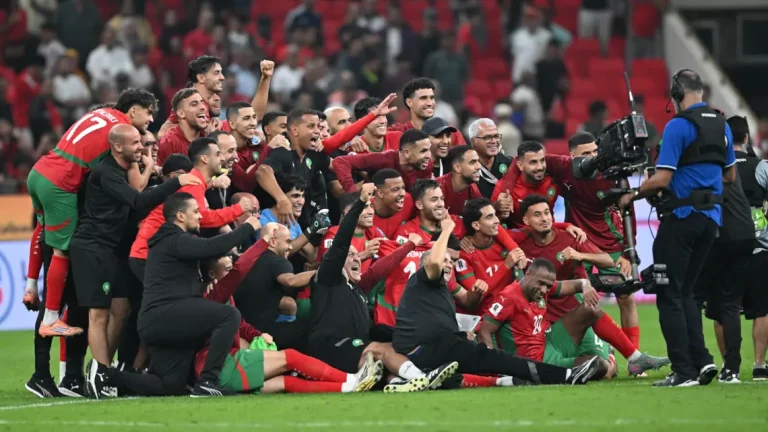
Morocco set a new world record of 16 consecutive international victories with Tuesday’s 1-0 World Cup qualifying success over Congo in Rabat.
Fenerbahce forward Youssef En-Nesyri scored the only goal of the game for the Atlas Lions, who had already secured World Cup qualification earlier this month with a 5-0 trouncing of Niger.
“Record breaking. Our National Team makes HISTORY with 16 CONSECUTIVE WINS,” the Moroccan national team said on its official X account.
“Unstoppable Lions,” it added.
The 2022 World Cup semifinalists were the first African nation to qualify for next year’s tournament in the United States, Canada, and Mexico.
Morocco – whose run began on 7 June 2024 – had shared the previous mark of 15 victories with Spain, whose winning run began during their Euro 2008 success and ended a year later in June 2009.
That surpassed a previous record set by France, who were European champions at the time, between March 2003 and February 2004.