Home Blog Page 333

Minister Confirms Full Adoption Of Criminal Justice Reform

0

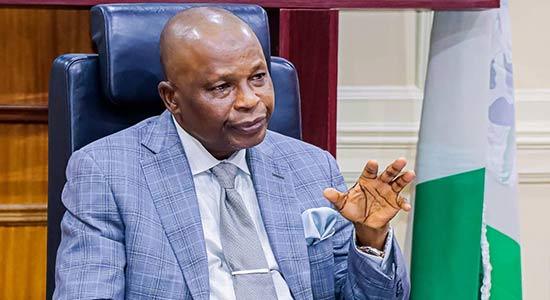
The Attorney General and Minister of Justice in Nigeria, Prince Lateef Fagbemi, has announced that all 36 states of the federation have now adopted their versions of the Administration of Criminal Justice Law (ACJL).

Fagbemi disclosed in Abuja during a stakeholders’ meeting to review and validate proposed amendments to the Administration of Criminal Justice Act (ACJA) 2015.

Represented by the director in the Solicitors Department of the Ministry of Justice, Mrs Gladys Ojegbame, he said the development demonstrates Nigeria’s “shared national commitment to fairness, equity, accountability and efficiency.”

The ACJA, first enacted in 2015, sought to harmonise criminal procedures across Nigeria, reduce trial delays, strengthen the rights of defendants and victims, and introduce innovations such as non-custodial measures and the abolition of arrest by proxy. A decade later, officials say progress has been made, but gaps remain.

“Legislation alone cannot resolve all challenges within the criminal justice system,” Fagbemi admitted. Yet, this review is a crucial step towards building a system that is fast, fair, effective, and responsive.”

He linked the reforms to President Bola Ahmed Tinubu’s Renewed Hope Agenda, which places justice reform at the centre of governance.

Civil society leaders also welcomed the reforms. Professor Yemi Akinseye-George, President of the Centre for Socio-Legal Studies (CSLS), praised the review process as an opportunity to “critically address existing shortcomings and enhance the system.”

Joshua Dada of the Rule of Law and Anti-Corruption Programme (RoLAC) added that while progress has been substantial, “successes achieved must be consolidated, and challenges addressed through updated laws.”

The meeting brought together key stakeholders, including representatives of the Federal High Court, the Directorate of Public Prosecutions, the Nigerian Police Force, the NDLEA, and the Law Reform Commission.

NITDA Pushes Digital Tech For Construction Productivity

0

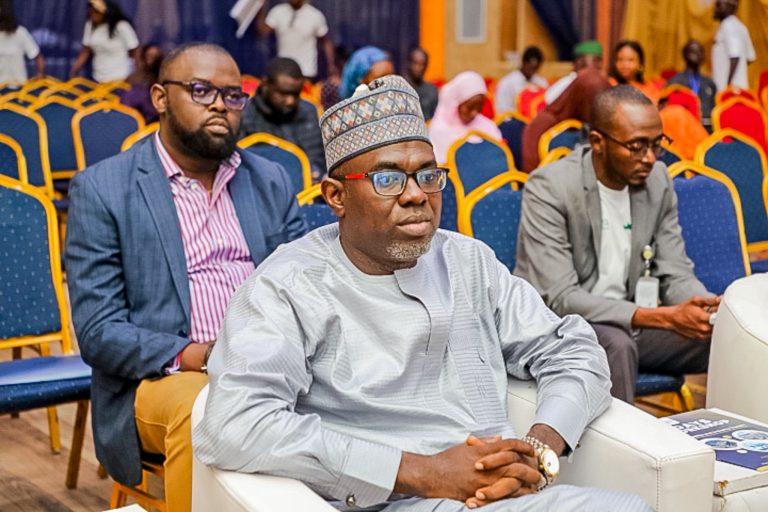
The Director-General of the National Information Technology Development Agency (NITDA), Kashifu Inuwa, has urged Nigeria’s construction industry to move from blueprints to bytes by embracing digital technologies that can transform project delivery and boost productivity.

Delivering a keynote presentation titled “Digital Transformation in the Nigerian Construction Industry” at a two-day workshop organised by the Nigerian Institute of Quantity Surveyors (NIQS), FCT Chapter, the DG outlined the tools driving this impending revolution. The event, themed “Policy Shifts and Industry Trends,” provided the perfect launchpad for this digital mandate.

Represented by Dr Yahaya Onimisi, the Agency’s Acting Director of Project Management, Inuwa emphasised that emerging technologies are not just optional upgrades but necessary foundations for the future. He specifically highlighted how Building Information Modelling (BIM), Artificial Intelligence (AI), Blockchain, Data Analytics, and Cloud Collaboration tools can significantly reshape the sector.

According to him, these technologies offer a sure-fire route to improve service delivery, enhance accuracy, boost productivity, and create smarter project management systems across the entire construction value chain.

“As the urgent need for modernisation becomes more apparent, the future of construction lies in digital transformation. By embracing innovation, Nigeria’s Quantity Surveyors can drive smarter, faster, and more transparent infrastructure development,” Inuwa stated.

Highlighting the sector’s challenges, including project delays, cost overruns, inefficiencies, and resistance to change, he described digital transformation as both a disruption and an opportunity.

Inuwa further explained that embracing innovation will reposition Nigerian Quantity Surveyors (QS) from routine cost measurement to strategic, data-driven roles.

“Digital transformation is not merely about adopting new technology but about fundamentally changing business processes, culture, and skills to leverage the opportunities presented by the digital age,” he added.

Read also: NITDA Confirms 2026 Rollout of Digital Public Infrastructure Framework.

While calling for stronger partnerships between NITDA and NIQS to accelerate digital adoption, the NITDA boss outlined areas for collaboration, such as capacity building, policy alignment, innovation labs, and the development of a sector-specific digital transformation roadmap aligned with the agency’s Strategic Roadmap and Action Plan (SRAP) 2.0.

Referencing the agency’s collaboration with professional bodies such as the Nigerian Medical Association (NMA), Nigerian Union of Journalists (NUJ), and the Nigerian Union of Teachers (NUT), Inuwa asserted that with strategic investments, government support, and continuous professional development, Nigeria’s construction industry can unlock new opportunities, improve transparency, and achieve smarter project management outcomes.

“By embracing a mindset of continuous learning, investing strategically in technology, and fostering strong collaborations with stakeholders, Nigerian Quantity Surveyors can not only survive the technological disruption but also thrive in the evolving industry landscape,” he concluded.

Madagascar Declares Curfew in Capital After Protests

0

Authorities in Madagascar imposed a dusk-to-dawn curfew in the capital, after protests over power outages and water shortages reportedly turned violent.

Police fired teargas to disperse the thousands of mostly youth protesters who were marching and carrying placards, in Antananarivo, the capital.

“There are unfortunately individuals taking advantage of the situation to destroy other people’s property,” General Angelo Ravelonarivo, who heads a joint security body that includes the police and the military, said in a statement.

To protect “the population and their belongings,” the security forces decided to impose a curfew from 7 p.m. to 5 a.m., “until public order is restored,” the statement said.

Some blame the government of President Andry Rajoelina, who was re-elected in 2023, for not improving conditions.

Shops and homes were reportedly looted.

On Wednesday, the national police chief, Jean Herbert Andriantahiana Rakotomalala, warned that security forces would “take firm preventive…measures against those tempted to break the law.”


Reuters/Hauwa M.

Trump Vows to Move World Cup Games from ‘Unsafe Cities’

0

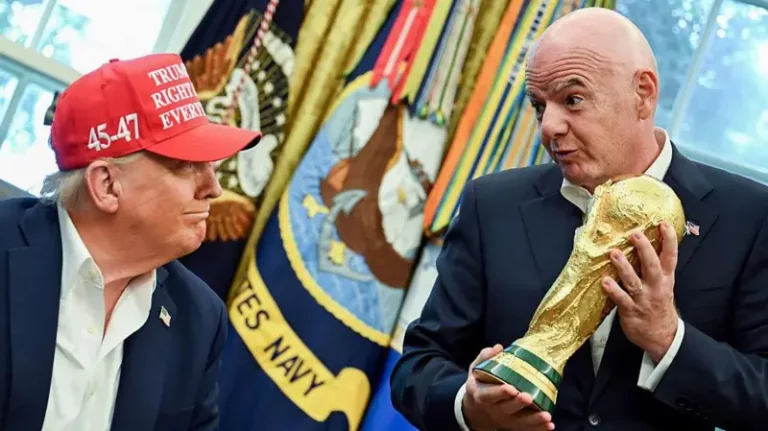
US President Donald Trump says he will move matches at the 2026 World Cup from any city he thinks is unsafe.

Eleven US cities are scheduled to host matches at next summer’s 48-team tournament, which is to be co-hosted by Canada and Mexico.

The US will host 78 of the 104 fixtures, including the final.

World governing body FIFA is in charge of organising the tournament and selecting host cities.

“It will be safe for the World Cup,” Trump told reporters in the Oval Office. “If I think it isn’t safe, we’ll move it into a different city.”

The 11 host cities in the US are Atlanta, Boston, Dallas, Houston, Kansas City, Los Angeles, Miami, New York/New Jersey, Philadelphia, San Francisco and Seattle.

Trump was asked specifically about matches in the cities of Seattle and San Francisco. Both are due to host six games.

He also mentioned Los Angeles, which will host the 2028 Olympics and eight matches next year.

“If any city we think is going to be even a little bit dangerous for the World Cup, or for the Olympics, but for the World Cup in particular, because they’re playing in so many cities, we won’t allow it to go. We’ll move it around a little bit,” he said.

Trump has made tackling crime a central part of his agenda.

Last month, he deployed National Guard troops into Washington DC.

The draw for the group stage of the World Cup is scheduled for 5 December in Washington, and the tournament will run from 11 June to 19 July.


BBC/CI

Education Initiative Trains Kaduna Teachers On Digital Platform

0

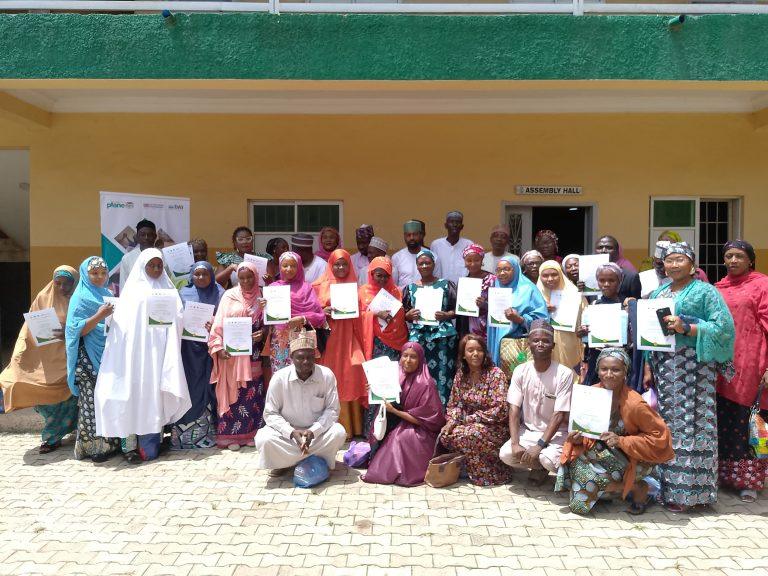
Partnership for Learning for All in Nigeria (PLANE) has trained about 504 teachers in Kaduna state on a digital platform, enabling them to share ideas, strengthen professional practice, and improve learning outcomes.

The initiative, Digital Community of Practice, aims to build a community of digitally empowered teachers.

The programme, piloted in four Local Government Areas (LGAs), provided teachers with an opportunity to gain credit units under the Teachers Registration Council of Nigeria (TRCN) scheme.

At the certificate dissemination ceremony for the first cohort on Friday in Kaduna, Northwest Nigeria, the State Team Lead of PLANE, Mrs Diana Agabi, explained that the training is centred on Foundational Literacy and Numeracy (FLN), using digital platforms such as WhatsApp to enable teachers to share ideas, interact, and strengthen classroom teaching and learning practices.

She added that the initiative introduces teachers to global best practices in digital learning, stressing that online platforms are widely adopted internationally, and Nigerian teachers must also embrace them to improve capacity and outcomes.

She noted that teachers are expected to share experiences, teaching feedback, and challenges on the platform, while colleagues respond with strategies, peer support, and innovative approaches to classroom management and inclusive learning.

Agabi explained that teachers learn how to manage diverse situations, including handling learners with disabilities, and can adopt practical ideas from their peers to improve teaching, build resilience, and enhance student performance.

She emphasised that the Teachers’ Digital Community of Practice Initiative was designed to encourage teachers to go beyond traditional classrooms and build professional communities driven by digital empowerment.

She noted that the programme also complements the TRCN scheme by providing participants with additional credit units as proof of professional growth, adding that it encourages other teachers yet to register to do so.

The State Coordinator of TRCN, Esther Natsa, explained that the council is the regulatory body responsible for overseeing the teaching profession, ensuring teacher development, setting standards, and offering opportunities for continuous professional growth across the country.

Natsa, represented by Nafisa Abbas, noted that the council plays a crucial role in enhancing teachers’ skills, upholding professional ethics, ensuring accountability, and improving teaching quality in Nigeria through structured programmes and policies, including accreditation of teacher training institutions.

She added that the Career Path Policy guides teachers’ progression through recruitment, training, and promotion, helping them meet professional standards while serving as the new national career guide to enable teachers to drive their own career development effectively.

She said TRCN organises Mandatory Continuous Professional Development (CPD) programmes to enhance teachers’ skills and adherence to best practices, while the TRCN Resource Hub provides access to lesson plans, unified curricula, teaching aids, and strategies for special needs learners.

The coordinator disclosed that the newly launched TRCN digital portal simplifies registration, licensing, and renewals, serving as a national database for tracking professional growth.

“Teachers can now update records, obtain licences, and print certificates conveniently from anywhere in Nigeria,” she added.

The Acting Executive Chairman of the Kaduna State Universal Basic Education Board (KADSUBEB), Mr Mubarak Muhammad, said the state government prioritises education, investing in human capital through teacher development.

He said over 26,000 teachers have been trained in various thematic areas, including literacy and numeracy.


Ethiopia, Russia Seal Deal For Nuclear Plant

0

Ethiopia signed an agreement with Russia on Thursday to build a nuclear power plant in the East African nation.

The deal was finalised by leaders of the Ethiopian Electric Power Company and Russian state-owned entity, Rosatom, during a nuclear energy forum in Moscow.

They agreed to create a detailed construction plan and a “roadmap” for the technical and economic foundation of the project, plus an intergovernmental agreement to proceed.

The agreement also called for the training of staff to operate the plant and develop the nuclear sector.

Earlier, Niger’s mining minister, Ousmane Abarchi, said his country wanted to build two Ethiopia, Niger Signs Pact with Russia’s Rosatom Nuclear Plantsmegawatt nuclear reactors in partnership with the Russian nuclear corporation.

Abarchi said Niamey was also proposing cooperation with Moscow to develop its country’s uranium reserves.

As the world’s eighth-largest producer last year, Niger wants to harness this mineral asset to increase power generation.

He said the projects would be developed under the oversight of the International Atomic Energy Agency.

The deals come as Moscow accelerates bilateral agreements with some African countries, significantly expanding its presence on the continent.

Meanwhile, Russian President Vladimir Putin said his country fulfils all its nuclear contract obligations regardless of the political situation.

Russia is interested in creating stable, long-term conditions for nuclear projects,” he said at the plenary session of the World Atomic Week.

Above all, ensuring nuclear safety and the physical security of nuclear facilities and installations, wherever these facilities are located, is an absolute priority for our country.”

Putin said that Russia plans to launch the world’s first nuclear energy system with a closed fuel cycle by 2030.

He said it will reuse over 90 per cent of the spent fuel, which will help to solve the problem of radioactive waste and the issue of uranium supply.


Germany Donates Canine Facility to Boost Nigeria’s Drug War

0

By Charles Ogba, Abuja

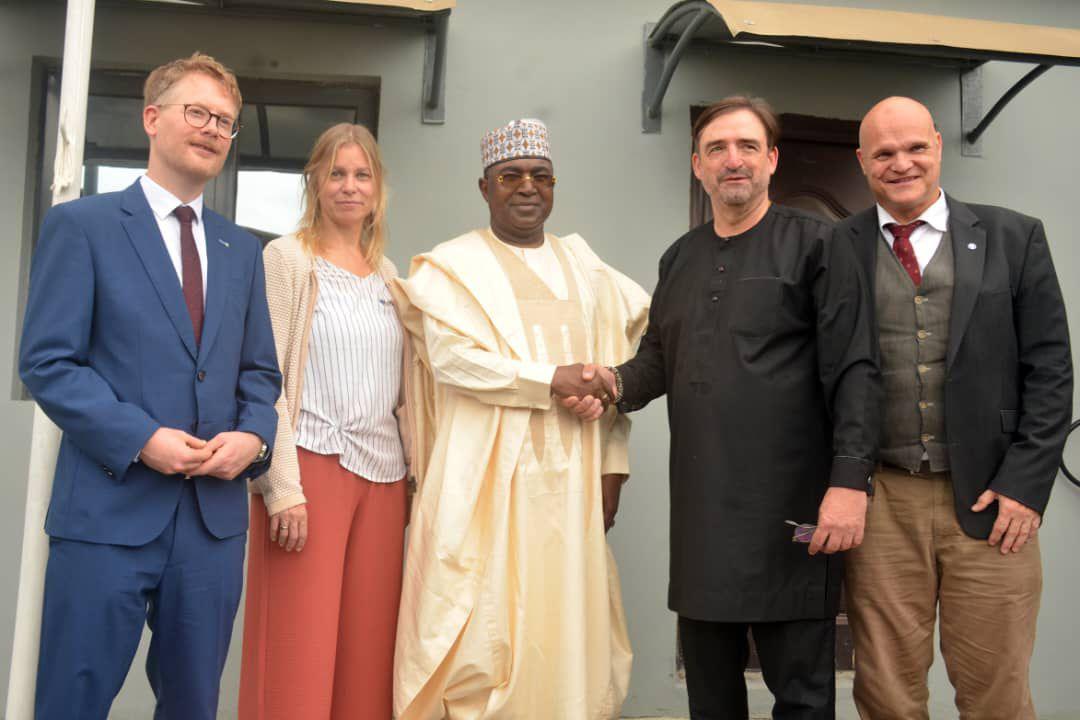
The Chairman and Chief Executive of Nigeria’s National Drug Law Enforcement Agency (NDLEA), Brigadier General Mohamed Buba Marwa (Rtd), says a newly built canine complex donated by the German government will significantly strengthen the country’s battle against illicit drugs.

Speaking in Lagos at the commissioning of the facility, Marwa hailed the project as “a milestone in Nigeria’s fight against narcotics.”

He said, “The provision of this facility will significantly drive our fight against illicit drugs, fulfil our core mandate and secure the future of our nation.”

The modern canine unit will provide advanced infrastructure for sniffer dogs that play a critical role in drug interdiction at Nigeria’s airports, seaports, borders, and transport hubs.

According to Marwa, the NDLEA’s canine operations have already led to seizures of more than 17.9 metric tonnes of narcotics, including a landmark interception of 74.1kg of captagon at Lagos’ Apapa seaport in 2021.

German officials described the cooperation as vital not only for Nigeria’s security, but also for global stability.

Germany’s Consul General in Lagos, Daniel Krul, praised the NDLEA’s efforts, saying, “The success of your agency is important not only for Nigeria, but for the region — and for Germany too. It helps keep our societies safe.”

He emphasised that trust remained the most valuable currency in the partnership.

Florian Bülow of Germany’s Federal Criminal Police (BKA) echoed the sentiment, likening the long-standing cooperation to a marriage built on “love, trust, shared goals and teamwork.”

The NDLEA chief concluded by stressing that while the canine unit had already achieved remarkable results, the new facility would “provide a dignified environment that motivates our personnel to sustain excellence.”

Abia State Plans Therapists Training For Special Needs

0

The Abia State Government has announced plans to train at least 250 therapists across the state’s 17 Local Government Areas to support children with intellectual and learning disabilities.

Chairman of the Abia State Commission for the Welfare of Disabled Persons, Mr. David Anyaele, disclosed this on Friday during a sensitisation workshop held in Umuahia for stakeholders and caregivers.

The report says that the workshop gathered various stakeholders, including government agencies, teachers, health workers, parents, and caregivers concerned with special needs education and welfare.

The event aims to enlighten stakeholders on their role in supporting children with disabilities and promoting inclusive participation in education, healthcare, and community life.

Anyaele said the therapists would help identify affected children and their families, addressing challenges that prevented equal participation in school, social life, and general society.

He described the sensitisation as a foundational step, saying teachers and stakeholders must understand their role before therapists began classroom-level engagement and direct interaction with families.

READ MORE:Nigerian Government Commissions School For Blind In Lagos

Anyaele said the objective was to expand stakeholders’ understanding of intellectual disabilities and help them identify local opportunities to support those children within their communities.

He reiterated the government’s commitment to empower people with disabilities, promoting their rights and dignity, and creating opportunities for their full participation in society and development.

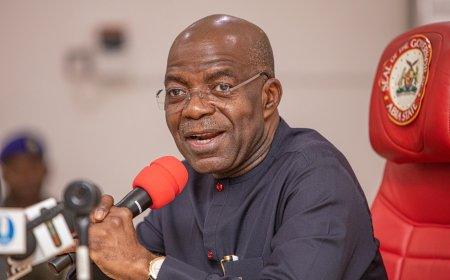
It is our hope that the investments by Gov. Alex Otti in education and healthcare will be inclusive,” Anyaele said, stressing the need for equal access for all.

He noted that the sensitisation, the first of its kind in Abia, would be extended to other local government areas to deepen community engagement and awareness.

Guest Lecturer, Mrs Nnenna Osu, advised stakeholders to seek early intervention once signs of intellectual or learning disabilities were noticed, to ensure timely and effective support.

Osu, a Magistrate in Abia State Judiciary, urged collaboration with professionals, support networks, and ongoing education to ensure independence and dignity for children with intellectual and learning disabilities.

Osu, Founder of Brain Activate Initiative, said the presentation aimed to raise awareness about children with intellectual disabilities and how best to integrate and support them in society.

She stated that globally, about 2–3 per cent of children had intellectual disabilities, while approximately 15 per cent of students experience some form of learning disability across various levels of severity.

Mrs Matilda Anyamaele, Special Assistant to the governor on Arts and Culture, hailed the initiative and called for its extension to the private sector and other community groups.

She advocated for special schools, noting that many of the children had unique challenges that required personalised attention beyond what mainstream education currently provided.

In an interview, Rev. Sr. Getrude Ukanwoko of St. Vincent De Paul Centre for Persons with Disabilities, Umuahia, lauded the Organisers, saying the session was highly educational and needed.

I have personally learnt a lot. More of such programmes are needed because many of these children are misunderstood, mistreated, and even nicknamed unfairly,” she added.


NAN/PA


UNGA: African Leaders Advocate Equity, UN Reform

0

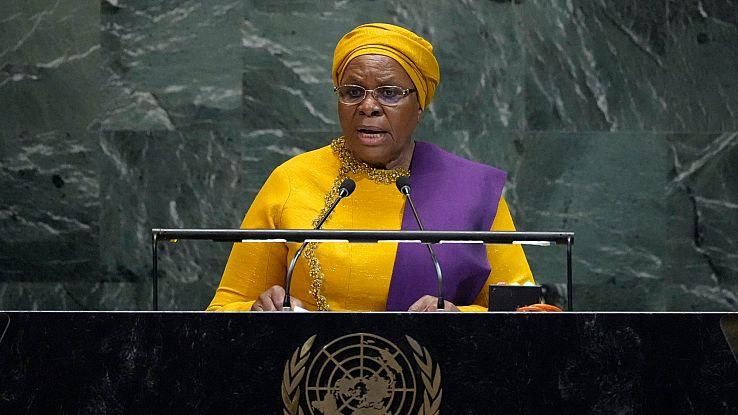
African leaders attending the 80th United Nations General Assembly are advocating for a greater global role for the continent in Security Council reforms and equitable trade.

Their message centred on a refusal to accept continued marginalisation and a demand for Africa’s rightful place as a sovereign partner on the world stage.

A central theme echoed by multiple leaders was the urgent need to overhaul the United Nations, particularly its Security Council.

President Denis Sassou Nguesso of Congo described Africa as the “continent of the future” and argued that a UN fit for purpose must be “more representative, more transparent, and aligned with the realities of our world.”

He stated plainly, “One can see clearly that the Security Council in its current composition no longer reflects the geopolitical balance of our world. Thus, the urgent need to reform it, not in theory, but in practice.”

This sentiment underscores a long-standing grievance that Africa, a continent of 54 nations, lacks a permanent seat on the world’s most powerful diplomatic body.

Political Injustices
The speeches moved beyond institutional reform to address broader issues of economic and political justice.

Faustin Archange Touadera, Head of State of the Central African Republic, asserted that Africa requires “bold partnerships” where inclusive development serves as a tool for peace.

He powerfully articulated the continent’s aspirations, stating, “The role of Africa within the global community must be acknowledged. We seek sovereignty instead of subordination, partnership instead of exploitation.”

Highlighting the stark inequality that defines current relations, he declared, “It is intolerable that poverty is escalating in Africa while wealth accumulates in northern countries. It is time to rectify the injustices inflicted upon Africa.

Continent’s Priorities
While reform and equity were the central pillars, African leaders presented a comprehensive agenda reflecting the continent’s priorities.

Key issues raised included climate change, bridging the digital divide, and ensuring the responsible development of artificial intelligence.

Presidents also pointed to specific geopolitical crises to illustrate the failures of the international system.

Kenyan President William Ruto, whose country has led a multinational police mission to Haiti, dedicated a significant portion of his speech to the crisis.

Haiti serves as a tragic reminder of the consequences when the international community turns a blind eye,” he stated, urging the UN to take decisive action to end the violence threatening Haitian lives.

Despite the assembly’s theme of “Better Together,” the collective African intervention highlighted the deep fractures in global cooperation.

As Namibian President Netumbo Nandi-Ndaitwah noted, the world is “fractured by conflict, displacement, and economic instabilities.”

The consistent message from the continent was clear: true partnership can not be achieved until historical injustices are addressed and Africa moves from the periphery to the centre of global decision-making.


Economic Reforms Paving Path To Growth, Prosperity- President Tinubu

President Bola Tinubu has assured Nigerians that the hardships endured from economic reforms over the past twenty-eight months are paving the way for sustainable growth and shared prosperity.

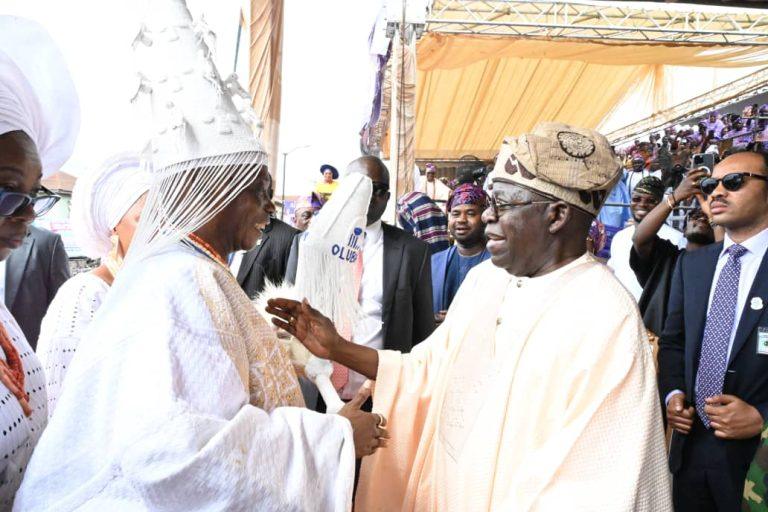
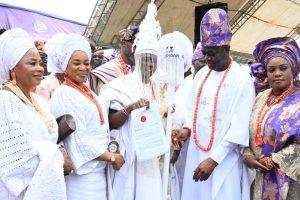
The President gave the assurance on Friday in Mapo Hall, Ibadan, Oyo State, while witnessing the final installation ceremony of His Imperial Majesty, the 44th Olubadan of Ibadan, Oba Rashidi Adewolu Ladoja.

While appreciating Nigerians for their perseverance and endurance in the last few months, President Tinubu emphasised that the sacrifices made by all citizens during the reform process are beginning to yield tangible progress and promise more economic stability, indicating a better future for Nigeria.


Thank you, to many of you here present again, today I am honoured and I am very proud to give you the cheering news that the economy has turned the corner there is a bright light at the end of the tunnel.

Your suffering is a pain of a painful surgery but is now returning to the moment of growth and prosperity awaiting us ahead.

“Thank you for your perseverance, thank you for your endurance, thank you for your understanding,” he said.

Congratulating the newly installed monarch, Olubadan of Ibadan, Oba Rashidi Ladoja, a former Senator and Former Governor of Oyo State, President Tinubu recalled the political journey of the duo and lauded Ladoja’s perseverance.

It’s a big present, a great honour for me to be here as the president of the Federal Republic of Nigeria, to witness your coronation, to witness history, all the things that you’ve started, the deliberations, the expectations, and history that we share.

‎”Together, for this country, it is a great honour, a moment of history, that you have said the tone of your forebearers,” the President said.

The Nigerian leader lauded the Olubadan of Ibadan, Oba Rashidi Ladoja, for his unparalleled resilience, unwavering determination, and steadfast reliability, describing the sterling qualities as truly impeccable.
The President said,If I start to recall the moment in the Senate and the struggle that we had together as a Governor, the history of the impeachment, your conquered story, your perseverance, your resilience, your determination, your reliability is impeccable.

President Tinubu prayed for the newly installed king to be granted long life and prosperity, wishing him joyous years on the throne marked by memorable and impactful achievements.

It’s my prayer that you will live long and be celebrated. It’s one of the rare gems of history to ascend the throne of your forebearers,” he said.

The President expressed deep appreciation to the people of Ibadan for their unwavering support during his 2023 presidential campaign. 

President Tinubu acknowledged members of the class of 1999,  Governors present at the installation ceremony, mentioning Former Governor of Cross River State, Donald Duke, Olagunsoye Oyinlola, and Mallam Ibrahim Shekarau.

He also appreciated the presence of the Former Governor of Kano State, Rabiu Kwankwaso, the Former Governor Ibukunle Amosun among many others.

President Tinubu’s presence at Mapo Hall and other dignitaries underscored the national importance of the ascension occasion, as Ibadan celebrates the continuity of its revered monarchical institution.

The Governor of Oyo State, Seyi Makinde presented the staff and certificate of office to former governor of the state, Oba Rasidi Adewolu Ladoja, as the 44th Olubadan of Ibadanland.

Makinde while presenting the staff of office to the monarch said, “This is a momentous occasion in the presence of President Bola Ahmed Tinubu, in the presence of people and in the presence of God.

In exercise of the power conferred on me as the Governor, I hereby present the staff of office to Oba, His Imperial Majesty, Senator, Governor, Engineer, my Baba, His Imperial Majesty, Rasidi Adewolu Ladoja, Arusa 1st,” Governor Makinde said.

‎Oba Ladoja, a former Oyo state governor and senator, was selected as the 44th Olubadan, following the passing of Oba Owolabi Olakulehin on July 7.

‎The eighty-one-year-old monarch, Oba Ladoja is a respected businessman and a prominent political figure who rose through the traditional Olubadan chieftaincy ranks to become Olubadan.

The Olubadan of Ibadanland is the paramount traditional ruler of Ibadan, the capital of Oyo State, and one of the largest cities in West Africa.

 The Olubadan throne holds important cultural, historical, and political significance among the Yoruba people.