Home Blog Page 335

Lagos to Host 2025 Safety Conference

0

The Lagos State government is set to collaborate with the Safety Commission to host the Lagos State Occupational Safety and Health Conference, LASOSH 2025.

Global leaders, policymakers, and industry stakeholders are expected to converge for the conference with the theme “Occupational Safety and Health as a Catalyst for Nation Building.”

According to a statement signed by the commission, the event is scheduled for Tuesday, October 7, 2025, at the Lagos Oriental Hotel, Victoria Island.

The Director General, Lagos State Safety Commission, Mr. Lanre Mojola in the statement, said that “the event will move beyond conversations to concrete policy actions, that will unite critical stakeholders in co-creating a sustainable safety framework.”

The Statement reads “Occupational Safety and Health is not just about compliance; it is about protecting lives, preserving dignity, and driving Lagos’s growth story. At LASOSH 2025, we are going beyond the rhetoric and building a Lagos where safety is a culture, innovation drives resilience, and every life is valued.

“The LASOSH Conference 2025 comes at a defining moment in Lagos State’s development journey. With rapid urbanization, industrial expansion, and rising population density, the state faces complex safety challenges ranging from managing large events and concerts, building collapses and transport accidents to industrial hazards, emergency preparedness, and risks in informal sectors.

“The summit will position Occupational Safety and Health, OSH as a policy and developmental imperative, central to Governor Babajide Sanwo-Olu’s vision of making Lagos Africa’s Model Megacity and a Global Economic Hub that is Safe, Secure, Functional, and Productive.”

The conference according to the government will also give key policy directions to include mainstreaming OSH into Nigeria’s national and state development plans, institutionalizing Safety Impact Assessments for all major development projects as well as enforcing occupier’s liability insurance across commercial buildings to protect the public.

“Besides, we are also strengthening legislative backing for OSH standards in both public and private sectors, Integrating safety in urban planning, transport reforms, and tourism regulation, Leveraging technology and innovation to strengthen data-driven safety management systems. By embedding safety into economic and social planning, Lagos aims to boost productivity, safeguard lives, attract sustainable investment, and reinforce public trust.” statement added

The government hopes to leverage the conference to establish a resilient and adaptable OSH management system,. define roles of the stakeholders and develop a roadmap aligned with international best practices to strengthen compliance, reduce accidents, and safeguard workers.


Nigeria To Integrate Fire Safety In Schools

0

The Federal Fire Service in Nigeria says it has stepped up plans to integrate Fire Safety and rescue education into school curricula in the country.

The Controller General of the Federal Fire Service, Olumode  Adeyemi Samuel, stated this when he embarked on a working visit to the service commands in Abuja.

Controller Adeyemi remarked that the introduction of the curriculum was aimed at raising a new generation of safety-conscious Nigerians against emergency and other disaster situations.

“Nigerians should continue to imbibe the spirit of fire safety and other emergencies, and we have to prepare the younger ones for the future, he said.

In an official statement issued by the Federal Fire Service Public Relations Officer, Paul Abraham, the  Controller’s visit gave him the opportunity to interact directly with officers and men, assess their working environment, and inspect facilities to identify gaps and strengthen operational capacity.

“The firemen remain at the heart of the Service’s mandate of saving lives and property; your welfare is one of my topmost priorities,” Adeyemi said.

During the interactive session,  he disclosed that comprehensive insurance coverage will be made available for all firemen, while awards and recognitions will be introduced to encourage excellence and outstanding performance.

The Controller further assured that a conducive working environment would be provided, and loans would be made accessible to help officers meet pressing needs.

The CGF also cautioned officers to shun job racketeering and uphold discipline at all levels, warning that any staff found culpable would face stringent disciplinary action.


Nigeria’s First Lady Declares Gombe Health Summit Open

0

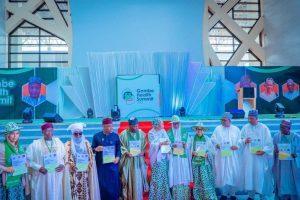
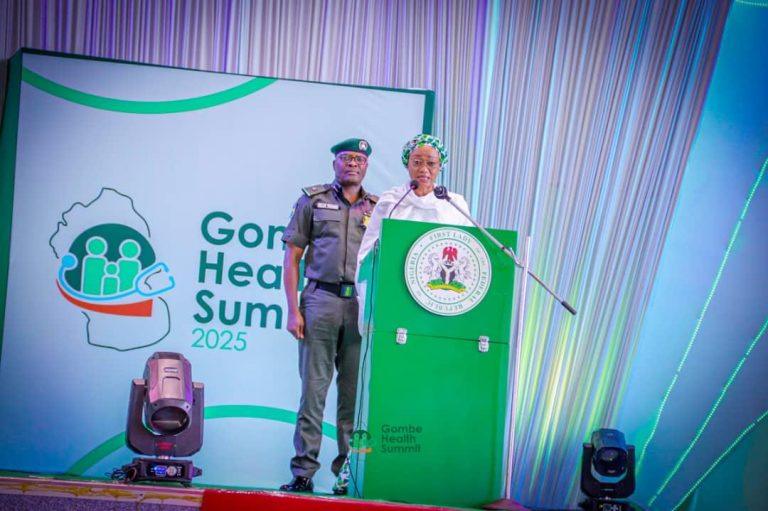
Nigeria’s First Lady, Senator Oluremi Tinubu, has officially declared open the maiden Gombe Health Summit in Northeast Nigeria.

The first lady commended Gombe state Governor Muhammadu Inuwa Yahaya for what she described as bold and visionary reforms that have repositioned the state’s health sector as a model for the nation.

The two-day Health Summit is expected to bring leading stakeholders from within and outside Nigeria to explore strategies for strengthening healthcare delivery in the state.

Senator Tinubu lauded the Governor’s transformational policies, noting the expansion of primary health centres, the modernisation of hospitals across the three senatorial districts, and innovative programs to combat child malnutrition. She said these interventions clearly demonstrate his commitment to building a workable and sustainable healthcare system.

“What I have learned today is truly impressive. Even Bill Gates once attested to Gombe State’s problem-solving mindset and commitment to results. We see that here again today, and we are proud of what Governor Inuwa Yahaya is doing. I believe Mr President is equally proud,” she said.

Read Also: Nigeria’s First Lady Launches Menstrual Health Initiative

The First Lady also praised the Governor’s recent approval of improved salaries for health workers, describing it as a mark of transparent and accountable leadership.

She expressed hope that his legacy of health sector reforms would be sustained for generations.

Salary Adjustment

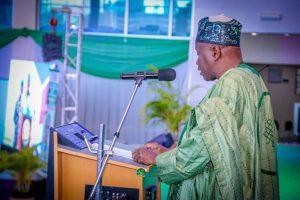
In a landmark pronouncement at the summit, Governor Yahaya approved the immediate implementation of the Consolidated Medical Salary Structure CONMESS and Consolidated Health Salary Structure (CONHESS salary structures for all health workers in the state, effective November 2025.

In his keynote address, Governor Yahaya explained that the intervention, costing ₦250 million monthly or ₦3 billion annually, represented a direct investment in the welfare of health professionals.

“This commitment comes with a call to all health workers to match our efforts with renewed commitment, productivity, and professionalism in service to our people,” the Governor stated.

Recount of Reforms 

Governor Yahaya said that upon taking over as governor in 2019, his administration inherited changes in the health sector, which led to the declaration of a state of emergency in the health sector.

He said the move had led to sweeping reforms that have since delivered tangible results.

He cited the 2023 National Demographic and Health Survey, which showed significant improvements.

According to Governor Yahaya, various policies and programmes were initiated to address the crisis, including immunisation coverage, which increased to 49%, up from 18%. DPT3 coverage went up from 26 to 60 per cent, deliveries by skilled birth attendants increased from 21% to 38% and modern contraceptive use moved from 16% to 30%.

The Gombe Governor listed some of the landmark achievements to include:

The Governor also highlighted institutional reforms, such as establishing a Hospitals Management Board and introducing biometric attendance, which exposed 440 ghost workers and saved the state over ₦4.5 billion.

Through the Gombe State Contributory Health Scheme, he said more than 380,000 residents had been enrolled, including over 100,000 vulnerable people. In addition, GoPharma, a state-owned pharmaceutical company, which is already providing affordable medicines, is projected to produce drugs locally in the near future.

Commendation

The Coordinating Minister of Health and Social Welfare, Professor Muhammad Ali Pate, praised the summit’s timing, describing it as aligned with the Federal Government’s renewed focus on healthcare delivery.

He said the reforms in Gombe had already yielded measurable outcomes in reducing maternal morbidity and child mortality while strengthening infrastructure and manpower.

Earlier, the Secretary to the State Government, Professor Ibrahim Abubakar Njodi, noted that the summit reflects the priority Governor Inuwa Yahaya accords to healthcare, adding that the administration has successfully repositioned the sector to meet the needs of the people holistically and sustainably.


New Zealand to Boost Local Defence Sector

0

The New Zealand government said on Friday it was changing defence procurement rules and introducing a new military technology fund in an effort to boost the local defence sector, as government spending is set to increase.

The New Zealand government said earlier this year it would boost defence spending by NZ$9 billion ($5 billion) over the next four years, and aim to nearly double spending to 2% as a share of gross domestic product in the next eight years due to growing concerns about strategic competition.

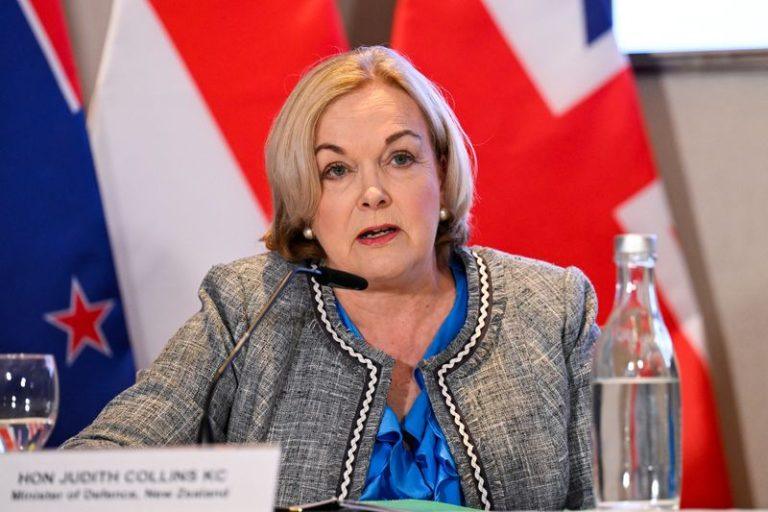
“When the world around us is changing at such a pace, we need to change our approach to how we equip our Defence Force, and we need to work in partnership with industry to be better together,” Defence Minister Judith Collins said in a statement about the release of the Defence Industry Strategy. “Not to do so would be irresponsible.”

The strategy laid out new government procurement rules that require multinational defence suppliers to develop and submit plans to ensure the use of local industry in delivering and sustaining defence capability.

It also said the defence force will explore opportunities to use small and local businesses to deliver equipment and systems, while subcontracting the original equipment manufacturer.

The government will introduce a new NZ$100 million to NZ$300 million ($58.15 million-$174.45 million) fund to develop advanced technologies for military use by the defence force.

Although New Zealand’s defence industrial base includes at least 800 suppliers, most of its significant purchases are sourced from multinational suppliers.

“We have the talent and the will. We now need to build the supports and clear the way for innovation,” Collins said.

The strategy also includes plans to present a new Defence Capability Plan every two years, with the next plan due in 2027.

($1 = 1.7197 New Zealand dollars)


Nasarawa State Commits N2 Billion To Scholarships, Bursaries

0

The Nasarawa State Government has said that it has committed two billion naira to the payment of scholarships and bursary allowances in the state. 

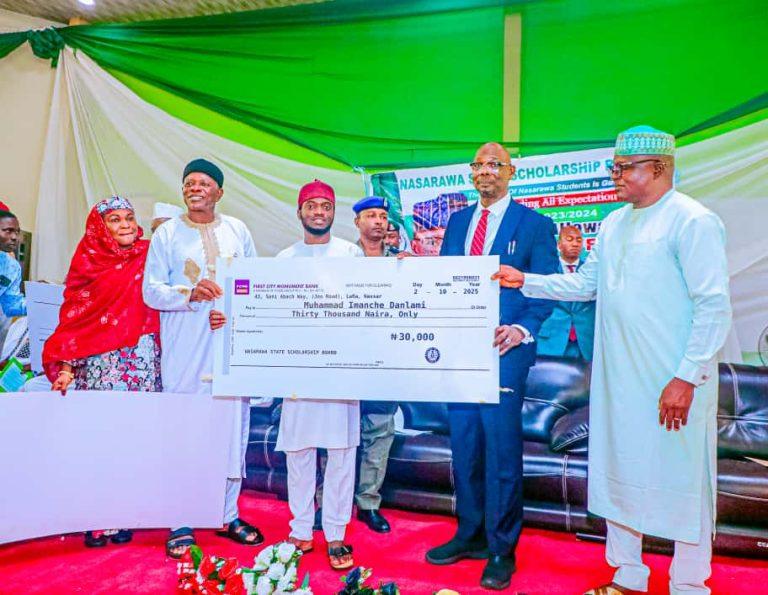
Governor Abdullahi Sule stated this during the flag-off of the payment of the 2023/2024 bursary allowances held at the College of Education, Akwanga local government area of the state.

Governor Sule, while flagging off the disbursement exercise, emphasised that apart from payment of NECO fees, the State Government is also paying the scholarship of over 150 students on foreign scholarships and over 30,000 students across institutions in the country.

The governor commended the executive secretary of the Nasarawa State Scholarship Board for the transparent process that has led to the refund of the excesses after the screening of the beneficiaries.

Also speaking, the Executive Secretary of the Nasarawa State Scholarship Board, Hajiya Sa’adatu Yahaya, noted the importance of the event, revealing that over sixteen thousand seven hundred students are to benefit from the exercise, gulping over five hundred million naira. 

The State Commissioner for Education, Dr John Mamman, who underscored the significance of the State Government’s education policy drive, urged the benefiting students to make judicious use of the bursary allowance.

The National President of Nasarawa State Students Association, NASSA, Comrade Abimuku Ovey, appreciated Governor Abdullahi Sule for the gesture and assured that the allowances will help them in their academic journey and reassured the commitment of the students to continue to be good ambassadors of the State wherever they are.

The allowance cut across institutions in Nigeria and other parts of the world.

IMO Boss Applauds Nigeria’s Maritime Security Milestone

0

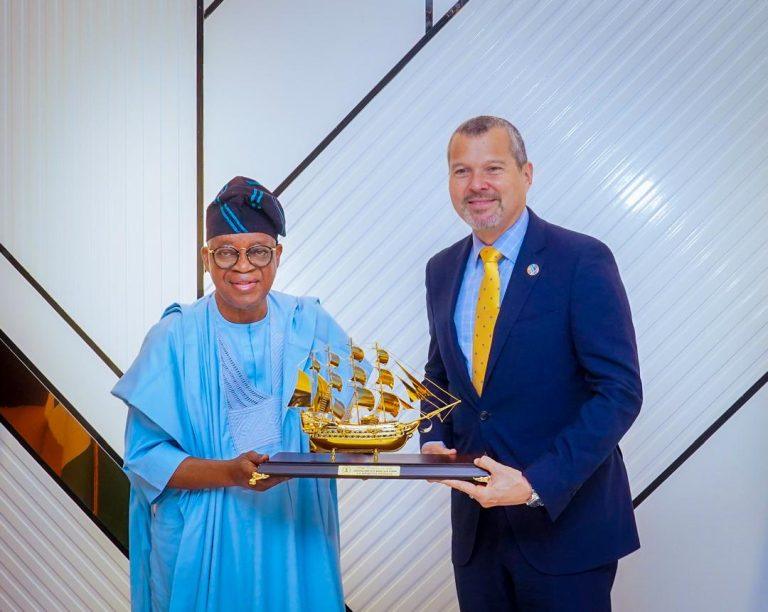
The Secretary-General of the International Maritime Organisation (IMO), Arsenio Domínguez, has lauded Nigeria’s remarkable achievements in maritime security, particularly its success in maintaining zero piracy incidents for more than three years.

He also highlighted Nigeria’s groundbreaking Deep Blue Project, describing it as a model for regional cooperation in the Gulf of Guinea.

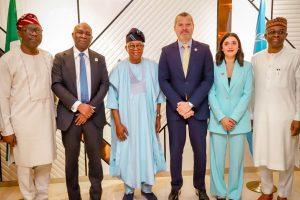
Domínguez made the remarks during a courtesy visit to the Minister of Marine and Blue Economy, Adegboyega Oyetola.

He noted that Nigeria’s investment in maritime safety infrastructure and the collaboration of its security agencies, especially the Nigerian Navy, have yielded tangible results in combating piracy and maritime crimes.

According to him, these efforts demonstrate Nigeria’s leadership and commitment to ensuring safer seas, not just for its own waters but for the wider West and Central African region.

The IMO Boss acknowledged Nigeria’s recent submission to the organisation outlining its national and regional security initiatives. While commending the progress made, he stressed the need for continued support in infrastructure development and the acquisition of modern equipment. 

He assured that the IMO would remain committed to providing technical assistance through awareness campaigns, training programmes and capacity-building initiatives.

In highlighting the organisation’s ongoing projects, Domínguez referenced a regional conference scheduled to be held in Ghana in January on the Safe Seas Project, designed to consolidate contributions from Nigeria and other partner states. 

He also announced ongoing discussions with the European Union aimed at launching a new maritime governance project focused on ports and security, as well as two regional projects in Southern and Western Africa where progress would be tracked through defined indicators.

Domínguez commended Nigeria’s Blue Economy Policy as a forward-looking initiative for harnessing marine resources sustainably.

On his part, the Nigerian Minister of Marine and Blue Economy, Adegboyega Oyetola, in his address, said the IMO chief’s visit reflected the strength of Nigeria’s relationship with the global maritime body, while noting that Nigeria’s partnership with the Nigerian Navy and other stakeholders had been pivotal in suppressing piracy in the Gulf of Guinea.

He appreciated Domínguez for choosing Nigeria for the visit and expressed optimism that the discussions would further strengthen bilateral cooperation.

During the visit, presentations were delivered by top government officials and key stakeholders in the sector. The Director-General of the Nigerian Maritime Administration and Safety Agency (NIMASA), Dr Dayo Mobereola, highlighted ongoing reforms and initiatives in security, seafarer welfare and regulatory frameworks aimed at positioning Nigeria as a leading maritime nation.

The Acting Rector of the Maritime Academy of Nigeria, Oron, Dr Kevin Okonna, showcased the academy’s modern training facilities and underscored the importance of international partnerships in cadet exchange and simulator-based training.

The Managing Director of the Lekki Free Trade Zone, Wang Qiang, outlined the port’s role in boosting Nigeria’s cargo handling capacity, creating jobs and attracting long-term foreign investments.

Domínguez also interacted with cadets of the Maritime Academy of Nigeria, urging them to embrace emerging opportunities in the maritime sector, particularly in renewable energy, green shipping and maritime technology. 

He reaffirmed IMO’s commitment to working closely with Nigeria to strengthen maritime safety, enhance governance structures, and drive the sustainable growth of the blue economy.

He stated that the country’s achievements already serve as a model of excellence for Africa and beyond.

Nigeria’s First Lady Launches Menstrual Health Initiative

0

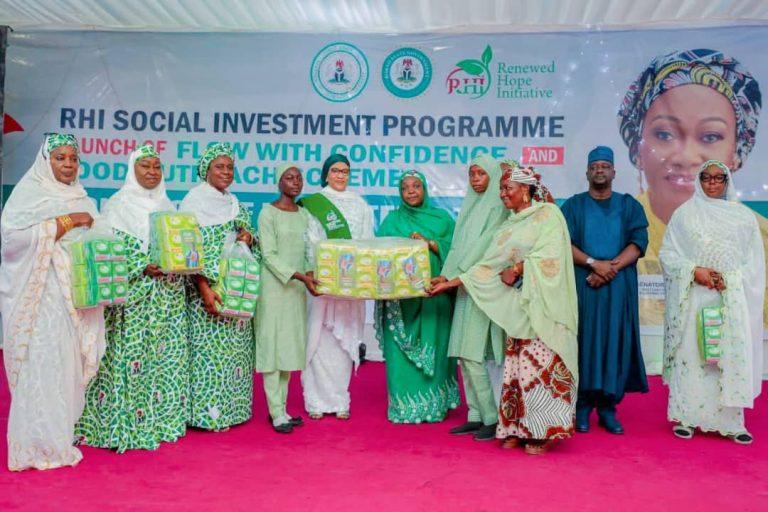
Nigeria’s First Lady, Oluremi Tinubu, has officially launched the Renewed Hope Initiative (RHI) – Flow with Confidence programme in Borno State, Northeast Nigeria.

The programme, rolled out simultaneously in Borno, Ekiti, Enugu, Gombe, Imo, Kogi, Cross River and Lagos States, aims to empower schoolgirls by improving menstrual health and hygiene. Each state, including the Federal Capital Territory, will receive 10,000 packs of disposable sanitary pads for distribution through state first ladies and RHI coordinators.

Speaking at the launch, the first lady, who was represented by Nana Kashim Shettima, wife of the Vice President:

“No girl should have to miss school because of her inability to afford sanitary products. It is unacceptable that girls, particularly in rural communities, continue to face challenges during their menstrual cycle, often missing school or resorting to unsafe alternatives. This must end.”

In Borno State alone, 10,000 schoolgirls in rural communities will benefit, with each receiving a one-year supply of sanitary pads. The initiative, under the education framework of the Renewed Hope Agenda, is expected to reach thousands of vulnerable girls across the country.

The pads, customised and locally produced by Uni Glory Nigeria Limited in Lagos, cost the Initiative ₦2.55 billion. Mrs Shettima stressed that the pads are not to be sold under any circumstances.

She appealed to local government chairmen, traditional rulers, religious leaders, corporate organisations and well-meaning Nigerians to support and monitor the distribution exercise, ensuring the pads reach the intended beneficiaries.

“For us at the Renewed Hope Initiative, no girl should ever have to choose between her dignity and her education,” she declared, officially launching the Flow with Confidence programme to the glory of God and for the benefit of Nigerian schoolgirls.

Governor Babagana Umara Zulum, represented by his Deputy, Umar Usman Kadafur, commended the First Lady for her foresight and compassion in addressing the challenges of menstrual hygiene among schoolgirls.

He said, “This initiative was not merely about the distribution of sanitary products but about compassion, solidarity, and the responsibility of government to protect the dignity of its citizens, particularly the most vulnerable.”

The Governor assured of Borno State Government’s unwavering support to complement the Federal Government’s Renewed Hope Agenda, adding that the programme would restore confidence to young girls and reduce school absenteeism caused by lack of access to sanitary products.

“Initiatives such as this remind us that governance is about people, and leadership must be measured not only in words but in actions that touch lives directly.”

Also speaking, the First Lady of Borno State, Dr Falmata Babagana Zulum, appreciated the gesture and said the 10,000 sanitary packs allocated to Borno would be distributed fairly to ensure rural communities benefit.

The State Coordinator of RHI, Dr Falmata Babagana Zulum, noted that the project reflects the commitment of Senator Oluremi Tinubu to empower women and girls nationwide.

Other dignitaries present included local government chairmen, traditional rulers, religious leaders, school administrators, and women’s groups who pledged to monitor the distribution process to ensure accountability.

The Flow with Confidence programme, under the education pillar of the Renewed Hope Agenda, is expected to reach girls across all 36 states and the Federal Capital Territory.

Northern Elders Forum Calls for Mining Sector Development

Hauwa Gidado, Abuja

The Northern Elders Forum (NEF) has called on the Nigerian government to give urgent and strategic attention to the development of the mining sector in northern Nigeria, describing it as a major catalyst for industrial growth, job creation, and improved livelihoods.

Speaking at the maiden edition of the Northern Nigeria Investment and Industrialisation Summit held in Abuja, the nation’s capital, NEF Chairman, Professor Ango Abdullahi, said the region’s vast mineral resources remain largely untapped despite their potential to transform the North’s economic fortunes.

“Imagine the multiplier effect, industrial growth, job creation, poverty reduction, and renewed prosperity for our people, if mining is properly harnessed, linked to value chains, and supported by strong infrastructure,” Professor Abdullahi said.

The summit, themed “Unlocking Northern Nigeria’s Mining, Agricultural and Power Potentials (MAP2035),” was described by Abdullahi as more than a policy talk shop but rather a “10-year blueprint for the region’s socio-economic transformation.”

He emphasised that the mining sector, when properly developed and integrated with value-added processing, could rival agriculture and other traditional sectors in terms of economic impact.

Vast Resources, Limited Infrastructure

While the North boasts abundant solid minerals, fertile land, and a large pool of human capital, Professor Abdullahi noted that strengthening infrastructure, such as railways, roads, electricity, and storage facilities, would unlock its full economic potential.

“Northern Nigeria is rich, not just in natural resources but in human capacity. But without deliberate, well-implemented policies and supporting infrastructure, this potential will remain untapped,” he said.

Historical Context

Professor Abdullahi placed the forum’s call within a historical framework, recalling the North’s industrial strength during the 1960s and 1970s.

“Back then, cotton, groundnuts, and tobacco anchored the economy, while the oil boom of the 1970s drove investments that turned cities like Kano and Kaduna into industrial hubs for textiles, leather, and food processing,” he said.

A Renewed Call for Action

The Northern Elders Forum believes that the revitalisation of mining, backed by clear government policy, could reignite the North’s economic engine and make a significant contribution to Nigeria’s national development.

“We believe meaningful impact will only come when mining and its associated industries are given the clear policy priority they deserve,” the NEF Chairman emphasised.

The summit concluded with a call for collaborative efforts between the government, the private sector, and development partners to implement the MAP2035 strategy and unlock the North’s full economic potential.

INEC Implements EU Recommendations on Electoral Processes

The Independent National Electoral Commission, INEC, says it has considered all eight recommendations specifically addressed to it by the European Union’s EU Election Observation Mission, and taken action on some of them.

The Chairman of INEC, Professor Mahmood Yakubu, stated this when the European Union EU Election Observation Follow-up Mission to Nigeria visited him in Abuja.

Professor Yakubu stated that in their recommendations report, action had been taken on aspects that only require administrative action to implement, and that action is being taken on cross-cutting recommendations that require collective action between INEC and other bodies and stakeholders, while waiting for the conclusion of the ongoing legal review by the National Assembly on the recommendations that require legislative intervention.

” I must also add that your recommendations, along with similar reports from other national and international election observers, were the subject of wide-ranging consultations with critical institutions and stakeholders during our own review of the 2023 General Election. The review report contains 142 recommendations,” he noted.

The INEC Chairman explained that an election is a process governed by law, adding that many of their recommendations require the review of the electoral laws.

“For this reason, the Commission had interfaced with our National Assembly, including a retreat with the Joint Committee on Electoral Matters (Senate and House of Representatives).

“We appeal to the National Assembly for an expeditious consideration of the electoral reform proposal. An early passage of law is critical to our planning for the elections,” the Chairman remarked.

Professor Yakubu stated that the Commission looks forward to the next EU Observer Mission for the 2027 General Election, as international Election Observation Missions are deployed on the invitation of the Commission.

He reassured them that they would continue to engage with the EU Election Observation Mission as the country engages in electoral processes geared towards improving the quality of elections and electoral activities.

“Very soon, the Commission will send out invitations to the EU as well as the Commonwealth, the African Union, and ECOWAS for the 2027 General Election.

“We believe that the recommendations arising from your observation of our election and electoral process help to improve the quality of our elections and electoral activities.

Earlier in his speech, the leader of the delegation, Mr. Barry Andrews, commended the initiatives put in place by INEC towards improving Nigeria’s electoral processes.

He assured INEC of the commitment of the EU Election Observation Mission in supporting the Commission to improve the country’s democracy and strengthen the electoral processes.

Ebola Spread in DR Congo’s Kasai Declining- Health Officials

0

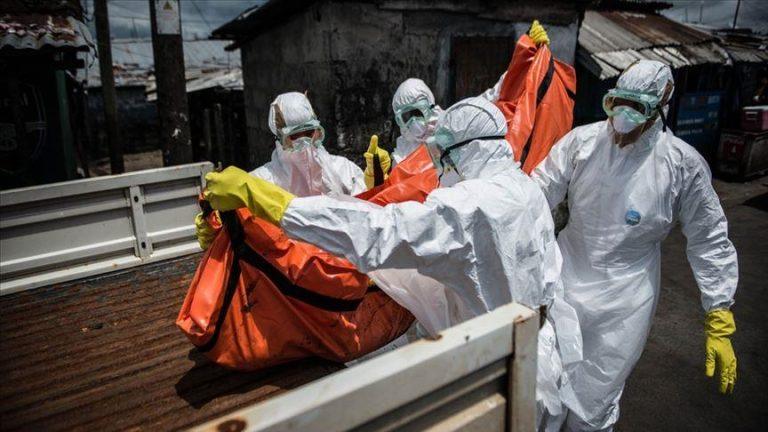
Health officials in the Democratic Republic of Congo say the Ebola outbreak in Kasai Province is stabilising, with the pace of new infections slowing due to improved surveillance, case management and infection control.

Since the outbreak began, the World Health Organization (WHO) has confirmed 64 infections, including 42 deaths, representing a fatality rate of about 66 percent.

In the past week, seven new cases and seven deaths were recorded across three health areas. The outbreak remains confined to six of Bulape’s 21 health zones, although five health workers have been infected, three of them fatally.

Authorities say “vaccination efforts are helping to contain the spread, with more than 4,100 people immunised and additional doses in reserve.”

While officials warn that family clusters and delayed isolation still pose risks, they stress that current measures are proving effective and the spread of the disease is gradually slowing.


Africanews/Shakirat Sadiq