Home Blog Page 337

Saudi Alumni Forum Boosts Academic , Research Collaboration

0

Nigeria’s Minister of State for Education, Dr Suwaiba Saidu Ahmed, has commended the Kingdom of Saudi Arabia for its continued support to international students through scholarship programmes that promote knowledge exchange and academic advancement.

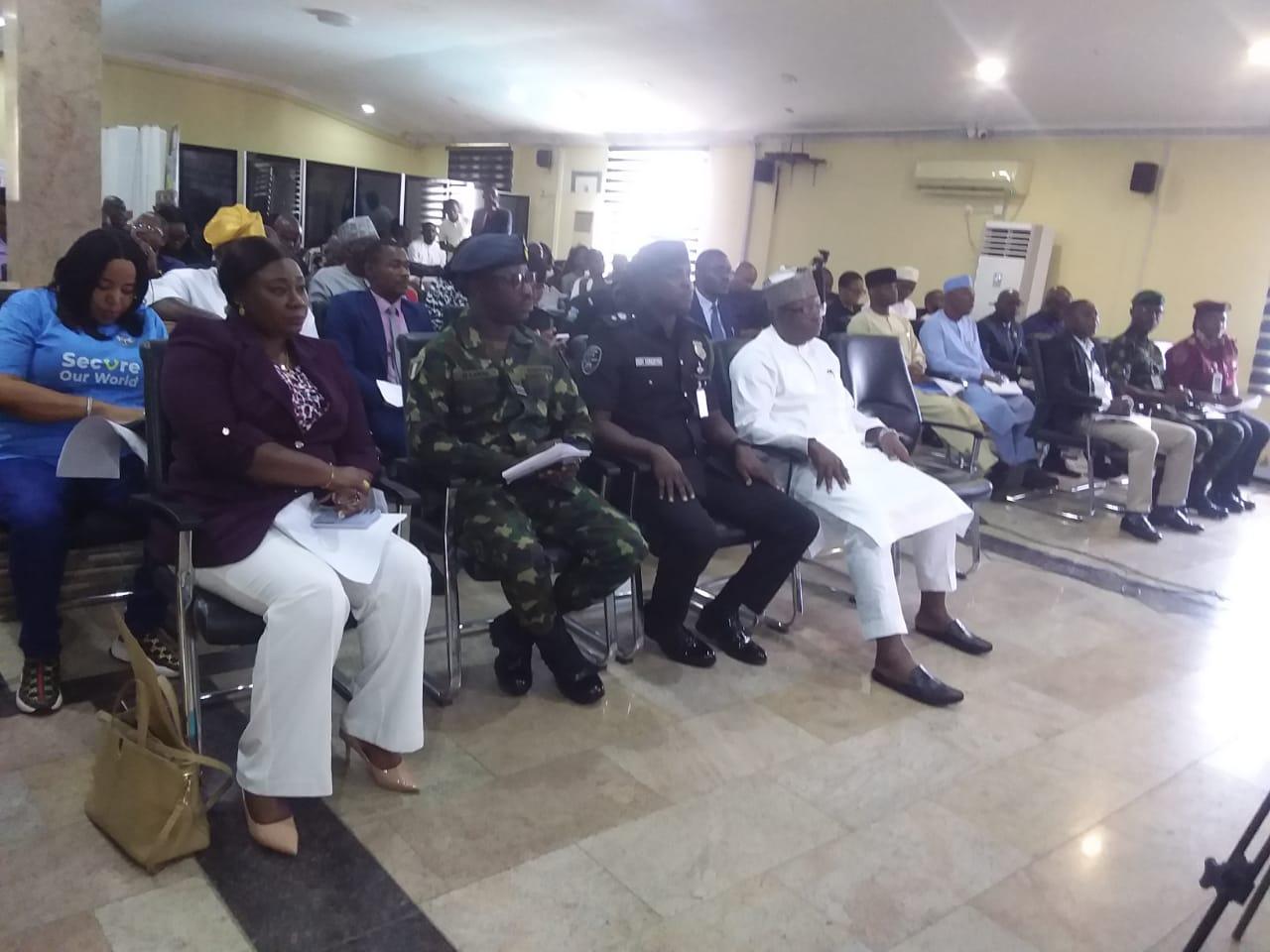
She made the remarks at the opening of the Forum of Saudi University Alumni in Nigeria and Neighbouring Countries, along with its accompanying exhibition, in Abuja. Dr Ahmed applauded the forum as a valuable platform for strengthening research cooperation and expanding opportunities for joint learning between the two countries.

The forum, organised under the auspices of the Saudi Ministry of Education by King Khalid University in partnership with the University of Tabuk and Najran University, serves as a strategic platform for fostering academic and research collaboration.

The forum brings together more than 400 participants, including alumni of Saudi universities from Nigeria and neighbouring countries, alongside 21 distinguished speakers who will engage in six scholarly sessions over three days. The gathering aims to promote knowledge exchange, strengthen educational partnerships and showcase successful collaborative practices that contribute to human capital development and regional progress.

The programme underscores the role of education in bridging cultures and advancing regional development. It highlights the power of alumni networks in driving innovation, knowledge transfer and sustainable development.

In his remarks, Mr Saad bin Fahd Al-Marri, Chargé d’Affaires of the Saudi Embassy in Abuja, said the Kingdom’s education reforms reflect its leadership’s vision to build a globally competitive system in line with Saudi Vision 2030. He emphasised the importance of the “Study in Saudi Arabia” platform in attracting international students and enhancing global academic and cultural cooperation.

Mr Al-Marri added that the Ministry’s scholarship initiatives aim to equip students with skills and expertise to contribute to development in their home countries. He commended the strong ties between Saudi Arabia and Nigeria and expressed gratitude for Nigeria’s support in hosting the forum.

The forum also seeks to strengthen collaboration in addressing contemporary challenges while reinforcing sound cultural and academic values. It reflects the Kingdom’s commitment to empowering its graduates worldwide and highlights education as a catalyst for sustainable development.

Nigeria Vows to Advance Sustainable Economic Growth

The Nigerian government has expressed it’s unwavering commitment to fostering sustainable inclusive economic growth, enhancing macroeconomic predictability, and improving the welfare of citizens.

The Minister of Budget and National Planning, Senator Abubakar Bagudu gave the assurance at the 31st Nigerian Economic Summit in Abuja, themed : The Reform Imperative: Building A Prosperous And Inclusive Nigeria By 2030.

Senator Bagudu said the economic reforms and policy initiatives being implemented by government are designed to address structural weaknesses, enhance productivity, and position Nigeria for long-term prosperity.

He added that “the result of last two years have given us confidence. While we recognize the short-term hardships on our people, we are confident that our policies will yield tangible benefits over time.

The stabilization of the exchange rate, declining inflationary pressures, and improvements in fiscal management are already setting the stage”.

The Minister speaking on the role of private sector in economic development said the Government and Private sector are partners, adding that the private sector now drives the economy and has become an engine of growth.

This was acknowledged in various Development Plans and Policies of government in recent times.

The National Development Plan, 2021-2025 made the private sector the key driver of the economy by allocating an investment size of 86% of the total plan size to the private sector.”

Senator Bagudu highlighted the efforts of the current administration, stressing that it has implemented bold and courageous reforms aimed at stabilizing the economy, enhancing the fiscal space, and addressing insecurity, as captured in the Renewed Hope Agenda and the 8 – Priority Areas of government.

“These measures were crucial to averting a fiscal crisis and laying the foundation for long-term economic growth and development.

However, we recognize that these reforms came with short-term challenges for households and businesses.

He said government is determined to ensure that the challenges are confronted and addressed.

He said the current administration recognizes the need for stable policies, consistent regulations, and an improved business environment to boost investor confidence and reduce uncertainty.

The government is actively working to streamline regulatory frameworks, eliminate bureaucratic bottlenecks, and create a more predictable and enabling environment for investment.

The government’s policy responses and economic interventions in fiscal sector as enunciated in the Four Tax Reforms Acts are strategically aimed at strengthening revenue mobilization for sustainable economic growth and development.

We have been prioritizing monetary and fiscal policy coordination to stabilize the macroeconomic parameters.

Our revenue diversification strategy includes boosting non-oil revenue, supporting the manufacturing sector, and driving digital transformation.

Public infrastructure and investment initiatives are underway in transport, power, and the digital economy to enhance economic productivity.

Furthermore, we are implementing targeted programs to support vulnerable populations, improve education and healthcare, and develop essential skills.

Enhancing agricultural growth and productivity remain essential to generation of sustainable inclusive growth.

This objective is being supported by the institutional realignment that include the creation and funding of the livestock ministry, funding of the National Agricultural Development Fund, recognizing Fisheries as part of the Blue and Maritime potential as well as recapitalizing of the Bank of Agriculture.”

The Summit is an annual event organised by the Federal Ministry of Budget and Economic Planning working in partnership with the Nigerian Economic Summit Group (NESG).


Victoria Ibanga

Kano State Governor Appoints New Bureau Statistician-General

0

Kano State Governor, Abba Kabir Yusuf, has appointed Dr. Suraj Sulaiman as the new Statistician-General and Director-General of the Kano State Bureau of Statistics.

The announcement was made in a statement issued by the Governor’s spokesperson, Sunusi Bature in Kano.

Dr. Sulaiman succeeds Associate Professor Aliyu Isa Aliyu, whose tenure ended following his elevation to Commissioner for Livestock Development.

Governor Yusuf has directed that the handover process be completed between this week.

A seasoned academic and mathematician, Dr. Sulaiman brings extensive experience in research, teaching, and statistical analysis to his new role.

He earned his PhD in Mathematics from University Technology Malaysia (UTM) between 2015 and 2018, focusing his doctoral research on “New Method of Computing the Projective Polynomial Resultant Based on Dixon, Jouanolou and Jacobian Matrices.”

He also holds a Master’s degree in Mathematics from Yasar University, Izmir, Turkey (2012–2014), where he specialized in “T-noncosingular Abelian Group,” and a Bachelor’s degree in Mathematics from Kano University of Science and Technology, Wudil (2006–2010), with a research project on “A Review of Self-Adjoint Operators Over a Hilbert Space.”

Dr. Sulaiman’s academic journey began at the College of Arts, Science and Remedial Studies, Kano, where he obtained a Diploma in Mathematics Education between 2004 and 2006.

Governor Yusuf congratulated the newly appointed Statistician-General, expressing confidence that his academic and professional expertise will enhance the Bureau’s capacity to provide reliable data for policy and decision-making.

The governor reiterated his administration’s commitment to promoting data.


NNPCL Assures Nigerians Of Stable Cooking Gas Price

By: Temitope Mustapha, Abuja.

The Nigerian National Petroleum Company Limited (NNPCL) has described the recent uptick in the price of Liquefied Petroleum Gas (LPG), commonly known as cooking gas, as temporary.

The company assured consumers across the country that the current situation is temporary, expressing confidence that the price of cooking gas will stabilise and return to normal levels in the coming days.

The Group Chief Executive Officer (GCEO) of the Nigerian National Petroleum Company Limited, NNPCL, Bashir Ojulari, gave the assurance in Lagos, while speaking to State House correspondents after an audience with President Bola Tinubu on Sunday in Lagos State, Nigeria.

“It is relatively artificial because for the period of the strike, quiet movement and loading were delayed for about two to three days and because of that, you see that impact and as things return to normal it takes some time for distribution to fully return and … with that delay, some of the people that have existing resources in reserves had to put up the price.

“My expectations are that now that things are back to normal, prices should return to what they were before the strike,” Ojulari said.

The NNPCL GCEO added that the recent industrial action resulted in a substantial loss of output, with more than 200,000 barrels per day (bpd) of crude oil production deferred.

He stressed that gas production was also affected, leading to disruptions in power generation amounting to about 1.2 megawatts, which were directly impacted by the strike.

“In this particular case, we actually lost significant production of over 200,000 bpd. We also have Gas production that was impacted, and we also have power generation that was impacted by about 1.2mega megawatts of power that was affected by that strike.

“I think I’m very pleased that the Federal Government through the leadership of Minister of Labour and full support of NSA, we were able to put together everyone into a dialogue and brought everybody to the table and now there has been a communique that has been agreed on the way forward and we are all very hopeful that everyone will abide by this communique.

“Since then, we have been able to return production to status quo. There have been one or two areas that we are still trying to catch up overall. We are gradually going back to restore lost production and the deferment that we have as of today,” Ojulari explained.

NNPC’s Performance

Speaking further on his update to the President on the company’s progress, particularly in the areas of production performance and investment attraction, Ojulari explained that the discussion focused on the company’s current performance, the progress made so far this year, and the strategies being implemented to ensure the delivery of these growth targets in the coming year.

The NNPCL GCEO stated that Nigeria is making steady progress in ramping up its oil and gas production.

He revealed that the country achieved an average crude oil output of 1.68 million barrels per day (mbpd) in September.

Ojulari noted that the figure represents Nigeria’s highest crude oil output in nearly five years, describing it as a significant milestone in the nation’s production performance.

He added that gas production also reached a record level of over seven billion cubic feet per day (7BCF/d), the highest in recent times.

The NNPC boss added that with the completion of major turnaround maintenance activities in August and September, production levels are expected to improve further.

He expressed optimism that by the end of the year, Nigeria’s oil output would reach at least 1.8 million barrels per day.

“We are making good progress. As you know we recorded 1.68mbpd of oil production last month which was very good. That was the first in about five years, in terms of milestone. We also recorded the highest gas production above 7BCF per day which is also the highest in recent times. But … with some turnaround maintenances we have done in August and September, all of those are meant to come back this month and we are hoping that by the end of the year we should at least be clocking 1.8mbpd.

“It is quite an important opportunity to update the president on the progress in NNPC, particularly in terms of production performance. In terms of progress, we are … attracting investment. As you recall, the President gave us a clear mandate which is to grow production to at least 2million bpd by 2027 and up to 3million bpd by 2030 as well as grow gas production as well.

“So where are we on that, and how are we progressing this year, and how are we preparing for next year in terms of ensuring we deliver this growth? That was one of my updates to the President,” he added.


Olusola Akintonde

Nigerian Professor leads Global Advancement Drive

0

In a strategic move to bolster its international profile and sustainable development, Ahmadu Bello University (ABU), Zaria, in Kaduna State, has announced the appointment of Professor Umar-Buratai as the new Director of Advancement and International Education.

The appointment approved by the University’s Vice-Chancellor, Professor Adamu Ahmed, signals a new era of dynamic global engagement and institutional growth for the historic university.

Professor Umar-Buratai, a respected academic from the Department of Theatre and Performing Arts, brings a wealth of prestige and expertise to the role.

His appointment is particularly significant following his recent honour by the Nigerian Academy of Letters (NAL), the nation’s highest body of scholars in the arts and humanities.

This recognition underscores his esteemed standing in the academic community and his proven capacity for intellectual leadership and excellence.

Succeeding Professor Sani Abba Aliyu, whose tenure concludes on October 7, 2025, Professor Umar-Buratai is tasked with a critical mandate central to ABU’s future trajectory. In his new capacity, Professor Umar-Buratai will spearhead key initiatives designed to position ABU competitively on the world stage.

His core responsibilities will include strategic fundraising and resource mobilisation, developing and implementing innovative strategies to secure sustainable funding and endowments in support of the university’s projects, research initiatives and scholarship programmes..

Professor Umar-Buratai will focus on building a strong global network of ABU alumni, fostering a culture of lifelong engagement and sustainable philanthropic giving. He will also prioritise establishing and nurturing strategic partnerships with leading universities and research institutions worldwide to promote academic exchange, collaborative research and cultural understanding.

In addition, Professor Umar-Buratai will implement a strategic communications plan to highlight ABU’s academic excellence, research breakthroughs and positive contributions to society for a global audience.

Leading efforts to attract a diverse cohort of international students and esteemed faculty members, enriching the university’s academic and cultural landscape.

The appointment is for an initial term of two years, renewable based on the achievement of key performance indicators.

Vice-Chancellor Professor Adamu Ahmed expressed full confidence in the new Director, stating,
 “The appointment of Professor Umar-Buratai is a testament to our commitment to placing our most accomplished and visionary scholars at the helm of our strategic operations”.

“His renowned expertise in grant writing, coupled with his extensive institutional memory and the recent national honour from the Nigerian Academy of Letters, provides a solid foundation for advancing our university’s mission.”
We are confident that his leadership will be instrumental in securing the financial future and enhancing the global reputation of Ahmadu Bello University.”

Professor Buratai’s appointment underscores a growing trend within Nigeria’s education sector, where leading universities are harnessing home-grown intellectual capital to advance internationalisation and sustainable development.

By appointing a scholar of Professor Umar-Buratai’s calibre, ABU demonstrates the depth of talent within the Nigerian academic system and its proactive approach to meeting the challenges and opportunities of 21st-century global education.

The move is expected to significantly contribute to the positive narrative of Nigerian institutions taking their rightful place as centres of excellence and partnership on the international stage.

Niger State Raises Teachers Retirement Age to 65

0

The Niger State Government in North-Central Nigeria has approved a new law setting the retirement age for teachers at 65 years.

The law, passed by the State House of Assembly, will take effect from January 1, 2026.

Governor Umaru Bago announced this during the 2025 World Teachers’ Day celebration held in Minna.

The event was organised by the Nigeria Union of Teachers (NUT), Niger State Chapter, in collaboration with the Ministry of Basic and Secondary Education.

The Governor also said that “Professors in the state can now retire at 70 years.

He explained that this is to ensure teachers continue to pass their knowledge and values to future generations.

Governor Bago approved the return of PTA levies in schools, but directed that payments must be supervised by the Ministry of Education to ensure proper use.

He promised a wage award of ₦20,000 to all teachers next month and donated an 18-seater bus to the NUT.

He further said that from now on, the employment and promotion of primary school teachers will be handled by the Local Government Service Commission, while SUBEB will only screen and provide necessary information.

The governor also approved a retreat for teachers on level 17 and promised to remove teachers from civil service bureaucracy to give them a more standard service structure.

The NUT State Chairman, Comrade Adamu Mohammed Akayago, praised Governor Bago for his commitment to education and for approving an 80,000 minimum wage for workers.

He said teachers are key to building the nation and deserve dignity and better welfare.

The Permanent Secretary, Ministry of Basic and Secondary Education, Hajiya Aishatu Nuhu Yalwa, said the Bago administration remains committed to quality and inclusive education for all children.

In his keynote speech, NECO Registrar, Prof. Dantani Ibrahim Wushishi, described teachers as national security assets who play a key role in shaping responsible citizens. He called for more support and empowerment for teachers across the country.

Other speakers, including the Chairman of SUBEB, Mohammed Baba Ibrahim, and the NLC Chairman, Comrade Idris Lafene, also commended teachers for their contributions to nation-building.

Governor Bago and other dignitaries, including Senator Sani Musa and former Commissioner for Basic Education, Dr. Hadiza Asabe Mohammed, were honored with awards for their contributions to the education sector.

This year’s World Teachers’ Day theme was; “Together for Teachers, Together for Tomorrow.”


Olusola Akintonde

Niger State Tasks Media on Awareness for Measles-Rubella Vaccination

0

The Niger State Ministry of Health in North Central Nigeria has urged the media to intensify public awareness on the forthcoming Measles-Rubella (MR) vaccination campaign.

Speaking at a one-day Media Dialogue in Minna the state capital, the Polio Emergency Operations Centre (EOC) Incident Manager, Dr. Fatima Ibrahim, said the new vaccine marks an important milestone in Nigeria’s immunisation programme.

She explained that measles remains one of the leading causes of death among children under five, while rubella can cause serious birth defects when contracted during pregnancy.

“With the introduction of the Measles-Rubella vaccine, we now have a stronger tool to protect our children and future generations,” Dr. Fatima said.

She commended the partnership between the Nigerian and state governments, UNICEF, WHO, Gavi, and other partners for their supports towards the campaign.

According to her, “the MR vaccine is safe, fully funded by the government, and free for all children aged 9 months to 14 years.”

Dr. Fatima stressed that the media has a vital role in creating awareness and ensuring the success of the campaign.

“The media must help parents and caregivers understand that immunization is not just a routine check, but a major step in protecting our children’s lives,” she said.

Also speaking, the Chief of UNICEF Kaduna Field Office, Dr. Gerida Birukila, represented by Dr. Ahmed Tsofo, said journalists have the power to shape public opinion on vaccination.

“Your voice can break myths and misinformation. You can help make vaccination a proud responsibility for every parent,” Dr. Birukila said.

She urged the media to use simple, factual messages to encourage parents and communities to bring their children for vaccination.

The dialogue ended on a positive note, with participants agreeing to work together to ensure a successful Measles-Rubella campaign across Niger State and Nigeria at large.

Constitution Review, 2026 Budget Top Agenda As Lawmakers Resume Plenary

The National Assembly will resume sitting on Tuesday, 7 October 2025, after a two-month annual recess that began on 23 July 2025.

Nigerians are looking forward to a vibrant legislative session as lawmakers return to the chambers to address several pressing national issues that have unfolded in recent months.

Insecurity, constitution amendment, supplementary budget and the rift between Senator Natasha Akpoti-Uduaghan with the Senate, among others, are likely issues on the table for discussions.

Lawmakers were initially expected to resume on 23 September 2025, but the date was extended to allow members participate in activities marking the country’s Independence Day anniversary and other official engagements.

Although plenary sittings were suspended during the recess, legislative work continued behind the scenes. Several standing and ad-hoc committees held investigative hearings and engaged stakeholders on pending bills, ensuring that parliamentary activities did not come to a complete halt.

Both the Senate and the House of Representatives members will now reconvene to discharge their legislative duties in both the upper and lower chambers.

Constitution Review

The Senate and House of Representatives had conducted Zonal public hearings across the country where they sought inputs from Nigerians regarding the review and amendment of the 1999 Constitution.

Agitations for the creation of new states and local government areas, state police defined constitutional roles for traditional rulers, among others, dominated the space during the public hearings nationwide.

The lawmakers are expected to act on the final report to be presented to state assemblies for their adoption and ratification.

The final draft of the 1999 Constitution by the National Assembly would require agreement by a two-thirds majority (24 of the 36) state houses of Assembly and presidential assent to be effective.

Recently, Senate Leader, Senator Opeyemi Bamidele (APC, Ekiti Central), said “the National Assembly would compile and transmit the report to state assemblies before the end of the year.”

He said “the committee was working towards finalising the harmonised report and meeting its legislative timeline for submission.”

Supplementary budget and 2026 outlook

Fiscal policy is another issue on the horizon. President Bola Ahmed Tinubu is expected to send a supplementary budget for 2025 before the year’s end. The increasing expenditure needs, from security operations to palliatives against inflation, make it almost inevitable.

The National Assembly is also expected to press for the 2026 budget to be presented earlier than December to allow proper scrutiny.

Insecurity

The issue of insecurity is another area the Legislature will deliberate on.

Despite the efforts of security personnel, there have been reported attacks in some areas, where innocent citizens have been killed or displaced by the bandits.

Senate/Natasha

Another matter likely to attract attention plenary resumes is the suspension of Senator Natasha Akpoti-Uduaghan (Kogi Central).

In a letter signed by the Acting Clerk to the National Assembly, Dr. Yahaya Danzaria, the Senate acknowledged receiving Natasha’s notice that she planned to resume on September 4, 2025, which she said marked the end of her suspension.

But the Senate explained that her suspension, which began on March 6, 2025, remains valid until the Court of Appeal rules on the case she filed challenging her suspension.

The controversy began when Senator Akpoti-Uduaghan, representing Kogi Central in the Senate, refused to occupy her new seat, saying it was done without her consent and infringed on her privileges as a lawmaker

Restrictions

The Sergeant-at-Arms of the National Assembly has announced new security restrictions around the complex, especially the office of the Senate President, Senator Godswill Akpabio, ahead of their legislature’s resumption.

In the memo dated October 2, retired Brigadier-General Etido Ekpo directed that the corridor linking the White House lobby to the Senate President’s office will now be reserved strictly for lawmakers, who are the Senators and members of the House of Representatives.

The memo explicitly stated that aides and personal assistants will no longer be permitted access to the passage.

“You are kindly requested to disseminate this information to distinguished senators who would, in turn, intimate their aides or personal assistants as appropriate,” the notice read.

The memo said the decision was taken in the interest of maintaining a “secure and safe environment” for legislative business within the complex.

The restriction is likely to prompt conversation among staff and legislative aides, many of whom have routine duties that require close access to principal officers and their offices.

The Senate President’s office is typically one of the most heavily guarded areas in the National Assembly.

Strengthen Digital Technology in Broadcast Sector – Former NTA Boss

0

The first Director General of the Nigerian Television Authority, NTA, Vincent Maduka, has called on the Nigerian Government to strengthen digital technology in the country’s broadcast sector.

Maduka said this could be done by training and re-training content creators to acquire the much-needed competencies to compete favourably in the current global media space.

The media icon made the call while speaking with Voice of Nigeria, during his 90th birthday anniversary, which was marked at the Air Force Officers Mess in Victoria Island, Lagos, South West, Nigeria.

In his words, he urged that the “Federal government should train and retrain those in the digital sector.”

This includes those building their careers in the different applications of digital technology, such as content creation.

He commended Nigeria for embracing digital technology and becoming a major hub in the global digital space.

“Nigerians have joined the rest of the world to establish a digital economy. Many countries are coming to Nigeria to establish digital communities,” he said.

He went ahead to appeal to the Federal Government to facilitate easier access to digital technologies and make it more available to Nigerians in the cities and rural areas.

Maduka called on the younger generation to make the best use of the opportunity provided by digital technology for career advancement and also encouraged the older generation to be part of it.

The veteran broadcast engineer also spoke on other issues that spanned his career in broadcasting such as his career progression, challenges and achievements.


Olusola Akintonde

ICPC Chairman Reaffirms Commitment To Strengthening LGAs Integrity

The Chairman of the Independent Corrupt Practices and Other Related Offences Commission (ICPC), Mr. Musa Aliyu, has emphasised the Commission’s dedication to enhancing institutional frameworks across Nigeria’s 774 Local Government Areas (LGAs).

Mr. Aliyu made this statement during the presentation of the First Nigerian Local Government Integrity Index Report by the Centre for Fiscal Transparency and Public Integrity in Abuja.

He described the initiative as a timely and valuable tool for improving transparency and accountability at the grassroots level.

The ICPC Chairman noted that “the Commission would analyse the report’s findings and incorporate relevant innovations into its newly launched program, Accountability and Corruption Prevention in Local Governments (ACCP-LG).”

“We will use this Index Report to address issues related to transparency, accountability, and local government finances. Our aim is to strengthen frameworks in local governments to ensure they provide impactful services to the community,” he stated.

Report

The Executive Director of the Centre for Fiscal Transparency and Public Integrity, Mr. Umar Yakubu, presented the report, revealing a significant governance crisis in Nigeria’s local government system. The study found that 85 percent of LGAs are categorized as “Very High” or “Critical” risk, indicating widespread opacity, weak enforcement mechanisms, and inadequate service delivery.

The Index evaluated LGAs based on eight pillars: fiscal transparency, resource Mobilisation, anti-corruption enforcement, post-election governance, civic oversight, public service outcomes, digital infrastructure, and security environment.

Key highlights from the report include:

Systemic Integrity Failures:
Six hundred and fifty-eight LGAs (85%) ranked in Tiers 4 and 5 (“Very High” and “Critical” risk). Only four LGAs (0.5%) were in Tier 1 (“Low Risk”), with Nasarawa LGA achieving the highest transparency score of 15/100.

Critical Cases
Port Harcourt LGA in Rivers State scored 92/100 but lacked a functional website and showed instances of FOI denials, poor disclosures, and a history of violence and alleged election manipulation. While most states were categorised as “Very High Risk,” exceptions included Lagos, Jigawa, Nasarawa, and Kaduna.

Recommendations

Mr. Yakubu made several urgent recommendations, including:- “Direct fund allocations from the Nigerian Government to LGAs without state interference.
– Mandatory quarterly transparency audits for high-risk LGAs.
– Adoption of open contracting, asset disclosure frameworks, and digital governance platforms.”

The event highlighted ICPC’s continued collaboration with Civil society organisations and other stakeholders to leverage research and verifiable data in strengthening Nigeria’s anti-corruption efforts and providing credible information to the public.