Home Blog Page 338

House Recommits To Transparency, Inclusive Governance

0

The House of Representatives has restated its commitment to transparency, inclusiveness and people-oriented legislation aimed at driving Nigeria’s economic growth and institutional reform.

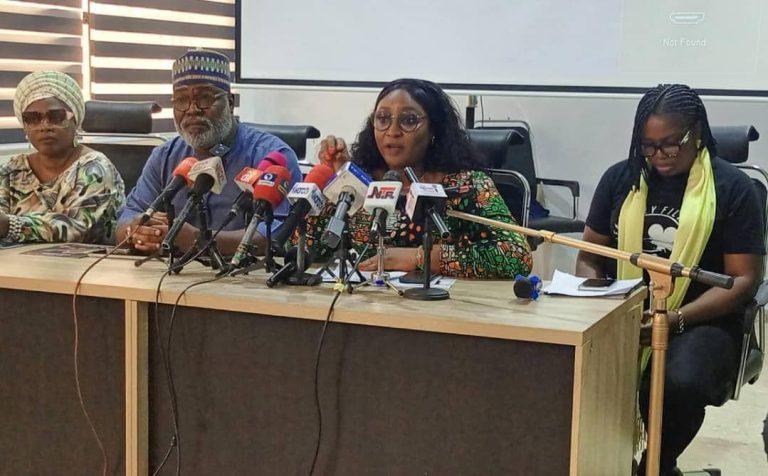
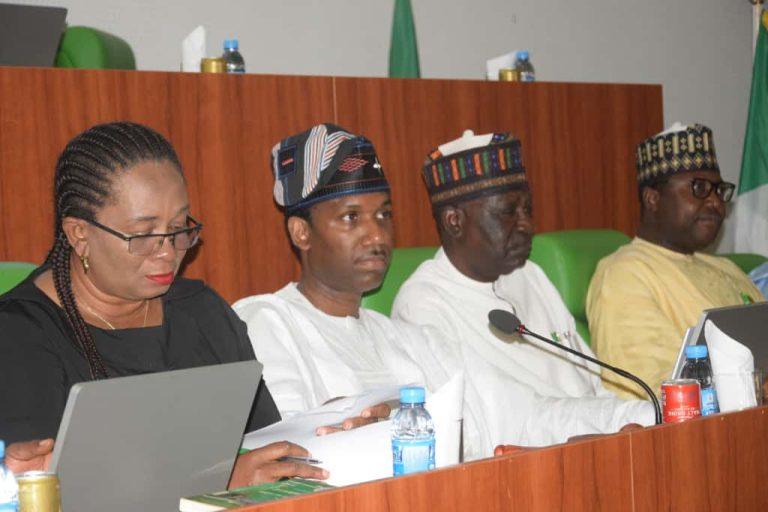
The Chairman of the House Committee on Commerce, Mr Ahmed Munir, committed to a public hearing on ten bills in Abuja.

He said that the House remains focused on ensuring that every proposed law reflects the genuine needs of Nigerians.

He explained that the bills under consideration span multiple sectors of the economy, with provisions to establish new professional regulatory bodies, amend outdated laws, and strengthen the operational capabilities of existing institutions for greater service delivery.

“A critical look at these bills shows that both the legislature and the executive have the interest of the citizens at heart. Some of these bills, if passed, will create regulatory institutions that ensure professionalism, accountability, and efficiency across various sectors,” Munir stated.

Among the notable bills deliberated on was the Bill for an Act to Establish Climate Resilient Commerce in Nigeria (HB. 2206), which seeks to create a framework for promoting sustainable economic growth and reducing the vulnerability of Nigerian businesses to climate-related risks.

Mr Munir noted that the proposed legislation aligns with global efforts to mitigate climate change impacts and will position Nigeria to take advantage of international partnerships and incentives tied to environmental sustainability.

“The importance of synergy between the legislature and the executive toward good governance and human capital development cannot be overemphasised. Bills like this will help moderate potential damage, reduce long-term risks, and enable us to benefit from global and local opportunities associated with climate change mitigation.”

The Committee considered ten bills at the hearing, including those seeking to establish or amend professional and regulatory bodies such as the Chartered Institute of Nigerian Universities Professional Administrators, the Institute of Chartered Biochemists and Molecular Biologists, the Chartered Institute of Mortgage Bankers and Brokers, the Chartered Institute of Entrepreneurship Consultants, and the Chartered Institute of Enterprise Risk Management of Nigeria.

Also listed were amendments to the Nigerian Export Promotion Council Act and the National Institute of Marketing of Nigeria Act 2003, as well as bills to strengthen risk management and financial analysis practices in Nigeria.

The Chairman said the essence of the public hearing was to provide a platform for citizens and stakeholders to express their views, thereby enriching the legislative process with diverse perspectives.

Read Also: Senate Swears In Two New Senators From Edo, Anambra

The lawmaker commended President Bola Ahmed Tinubu’s administration for stabilising key economic indicators, including achieving a 3.9% annual GDP growth and improving revenue mobilisation.

He described these achievements as signs that “the bleeding has been stopped,” adding that the next phase should focus on translating macroeconomic progress into tangible benefits for ordinary Nigerians.

“This requires expanding social protection schemes, ensuring transparency in public finance, tackling food insecurity, and addressing inflation and trade barriers.”

He emphasised that the 10th Assembly remains a People’s Parliament, committed to openness, inclusivity, and national interest. He recalled that the House recently conducted nationwide hearings on constitutional amendments, underscoring its dedication to participatory governance.

He urged participants to be constructive and concise in their submissions, assuring them that all contributions would be considered in shaping final recommendations.

Meanwhile, the Chartered Risk Management Institute of Nigeria (CRMI) has opposed the proposed establishment of the Chartered Institute of Enterprise Risk Management of Nigeria by the National Assembly, describing it as a duplication of existing institutions with identical mandates.

In a memorandum submitted to the House Committee on Commerce, the Registrar of CRMI, Mr Victor Olannye, said the bill seeking to establish the new institute overlaps with the functions of the already existing Chartered Risk Management Institute of Nigeria.

“Upon careful review of the bill, we wish to draw the Committee’s attention to certain issues surrounding the proposed legislation, specifically its overlap with existing laws and its implications for the integrity of the legislative process,” Mr Olannye explained.

He said that the 9th National Assembly had already passed the Chartered Risk Management Institute of Nigeria Act No. 39 of 2022, which was duly assented to by the President and gazetted, thereby conferring legal status on the Institute.

“The Act comprehensively governs and promotes the practice of risk management in Nigeria, including professional certification, regulation, and the advancement of the profession,” he said.

He pointed out that the primary objective of the proposed Chartered Institute of Enterprise Risk Management of Nigeria, to control and promote the practice of risk management, is already fully addressed by the 2022 Act.

He therefore urged the Committee to consider dropping the bill, noting that allowing it to progress would “contradict existing legislation (Act No. 39 of 2022), create legal and institutional conflicts, undermine the principle of avoiding duplication and redundancy in laws, and weaken the credibility and authority of the legislature’s previous actions.”

Other stakeholders also made contributions to the bills.
NSCDC Hails Inauguration of House Committee on Illegal Mining

0

The Nigeria Security and Civil Defence Corps, NSCDC, has described the recent inauguration of the House of Representatives Ad Hoc Committee on Illegal Mining as a “significant milestone” in the ongoing effort to end illicit mineral exploitation in the country.

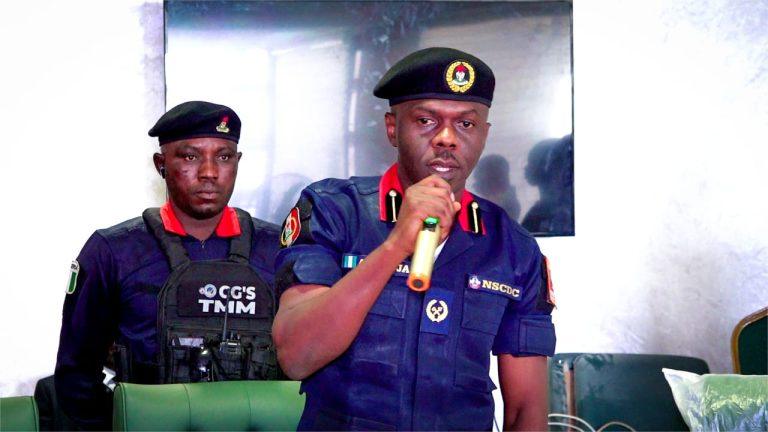
Speaking at the inauguration held at the National Assembly Complex in Abuja, Commander of the Mining Marshals, John Onoja, who represented the NSCDC Commandant-General, Prof. Ahmed Abubakar Audi, hailed the committee’s formation as a critical step to fully take charge of Nigeria’s mineral sector.

“This committee signals a coordinated national front to curb illicit mineral exploitation and reclaim control over the solid minerals sector,” ACC Onoja stated.

He applauded the leadership of the House for its “unwavering commitment to addressing the challenges that threaten our lives, economic prosperity, and environmental sustainability as a nation.”

ACC Onoja emphasised that illegal mining is more than an economic crime; it is a national security threat, eroding legitimate investment and destabilising communities across Nigeria.

Onoja traced the formation of the elite Mining Marshals unit to President Bola Ahmed Tinubu’s Renewed Hope Agenda, noting that it was established through the collaboration of the Minister of Solid Minerals Development, Dr Dele Alake; the Minister of Interior, Dr  Olubunmi Tunji-Ojo; and the NSCDC’s leadership.

“The enabling environment provided by this trio has strengthened the Corps’ capacity to sanitise the mining environment and protect legitimate investments,” he noted.

Onoja stated that the Mining Marshals have already made significant progress, disrupting illegal operations, arresting suspects, and seizing illicit minerals.

READ ALSOLawmakers Inaugurate Ad Hoc Committee to Curb Illegal Mining

However, he acknowledged the scale of the challenge, emphasising that stronger legislative support and inter-agency cooperation are crucial to sustaining and scaling these efforts.

He urged the National Assembly to focus on five key areas:

1. Enhancing the enforcement powers of the Mining Marshals;

2. Strengthening inter-agency collaboration;

3. Increasing budgetary support;

4. Building a robust legal framework for prosecuting offenders;

5. Raising awareness in local communities about the dangers of illegal mining.

“We remain committed to this fight until we get the needed support of this House to do even better,” he declared.

“The NSCDC will continue to work tirelessly to ensure that our mineral resources are harnessed for the benefit of all Nigerians.”

A New Phase

The Chairman of the newly inaugurated House Ad Hoc Committee on Illegal Mining, Hon. Sani Egidi Abdulraheem, delivered an address outlining the scale and urgency of the challenge.

“Illegal mining is a scourge that has had devastating effects on our nation, from the massive revenue losses to the criminality that undermines our security and rudely alters our environment,” he said.

Citing an estimated $9 billion in annual revenue losses due to illegal mining, Abdulraheem underscored the urgency of the committee’s mission:

“Our mission is clear: to block these revenue leakages, enforce transparency, and ensure that every naira from our natural resources contributes to the nation’s economic prosperity.”

For the Committee Chairman, the assignment goes beyond legislative routine. It’s a national mandate to secure Nigeria’s mineral wealth, dismantle corruption, and drive industrial transformation, notably by reviving the long-stalled Ajaokuta Steel Company.

“Ajaokuta stands as a glaring testament to the failure of our nation to fully harness the potential of our mineral resources,” he said, expressing confidence that with renewed political will, the steel plant could become a cornerstone of Nigeria’s industrial future.

READ ALSONigerian Government Cancels 1,263 Mining Licenses For Non-Compliance

Cross-Institutional Collaboration

Abdulraheem also highlighted the pivotal role of the NSCDC’s Mining Marshals, calling them “a crucial institutional instrument” in the nation’s fight against illegal mining.

“Their field intelligence, operational reach, and enforcement capacity make them indispensable to the committee’s work,” he noted.

Observers say this cross-institutional synergy, uniting the legislative, executive, and security arms of government, represents a new chapter in Nigeria’s mineral governance.

With coordinated action and renewed political will, stakeholders believe the country can finally break the cycle of exploitation that has plagued the sector for decades.

The event drew broad participation from government agencies, security forces, mining sector stakeholders, and civil society actors, reinforcing what many described as the emergence of a “new era of accountability” in Nigeria’s solid minerals industry.


Council Approves Professor Amupitan As New INEC Chairman

The National Council of State has approved the nomination of Professor Joash Ojo Amupitan, representing the North-Central region, as the new Chairman of the Independent National Electoral Commission (INEC).

A statement by the Special Adviser to the President on Information and Strategy, Bayo Onanuga, said that President Bola Tinubu presented Professor Amupitan as his nominee to fill the vacancy created by the exit of Professor Mahmood Yakubu, who served as INEC Chairman from 2015 until October 2025.

President Tinubu told the council that Amupitan is the first person from Kogi State, in the North-Central region, to be nominated for the position and described him as apolitical.

Council members unanimously supported the nomination, with Governor Ahmed Usman Odododo describing Amupitan as a man of integrity.

In compliance with the constitution, President Tinubu will now send Amupitan’s name to the Senate for screening.

His Profile

Fifty-eight-year-old Amupitan, from Ayetoro Gbede, Ijumu Local Government Area of Kogi State, is a Professor of Law at the University of Jos, Plateau State, and an alumnus of the same university.

He specialises in company law, Law of evidence, corporate governance, and Privatisation Law, and became a Senior Advocate of Nigeria (SAN) in September 2014.

Amupitan was born on April 25, 1967.

After completing his primary and secondary education, he attended Kwara State Polytechnic, Ilorin, from 1982 to 1984, and the University of Jos from 1984 to 1987. He was called to the Bar in 1988.

He earned an LL.M. at the University of Jos in 1993 and a PhD in 2007, during an academic career that began in 1989, following his National Youth Service at the Bauchi State Publishing Corporation, Bauchi, from 1988 to 1989.

He currently serves as the Deputy Vice-Chancellor (Administration) at the University of Jos, a position he holds alongside his role as Pro-Chancellor and Chairman of the Governing Council of Joseph Ayo Babalola University, Osun State.

Among the academic positions he has held at the University of Jos are: Chairman of the Committee of Deans and Directors (2012–2014), Dean of the Faculty of Law (2008–2014), and Head of the Department of Public Law (2006–2008).

Outside the academia, Amupitan serves as a board member of Integrated Dairies Limited, Vom; a member of the Governing Council of the Nigerian Institute of Advanced Legal Studies, and a member of the Council of Legal Education (2008–2014).

He was also a board member of Riss Oil Limited, Abuja, from 1996 to 2004.

Amupitan is the author of several books on law, including Corporate Governance: Models and Principles (2008); Documentary Evidence in Nigeria (2008); Evidence Law: Theory and Practice in Nigeria (2013); Principles of Company Law (2013); and An Introduction to the Law of Trust in Nigeria (2014). 

President Tinubu Presides Over Joint Council Of State, Police Sessions

0

Nigeria’s President, Bola Ahmed Tinubu on Thursday presided over a hybrid high-level session of the Council of State and Police Council.

The meeting, convened at the instance of President Tinubu to address pressing national security challenges, had in attendance former Head of State, General Abdulsalami Abubakar (rtd), and former Military President, General Ibrahim Badamasi Babangida (rtd), who both joined virtually.

Physically present at the council meeting were former Chief Justices of Nigeria, Alfa Belgore, Walter Onnoghen, Tanko Muhammad, and Kayode Ariwoola.

Others are the Senate President, Godswill Akpabio, Speaker of the House of Representatives, Tajudeen Abbas, National Security Adviser, Nuhu Ribadu, Chief of Staff to the President, Femi Gbajabiamila, Attorney General of the Federation, Lateef Fagbemi, the Inspector General of Police, Kayode Egbetokun, Chairman of Nigeria’s Governors Forum and Governor of Kwara State, AbdulRazaq AbdulRahman.

Also present are: Kaduna State Governor, Uba Sani, Yobe Governor, Mai Mala Buni, Sokoto State Governor, Ahmad Aliyu Sokoto, Kebbi State Governor, Nasir Idris, Benue Governor, Hyacinth Alia, Ogun State Governor, Dapo Abiodun, Lagos State Governor,  Babajide Sanwoolu, Enugu State Governor, Peter Mbah, Rivers State Governor,  Sim Fubara, Ebonyi State Governor, Francis Nwifuru and Kogi State Governor, Ahmed Ododo and Edo State Governor and Monday Okphebolo.

Also attending the meeting are Governor Abia State, Alex Oti, Cross River State Governor, Bassey Otu, Jigawa State Governor  Umar Namadi, Kano State Governor, Abba Yusuf, Katsina State Governor Dikko Radda and the Governor of Imo State, Hope Uzodimma.

Deputy Governors present: Oyo State, Bayo Lawal; Osun State, Kola Adewusi; Bauchi State and  Plateau State Deputy Governor Josephine Piyo.

The meeting is also to deliberate on the outlined strategic reforms aimed at strengthening Nigeria’s policing architecture.

The Thursday, October 9th Council of State meeting is the second that President Tinubu will be presiding over after the first held on August 12th, 2024.

The Council of State, a statutory body established under the 1999 Constitution of the Federal Republic of Nigeria (as amended), serves a pivotal advisory role in the governance and strategic direction of the nation.

The meeting will focus on matters of national importance and key issues affecting security across the country.

Police Council Phase

Meanwhile, the Police council meeting began at 2:39 pm local time, under the Chairmanship of President Bola Tinubu.

Shortly before the Police Sessions, Former Military President, Ibrahim Babangida and Former Head of State, Abdulsalami Abubakar, exited the virtual participation after the Council of State meeting.

 Former Chief Justices of Nigeria — Alfa Belgore, Walter Onnoghen, Tanko Muhammad, and Kayode Ariwoola — also exited the council chamber before the commencement of the Police Council session.

The Inspector General of Police, Kayode Egbetoken, also joined the meeting alongside the Chairman of the Police Service Commission (PSC), retired Deputy Inspector-General of Police Hashimu Argungu.

The council advises the President on the appointment or removal of the Inspector-General of Police. Council members also confirm the appointment of a new IGP before it becomes official.

The Council deliberates on broad policies for the organisation, administration, and supervision of the Nigeria Police Force. Discussions often include reforms, discipline, training, and welfare of police personnel.

Members review national security reports, focusing on internal security challenges such as banditry, kidnapping, cybercrime, and communal conflicts.

They also assess intergovernmental coordination between federal and state security agencies.

Kwara’s Sugar Factory Studios Debuts with Ajuwaya Series

The Kwara State Government has unveiled Ajuwaya Series, the first film produced at the state-owned Sugar Factory Film Studios in Ilorin, marking a major milestone in the state’s efforts to boost the creative industry.

Eighty-five percent of the production was completed at the studios, which received ₦350 million funding support from Nigeria’s First Lady, Senator Oluremi Tinubu.

Managing Director of the studios, Gbenga Titiloye, described the project as a landmark achievement that reflects Governor AbdulRahman AbdulRazaq’s commitment to promoting creativity, innovation, and economic growth through film production.

He said; the facility, currently the only functional film studio of its kind in Africa—has the capacity to attract foreign investment and strengthen Nigeria’s position in the global film industry.

Mr. Titiloye also commended Senator Tinubu for her generous contribution, saying “it underscores the Federal Government’s support for the creative economy.”

Commissioner for Communications, Mrs. Bola Olukoju, said “more than 1,200 people, including fashion designers, transporters, caterers, and artisans, benefited from the production, adding that the film has helped expand Kwara’s creative ecosystem.”

Deputy Chief of Staff to the Governor, Princess Olubukola Babalola, urged youths to harness the opportunities provided by the studios to develop their talents and pursue careers in filmmaking.

General Manager of the studios and producer of the film, Mrs. Grace Babasola, said “Ajuwaya Series represents the beginning of a new phase for the state’s film and entertainment industry.”

She praised Governor AbdulRazaq’s vision for establishing the studios, noting that it has created a platform for young Nigerians to express their creativity and tell authentic African stories.


Somalia to Introduce Swahili in Schools, Deepens Regional Integration

0

Somalia’s President, Hassan Sheikh Mohamud has announced plans to include Swahili, the lingua franca of East Africa in the country’s national curriculum.

This marks a major step towards strengthening regional integration.

The President made the declaration at the ongoing East African Community (EAC) Summit in Mogadishu, where he emphasised the importance of adopting Swahili to foster unity and collaboration within the region.

Currently, English serves as the primary medium of instruction across Somalia’s Secondary schools, while Arabic remains the only compulsory second language.

However, under the new policy, Swahili will be introduced at both school and university levels.

The country’s universities, especially the Somali National University, should focus more on developing the Swahili language, which is the language of East Africa,” President Mohamud said.

Adopting Swahili is important for our integration into the region,” he added.

Somalia’s Education Minister, Farah Sheikh Abdulkadir, also expressed optimism about the initiative, saying the government was committed to making Swahili a language of communication, trade, and learning.

We want to see Swahili become widely used, even replacing English during our next conference,” he said.

Swahili is already spoken in parts of southern Somalia and has gained wider use in recent years, influenced by cross-border movement and regional peacekeeping operations. Many Somalis who fled to Kenya during the civil war have since become fluent in Swahili and are now contributing to its spread back home.

Somalia joined the eight-nation EAC in 2024, seeking to boost economic growth and regional cooperation after decades of instability.


BBC/Oyenike Oyeniyi 

Africa Climate Forum Returns to Abuja

0

The Africa Climate Forum (ACF) is set to return to Abuja, Nigeria’s capital from October 14 to 15, 2025, bringing together leaders, investors, and innovators to advance discussions on Africa’s green transition.

The two-day event, scheduled to hold at the Shehu Musa Yar’Adua Centre, will convene representatives from government, business, financial institutions, and civil society to explore practical solutions for building a cleaner, fairer, and more resilient continent.

Now in its third edition, the Forum—organised by the Global Centre for Law, Business and Economy, GCLBE, has grown into a major platform driving climate commitments into measurable actions across Africa.

This year’s theme, “Bolder, Greener and Better Steps: Closing Transition Gaps in Africa,” zeroes in on a mission to help African nations move from dialogue to delivery.

Speaking ahead of the Forum, Dr. George Nwangwu, Director General of Global Centre for Law, Business and Economy, GCLBE, emphasised the need to shift focus from climate awareness to tangible execution.

“The real work now is financing, coordination, and execution and that is exactly what this Forum is designed to drive,” she said.

ACF 2025 will explore how African countries can bridge the transition gap by aligning local needs with international opportunities in finance, innovation, and trade.

These platforms aim to move the conversation beyond pledges, targeting real projects that cut emissions, improve energy access, and drive job creation.

Participants will include stakeholders from government, finance, academia, and the private sector.

Since its debut in 2023, the Africa Climate Forum has evolved into one of the continent’s most respected platforms for climate action.

ACF 2025 is expected to highlight how Africa can leap beyond transition gaps—transforming challenges into home-grown, scalable solutions that contribute to a greener global economy.


Nigerians Advocate Dialogue to Safeguard Economic Stability

Leading business figures, religious leaders, and civil society advocates have urged the Petroleum and Natural Gas Senior Staff Association of Nigeria (PENGASSAN) and the organised labour movement to pursue dialogue and collaboration in addressing issues related to the Dangote Petroleum Refinery.

In a joint statement signed by Atedo Peterside (CON), Khalifa Muhammad Sanusi II, Bishop Matthew Hassan Kukah (CON), Osita Chidoka, Opeyemi Adamolekun, and other distinguished Nigerians, the group commended the vital role of labour unions in protecting workers’ interests while emphasising the importance of maintaining industrial harmony to safeguard Nigeria’s energy security and sustain investor confidence.

They noted that while government mediation had helped de-escalate tensions, the episode underscored the need for restraint and dialogue in addressing labour grievances.

The right to organise cannot become a licence to hold the economy hostage,” the statement warned.

Productive enterprises that lower costs and create jobs must be safeguarded. Industrial disputes, if not carefully managed, risk discouraging both domestic and foreign investment at a time when Nigeria most needs capital and innovation.

A refinery of this scale is a national lifeline, with profound consequences for jobs, energy security, and inflation.”

The leaders lamented that for decades, Nigerians endured the collapse of government-owned refineries, the waste of trillions of naira in subsidies, and dependence on fuel imports.

These failures left citizens exposed to scarcity, inflation, and insecurity,” they noted.

Describing the Dangote Refinery as “a national symbol of what bold domestic investment can achieve,”

The leaders said Nigerians have already begun to feel its impact through the significant drop in fuel prices from about ₦1,500 per litre to around ₦820 in some areas, and the resulting reductions in transport fares and food costs.

This impact on transport and food prices gives Nigerians a glimpse of how local productivity can improve daily life,” they added.

It also sends a message to investors at home and abroad that genuine industry, rather than speculation, can still thrive in Nigeria.”

The group stressed that while workers’ rights must be protected, such rights must also be exercised responsibly and within the law.

They dismissed allegations of monopoly, clarifying that the refinery operates in an open market where others are free to invest.

Stakeholders with genuine competition concerns, they advised, should approach statutory regulators such as the Federal Competition and Consumer Protection Commission (FCCPC) rather than resort to strikes or blockades.

“There is no legal monopoly here,” the statement noted. “Others are free to invest in refining, provided they can mobilise the necessary resources and expertise.”

Commending the Federal Government, labour unions, and the management of Dangote Refinery for stepping back from confrontation, the signatories urged all parties to embrace dialogue as a lasting framework for resolving disputes.

This crisis is not about a refinery or any other business,” the statement noted.

“It is about the direction of our economy: whether we will continue in a cycle of scarcity and rent-seeking or build a future anchored on productivity, fairness, and shared prosperity.

The Dangote refinery represents an audacious step forward. It should not be undermined but strengthened — as a signal to other industrialists that investing in Nigeria’s future is worthwhile.”


VON Strengthens Media Partnership with Finland for Global Impact

0

The Director-General of Voice of Nigeria (VON), Mallam Baba Jibrin Ndace, has reaffirmed the organisation’s commitment to strengthening bilateral relations with the Government of Finland through content sharing and media exchange initiatives.

Mallam Ndace made this known during a courtesy visit by the management staff of Voice of Nigeria to the Finnish Embassy in Abuja.

He underscored the importance of collaborative content development and media exchange between Finland’s Public Broadcasting Service, Yle and Voice of Nigeria, aimed at promoting positive narratives and enhancing development-oriented communication between both countries.

“Content sharing and media exchange are vital tools for promoting mutual understanding, cultural exchange, and development communication between Nigeria and Finland,” Mallam Ndace stated.

The Director-General reaffirmed that Voice of Nigeria (VON) is fully prepared to showcase Finland’s developmental achievements through broadcasts in its eight existing languages, English, French, Arabic, Kiswahili, Hausa, Yoruba, Igbo and Fulfulde, across both terrestrial and digital platforms worldwide. He further revealed that the organisation is set to commence broadcasts in Mandarin, a move aimed at broadening its global audience and strengthening international engagement.

In her remarks, the Ambassador of Finland to Nigeria, Her Excellency Sanna Selin, appreciated the DG and expressed her readiness to deepen cooperation with VON in advancing mutual media interests.

Ambassador Selin identified Nigeria’s economic potential and rich cultural heritage as key areas of comparative advantage that align with Finland’s socio-economic engagement priorities.

“In this era of misinformation and fake news, cooperation between public broadcasters like Yle and VON is crucial to ensure accurate, credible, and balanced information flows across borders,” Ambassador Selin noted.

Her Excellency, Sanna Selin, brings over 20 years of experience in foreign affairs, with her appointment reflecting Finland’s ongoing commitment to strengthening diplomatic and media relations with Nigeria.

Nigerian President Convenes Council of State, Police Sessions

0

‎President Bola Ahmed Tinubu is set to preside over high-level sessions of the Council of State and the Police Council on Thursday, to deliberate on pressing national security challenges and outline strategic reforms aimed at strengthening Nigeria’s policing architecture.

‎The Thursday, October 9th Council of state meeting is the second President Tinubu will be presiding over after the first held on August 12th, 2024.

‎The Council of State, a statutory body established under the 1999 Constitution of the Federal Republic of Nigeria (as amended), serves a pivotal advisory role in the governance and strategic direction of the nation.

‎Council which comprises of the President as Chairman and Vice President as Vice Chairman, has all former presidents and Heads of State, all former Chief Justices of Nigeria, President of the Senate, Speaker of the House of Representatives, all state governors and Attorney-General of the Federation as members.

‎A statement issued by the Permanent Secretary, Cabinet Affairs Office, Dr. Emanso Umobong, disclosed that the Secretary to the Government of the Federation (SGF), Senator George Akume, has formally invited members of both councils to participate in the sessions, which will be held in a hybrid format at the Council Chambers.

‎The statement added that the high-level engagement underscores President Bola Tinubu’s commitment to addressing pressing national challenges and strengthening Nigeria’s overall security framework.

‎The meeting will focus on matters of national importance and key issues affecting security across the country.