Home Blog Page 402

Nigeria Expands Power Sector Training with New NAPTIN Facilities

0

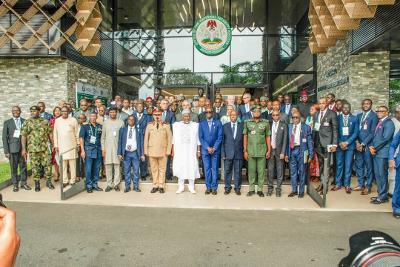
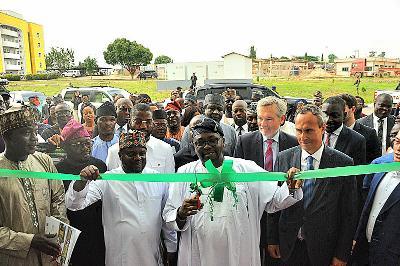
The Nigerian Government has inaugurated five modern training workshops and a 104-room hostel at the National Power Training Institute of Nigeria (NAPTIN) in Abuja, the nation’s capital.

The landmark project is designed to strengthen technical capacity in the power sector and underscores Nigeria’s ambition to become a continental hub for energy innovation.

Commissioning the facilities, the Minister of Power, Adebayo Adelabu, described the development as a pivotal step in advancing human capital for the country’s energy transition.
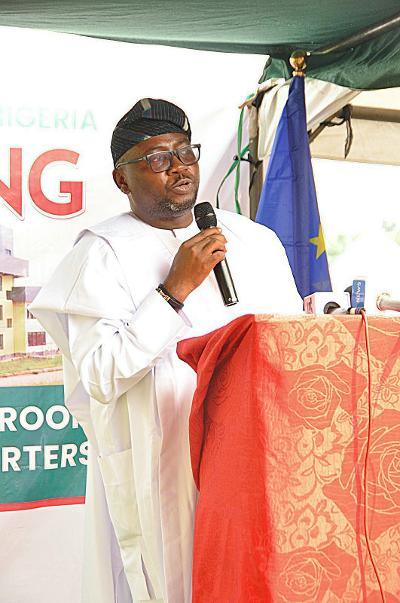
“Today’s commissioning underscores our commitment to developing a highly skilled workforce capable of addressing the challenges of our rapidly evolving energy landscape. These workshops and hostel infrastructure should not just be about physical buildings, but about promoting an environment of peer learning, collaboration, and professional growth,” he said.

Adelabu thanked the European Union (EU), the French Government through the Agence Française de Développement (AFD), and Nigeria’s Ministry of Finance for their support, noting that the project directly aligns with President Bola Ahmed Tinubu’s Renewed Hope Agenda.
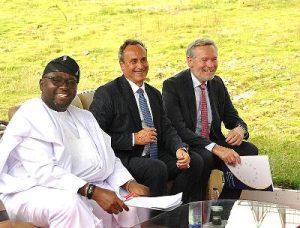
“This is yet another stride in the Renewed Hope Agenda of Mr. President, which ensures that the development of our nation lies in providing key infrastructures that will provide hope for our vibrant youthful population and transform into meaningful economic prosperity for all Nigerians,” he stated.

EU, France Reaffirm Support

The European Union Ambassador to Nigeria and ECOWAS, Gautier Mignot, said the Union had committed an €8 million grant to the project.

“By providing a skilled workforce and building capacity, we want to help drive economic development, create jobs, and improve the well-being of the population,” he explained.

Mignot highlighted that EU support had already produced 95 new technical and non-technical courses, a Training of Trainers programme, and reforms to strengthen NAPTIN’s corporate governance.

He added that the EU has invested over €200 million in Nigeria’s power sector since 2008 and is currently implementing a new €100 million renewable energy package that will deliver 400 megawatts of clean energy to more than five million Nigerians by 2027.

French Ambassador to Nigeria, Mr. Marc Fonbaustier said “the facility reflects France’s long-standing commitment to Nigeria’s energy transformation.”

“For over a decade, France has supported Nigeria’s energy sector through AFD, committing over €300 million to large-scale infrastructure projects. This occasion symbolizes our commitment to supporting Nigeria on its path to inclusive and sustainable development,” he said.

Fonbaustier added that the partnership would also strengthen universal electricity access and youth employment, with Schneider Electric providing additional technical support.

NAPTIN’s Continental Ambition

NAPTIN’s Director General, Ahmed Nagode described the commissioning as the fulfilment of a bold vision.

Nagode said; “I feel highly fulfilled. We thank the Honourable Minister, the Ambassadors of the EU and France, our partners and consultants who made it possible for us to live our dream of being a centre of excellence not only in Nigeria and West Africa but in Africa and beyond.”

He added that the modern facilities — including an outdoor training yard, crèche, and provisions for the physically challenged, would consolidate Nigeria’s leadership in vocational training.

“With this infrastructure, I have no doubt that we have started the journey to transform vocational training in the power sector, not only in Nigeria but across Africa. This will be a hub of knowledge and a centre of attraction for the West African subcontinent,” Nagode said.

Youth Voices in the Transition

Young participants under the NextGen RESCO Programme shared their optimism.

From Niger State, Hassana SarkinPawa said: “I am really happy because what I expected was above it. We have learned much regarding renewable energy. I have even started thinking of going towards a career in power because it is really exciting.”

Surajo Idris from Kano State stressed renewable energy’s importance; “In Nigeria, we have a lot of problems regarding electricity, and renewable energy is actually the best alternative. This programme is designed to train and equip future leaders that will take the renewable energy sector to the next level.”

Peace Ohaneme from Lagos State highlighted gender inclusion; “This programme is all about involving the youth in the renewable energy sector, especially women because the sector lacks women. Right now, we have an equal number of men and women, 50-50. My experience here has been very good; the meals are fine, the accommodation is beautiful, the classes are going well.”

Muhammad Hassan from Bauchi State added: “With this experience I believe I am going to be one of the agents of change in the renewable energy sector. The sector needs young minds like me and my colleagues to transform and transition this country into renewable energy.”

Driving the Renewed Hope Agenda

Launched in 2015, the NAPTIN–AFD–EU Project aims to transform NAPTIN into a globally recognised centre of excellence for vocational training across the power sector value chain.

With the commissioning of these new facilities, NAPTIN is poised to bridge Nigeria’s technical skills gap and prepare a new generation of engineers, technicians, and innovators, while deepening international partnerships that advance Nigeria’s clean energy future.

PIAK
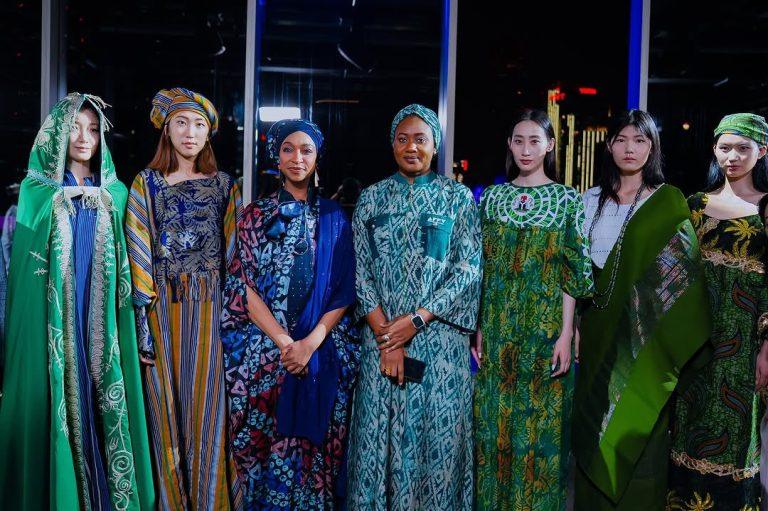
Nigeria Takes Centre Stage at Beijing Fashion Week

Nigeria took centre stage at the 2025 Beijing Fashion Week on 9 September, as its delegation showcased the nation’s rich cultural heritage and contemporary designs at the Silk Street Show Venue.

Leading the team was the Minister of Art, Culture, Tourism, and the Creative Economy, Barrister Hannatu Musa Musawa, whose presence underlined the Ministry’s commitment to ensuring Nigeria’s meaningful contribution to this prestigious global event.

A special recognition goes to the African Fashion Festival Vogue, Faithrealms Clothings, Alhayatglobal
and Rdausiofficial whose showcase of Nigeria’s rich heritage and contemporary designs proudly represented our nation on this global platform.

Events such as this are a… pic.twitter.com/adj4KtUuFA

— FMACTCE_Nigeria (@Fmactce_Nigeria) September 10, 2025

As one of the world’s leading fashion platforms, Beijing Fashion Week annually brings together designers, brands, and cultural stakeholders to highlight innovation, celebrate creativity, and promote cultural exchange.

The 2025 edition brought together international participants and explored the connections between tradition, modernity, and sustainability in fashion.

In a statement, the Ministry expressed its gratitude to the Government of the People’s Republic of China, the Beijing Ministry of Culture and Tourism, the Chinese Embassy in Nigeria, and Nigeria’s counterpart Ministry in Beijing for their invaluable support in making the delegation’s participation a success.

Also Read: Nigerians Shine at 2025 Edmonton Heritage Festival

Nigeria’s showcase demonstrated the country’s readiness to deepen partnerships with Beijing across fashion, the creative industries, and cultural exchange.

According to the Ministry, such engagement not only strengthens cultural and economic ties but also paves the way for new opportunities for collaboration.

“This marks the beginning of many future collaborations,” the Ministry affirmed, reiterating its commitment to advancing Nigeria’s creative industries and reinforcing the country’s cultural presence on the global stage.

It said: “Events such as this are a testament to the power of cultural exchange and fashion as a universal language. They provide opportunities to deepen partnerships, strengthen cultural and economic ties, and open new pathways of cooperation.”

Looking ahead, the Ministry pledged to continue consolidating Nigeria’s role on international cultural and creative platforms.

Nigeria, African Union Sign Counter-terrorism Pact

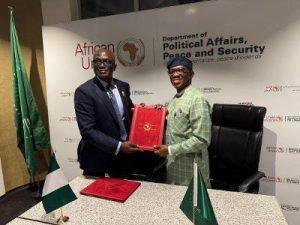
Nigeria has reinforced its position as a key pillar of Africa’s security framework by signing a historic Memorandum of Understanding (MoU) with the African Union on counter-terrorism, the first agreement of its kind between the AU and a member state.

The deal comes on the heels of last week’s Regional Conference on Combating Terrorism and Sustainable Security in the ECOWAS Region and the Sahel, hosted by Nigeria’s Counterterrorism Centre of the Office of the National Security Adviser (NCTC-ONSA).

The high-level summit brought together policymakers, security experts, and international partners to address rising threats of terrorism, insurgency, and organised crime across West Africa and the Sahel.

Nigeria’s Strategic Breakthrough

The conference was widely hailed as a major diplomatic and security milestone, underscoring President Bola Ahmed Tinubu’s drive for “African solutions to African problems” and Nigeria’s growing influence in shaping continental security dialogue.

Momentum quickly translated into action, with Nigeria and the AU sealing a path-breaking MoU that focuses on intelligence sharing, training, and joint initiatives, creating the foundation for a more coordinated African response to terrorism.

AU Commissioner for Political Affairs, Peace and Security, Ambassador Bankole Adeoye, stressed the need to balance security with human rights.

He said; “To fight terrorism effectively, the African Union and its partners are saying clearly that the mainstreaming of human rights is central to the fight against terrorism.”

National Coordinator of Nigeria’s Counterterrorism Centre, Major-General Adamu-Garba Laka, described the agreement as a landmark step in collective resilience.

“This agreement represents shared goals, mutual support, and effective cooperation. By forging a united front against terrorism, we are better equipped to confront this multifaceted challenge and uphold the safety and security of our nations.” he declared.

Nigeria’s Rising Role

For Nigeria, the MoU signals a decisive shift. After years of focusing on its own internal battles against violent extremism, the country is now positioning itself as a continental anchor and a trusted global partner in counterterrorism efforts.

As instability continues to spread across parts of West Africa and the Sahel, Nigeria’s assertive diplomacy and commitment to collaborative security frameworks are drawing recognition and commendation from the international community.

PIAK

Over 500 Women Receive Free Cancer Screenings In Ogun State

0


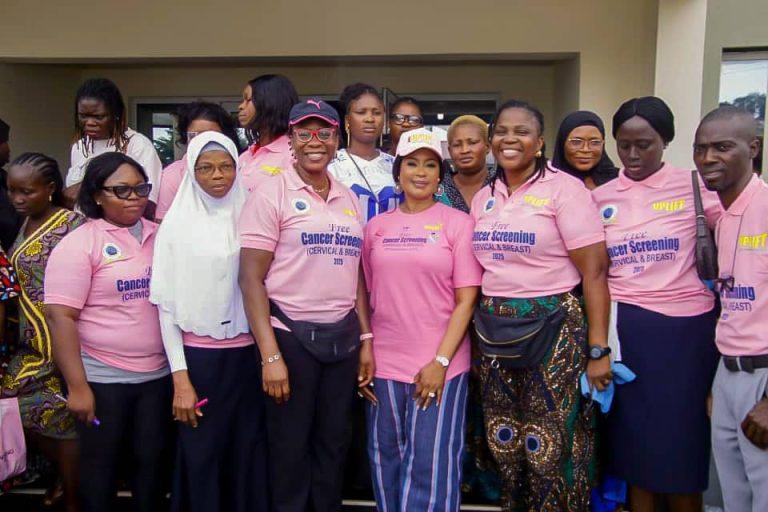
Over 500 women in Ogun State, Southwest Nigeria, have benefited from free cervical and breast cancer screenings, courtesy of the uplift Development Foundation.

The initiative, organised by the non-governmental organisation, aims to promote women’s health and save lives through early detection and preventive care.

The foundation reaffirmed its commitment to supporting communities by providing access to essential healthcare services, particularly for women in underserved areas.

READ MORE:3,000 Children Benefit From Lagos Back-to-School Medical Outreach

The free breast and cervical cancer screening exercise of the Uplift Development Foundation is not just about testing, but it’s about raising awareness on two of the leading causes of death among women in Nigeria.

Globally, the World Health Organisation, WHO, says “more than 19 Million new cancer cases and almost 10 million deaths are recorded each year.”

The screening exercise, held at the Federal Medical Centre, in Abeokuta, the Ogun state capital, drew women from different parts of the state, many of whom said they never had access to such medical checks.

The Founder, Uplift Development Foundation and Wife of former Ogun state Governor, Mrs Olufunso Amosun, noted that the rise in cancer cases, in comparison to the limited access to hospital and high cost of treatment has necessitated the need for continuous advocacy and screening intervention.

Amosun explained that “the sobering statics highlight the importance and necessity for regular cancer screening.”

She said; “ Since it’s inception in 2012, Uplift Development Foundation has placed cancer advocacy, awareness and screening exercises on its front burner. The momentum has been sustained consistently over the years, and cumulatively, well over 10,000 patients have benefitted from our various interventions. “

According to Amosun , “the Foundation has over time erected, renovated and equipped cancer care clinics in each of the 3 senatorial districts in Ogun state to facilitate increased screening for women across the state. One is situated within the Olabisi Onabanjo Teaching hospital, Sagamu, another within the General Hospital, Ota, and the third within the General Hospital, Ijaye here in Abeokuta. “

She stressed further that the Foundation would continue to build on its legacy, saying her husband and former Governor, Senator Ibikunle Amosun has made financial provision towards free lumpectomy surgeries for any patient found with suspicious breast lumps during the screening exercise.

According to her, those found with malignant lumps will also be sent for histology and further investigation.

Wife of Nigerian former President, Mrs Bola Obasanjo, educated women on the importance of lifestyle choices, including healthy diets, exercise, avoiding tobacco and reducing alcohol intake, which can lower cancer risk.

Medical experts at the event emphasised that early detection is the strongest weapon against cancer.

A medical expert, Dr Emmanuel Nkom urged women to embrace regular medical checks, carry out monthly breast examinations, and promptly report unusual signs, such as lumps, pain or abnormal discharge to health professionals.

Some of the beneficiaries expressed gratitude, noting that the high cost of medical services often discourage women from early screening.

The medical outreach forms part of ongoing efforts to reduce the burden of cancer among Nigerian women, while also encouraging a culture of preventive healthcare in the country.

This is the 14th edition of the Uplift Development Foundation free breast and cervical cancer screenings exercise.


Nigerian Leader Orders Committee to Reduce Food Prices

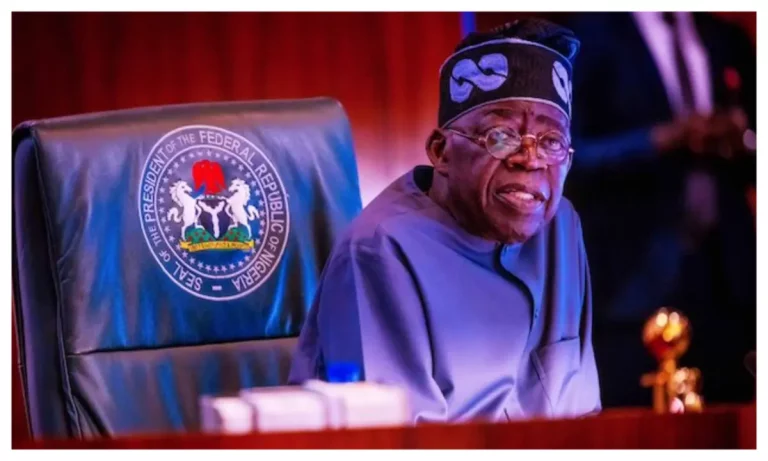
The Nigerian President, Bola Ahmed Tinubu has directed a Federal Executive Council (FEC) committee to implement urgent measures that will further reduce food prices across the Country.

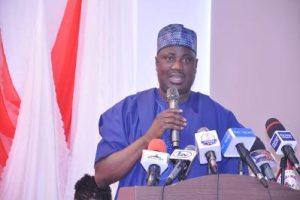
Minister of State for Agriculture and Food Security, Senator Aliyu Sabi Abdullahi, announced the directive on Wednesday in Abuja during a capacity-building workshop for journalists covering the Senate.

He explained that the move would be achieved through the safe passage of agricultural produce and commodities across key transport routes nationwide, thereby cutting down logistics costs and reducing market prices.

“In addressing the high price of transportation of farm produce in the country, I can say it on good authority that the President has given a marching order, with a Federal Executive Council committee already handling it, on how we are going to promote safe passage of agricultural foods and commodities across our various routes in the country,”Senator Abdullahi said.

The Minister stressed that the government is working to ease the burden of transportation costs that make food unaffordable for many Nigerians.

Senator Abdullahi said; “We are aware, and I’m sure as media, you are also aware, there are routes through which commodities are taken before they are delivered. If you know the amount of money that is being spent, you can now understand why those commodities have to be expensive at the point of delivery. So we are working very hard. We are doing quite a lot. But I’ve just given you a snippet because I felt we should look at that.”

Highlighting President Tinubu’s vision for food sovereignty, he noted that “the policy framework goes beyond food security to ensure sufficiency, affordability, accessibility, and proper nutritional content on a sustainable basis.”

New Programmes

Senator Abdullahi disclosed that new programmes are also being rolled out to boost production and support farmers.

“We are having what you call the Farmer Soil Health Scheme. And that is ready for launch. We are just waiting for the date.” Senator Abdullahi said.

He revealed that government is embarking on a comprehensive reform of the cooperative sector to mobilise resources, generate economic activity, and improve livelihoods.

“Mr. President has shown tremendous interest in the cooperative sector as a veritable tool for resource mobilisation, for economic activity generation, and to improve the livelihood of members. And you know the principle of cooperative is clear, is democratic, yet it is also very productive. And so we are reforming this. There’s a number of things we are doing there. And I will urge you, as a press corps, to consider forming a cooperative,” Senator Abdullahi told journalists.

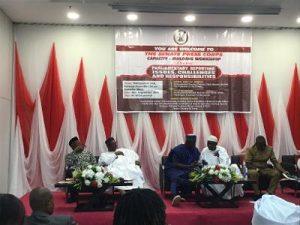
Other speakers at the workshop, themed Parliamentary Reporting: Issues, Challenges and Responsibilities,” included the Chairman of the Senate Committee on Media and Public Affairs, Senator Yemi Adaramodu; former Presidential Adviser on National Assembly Matters, Senator Ita Solomon Enang; and the Director General of the National Institute for Legislative and Democratic Studies (NILDS), Professor Abubakar Sulaiman.

PIAK

Committee Chairman Urges Lawmakers to Safeguard Fiscal Reforms

The Chairman of the Presidential Committee on Fiscal Policy and Tax Reforms, Taiwo Oyedele, has urged the National Assembly to support constitutional amendments that will safeguard Nigeria’s fiscal reforms against reversal.

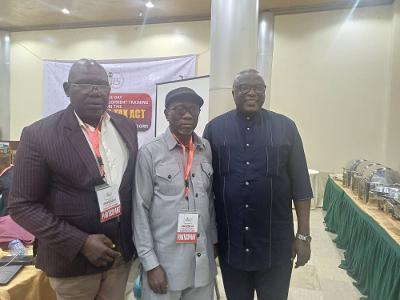
Oyedele made the call on Wednesday in Abuja while delivering a keynote address at a one-day capacity-building training on the Nigeria Tax Act (2025) for members of the State House Press Corps.

He emphasised the need for legal measures to criminalise the arbitrary imposition of levies by sub-national authorities, ensuring stability and integrity in Nigeria’s fiscal policy framework.

Oyedele said; “Our democracy must be structured to outlive political cycles. Otherwise, we waste sacrifices, and the country pays a heavy price. Reform is not about one administration; it must be institutional.”

The tax reform expert explained that the reforms focus on strengthening institutions rather than individuals, stressing that Nigeria’s democracy must be structured to withstand political cycles.

Addressing concerns about the introduction of a new tax identification system, Oyedele clarified that the reform merely harmonises existing means of identification to simplify the process.

He said; “We are not creating another layer of bureaucracy. What we have done is to harmonise identification. If you already have a National Identification Number (NIN) or Bank Verification Number (BVN), you need not worry. These will serve as tax IDs. The objective is simplification, not complication.”

Oyedele highlighted the dangers of policy inconsistency, warning that frequent reversals had cost the country trillions of naira and undermined reform efforts.

“The simple question at the time was not how to stop leakages at toll gates, but why we did not build systems to ensure accountability. Because of that reversal, we are now back to discussing tolling and fuel surcharges more than two decades later. The same thing with refineries — if we had not reversed the sales, Nigeria would have saved over ₦20 trillion and created jobs.” he explained.

On fuel subsidy, Oyedele asserted that the savings from its removal are insufficient to meet Nigeria’s vast development needs.

“Even if you remove corruption and waste completely, the resources at our disposal are not enough to transform Nigeria. Subsidy savings alone cannot deliver the level of infrastructure and services required. Our fiscal space is simply too small,” he further said.

Oyedele revealed that the Nigerian National Petroleum Company Limited (NNPC) not only withheld remittances but also used future crude oil production as collateral to finance petrol imports, worsening fiscal vulnerability.

Commenting on the recently debated 5 per cent fuel surcharge, he clarified that it is not a new tax but a provision embedded in the Federal Roads Maintenance Agency (FERMA) Act since 2007.

“This surcharge will not commence automatically in 2026. It requires a commencement order from the Minister of Finance, duly published in the Gazette. The intent is to ensure openness and accountability in application, unlike in the past,” Oyedele explained.

He stressed that over 150 countries dedicate fuel-related levies to road maintenance, stressing that Nigeria cannot continue depending on printed money to fund its infrastructure.

“You cannot grow an economy when people and goods cannot move around efficiently. The reality is that we need dedicated funding for roads and infrastructure. Subsidy savings will not cover this gap,” Oyedele said.

On the reliefs provided by the new tax reforms, he noted that small businesses with an annual turnover below ₦100 million would enjoy zero per cent corporate tax, while about 97 per cent of low- and middle-income earners are exempted or relieved from several tax burdens.

Oyedele also stated that essential goods and services such as food, education, and healthcare have been classified as zero-rated for Value Added Tax (VAT), enabling producers to reclaim input VAT and thereby lowering production costs and stabilising consumer prices.

He urged Nigerians, particularly the media, to report responsibly and avoid negative narratives that could undermine reforms designed for the public good.

“We must focus on facts. The subsidy removal stopped an imminent economic collapse, but it is only the beginning. The wider tax reforms are meant to create fairness, remove multiple taxation, and provide sustainable funding for infrastructure. If we stay the course, the benefits will begin to manifest at the household level from 2026,” Oyedele assured.

PIAK

Nigeria Signs $500m Solar Partnership with International Alliance

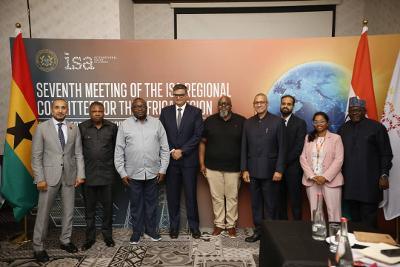
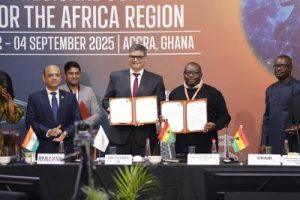
The Nigerian Government has signed a comprehensive Country Partnership Framework with the International Solar Alliance (ISA), marking a major step toward a clean energy future for Nigeria.

The agreement was formalised by Nigeria’s Minister of Power, Adebayo Adelabu, and ISA Director General, Ashish Khanna, during the ISA’s Seventh Regional Committee Meeting for Africa, hosted in Accra, Ghana.

 The event brought together African governments, development partners, and financial institutions to chart a common pathway for expanding solar adoption across the continent.

This was made known by the Special Adviser to the Minister on Media and Strategic Communication, Bolaji Tunji.

Adelabu explained that “the partnership establishes a robust three-year action plan to accelerate Nigeria’s solar energy adoption, focusing on advocacy, capacity building, and programmatic support.”

The collaboration will prioritise scaling up solar applications in agriculture, promoting rooftop solar installations, deploying mini-grids, and establishing a Solar Technology and Application Resource (STAR) Centre.

“A cornerstone of the framework is the creation of a $500 million DRE Nigeria Fund, designed to catalyse investment in distributed renewable energy projects and backed by enhanced regulatory support from the Ministry of Power,” the Minister stated.

He stressed that the initiative would power national development by going far beyond household lighting.

“This partnership is about more than light; it’s about powering development. Decentralised renewable energy solutions are not merely about providing light to households, they are about unlocking development, powering schools and clinics, energising small and medium enterprises, supporting agricultural processing, driving e-mobility, and opening opportunities for digital inclusion in rural communities.” Adelabu said.

“Every mini-grid and solar system deployed means a child can study, a clinic can function, an entrepreneur can thrive, and a farmer can irrigate his fields. This is the transformational promise of renewable energy for Africa.” he added.

The signing, which also saw Ghana and The Gambia enter similar agreements, signals a powerful wave of regional cooperation, placing solar energy at the heart of national development strategies across Africa.

PIAK

Nepal Protesters, Army in Talks to Decide Interim Leader

0

Nepal’s army will resume talks on Thursday with “Gen Z” protesters to decide a new interim leader for the Himalayan nation.

The Army Spokesperson Raja Ram Basnet said this, following angry demonstration that killed 30 and forced the prime minister to resign.

Soldiers patrolled the quiet streets of Kathmandu, the capital, after its worst protests in years triggered by a social media ban that authorities rolled back after 19 deaths as police fired tear gas and rubber bullets to control crowds.

“Initial talks are on and would continue today,”Basnet said, referring to the discussion on a new interim leader. “We are trying to normalise the situation slowly.”

The death toll from the protests had risen to 30 by Thursday, Nepal’s health ministry said, with 1,033 injured.

Prohibit orders will stay in Kathmandu and surrounding areas for most of the day, the army said in a statement, while an airport spokesman said international flights were operating.

The demonstrations are popularly referred to as the “Gen Z” protests since most participants were young people voicing frustration at the government’s perceived failure to fight corruption and boost economic opportunities.

The protesters have called for former Chief Justice Sushila Karki as interim prime minister, Raman Kumar Karna, the secretary of the Supreme Court Bar Association, whom they consulted said.

“When they requested me, I accepted,” Karki said.

The protests, in which government buildings, from the supreme court to ministers’ homes, including Oli’s private residence, were also set ablaze, only subsided after the prime minister resigned.

Business establishments set on fire included several hotels in the tourist town of Pokhara and the Hilton in Kathmandu.

Reuters/Hauwa M.

Army Chief Hails Troops’ Efforts in Security Operations

0

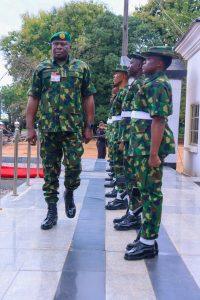
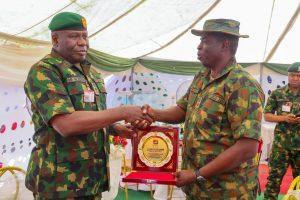
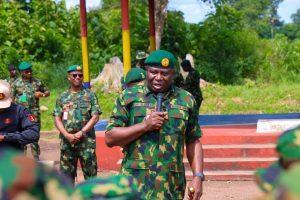
The Chief of Army Staff (COAS), Lieutenant General Olufemi Oluyede, has commended troops of 130 Battalion and 341 Artillery Regiment in Ogoja, Cross River State, for their resilience in national security operations.

The visit to Godwin Ally Barracks on 9 September formed part of the Army Chief’s assessment tour of formations and units under 82 Division.

According to a statement by the Acting Director, Army Public Relations, Lieutenant Colonel Appolonia Anele, the COAS inspected facilities, interacted with personnel, and directed the renovation of dilapidated accommodations to improve living conditions in the barracks.

General Oluyede, who stressed his “Soldiers First” mantra, also pledged to revamp schools within barracks to give soldiers’ children access to quality education. He disclosed ongoing efforts to supply new uniforms and military kits across the Army.

The COAS highlighted that the recent increase in Ration Cash Allowance has enabled better feeding for troops, adding that he expects them to reciprocate by giving their best in the discharge of duties. He further urged synergy with sister security agencies and host communities to secure lasting peace in the region.


FCTA Cracks Down on Illegal Constructions

0

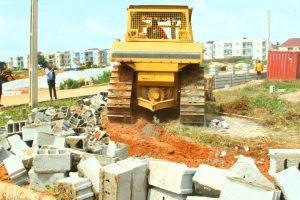
The Federal Capital Territory Administration (FCTA) has halted the construction of more than 30 sub-structures in Abuja, citing violations of planning regulations.

According to the administration, the affected developers (River Park Estate) continued building despite the withdrawal of their lease agreements and recommendations from a ministerial committee that all undeveloped plots within the estate be reverted to the FCTA.

The FCT Minister, Nyesom Wike, had on August 8, 2025, inaugurated an ad hoc committee on the review of controversies surrounding the River Park Estate.


The committee, however, directed that holders of previous “customary” titles whose plots fall within the River Park Estate boundaries and who have developed in accordance with applicable planning and development control regulations be permitted to retain their titles. This recommendation aligns with the subsisting court judgment referenced in paragraph 16.3.”

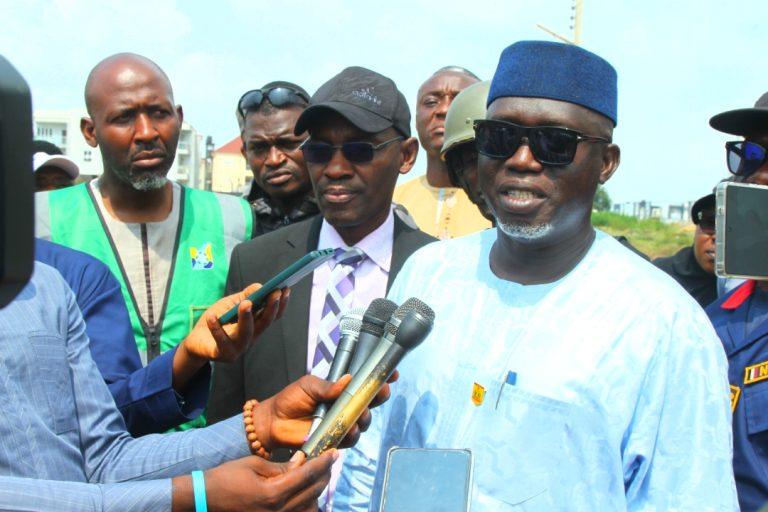
Meanwhile, the Director of Development Control, Mukhtar Galadima, who led enforcement officers to the site on Wednesday, said the action followed reports that the developers were working day and night to beat the directive.

According to him, “About a week ago, there was an event at the Honourable Minister’s office where two committees submitted their reports. One of the committees was on issues surrounding the River Park Estate development. And one of the recommendations was that all undeveloped plots within the estates be reverted back to FCTA.

“So we got a report that certain developers are hurriedly working day and night to see that they have developed some of the vacant plots. So what we do as an agency is we serve them notice to stop work. This morning we came, we saw them working, and that’s why we are removing the structures. The excavations and all those structures were put on ground.

“Whatever we see on site, we remove it. So this is just the beginning. Luckily, they are just at excavation level, but wherever we see any new development coming up, we will remove it.”