Home Blog Page 404

Reactions Greet Presidential Directive On Ogoniland

Temitope Mustapha, Abuja

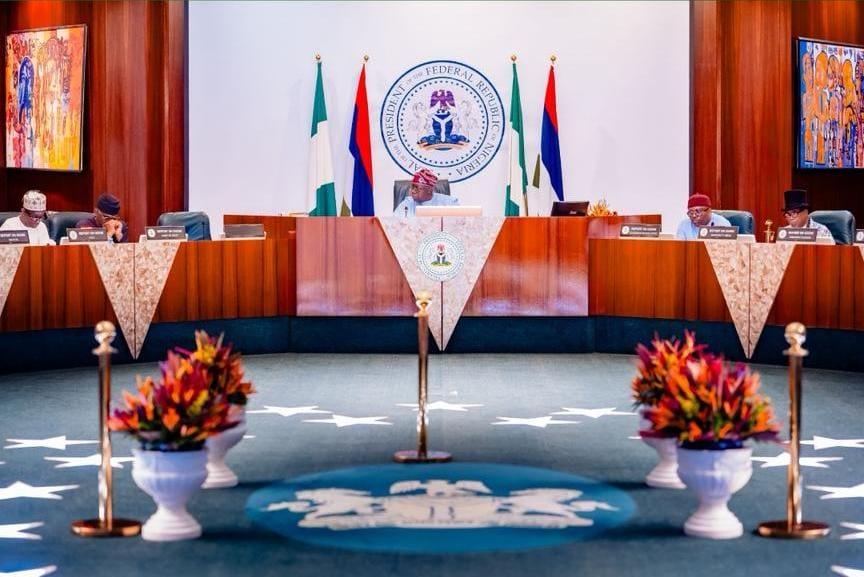
The National Security Adviser, Mallam Nuhu Ribadu, has stated that President Bola Tinubu’s directive to initiate dialogue, community engagement, and open communication with the people of Ogoniland has successfully laid the foundation for restoring peace and rewriting over three decades of history.

The NSA asserted this on Wednesday in Abuja while speaking to State House Correspondents after the Presentation of the Reports on Ogoniland Consultations to the President at the State House, Abuja.

Ribadu further revealed that President Tinubu also issued an unequivocal directive to the Office of the National Security Adviser, as well as all relevant government agencies and institutions, to ensure the full and immediate implementation of all agreed-upon measures, a mandate, he said, is already being actively executed.

“In all aspects of our national life, Ogoni is one. Thirty something years of very unfortunate history.  

“He gave directives to all government agencies and institutions and also directly to our office that we must implement everything that has been agreed and we have taken it,” he said.

Read also: President Tinubu Confers National Honour On Ogoni Four

Ribadu assured Nigerians that the Office of the National Security Adviser, alongside all relevant agencies, is committed to restoring peace in Ogoniland.

He expressed optimism that Nigerians would soon witness the positive impact of these efforts throughout the entire region.

“We will make sure that we will follow strictly his own directives and his instructions. We are going to make sure that peace is restored; already it is and hopefully you will see the benefit of it not just in Ogoni land but the entire Niger Delta and by extension Nigeria.”
The NSA applauded the President for his engagement of Nigerians through popular participation in rewriting past narratives adding that “today’s developments reaffirm the need to persist and advance the work ahead.”

Provide Lasting Peace

Also reacting, a prominent Nigerian lawyer and civil rights activist, Ledum Mitee, said the recent developments in Ogoniland offer a blueprint for reconciliation and lasting peace, opening doors to justice for Ogoni indigenes to partner with the government and achieve prosperity.

“I think it is the beginning of a new dawn in the government. And in fact, the rest of Nigeria.

“We’re going back; that door for justice being opened for our people, and that collectively, we will march through that door with the government.”

Ledum added that President Tinubu had equally ordered immediate action on key reports and emphasised ongoing Confidence Building Measures.
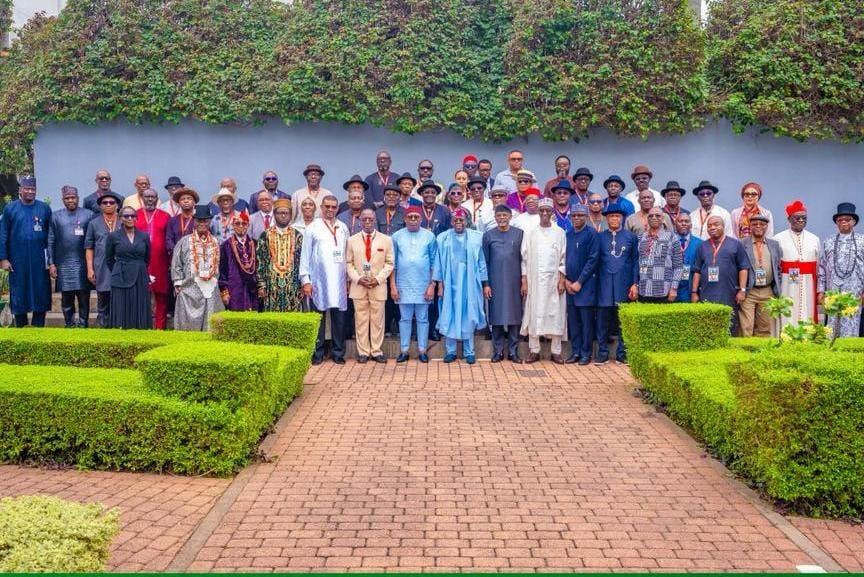
The civil rights activist highlighted that concrete progress had been made during the dialogue process,  which is currently receiving direct attention from the highest level of government.

He expressed hope that this approach will demonstrate that non-violence can lead to successful outcomes, benefiting both the Ogoni people and others.

Ledum Mitee was a key member of the Movement for the Survival of the Ogoni People (MOSOP)

Also speaking at the Ogoni report presentation, Governor of Rivers State, Siminalaye Fubara affirmed that there are clear indications the Bola Ahmed Tinubu led administration is genuinely committed to resolving age long issues in Ogoniland.

“Fubara said that “the presented report on Ogoni Consultations is a sign that this government is serious about resolving these issues, and I think we need to give them all the necessary opportunity and time to ensure that this problem is resolved once and for all.

“Let me thank the committee. I believe that the reason why I’m also speaking before professor is because he has better information, like I said, since I’ve been away for a while. Let me again, thank the dialog committee and assure everyone that we would do everything humanly possible to make sure that we succeed on this national assignment.”


Hauwa Abu

U.S. CDC Trains 2,000 Volunteers to Boost Cholera Response

0

The U.S. Centre for Disease Control and Prevention (U.S. CDC), in partnership with the Nigerian government, has trained 2,400 community volunteers across the Federal Capital Territory (FCT), Sokoto, Ebonyi, and Ondo States.

U.S. CDC Senior Emergency Management Specialist, Dr Muhammad Saleh, made this known in an interview in Abuja.

Saleh said the training was part of a broader health security initiative aimed at improving Nigeria’s ability to detect, investigate, and respond to infectious disease outbreaks.

“The volunteers were also required to raise awareness on safe hygiene practices, and link patients with health facilities for rapid treatment.

“The initiative leverages community trust to improve outbreak surveillance and prevention.”

According to him, because they were trusted members of their communities, people are more willing to listen to them.

“They can spot unusual cases quickly and raise the alarm. That early detection saves lives,” he said.

Saleh said that the volunteers go door-to-door teaching people proper hand-washing; discouraging open defecation; and warning against unsafe self-medication from roadside chemists.

He said they also plaid a crucial role in dispelling myths and misinformation about cholera and other infectious diseases.

He said, “Trust is everything; when a volunteer tells a neighbour that vomiting and passing stool could be cholera, people listen.

“They know this person, they see them daily; so, the message is credible.”

He said that the volunteers were part of a broader strategy to strengthen health system resilience.

Saleh said that Nigeria adopted new tools such as disease hotspot mapping and fully operational Emergency Operations Centres (EOCs) in all the 36 states and the federal capital territory.

He acknowledged challenges such as limited resources, attrition of trained personnel, and the persistence of misinformation but said the collaborative approach between government, partners, and communities was already yielding results.

“Everybody has a role to play, communities, families, partners, and government.

“The more we sustain these collaborative efforts at the grassroots level, the more resilient Nigeria becomes against cholera and other infectious diseases,” he said.

NAN

VON DG Advocates Media Literacy to Curb Fake News

0

The Director General of Voice of Nigeria, Mallam Jibrin Baba Ndace, has underscored the critical role media literacy plays in addressing the challenge of fake news, misinformation and disinformation.

The DG disclosed this when he delivered a lecture at the September 2025 Edition of the Bureau of Public Service Reforms BPSR Lunch Time Seminar on “National Rebirth in the Digital Era” in Abuja, Nigeria’s capital.

The lecture with the theme: “National Rebirth in the Digital Era: Navigating the Information Conundrum-Challenges, Strategies and Best Practices for Effective Information Management in the Age of Social Media” highlighted some of the challenges encountered in the information space and recommended strategies for effective information management.

According to the DG:

“The age of social media is here. We must understand that we are in a changing environment. And the public service must embrace that. And in doing that, it’s a collective responsibility.”


“And the need for us to embrace media literacy, so that we understand when news is fake, what is disinformation, what is misinformation, what is outright lies.

“And then we must understand how we conduct ourselves as individuals within various social media spaces. Including WhatsApp, Facebook, Twitter, TikTok, and Instagram.

“Without media literacy, public officials are vulnerable to fake news, misinformation and disinformation. In this area that we are in, you need to empower yourself as a manager at whatever level. You must understand the content that you take in and how you are going to respond to it.”

The DG called on Nigerians to follow public media institutions as they are critical in propagating policies and programmes of government.

According to him, “we must also understand that public media institutions, Voice of Nigeria, NTA, FRCN, and News Agency of Nigeria, are all public media institutions funded by taxpayers’ money. So you don’t ignore them. You should also let them be part of whatever you are doing so that they can help in propagating policies and programmes of government.”

The DG further encouraged Nigerians to promote the country where necessary and shy away from criticising the country at every given opportunity.

“We are not saying Nigeria is perfect. But we are saying that a lot is happening both in the public service and in other sectors of Nigeria. Nigerians are doing well at home and abroad.

“We must celebrate that. We must not allow ourselves to be used as an instrument of denigrating and bringing down our country. We must own our country.”

Information Management

In his opening remarks, the DG of BPSR, Dasuki Arabi, highlighted the urgent need to improve information management in the public service.

According to him, “Effective information management goes beyond record keeping. It is about ensuring that data and communication are accurate, timely, consistent, and accessible.

“This is critical in building trust between government and citizens. Recent events in other parts of the world are calling on all of us to provide up-to-date information and to keep engaging agencies that are almost the majority in number in this country. This event is focused and is coming up in line with the recent directive of His Excellency President Bola Ahmed Tinubu GCFR to government officials, which emphasises responsible communication, fact-based reporting, and avoiding contradictory or misleading information.”

The BPSR DG further highlighted his organisation’s efforts in strengthening information reforms across the public service.

“We have developed a communication strategy that is geared towards promoting accountability and responsible use of information across ministries, departments, and agencies of government. The National Strategy of Public Service Reforms highlights ICT adoption, open government, and citizen engagement as key priorities. We have also provided frameworks for proactive disclosure of information in line with the Freedom of Information Act and the continuation to build trust of citizens, ministries, departments, and agencies of government.”


Group Hails President Tinubu’s Economic Performance 

The Hope Alive Initiative has commended President Bola Ahmed Tinubu’s economic reforms, describing them as a key driver of Nigeria’s recent strong performance.

In a statement signed by its Director of Press, Ernest Omoarelojie, the group highlighted data from the National Bureau of Statistics (NBS), which reported a year-on-year Gross Domestic Product (GDP) growth of 4.23 per cent in the second quarter of 2025, as evidence that the administration’s reforms are delivering tangible results.

According to the group, before President Tinubu assumed office in May 2023, the economy was in dire straits, weakened by unsustainable fuel subsidies, a distorted foreign exchange regime, dwindling external reserves, and low investor confidence.

“The economy was on the brink, with poverty levels deepening and the fiscal space for growth almost completely eroded,” the group said.

It noted that bold policy measures, including the removal of petrol subsidy, unification of the foreign exchange market, fiscal consolidation, and social interventions, have now begun to turn the tide.

Among the notable gains highlighted were:

” i. GDP growth: 4.23% in Q2 2025 compared to 3.48% in Q2 2024.

ii. External reserves: now at $42 billion, boosting investor confidence and stabilising the naira.

iii. Inflation: six months of consistent decline, with projections for single-digit levels by 2026.

iv. Agriculture: 2.82% growth, supported by mechanisation and the National Agricultural Development Fund.

v. Industry: 7.45% expansion, reflecting renewed manufacturing and mining activity.

vi. Trade: manufactured exports up 173% in Q2 2025, with a 44.3% rise in trade surplus.

vii. Infrastructure: ongoing construction of 13 major roads, the Lagos-Calabar Coastal Highway, and the $3.02 billion Port Harcourt–Maiduguri Rail Line.

viii. Social protection: over N330 billion disbursed to 8.1 million households and more than N80 billion in education loans to 400,000 students.

The group said Nigeria’s aggregate GDP, now N100.73 trillion (up from N84.48 trillion the previous year), reflects “a tectonic shift towards a more diversified and sustainable economy.”

They commended President Tinubu and his economic team, the Hope Alive Initiative.

The group also endorsed the Poverty Exit Plan recently unveiled by Vice President Kashim Shettima, which it said offers “a clear pathway to lifting 40–50 million Nigerians out of multidimensional poverty within the next decade.”

It urged Nigerians to support the administration, avoid distractions, and remain confident in the country’s economic direction.

“Nigeria is not just recovering, it is rising,” the group added.


Abuja-Kaduna Train Derailment: NSIB Releases Preliminary Report

0

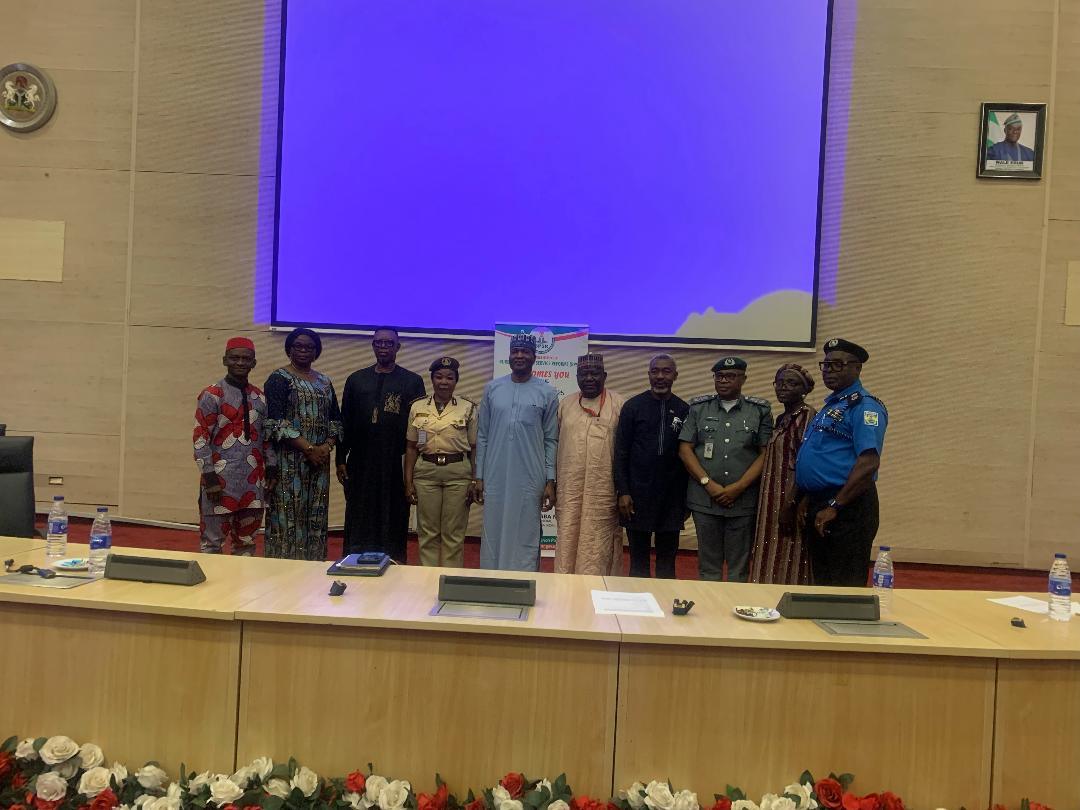
The Nigerian Safety Investigation Bureau NSIB has released the preliminary report on the derailment involving train number AK 1, operated by the Nigerian Railway Corporation NRC, with locomotive registration number CDD5c2 2701.

The preliminary report was contained in a Press Statement issued by the Director, Public Affairs and Family Assistance, Nigerian Safety Investigation Bureau, Mrs Bimbo Oladeji.

The statement reads: “The derailment occurred at Km 49, Kubwa–Asham section, Kagarko Local Government Area, of Kaduna State, Northwest Nigeria, on 26 August 2025.

“The passenger train, which departed Idu Station, Abuja, at 09:45 h en route to Rigasa Station, Kaduna State, was carrying 618 persons on board, including NRC Crew members, Security Personnel, and service staff.

” At approximately 11:09 hours, shortly after passing a manually operated switch point at Asham Station, the forward locomotive and adjoining coaches derailed and overturned.

Twenty-one passengers sustained varying degrees of injuries, while no fatalities were recorded. Initial findings and recommendations are contained in the preliminary report, which is available for download on the NSIB website.

The Bureau added that “the report represents early findings and is subject to further analysis. The final report will present detailed conclusions and additional recommendations to enhance rail safety in Nigeria.”


Nigerian Government Vows to Transform Transport Sector

The Minister of Transportation, Senator Sa’idu Ahmed Alkali, and his Marine and Blue Economy counterpart, Adegboyega Oyetola, have reaffirmed the Federal Government’s commitment to transforming Nigeria’s transport and marine sectors through massive infrastructure investment, manpower development, and policy reforms.

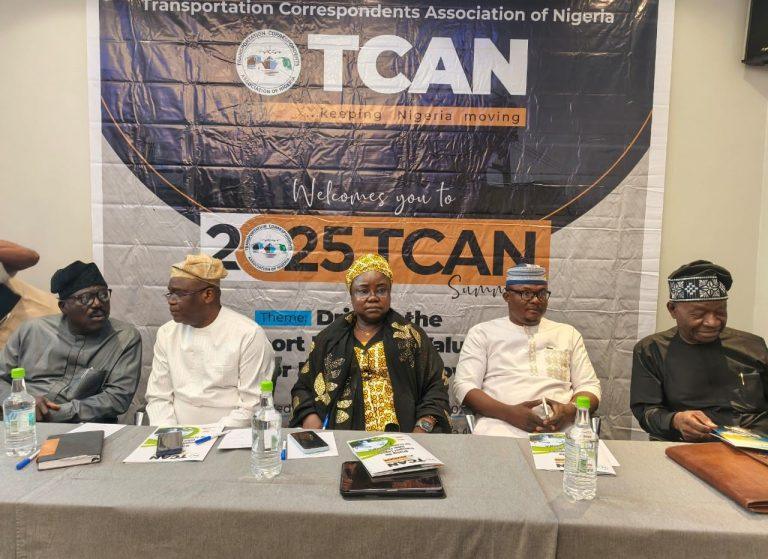
The ministers described the ongoing government’s efforts as “critical to unlocking the nation’s economic potential and driving inclusive growth” at the 2025 Nigeria Transport Summit, organised by the Transportation Correspondents Association of Nigeria (TCAN) in Lagos, Southwest Nigeria.

Speaking at the summit, Transportation Minister Alkali praised President Bola Tinubu for championing far-reaching transport reforms under the Renewed Hope Agenda, saying the administration’s resolve is already reshaping Nigeria’s mobility landscape.

“The President has provided clear direction and commitment to making public transportation efficient, safe, integrated, and affordable. His administration’s policies are laying the foundation for a truly modern transport system,” Alkali said.

Alkali highlighted key achievements, including the ongoing modernisation of several rail corridors. Among them is the Port Harcourt–Maiduguri rail line, where the Port Harcourt to Aba segment has been completed and operationalised. The Kaduna–Kano and Kano–Maradi lines have also seen rapid progress, with execution levels now exceeding 50% and 60%, respectively, up from just 5–15% at the start of the administration.

“At the pace we are going, the Kano–Maradi line will reach Katsina by December 2025 and be ready for full completion by March 2027,” the minister disclosed.

In addition, Alkali revealed plans for a High-Speed Rail network connecting Lagos, Abuja, Kano, and Port Harcourt, a project he said would redefine long-distance travel in Nigeria.

Also speaking, Minister of Marine and Blue Economy Adegboyega Oyetola said the new National Marine and Blue Economy Policy will cut logistics costs, boost trade competitiveness, and attract private sector investment into the transport and maritime sectors.

Also Read: NSIB Reaffirms Commitment To Safer  Transport 

Oyetola, who was represented by the Director of the Maritime Services Department, Dr Mrs Mercy Ilori, explained that the policy provides a framework for seamless intermodal integration across road, rail, barge, and pipeline channels, aimed at transforming Nigeria into a logistics hub for West and Central Africa.

“By lowering the cost of doing business, improving turnaround times, and creating an enabling environment for private capital, we are positioning Nigeria as a preferred logistics destination in Africa,” Oyetola said.

The minister highlighted key interventions already underway, including the operationalisation of the Lagos–Ibadan Standard Gauge Rail line for port cargo evacuation, expansion of barge operations at Lagos and Onne ports, completion of the Apapa–Oshodi Expressway, and the commissioning of the 27km Lekki Port Access Road. He also pointed to the development of inland dry ports in Ibadan, Kaduna, Kano, and Funtua to ease pressure on seaports and support regional economies.

Oyetola stressed that the success of the reforms depends on collaboration among shipping lines, terminal operators, freight forwarders, investors, and regulators, adding that Nigeria must adopt digital, green, and climate-resilient logistics solutions to remain globally competitive.

Transportation experts at the summit emphasised the crucial role of innovation and sustainability in driving the industry forward. The summit carried the theme: “Driving the Transport Logistics Value Chains for Economic Growth.”

In the same vein, Programme Director of the Presidential Initiative on Compressed Natural Gas (Pi-CNG), Mr Michael Oluwagbemi, said that to unlock economic growth, Nigeria must ensure its transport systems are not only effective but also sustainable, affordable, and future-ready.

Oluwagbemi, represented by Mrs Ugonna Onyemelukwe, added, “Through efficient transport and logistics, industries will thrive, agricultural produce will reach markets, and people will stay connected. This is where the Presidential CNG Initiative comes in to accelerate Nigeria’s transition from petrol and diesel to CNG and provide Nigerians, especially those in the transport and logistics value chains, with cheaper, cleaner, and safer energy alternatives.”

He noted, “CNG is important for the transport sector because it saves costs, reduces the environmental footprint of logistics operations, and harnesses Nigeria’s energy security. Pi-CNG has begun rolling out conversion centres, training programmes, and fueling infrastructure nationwide.”

Earlier in his welcome remarks, TCAN Chairman Mr Tola Adenubi warned that Nigeria’s transport sector remains dangerously unbalanced, with over-reliance on road haulage leaving highways in disrepair and citizens at risk.

He cited the “daily menace” of falling containers, persistent boat mishaps on inland waterways, and chronic neglect of barge operations despite their potential to relieve road congestion and lower costs.

“At 65, Nigeria is yet to have an acceptable protocol to guide the entire transport system,” Adenubi lamented, urging the government to enforce the 2023 Inland Waterways Transportation Code and invest in safer alternatives across rail and water.

Other dignitaries in attendance included representatives from LASWA, SIFAX Group, NIWA, Shippers Council, Dangote Group, CIOTA, ATBOWATON, LASPA, TTP, NIGER DOCK, NSIB, Lagos Ministry of Transportation, NPA, and the Nigerian Railway Corporation.

CBN Reduces Interest Rate by 50 Basis Points

The Monetary Policy Committee (MPC) of the Central Bank of Nigeria (CBN) has reduced the benchmark interest rate by 50 basis points, lowering it from 27.5 per cent to 27 per cent.

Governor Olayemi Cardoso disclosed this while briefing journalists on the outcome of the 302nd MPC meeting in Abuja.

According to him, the reduction comes after three consecutive pauses in rates.

The governor further announced that the cash reserve requirement for commercial banks has been adjusted to 45 per cent, while that of merchant banks remains at 16 per cent.

Also Read: CBN Retains Interest Rate at 27.50 per cent.

He added that the MPC retained the Liquidity Ratio at 30 per cent and adjusted the Asymmetric Corridor to +250/-250 basis points, down from +500/-100 basis points around the MPR.

The bank also introduced a 75 per cent cash reserve ratio on non-TSA public sector deposits.

Cardoso explained that the MPC’s decision was premised on the recent moderation in inflation.

President Tinubu Confers National Honour On Ogoni Four

President Bola Ahmed Tinubu has posthumously conferred the national honour of Commander of the Order of the Niger (CON) on the late Ogoni leaders Albert Badey, Edward Kobani, Theophilus Orage, and Samuel Orage, collectively known as the “Ogoni Four.”

The President announced on Wednesday at the State House, Abuja, while receiving the report of the Ogoni Consultations Committee.

This recognition of the Ogoni Four by President Tinubu showcases his administration’s enduring legacy and commitment to the rights and welfare of the Ogoni people, according to the government.

The conferment was part of the acknowledgement of individuals who have contributed to Nigeria’s socio-political landscape and history.

Speaking to the Ogoni delegates, President Tinubu urged the people of Ogoniland to embrace reconciliation and unity after decades of division.

“May their memories continue to inspire unity, courage and purpose among us. I urge the Ogoni people across classes, communities and generations to close ranks, put this dark chapter behind us and move forward as a united community with one voice,” President Tinubu said.

The President assured stakeholders that his administration would support Ogoniland’s journey to peace, environmental remediation, and economic revival, while also facilitating the return of oil exploration to the area.

“I am encouraged by the overwhelming consensus of the Ogoni communities to welcome the resumption of oil production. The government will deploy every resource to support your people in this march towards shared prosperity,” Tinubu said.

The president recalled that in 2022, the previous administration handed over the operation of the Ogoni oil field to the Nigerian National Petroleum Company Limited (NNPCL) and its joint venture partners, stressing that his government would honour and build on that decision.

Also, President Tinubu directed the National Security Adviser, Nuhu Ribadu, to immediately commence engagement between the Ogoni people, NNPCL, its partners, and all relevant stakeholders to finalise modalities for restarting operations.

“A dead asset is not valuable to the community, the country or the people. The longer we procrastinate, the worse it is for everyone,” the President said, while also directing the Minister of Environment to integrate pollution remediation and environmental recovery into the broader framework of dialogue with the people.

President Tinubu further called on Ogoni indigenes to partner with the government in transforming wealth into more blessings for Nigeria

“Let us together turn pain into purpose, conflict into cooperation, and transform the wealth beneath Ogoni soil into a blessing for the people and for Nigeria.”

Presenting the report earlier, the National Security Adviser, Nuhu Ribadu, said the consultation exercise engaged all four Ogoni zones, with input from local communities, traditional leaders, and the diaspora.

The NSA added that stakeholders have equally agreed that the report should serve as a blueprint for implementation, with an inter-agency task force comprising NNPCL, relevant ministries, and the Ogoni Dialogue Committee to drive execution.

The NSA emphasised that the process was not just about submitting a report but about restoring hope and trust in Ogoniland after years of neglect and conflict.

Also, speaking at the Ogoni report presentation, Governor of Rivers State Sim Fubara affirmed that there are clear indications the Bola Ahmed Tinubu-led administration is genuinely committed to resolving age long issues in Ogoniland.

Fubara said that the presented report on Ogoni Consultations is a sign that this government is serious about resolving these issues, and I think we need to give them all the necessary opportunity and time to ensure that this problem is resolved once and for all. 

“Let me thank the committee. I believe that the reason why I’m also speaking before the professor is because he has a better information, like I said, since I’ve been away for a while, to give us here, but so far, let me again thank the dialogue committee and assure everyone that would do everything humanly possible to make sure that we succeed on this national assignment.”

Inclusive Engagement

The Chairman of the Dialogue Committee, Professor Don Baridam, affirmed that the committee ensured inclusive engagement of all stakeholders throughout the consultation process.

He emphasised that the final report embodies the unified aspirations of the Ogoni people.

Baridom noted that the report comprehensively captures key demands from the community, including structured participation in oil production, a renewed commitment to environmental remediation, and the establishment of a sustainable development framework.

He added that collective mandate is to guide ongoing negotiations and policy formulation processes affecting Ogoni land.

Oil exploration in Ogoniland stopped in 1993 following sustained protests against environmental degradation and injustice, which culminated in the execution of Ken Saro-Wiwa and eight other activists in 1995.

Recall that President Tinubu recognised the ogoni nine on June 12th, during Nigeria’s Democracy Day celebrations, he granted posthumous national honours to the late environmental activist Ken Saro-Wiwa and the other eight members of the Ogoni Nine, who were executed in 1995.

The President also exercised his presidential powers to grant them full pardons, commemorating their sacrifice in the struggle for environmental justice and human rights in Nigeria.


Gombe State Ranks Second Nationally in Fiscal Transparency

BudgIT’s latest Subnational Transparency Assessment ranks Gombe State as a top-tier performer in fiscal transparency and accountability, placing it second nationwide with an impressive score of 99 out of 100.

The ranking, which evaluated fiscal transparency across the 36 states and the FCT in the second quarter of 2025, placed Gombe among the “Progressive Performers,” second only to Ekiti State, which led with a single point higher.

The report attributed this remarkable performance to the “strong commitment to openness and accountability of Gombe in the implementation of projects and policies under the leadership of Governor Muhammadu Inuwa Yahaya.”

It added that Gombe State excelled particularly in the timely publication of critical fiscal documents, including its Approved Budget, Medium-Term Expenditure Framework (MTEF), Citizens’ Budget, and Quarterly Budget Implementation Reports (BIRs).

Also Read: January 2026: Nigerian Government To Implement New Fiscal Tax Laws

“The state also stood out for maintaining an updated e-procurement portal and a functional website with fiscal data, ensuring easy public access to financial information,” the report noted.

This unprecedented achievement reflects the sustained efforts of Governor Yahaya, who has made open governance and transparency in policy and project implementation a cornerstone of his leadership.

The Governor’s commitment to transparency and accountability is instilling fiscal discipline and giving citizens clear insight into how their resources are being managed and spent.

In a country where fiscal secrecy often hinders progress, Gombe State’s strides have positioned it as a model of transparency and smart resource management. Its commitment to good governance is winning the trust of citizens, attracting investors, and drawing in support from development partners.

With Gombe already excelling in most of the indices, the state is on course to maintain its leadership in fiscal transparency and continue to serve as a benchmark for governance reforms across Nigeria.

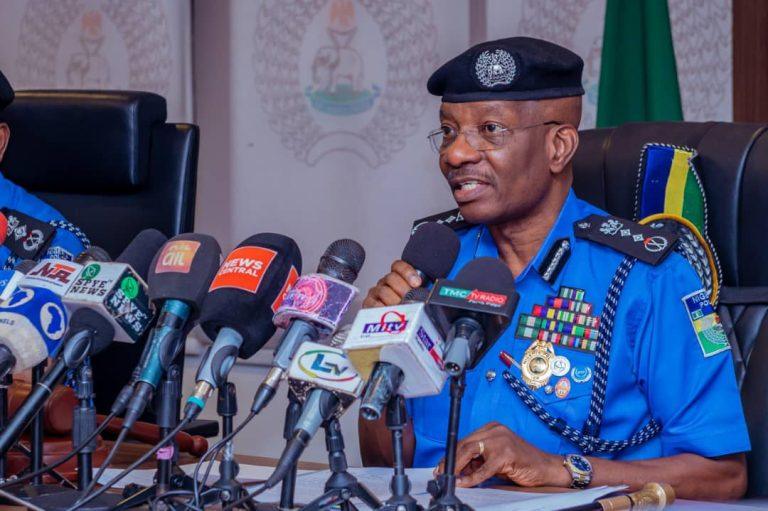
IGP Warns Against Attacks on Police Officers

0

The Nigerian Police says it will no longer tolerate unprovoked attacks on police officers.

Nigeria’s Inspector General of Police, IGP Kayode Egbetokun, gave the warning during a conference with senior police officers in Abuja, Nigeria’s Capital.

IGP Egbetokun lamented recent attacks on 11 Police personnel on September 19 and 22 by suspected armed herdsmen and local militias at Agu Centre, Katsina Ala.

The IGP clarified, ” I have issued warnings against attacks on police officers carrying out their lawful duties.

“Attacks on our personnel are unacceptable. We do not condone any form of assault on police officers performing their legitimate functions.

“Repeatedly, I have appealed to the public: if you disagree with the conduct of any police officer, kindly report the matter to the appropriate authorities.”

The Police Chief emphasised that “every state has a Commissioner of Police, every division has a Divisional Police Officer (DPO), and every area has an Area Commander.”

Egbetokun added that the Police Force also has a Complaint Response Unit in all police formations across the Federation, and their contact details have been publicised several times for the public.

He lamented that “If you disagree with the behaviour of any police officer, do not attack them, report their conduct to their superior. Be assured that such reports will not be ignored.

“All necessary disciplinary actions will be taken against the offending officer.”

He stated that disciplinary measures taken against erring officers were made public to encourage citizens to report misconduct.

According to him, the Force takes reports of misconduct by men and officers seriously and never hesitate to discipline those found culpable.

The Police Chief also emphasised that the authorities would not shut the door on criminals who wished to embrace peace.

The IGP, who responded to questions on the ongoing negotiations with notorious bandit leaders in Katsina State, added that if they were willing to surrender, they would be welcomed.