Home Blog Page 494

Bezos-Backed Perplexity AI in $34.5B Chrome Bid

0

Artificial intelligence start-up Perplexity AI has stunned the tech world with a surprise $34.5 billion (£25.6bn) takeover offer for Google Chrome, the world’s most popular web browser with an estimated three billion users. The three-year-old firm, backed by Amazon founder Jeff Bezos and chip giant Nvidia, is led by Aravind Srinivas, a former Google and OpenAI employee.

READ ALSO: Microsoft Launches AI-Based Copilot Mode On Edge

The bid comes as Google faces mounting antitrust pressure in the United States, including two major lawsuits and a pending federal court ruling that could force it to break up its search business. Google has said it would appeal any order to spin off Chrome, calling such a move an “unprecedented proposal” that would harm both consumer choice and online security.

Perplexity described its offer as a commitment to “the open web, user choice, and continuity for everyone who has chosen Chrome.” In a letter to Alphabet CEO Sundar Pichai, the company argued that moving Chrome to an independent operator focused on user safety would benefit the public.

However, doubts about the seriousness of the bid emerged almost immediately. Judith MacKenzie, head of Downing Fund Managers, called it an “unsolicited bid” that is not yet funded, while technology investor Heath Ahrens labelled it a “stunt” and “nowhere near Chrome’s true value” given the browser’s vast data and reach. Perplexity, valued at $18 billion as of July, has not disclosed how it plans to finance the acquisition.

The start-up has been positioning itself as a rising challenger in the generative AI race, competing with OpenAI’s ChatGPT and Google’s Gemini. Last month, it launched an AI-powered browser called Comet. But Perplexity has also faced controversy, particularly from media organisations accusing it of copyright infringement. In June, the BBC sent a legal letter claiming the company reproduced its content “verbatim” without permission. Perplexity rejected the accusation, framing it as part of an effort to protect Google’s “illegal monopoly.”

This is not the first time Perplexity has made headlines for an audacious move. Earlier this year, it offered to buy the U.S. operations of TikTok, which faces a September deadline to be sold by its Chinese owner or be banned in the country.

As part of its Chrome proposal, Perplexity said it would keep Google as the browser’s default search engine while allowing users to change settings. It also pledged to continue supporting Chromium, the open-source platform that underpins Chrome and other browsers such as Microsoft Edge and Opera.
Comply with Revised Cash Management Policy – AGF directs MDAs

The Nigerian Government has issued a directive to all Ministries, Departments, and Agencies (MDAs) to ensure strict adherence to its revised cash management and bottom-up cash planning policy.

Speaking at a stakeholders’ engagement on the implementation of the capital budget and related issues in Abuja, the Accountant General of the Federation, Shamsudeen Ogunjili, stated that the policy aims to improve transparency, accountability, and efficiency in the system.

“The Federal Government initiated the implementation of a cash management and bottom-up cash planning policy as a basis for the execution of the 2024 Capital Project. The policy provides a set of rules and general guidelines for the conduct of government business in the planning and management of cash resources to ensure effective and efficient service delivery.

“Efficient and prudent cash management is central to any meaningful development, particularly in a developing economy like ours. The policy is designed to provide strategies for cash flow planning and management such that inflows are realised, outflows are controlled, and value for money is achieved in line with public expectations—thereby avoiding discretionary spending, minimising deficits, and reducing unnecessary borrowing.

“It also ensures that payments to end beneficiaries are made immediately upon issuance.”

He lamented that MDAs continue to flout procurement processes, thereby creating payment challenges for the Office of the Accountant General of the Federation (OAGF).

“The implementation of the policy is hampered by gross non-compliance with the Public Procurement Act, 2007, and other extant regulations, leading to financial commitments that far exceed the Federal Government’s monthly projected cash flows.

“We have reviewed the trend where MDAs award contracts solely based on budgetary provisions, which contradicts the annual budget implementation plan from which cash plans and funding strategies are derived.

More worrisome is the situation where the cash needs uploaded by most MDAs are limited to employee payables and mobilisation fees, neglecting ongoing and completed projects provided for in the budget. This has forced some contractors to approach the Federal Ministry of Finance or the OAGF for intervention, claiming that the funds used to execute the projects were borrowed from banks at high interest rates.”

The revised policy is part of the government’s broader public finance management reform.

The Federal Government has declared a new era of fiscal discipline in capital project execution, warning MDAs against awarding contracts without proof of available funds.

The Minister of Finance and Coordinating Minister of the Economy, Wale Edun, announced that Warrants and Authorities to Incur Expenditure (AIEs) must now be issued before any legal commitment is made.

Under the revised framework, MDAs must secure warrants before entering into contracts, aligning public expenditure with available cash and strict financial regulations.

“For the avoidance of doubt, no letter of award, contract signing, or financial obligation should be entered into unless corresponding warrants and AIEs covering the full or committed portion have been duly released,” Edun stated.

The Minister emphasised the critical role of transparent and efficient budget execution in President Bola Ahmed Tinubu’s growth agenda, which targets GDP expansion of at least 7% to lift millions out of poverty.

“Nigeria’s future growth depends on effective, honest, and targeted spending. We must ensure that public resources work harder for our people and our economy,” he added.

PIAK

President Tinubu Will Continue to Strengthen NDLEA – NSA

0

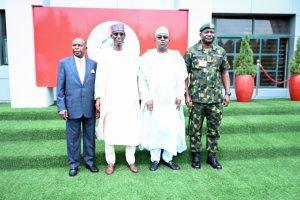
The National Security Adviser, Mallam Nuhu Ribadu, has said the administration of President Bola Ahmed Tinubu will continue to strengthen the National Drug Law Enforcement Agency (NDLEA) because of its strategic value to the nation’s security architecture.

Ribadu stated this at the commissioning of 46 new vehicles for NDLEA’s strategic commands and formations at the agency’s headquarters in Abuja. He commended the Chairman/Chief Executive Officer, Mohamed Buba Marwa, and his team for their sustained commitment, discipline, and energy in transforming the NDLEA into a result-oriented force against illicit drugs.

“I commend the Chairman, General Mohamed Buba Marwa, for his discipline, commitment, and transformative leadership. Under his watch, NDLEA has become a result-oriented force addressing the grave threats posed by illicit drugs that undermine our national security, social stability, and public health,” Ribadu said.

“This event is not just about commissioning vehicles. Without the mobility to swiftly reach danger points, intercept traffickers and move resources where they are most needed, our fight is severely constrained.

The link between drug trafficking and insecurity is systemic. Criminal gangs thrive on drug profits. Insurgents and armed groups fund their activities with it. Countless young Nigerians fall victim to addiction, with devastating consequences for families and communities,” he added.

Ribadu said the Renewed Hope Agenda of President Bola Ahmed Tinubu prioritises drug control as a pillar of national security strategy. “The President’s unwavering support through funding, inter-agency cooperation, and policy alignment has directly enabled today’s milestone,” he noted.

He pledged full backing for the NDLEA, saying the vehicles would boost operational presence, strengthen deterrence, and ensure no trafficker escapes justice. He urged officers to view the commissioning as a call to action — to do more, remain vigilant, act within the law, and uphold the highest standards of professionalism.

“The NDLEA is not only building lives, but also restoring dignity and shaping national policy. Use these resources responsibly, act within the law, and remain vigilant,” Ribadu said.

In his welcome address, Marwa said the event reflected both the government’s commitment to equipping frontline institutions and the NDLEA’s transformation into a respected and effective agency.

“Today’s event is a milestone, as NDLEA is now counted among a distinguished group of security and drug law enforcement agencies around the world that are not only visible in their operations but equally respected and making impacts,” Marwa said.

He thanked President Tinubu for his strategic support, noting that under the Renewed Hope Agenda, national stability, institutional reform, and the safety of Nigerian lives remain top priorities.

Marwa highlighted that in the past two years, NDLEA arrested 40,887 drug offenders, including 45 drug barons, seized over 5.5 million kilograms of illicit substances, destroyed 704.445 hectares of cannabis farms, and secured 8,682 convictions.

“Equally important is the fact that 24,173 drug users have been treated and rehabilitated, while 8,698 sensitisation activities were carried out nationwide. These clearly create a fair balance between our drug supply reduction and drug demand reduction efforts,” he said.

Attorney General of the Federation and Minister of Justice, Prince Lateef Fagbemi, SAN, praised Tinubu for enabling NDLEA’s achievements, saying: “Without an understanding President, it would be very difficult to have this type of gathering today. Whenever we are asked to showcase our report card, I’m very quick to say put NDLEA first.”

Chief of Defence Staff, Gen. Christopher Musa, also commended NDLEA’s resilience, describing the vehicle procurement as a “significant boost to the agency’s operational response capability and overall effectiveness in the fight against drug trafficking and substance abuse.”

Director General of the Bureau of Public Procurement, Dr. Adebowale Adedokun, congratulated Tinubu for appointing Marwa, describing NDLEA as “an example for other agencies of government” in due process and operational standards.

A total of 38 SUVs were distributed to zonal, strategic, and state commands, while 10 sedan cars went to NDLEA’s directorates. Fifteen newly promoted Commanders of Narcotics were also decorated with their new rank of Assistant Commander General of Narcotics at the ceremony.

PIAK

NHRC Condemns Treatment of Ibom Air Passenger

0

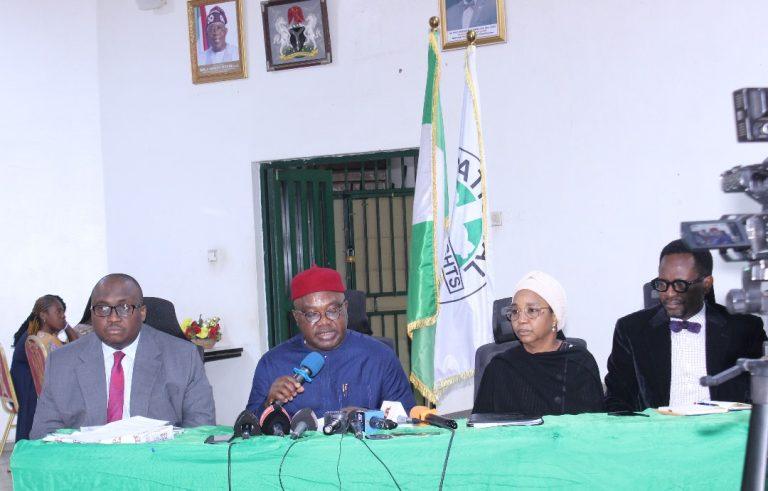
Nigeria’s National Human Rights Commission (NHRC) has condemned the treatment of airline passenger Ms. Comfort Emmanson, captured in viral videos showing her being forcefully removed from an Ibom Air flight and later exposed in a compromising manner.

At a press briefing in Abuja, NHRC Executive Secretary, Tony Ojukwu, said the incident — and the public dissemination of the footage — amounted to a “clear affront to human dignity,” stressing that such acts “have no place in a civilised society.”

He emphasised that the prohibition of torture and inhuman treatment is an “absolute and non-derogable right” under Nigerian, African, and global human rights law. Citing Section 34 of Nigeria’s constitution, the UN Convention Against Torture, and the African Charter on Human and Peoples’ Rights, Ojukwu said the passenger’s dignity and privacy were severely violated.

The NHRC also criticised the recording and viral spread of the incident online, describing it as “a secondary form of harm.”

The Commission welcomed recent government actions addressing this case and another involving ValueJet Airline and musician Wasiu Ayinde Marshall but insisted that “all human rights issues arising from both cases should be thoroughly addressed in the interest of rule of law and justice.”

Ojukwu urged airlines to adopt clear protocols and provide staff training to handle disputes without resorting to force or humiliation, warning that companies could be held accountable for rights abuses under the UN Guiding Principles on Business and Human Rights.

The NHRC called on aviation authorities to review passenger-handling procedures to ensure compliance with human rights standards and pressed prosecutors to act swiftly against those implicated under Nigeria’s Anti-Torture Act.

The Commission also issued an unprecedented advisory to all aviation stakeholders on “the right to dignity and protection against torture, inhuman and degrading treatment in aviation operations.”

Ojukwu pledged continued monitoring to ensure Ms. Emmanson, other passengers, and airline staff are protected, and that those responsible are held fully accountable.

PIAK

Skills: Nigeria Targets 20 Million Youths with New Programme

The Nigerian Government has unveiled a national skills programme targeting 20 million youths in the country with jobs, training, and entrepreneurship opportunities by 2030, with at least 60 per cent of beneficiaries expected to be women.

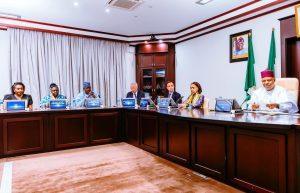
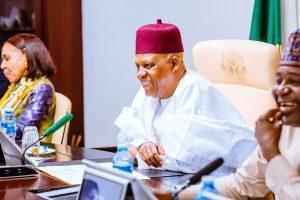
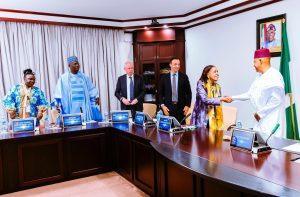
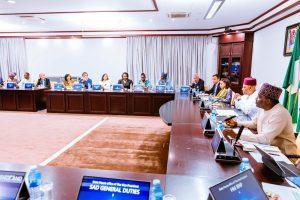
Speaking during the inaugural board meeting of Generation Unlimited (GenU) Nigeria, Vice President Kashim Shettima described Nigeria’s youthful population as the nation’s superpower and comparative advantage in a rapidly ageing world.

This followed Vice President Shettima’s assumption of his role as chairman of the reactivated GenU Nigeria board, which has a mandate to connect millions of young Nigerians to employment by 2030. The meeting coincided with International Youth Day 2025, themed “Youth Innovation for a Sustainable Future.”

“With over 60 per cent of our population below the age of 25, we cannot afford to squander this asset. An advantage unrealised is merely potential wasted. We must refine it, we must invest in it, and we must channel it towards productive destinies,” Shettima said.

The Vice President warned that Nigeria’s “national skills ecosystem faces a trilemma” — too many young people excluded from the start, training disconnected from livelihoods, and inadequate infrastructure for large-scale hands-on learning.

“Another isolated training scheme will not deliver us from these constraints. What we need is systemic change — a new architecture built to last,” he added.

The centrepiece of the initiative is the Digital Access and Livelihoods Initiative (DALI), described as a demand-driven national talent pipeline linking foundational and work-readiness training directly to guaranteed jobs or enterprise pathways.

“We need a platform to unify government, private sector leaders, development partners, and the boundless energy of our youth under a single banner. This is a proposition to attract coordinated investment and replace fragmented efforts with a common front,” Shettima said.

He pledged that all training under the initiative would align with the National Skills Qualification Framework to ensure Nigerian youths have both the skills to work and the credentials to compete globally.

Charging the new board, in collaboration with UNICEF and other partners, to proceed with full development and implementation of DALI, the Vice President declared: **“Let this be the turning point. Let this be the day history remembers as the moment we stopped managing youth unemployment as an inevitable crisis and started unlocking the creative, entrepreneurial, and intellectual capital of our people.

“We owe young Nigerians jobs. We owe them hope. We owe them the future — not just promises, but proof that their country believes in them enough to invest in their success.”

Minister of Youth Development, Comrade Ayodele Olawande, said the administration’s vision was clear — to create jobs, bridge the skills gap, and empower young people through human capital development, not token gestures.

“Nigerian youths are not limited. We have the talent, creativity, and courage to thrive. What we need is a meaningful and enabling environment, and we must work together as one team to create and deliver real impact,” he said.

Special Assistant to the President on Strategy and Policy (Workforce Development), Rimamskeb Nuhu, noted that the government had identified three major challenges facing young Nigerians — foundational skills gap, livelihood disconnect, and infrastructure deficit.

Other stakeholders at the meeting highlighted achievements across GenU 9JA’s three pillars — Digital Learning and Connectivity, Workplace Readiness, and Youth Engagement and Empowerment.

UNICEF Nigeria Country Representative and GenU 9JA co-chair, Ms. Wafaa Saeed, said a key achievement was the formal recognition of Youth Agency Marketplace (YOMA) as Nigeria’s national youth opportunities aggregator, a one-stop digital platform connecting young people to skilling, innovation, volunteering, and economic pathways.

Launched in 2021, GenU 9JA is a Public-Private-Youth-Partnership platform targeting 20 million Nigerian youth by 2030, supporting their transition from learning to earning, productive work, and active citizenship.

PIAK

Nigeria Rallies African Nations for Defence Chiefs Conference

Nigeria has reaffirmed its commitment to regional and continental security, urging African nations to unite in tackling shared threats and promoting peace.

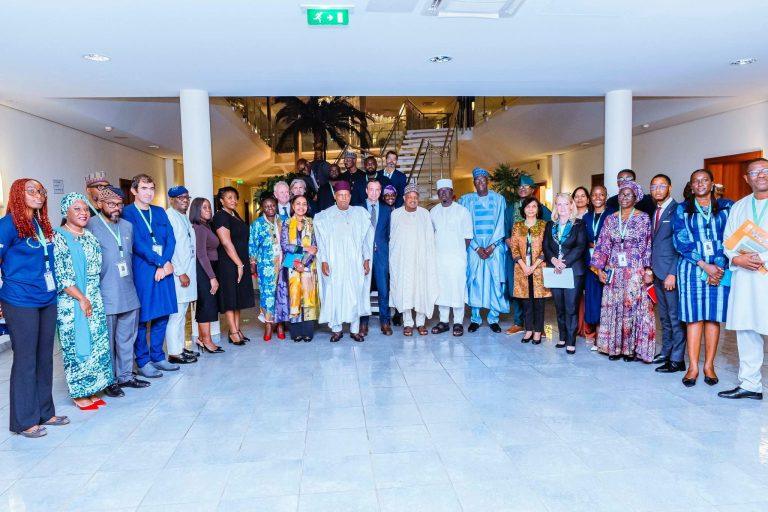
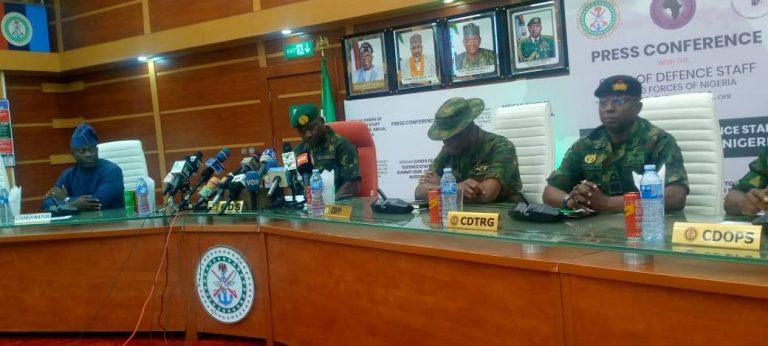
Chief of Defence Staff, General Christopher Musa, made the call while briefing journalists on the forthcoming maiden African Chiefs of Defence Staff Conference in Abuja, scheduled for 25–27 August 2025.

The conference, themed “Combating Contemporary Threats to Regional Peace and Security in Africa: The Role of Strategic Defence Collaboration”, will gather defence chiefs from across the continent to develop African-led solutions to pressing security challenges.

General Musa said Nigeria is spearheading efforts to strengthen collaboration among African military leaders, noting the country’s track record in restoring peace and stability across the continent, supporting nations in conflict, and contributing to international peacekeeping.

With security threats rising across Africa, he stressed the need for solidarity among nations to collectively identify challenges and propose sustainable responses.

“The collaboration is seen as a reflection of the strong support from President Bola Ahmed Tinubu and the Nigerian people, recognising that the fight against asymmetric warfare requires more than just military action. The leadership calls for whole-of-government and whole-of-society involvement to ensure lasting peace and security,” he said.

He added that “strategically, the initiative seeks to enhance intelligence-sharing, joint training, and coordinated operations among African countries.”

The Defence Chief further explained that the conference will strengthen the African Union’s peace and security mechanisms, such as the ECOWAS Standby Force, while integrating private sector innovation into defence strategies.

“Ultimately, Nigeria’s goal is to establish a platform where Africans can discuss and solve their own problems, reinforcing the principle that charity begins at home,” he stressed.

According to organisers, all 54 African countries have been invited to the summit, with over 90 per cent confirming attendance.

PIAK

Nigeria Embarks On Major Health Sector Reform—SWAp

0

The Sector-Wide Approach (SWAp) says Nigeria is initiating a health sector reform that experts believe could redefine the nation’s path toward self-reliance in healthcare and broader development.

Dr. Muntaqa Umar-Sadiq, National Coordinator of the SWAp Coordination Office, disclosed this on Thursday in Abuja during an interview with the Newsman.

Umar-Sadiq said that the move, anchored in the Nigeria Health Sector Renewal Investment Initiative (NHSRII) and driven by SWAp, aimed to build a better-integrated, efficient health system capable of sustaining national responses to HIV/AIDS, Tuberculosis, and Malaria.

He described the reform as “audacious and worthy,” noting that it reflects the deep commitment of federal, state, and community stakeholders, alongside development partners.

“This week, we reignited a new chapter in building an efficient, better-integrated health system that can sustain and strengthen our national response to HIV/AIDS, Tuberculosis, and Malaria.

“What makes this effort different is that it sits within a larger transformation, the Nigeria Health Sector Renewal Investment Initiative,” he added.

He said that the SWAp framework Prioritises demand-driven integration for resource efficiency, the use of data intelligence for high-quality decision-making, and a unified national conversation to strengthen collaboration and reduce fragmentation.

“In response to shifts in global development funding, Nigeria established a Technical Working Group on AIDS, Tuberculosis, and Malaria (ATM-TWG) to quantify immediate funding gaps.

“In record time, the country’s ATM programmes, NACA, NASCP, NTBLCP, and NMEP, alongside key agencies such as the NPHCDA, NHIA, the DHPRS of the Federal Ministry of Health and Social Welfare, and the SWAp Coordination Office, produced a cost analysis that informed a ₦200 billion domestic investment,” he said.

READ MORE:Nigerian Government Engages Health Unions to Sustain Peace

According to Umar-Sadiq, a transition strategy is now being developed to address foundational gaps, strengthen programme arrangements, and enhance stakeholder engagement.

He said that the goal was to achieve population-level effectiveness and ensure optimal efficiency in the use of funds.

“While integration is embedded in the founding principles of our health system, SWAp provides the enabling environment for accelerated institutionalisation and deliberate policy reform where needed,” he added.

He said that on Aug. 11–12, stakeholders from across the health sector gathered in Abuja for a generative workshop to co-create solutions capable of unlocking efficiency in the system.

“The meeting produced dozens of integration opportunities Nigeria will pursue over the next three years.

“This journey blends passion and faith. It is a bold step that reflects the deep commitment of our leadership and partners at all levels,” he added.

The report said that observers says that the reform’s success will depend on sustained political will, strong collaboration, and consistent funding, but many agree it marks one of Nigeria’s most coordinated efforts to take charge of its health future.

Jigawa, Hadejia Jama’are Basin Partner on Irrigation, Flood Control

0

The Jigawa State Government in North West Nigeria, has reaffirmed its commitment to working closely with the Hadejia Jama’are River Basin Development Authority (HJRBDA) to expand irrigation infrastructure, tackle flooding, and boost agricultural productivity across Jigawa State.

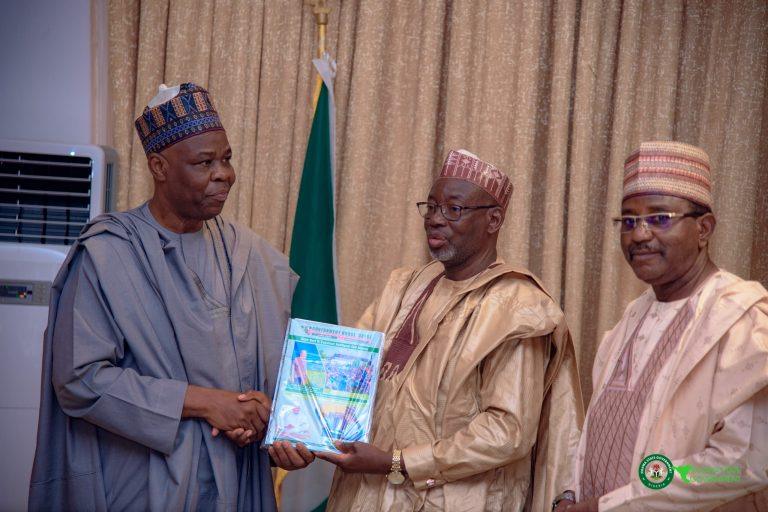
Governor Umar Namadi made the pledge when HJRBDA’s Managing Director, Engr. Rabi’u Suleiman Bichi, led the agency’s management team on a courtesy visit to the Government House, Dutse.

Namadi revealed that the Hadejia Valley alone boasts 24,000 hectares of farmland, with only 6,000 currently developed, as plans are underway to bring the remaining 18,000 hectares into cultivation, a move he said would greatly enhance livelihoods.

“I have discussed this twice with Mr. President, and he has approved the development of an additional 6,000 hectares from international resources.

“A formal request has been submitted to the Minister of Water Resources, and I am confident that the Hadejia Valley will soon get the necessary resources,” the governor said.

Governor Namadi also highlighted ongoing initiatives to revive 10 abandoned dams, extend irrigation to upland communities, and replicate the successful Lalashi industrial borehole scheme in other parts of the state.

“These dams, once functional, will add 4,500 hectares to production capacity and reduce rural poverty,” he stated.

On flood control, Namadi described seasonal flooding as “critical and worrisome,” noting that the state has constructed 120 kilometres of embankments and cleared 70 kilometres of Typha grass to protect farmlands and communities.

In his remarks, Engr. Bichi commended the state government’s support in clearing Typha grass and improving water management.

He disclosed that HJRBDA has prepared proposals to expand irrigation by an additional 6,500 hectares in Jigawa and is executing projects approved by President Bola Ahmed Tinubu, including the Greater Dutse Water Supply Scheme and repairs to the Hadejia Barrage.

“With 5,440 hectares currently developed, farmers are producing over 220,000 metric tonnes of crops annually, valued at more than ₦154.4 billion, including wheat, rice, maize, tomatoes, and vegetables,” Bichi said.

He added that the 2025 budget allocates over ₦28 billion for HJRBDA projects in Jigawa, alongside ₦59 billion already set aside for the Greater Dutse Water Supply, small earth dams, erosion control works, and new irrigation schemes.

Details of the engagement were contained in a press statement by the governor’s spokesperson, Hamisu Gumel.

Nigeria, India Deepen Military Ties with Security Talks

Nigeria and India are taking fresh steps to boost their long-standing military partnership, with talks focusing on counter-terrorism, maritime security, and defence industry collaboration.

This was contained in a statement signed by the Personal Assistant on Media to the Minister of State for Defence, Ministry of Defence, Ahmad Dan-Wudil.

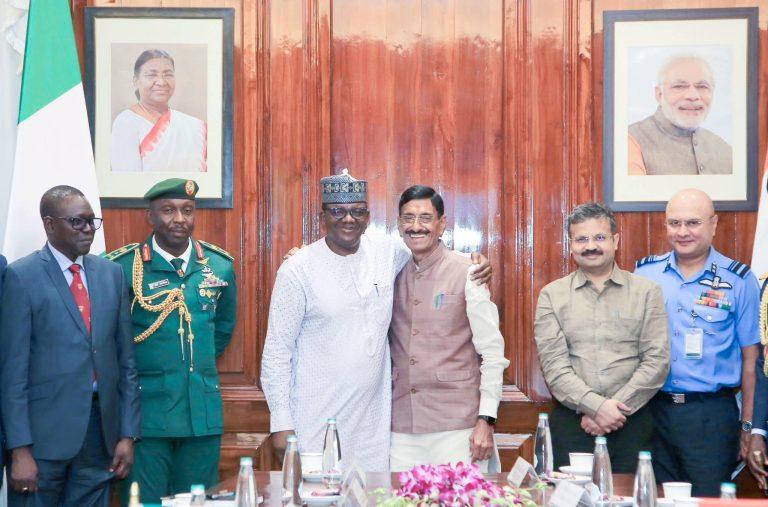
Nigeria’s Minister of State for Defence, Dr. Bello Matawalle, met his Indian counterpart, Mr. Raksha Rajya Mantri Sanjay Seth, in New Delhi. The high-level bilateral meeting explored joint training, research and development, hydrography, and anti-piracy operations.

India, known for its cutting-edge military hardware, showcased its capacity to supply Light Combat Aircraft (LCA), Light Combat Helicopters (LCH), and Offshore Patrol Vessels (OPVs). “India stands ready to fully support Nigeria’s procurement and capacity-building needs,” Minister Seth assured.

In response, Matawalle invited the Indian delegation to visit Nigeria’s defence industry to explore investment and production partnerships aimed at boosting local manufacturing. “We welcome Indian expertise and investment to strengthen Nigeria’s defence production capabilities,” he stated.

The Nigerian minister, on a four-day official visit to India (Aug. 11–14), also held talks with Indian defence industry leaders to solidify growing ties.

Nigeria and India’s military relationship dates back to the early 1960s. As two of the world’s largest democracies in their regions, they remain united in promoting peace, stability, and modern defence capabilities.

PIAK

PDP satisfied with Ibadan convention plans, demands Members’ Loyalty

0

Nigeria’s opposition party, the Peoples Democratic Party (PDP), says it is fully prepared to hold its National Convention in Ibadan, Oyo State, on November 15–16, 2025, and has restated its demand for absolute loyalty from all members.

Addressing journalists at the party’s national secretariat in Abuja, PDP National Publicity Secretary Debo Ologunagba expressed satisfaction with the arrangements so far and assured that the event would be seamless and successful.

He disclosed that the next National Executive Committee (NEC) meeting would be held on August 25, 2025, to receive reports from the Zoning Committee and the National Convention Organising Committee, both of which are already working on logistics, accommodation, security, and other arrangements.

“We are satisfied with preparations for the convention. Feedback from our members nationwide shows great enthusiasm, especially as this is the first time the PDP will hold its national convention in the Southwest,” Ologunagba said.

He commended the Oyo State Government for setting up a local organising committee to work with the national body, describing the collaboration as “seamless and effective”.

Retrieving Mandates

On efforts to reclaim mandates from members of the National Assembly and other elected officials who defected from the party, Ologunagba said the NEC had directed the National Legal Adviser to take constitutional steps to retrieve such positions.

“Constitutionally, they have lost their seats by reason of defection when there was no division in our party. We have taken the appropriate action, but we cannot resort to self-help,” he explained.

While noting that some of the cases were already in court, he insisted the party would follow due process.

100% Loyalty Demand

Ologunagba stressed that the PDP would not tolerate disloyalty in any form.

Membership of the party is voluntary. There’s easy entry and easy exit. What we demand is 100% loyalty. Disloyalty will not be condoned,” he warned.

He said some members who left the party were misled or acted in anger, but now that the party is stable and united, the “right time to return” had come.

Disciplinary Actions and Reconciliation

Asked why the party had not acted on certain disciplinary committee recommendations, including those concerning prominent members, Ologunagba said reconciliation remained the PDP’s strategic approach.

 “Politics is not a zero-sum game. Sometimes you swallow bitter pills and move on. We are engaging members at different levels and will always act in line with our constitution,” he stated.

South-South Congress

The PDP spokesman confirmed that the tenure of the South-South Zonal Committee expired in March 2025 and that a caretaker committee, led by Elder Emma Ogidi, had since been inaugurated in line with the party’s constitution.

Presidential Candidates

Responding to questions about potential presidential aspirants, including former President Goodluck Jonathan and former Anambra State Governor, Peter Obi, Ologunagba declined to speculate.

“We have many performing governors and other qualified members who can lead this country. If you want to know if Jonathan or Obi is contesting, ask them directly,” he said.

Looking to 2027

Ologunagba said the PDP was focused on uniting its ranks ahead of the 2027 general elections and offering Nigerians a credible candidate.

“We are coming out stronger than ever. Our national convention in Ibadan will be a celebration of democracy and a demonstration of the PDP’s readiness to rescue Nigeria,” he concluded.


Confidence Okwuchi