Home Blog Page 538

Australia to Raise Cap on International Students, Prioritize Southeast Asia

0

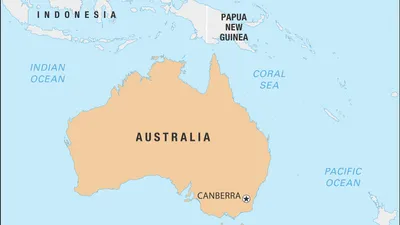
Australia will increase its cap on international students by 9% in 2026, bringing the total to 295,000, the government announced Monday. The move includes a specific focus on welcoming more students from Southeast Asia as part of broader efforts to balance migration and national interest.

The current limit, set at 270,000 for 2025, was introduced last year to manage record migration levels that contributed to housing shortages and rising prices. The additional 25,000 spots for 2026 come as the government says its reforms are successfully reducing unsustainable student visa growth.

“This is about ensuring international education grows in a way that benefits students, institutions, and the country,” said Education Minister Jason Clare.

In the 2023 fiscal year, nearly 600,000 student visas were granted, with the largest groups coming from China and India. As demand rebounded post-COVID, the government introduced a series of controls, including doubling student visa fees in 2024 and closing loopholes that allowed continuous visa extensions.

Assistant Minister for International Education Julian Hill said the reforms were “bearing fruit,” enabling the modest expansion. “The numbers were growing out of control,” he said in an interview with ABC. “Tough decisions have brought them to a more sustainable level.”

Under the updated allocation, two-thirds of the slots will go to universities and one-third to the vocational training sector. Larger public universities will be required to ensure students have access to safe housing and must boost enrollment from Southeast Asia to qualify for additional spots.

“It’s important for Australia’s soft power to attract the best and brightest from our Southeast Asian neighbours—students who will carry a piece of Australia with them for life,” Hill added.

The emphasis on Southeast Asia aligns with Prime Minister Anthony Albanese’s strategy to deepen regional ties and reduce reliance on China.

Universities Australia welcomed the announcement. “This is a sensible and strategic step,” said CEO Luke Sheehy. “The government has responded to our calls to grow this critical sector.”

International education is Australia’s top services export, contributing over A$51 billion (US$33 billion) to the economy in 2024.

Reuters/s.s

Health Emergency Initiative Honoured For Transformative Healthcare Impact

0

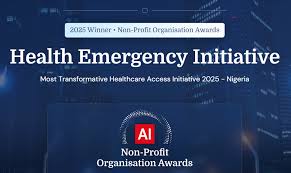
The Health Emergency Initiative (HEI), a non-governmental organisation, has been recognised for its exceptional efforts in providing emergency healthcare access, saving lives, and supporting vulnerable communities across Nigeria.

In a statement issued on Monday, HEI announced that it received the “Most Transformative Healthcare Access Initiative 2025” award at the Non-Profit Organisation Awards, organised by Acquisition International, a UK-based global business publication.

It said the award serves as a reminder that consistent, compassionate action can change lives.

Since its inception, Health Emergency Initiative has worked tirelessly to ensure that people in medical emergencies are not left to the mercy of chance or poverty.

Through timely interventions, collaboration with public hospitals, and an unrelenting drive to bridge the gap in access to critical healthcare, the organisation has restored hope and preserved dignity where it is often threatened most.

READ MORE:Ongoing Negotiations Target Health Sector Concerns – Nigerian Government

Mr Paschal Achunine, Executive Director of HEI, said, “This award is a powerful affirmation of the mission that drives us every day.

“It is a moment of reflection on how far the mission has come, and a celebration of every individual whose life has been touched by this work.

“We are deeply grateful for this recognition and even more determined to expand our reach, so that no Nigerian is left without help in a moment of medical crisis.”

The Non-Profit Organisation Awards by Acquisition International are awarded solely on merit and known for their rigorous selection process.

It shines a light on Organisations whose efforts demonstrate meaningful change and the 2025 edition celebrates those quietly driving transformation worldwide.

Stakeholders Validate Revised National Youth Agriculture Manifesto

0

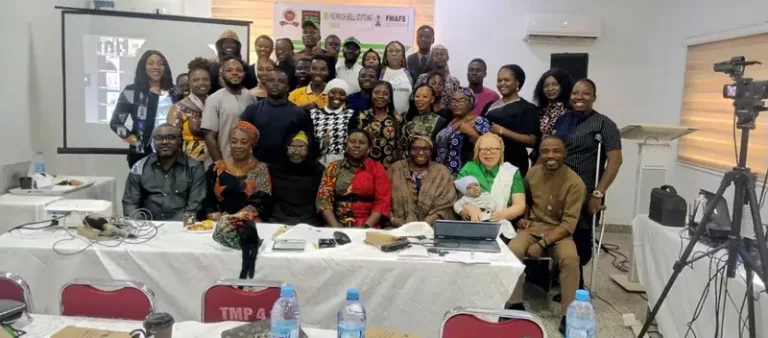
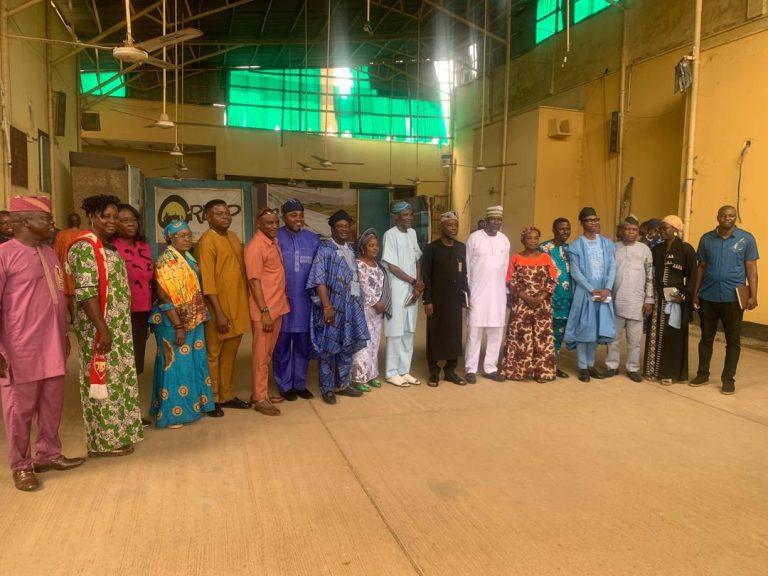
The Federal Ministry of Agriculture and Food Security, in partnership with the Leonard and Nkiruka Foundation (LANOF) and the Heinrich Böll Foundation (HBF), has validated the revised National Youth Manifesto in Agriculture for 2025–2030, which serves as both an advocacy tool and an investment roadmap.

It aims to strengthen institutional collaboration among government agencies, civil society organisations, the private sector, and youth networks across Nigeria’s agricultural sector.

Speaking at the consultative forum on agroecological practices and the validation of the manifesto, Mrs. Nkiruka Okoronkwo, Co-Founder of LANOF, stated that the document reflects the real experiences, priorities, and aspirations of young people engaged in agriculture.

She explained that the manifesto seeks to influence national policy by advocating improved access to land, finance, knowledge, markets, and climate-resilient technologies, while also amplifying youth leadership in transforming Nigeria’s food systems.

According to her, reviewing the 2017 version of the manifesto was necessary to align it with current realities and the evolving needs of young people in the agricultural sector.

“The validation is intended to incentivise the sector and enhance youth participation.

“The revised manifesto was reviewed by LANOF, with support from HBF and endorsement from the Federal Ministry of Agriculture and Food Security.

“We are here to validate the National Youth Manifesto in Agriculture and the Nigerian Youth in Agribusiness Call to Action, which is modelled after the African Union Youth Agribusiness Call to Action,” she added.

Okoronkwo outlined the manifesto’s objectives as providing a practical and comprehensive framework to guide youth participation across agricultural value chains.

She further noted that it advocates the integration of youth priorities into agricultural policies and aims to expand access to youth-responsive financing mechanisms, including grants, loans, and impact investments.

Dr. Saudatu Zahradeen, Gender, Youth, and Nutrition Adviser with the Country Programme Advisory Team (CPAT) of the International Fund for Agricultural Development (IFAD), said the forum was a step towards empowering youth as transformative agents in Nigeria’s agricultural landscape.

She commended the commitment of young agripreneurs, practitioners, policymakers, and development partners to co-create a future grounded in sustainability, inclusivity, and innovation.

“The Nigerian Youth in Agribusiness Call to Action and the revised manifesto are timely and visionary instruments that provide a roadmap for influencing policy, reforming institutions, and guiding programme implementation,” she said.

“Through IFAD’s country programmes such as the Value Chain Development Programme (VCDP), we remain committed to creating enabling environments where young people can thrive as entrepreneurs, leaders, and stewards of Nigeria’s agricultural future.”

Mr. Donald Ofoegbu, Programme Manager at HBF, said the next phase would involve finalising the document and presenting it to the Ministers of Agriculture, Youth and Sports, and Women Affairs.

He added that it would also be submitted to relevant National Assembly Committees, including those on Agricultural Production and Services.

“We want young people to take ownership of this advocacy and use it to engage with their state and local governments.

“Beyond validation, we will be training young farmers in organic agriculture and agroecology and enhancing agribusiness value chains to drive job creation.

“Partnership is essential to scaling youth participation in agribusiness, which in turn can significantly reduce unemployment and crime,” Ofoegbu said.

Kwara State Approves N20bn To Upgrade School Facilities

0

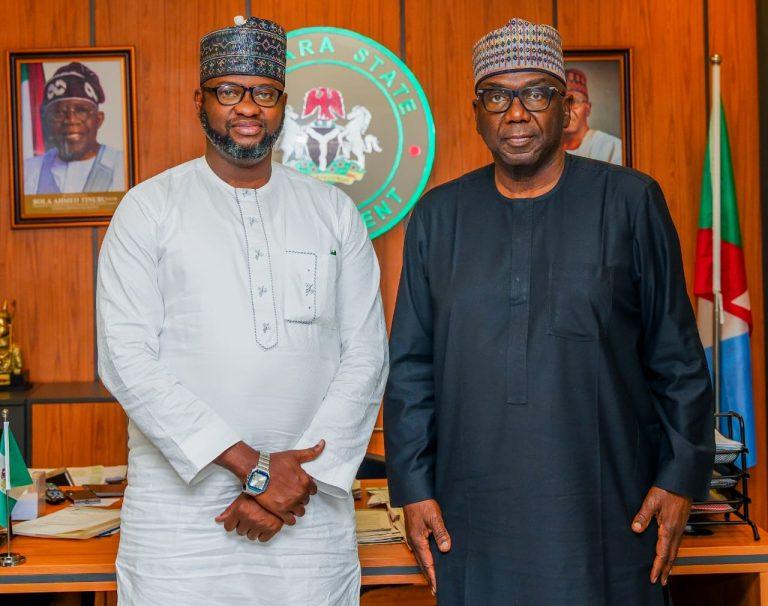
The Kwara State Governor, North Central Nigeria AbdulRahman AbdulRazaq has directed that N20bn be allocated in the supplementary budget for further revamp of school infrastructure across the state. 

Doubling down on its record, the new investment will strengthen the massive infrastructural upgrade in public schools, which the administration has embarked upon since 2020 after retooling Kwara’s relationship with the Universal Basic Education Commission (UBEC).

His Excellency has instructed that we dedicate another N20bn to school infrastructural upgrades. The process has started already. The designs are being made, and we will get down to this as soon as the supplementary budget is approved,” the Commissioner for Education and Human Capital Development,   Lawal Olohungbebe said in a statement. 

“This is not a standalone effort. It is only another major intervention of the administration to scale up what we have been doing. Between 2019 and now, the administration has worked on more than 1,254 classrooms — apart from several other special interventions.”

Olohungbebe said the administration is proud to have implemented SUBEB-UBEC school intervention projects from 2014 and now — a feat that he said is unique to the Abdulrazaq administration. 

Olohungbebe said the new intervention, which will also include laboratory and sanitation facilities, targets schools in different parts of the state, complementing the ongoing interventions at SUBEB. 

“Despite our huge interventions, we acknowledge that there are still gaps, and that is exactly why His Excellency is approving another special intervention to further close the gaps in school infrastructure,” he added.

INEC Targets Higher Voter Turnout in Kwara State

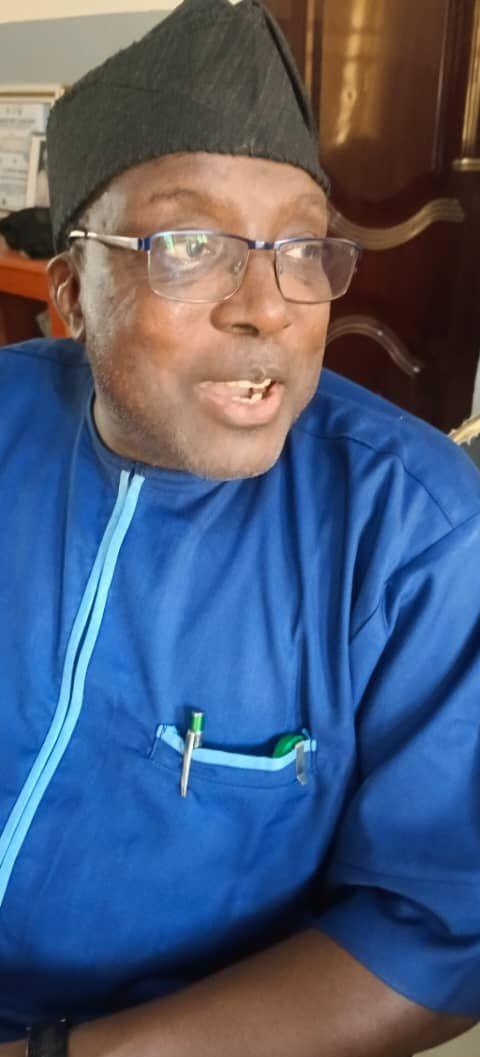
The newly redeployed Resident Electoral Commissioner (REC) in Kwara State, Mr Hale Gabriel Longpet, has disclosed plans by the Independent National Electoral Commission (INEC) to significantly increase the state’s voter population ahead of the 2027 general elections.

Mr Longpet made this known during a chat with newsmen in Ilorin, the capital of Kwara State, North Central Nigeria, where he explained that a major part of his mandate is to improve voter participation, both in registration and turnout.

He expressed concern that Kwara, despite its pivotal role in Nigeria’s political history, had only 1,695,927 registered voters as of the last general election, with 1,537,275 collecting their Permanent Voter Cards (PVCs), amounting to 90.6 per cent collection rate.

“I believe that with the population of Kwara and its strategic relevance, we should have more people registered. My target is to raise the voting population in the state beyond the current figure,” Longpet said.

To this end, INEC is set to kick off the Continuous Voter Registration (CVR) exercise on August 18, 2025 for the online registration while the in-person registration will commence on the 25th of this month across all 16 local government area headquarters in the state, in addition to the state office in Ilorin making 17 registration centres in total.

According to Longpet, the CVR will capture eligible Nigerians who recently turned 18, allow voters to transfer registration due to relocation, replace lost PVCs, and correct errors in names or other personal data. He emphasised that only Nigerians aged 18 and above who have not previously registered are eligible for fresh registration.

“The registration is not starting afresh; it is continuous, and that’s why it’s called Continuous Voter Registration. Many young people have become eligible since the last exercise in 2022,” he explained.

INEC, he added, would also make uncollected PVCs available at the registration centres, enabling those who missed out in previous distribution rounds to retrieve their cards.

The REC also revealed that he would embark on a tour of all 16 local governments in Kwara in the coming weeks as part of sensitisation efforts, particularly to reach hard-to-access areas such as riverine communities.

“We are starting at the local government headquarters, but if the Commission deems it necessary later, we may expand to ward levels as we did previously. We understand the terrain and are planning accordingly,” he said.

He stressed that INEC is working in collaboration with stakeholders including the National Orientation Agency (NOA), traditional institutions, civil society organizations, and the media to ensure widespread public enlightenment.

The Interagency Consultative Committee on Election Security (ICCES) is also on board to provide security support during the exercise.

Mr Longpet also addressed the issue of voter apathy, stating that many Nigerians still believe their votes don’t count, an assumption he described as false and dangerous to democratic development.

“People think their votes won’t count, but that’s not true. INEC has put in place credible systems like the Bimodal Voter Accreditation System (BVAS) to ensure only legitimate votes are cast and counted,” he stated.

He acknowledged that voter intimidation and violence in some areas discourage participation but assured that the Commission, with support from security agencies, is working to create safer voting environments.

On the issue of political cross-carpeting, Longpet clarified that INEC does not have the power to declare seats vacant following defections by elected officials.

He explained that it is the responsibility of the legislature, either the Speaker of the House of Assembly or Senate President—to notify INEC of any such developments before action can be taken.

Similarly, he reiterated that the conduct of local government elections lies solely with the State Independent Electoral Commissions (SIECs), and INEC’s only contribution is to provide the voter register upon request.

He disclosed that INEC has made submissions to the National Assembly concerning electoral reforms, including the possibility of diaspora voting and early voting for electoral officials.

“These proposals are currently under legislative consideration. We await the outcome,” he noted.

Responding to a question on the viability of electronic voting, Longpet admitted that while desirable, the current infrastructure across Nigeria cannot support it.

“There are areas in Plateau State, for instance, where there is no network coverage at all. Until such gaps are bridged, full electronic voting remains impractical,” he said.

Longpet, who served as REC in Kogi before his redeployment, said his priority is to ensure inclusiveness, transparency, and voter confidence throughout his tenure in Kwara.

“I want to leave Kwara State with a higher and more active voter base than I met. That would be my legacy,” he added.

Kaduna State Governor Dismisses Northern Marginalisation Claims

Kaduna State Governor, Senator Uba Sani, has dismissed claims that northern Nigeria is marginalised under President Bola Ahmed Tinubu’s administration, affirming that northerners hold key positions and are fully represented in the national government.

Speaking to journalists at the State House over the weekend after his meeting with the President on Friday, Governor Sani dismissed the marginalisation narrative as “false” and called on stakeholders to concentrate on collaborative solutions to the region’s developmental challenges.

“You cannot be talking about marginalisation when the Minister of Defence, Minister of State for Defence, the National Security Adviser, the Chief of Defence Staff, and the Chief of Army Staff are all from northern Nigeria. Even the heads of Civil Defence and Immigration are northerners. Agriculture, health—these are also led by northerners. The record speaks for itself”, Sani said.

Acknowledging the region’s socio-economic and security challenges, the governor emphasised that the issues are rooted in history and require a united, collective effort to address.

“The problems of northern Nigeria are deep-rooted. Government alone cannot fix them. We need unity among our leaders, business elites, religious groups, and civil society to drive change,” he stated.

He referenced the recent Arewa House summit held in Kaduna on July 29–30, describing it as “historic and commendable.”

The two-day interactive session held in Kaduna and organised by the Sir Ahmadu Bello Memorial Foundation brought together over 80 top government officials serving under President Tinubu’s leadership

The meeting brought together about 80 government officials and a wide array of stakeholders—from academics and traditional rulers to market women and youth leaders—to deliberate on the region’s future.

“For the first time, such a diverse group met to take a holistic look at our challenges. We agreed, based on data, that no zone in the North is being marginalised”, Sani said.

On education and youth development, Governor Sani cited a 2023 UNICEF report which revealed that 18.5 million children were out of school in Nigeria, with 70 to 80 percent in the North.

“This is not a new problem. In 2019, the numbers were similar. We must change this trajectory with targeted interventions”, he explained.

He called on the North’s wealthy elite to step up and invest in resolving the region’s education and poverty crises.

“The richest man in Africa is from the North. Many of our top business leaders are northerners. We need their support, not just government efforts, to turn things around,” he said.

Governor Sani said he briefed the President on major developmental initiatives mentioning progress in transport infrastructure.

“We are working closely with the federal government on a light rail project to complement our BRT system, which began six months ago,” he said.

In healthcare, the governor revealed that construction has commenced on a cancer treatment centre at the state’s 300-bed Bolami Julio Specialist Hospital, following an agreement reached with President Tinubu during his recent visit to the state.

Providing updates on the Abuja–Kaduna road project, Sani confirmed that the Federal Executive Council has released ₦200 billion for its completion.

“Initially, the plan was to finish the road in 14 months, but with this new momentum, we aim to complete it within eight months,” he said.

Speaking on security concerns, the governor identified the recruitment of 7,000 local vigilantes, who he said have contributed significantly to intelligence gathering.

“Security is not just about military action. It also involves addressing the economic and social root causes of violence,” he stressed.

He concluded by reaffirming President Tinubu’s commitment to peace and development in the Northwest, emphasising that the government is determined to tackle insecurity through a comprehensive strategy that includes socio-economic upliftment.

UNICEF Calls For Inclusive Breastfeeding Support In Communities

0

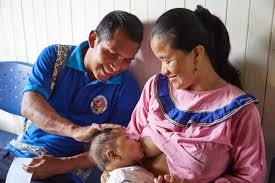
The United Nations Children’s Fund (UNICEF) has called for urgent action to establish sustainable and inclusive community-based support systems that prioritise breastfeeding, particularly in underserved communities.

Mr. Muhammad Okorie, UNICEF’s Social Policy Manager and Officer-in-Charge of the Lagos Field Office, made the call in Benin on Monday during an interview with newsmen.

Okorie spoke as Nigeria joins the rest of the world to mark the 2025 World Breastfeeding Week with the theme “Prioritise Breastfeeding: Create Sustainable Support Systems.”

He stressed that enabling mothers to exclusively breastfeed their babies was not just a matter of personal choice, but a systemic issue requiring the commitment of multiple stakeholders.

”There is a critical need to strengthen systems that support mothers to breastfeed successfully. We must ensure that this system exists, from the family to religious institutions, healthcare systems, workplaces and communities, every actor must play a role,” he added.

According to him, while UNICEF plays a catalytic role in advocating for child health and nutrition, breastfeeding outcomes are shaped significantly by social norms and cultural practices.

”Some mother-in-laws still insist newborns be given water, even when science has shown that breast milk alone contains all the nutrients; water and antibodies a baby needs in the first six months.

”The entire community must ensure that harmful practices are challenged, and the breastfeeding environment is enabled.”

The UNICEF’s Social Policy Manager revealed that the Organisation had been supporting the government at federal, state, and local levels to raise awareness, bust myths, and train health workers on how best to support mothers.

Okorie also said that the agency worked with antenatal and postpartum services to ensure mothers get practical support through their breastfeeding journey.

”One of the key policy areas UNICEF is championing is the extension of paid maternity leave across both public and private sectors.

”Some states like Lagos have reviewed maternity leave duration from four to six months, which is commendable, however, the private sector is often left out.

READ MORE:Kogi Health Ministry Celebrates Breastfeeding Awareness Week

”This week is a perfect opportunity to advocate for inclusive legislation that ensures private-sector employees also benefit,” he said.

He added that even when women return to work, workplaces should offer breastfeeding-friendly environments.

”Many Organisations don’t have breastfeeding rooms or crèches, which adds to the burden of nursing mothers.

”There’s a need for peer support groups, breastfeeding corners, and enabling work spaces. All of this is essential to help women meet the target of exclusive breastfeeding,”he further said.

Okorie also stressed the importance of early initiation, adding that a child deserved and had the right to be put to the breast within the first one hour of birth.

”That first breast milk is not just food, it is the child’s first vaccine and the first bond of love,” he said.

Propaganda Battles Ease as North, South Korea Halt Border Broadcasts

0

South and North Korea remain technically at war, with the 1950–53 Korean War ending in an armistice rather than a peace treaty. Over the years, both nations have used border loudspeakers to broadcast propaganda as tensions have fluctuated.

In 2018, then-President Moon Jae-in dismantled the loudspeakers as part of a broader agreement to halt hostile acts that could escalate military tensions. However, in 2024, President Yoon Suk Yeol reinstated the broadcasts—along with blasts of K-pop music—in response to North Korea’s provocation of sending trash-filled balloons across the border.

Following Seoul’s suspension of the broadcasts in June, North Korea also appears to have ceased its transmissions, which had long disturbed residents near the border, according to South Korean officials.

Despite the de-escalation, Kim Yo Jong, the influential sister of North Korean leader Kim Jong Un, dismissed the move, stating it was not an action worthy of appreciation.

Reuters/s.s

Anambra 2025: APC Candidate Commits To Tackle Insecurity, Others

The Candidate of All Progressives Congress (APC) for Anambra Gubernatorial Election, Prince Nicholas Ukachukwu, has made a strong case for a brand new leadership direction to address mounting security and social welfare challenges facing the citizens of the state.

He enumerated numerous state’s pressing challenges and noted that only an immediate change in leadership through the opportunity presented by the upcoming governorship poll would solve it.

While fielding questions from newsmen in Awka, he lamented that Anambra State was lagging behind in key areas and sectors including, security of lives/property, medicare, and basic infrastructure.

Prince Ukachukwu decried what he saw as the alarming security situation bedeviling the state, noting that numerous lives had been lost due to insecurity across various communities in the state.

The Party’s Flagbearer stressed the urgent need for action to ensure safety of the citizens.

He also stated that inadequate basic hospital equipment forces residents to seek treatment in far and distant places, positing that such often resulted in avoidable loss of lives.

Ukachukwu said that the citizens now have a wonderful opportunity to give change a chance in the upcoming election, asserting that Anambra State needs a new direction.

According to him, “Anambra needs a new lease of life for the betterment of the society at large”.

The APC Candidate pointed out that security and health care remain the bedrock of any society, hence going to be the main plank of his administration’s stage one, stage two and stage three focus.

Electricity Reform Law Will Transform Osun’s Economy- Governor Adeleke

Following the passage of the Electricity Market Bill into law by the Osun State House of Assembly, Governor Ademola Adeleke says the law has provided a major tool to deepen and boost the economy of Osun State.

He announced the law which will soon be signed by him will also open windows of opportunities for investors in the power sector with a lot of off-grid generation opportunities.

According to Governor Adeleke, sources of power generation will be diversified, opened up and regulated to address what he called chronic power supply crisis rocking the state, saying a lot of independent power producers have shown interest in the state electricity market.

The new law will ensure the right energy mix. Renewable energy will complement the traditional energy sources. Osun state is opened to new energy sector investors”, the Governor said.

Speaking over the weekend, on behalf of the governor on a radio program tagged: ‘Stewardship‘, a feedback platform for public interaction with the state government, the Commissioner of Information and Public Enlightenment, Mr. Kolapo Alimi said, aside from tapping into various power generation sources, “the era of exploitation and oppression of Osun people by some officials of Ibadan Electricity Distribution Company is over“.

The new law provides for the establishment of the State Electricity Regulatory Agency to regulate and monitor the electricity market as well as attend to service delivery issues by the Distribution Company (DISCO)”.

Also speaking during the radio program, the Director Energy, in the Osun State Ministry of Energy, Mr Johnson Abatan explained that the Energy Commission which will be established, in accordance with the provision of the new Energy Law, will be empowered to address complaints of electricity users and act on the activities of the distribution company, warning that the DISCO should brace up for the eventual take-off of the commission.

The regulatory commission will be addressing critical issues relating to customer – service providers complaints. It will grant licenses to power generators among others.

The commission will not allow current maltreatment of electricity users with estimated billing, without smart meters to continue”, Abatan said.

Earlier, when reacting to the passage of the Bill, the governor in a press release signed by his spokesperson, Olawale Rasheed promised to invite stakeholders to the signing into law soon.

He expressed hope that the business community in Osun state would in no distant time heave a sigh of relief, stressing that the much needed policy framework for the state power sector has arrived.

The governor commended the House of Assembly, the state Ministry of Energy and all those who worked on the draft bill and participated in the consultation processes leading to the passage by the state assembly.


Victoria Ibanga