Home Blog Page 56

Nigeria Commits To Freedom Of Information Rights

0

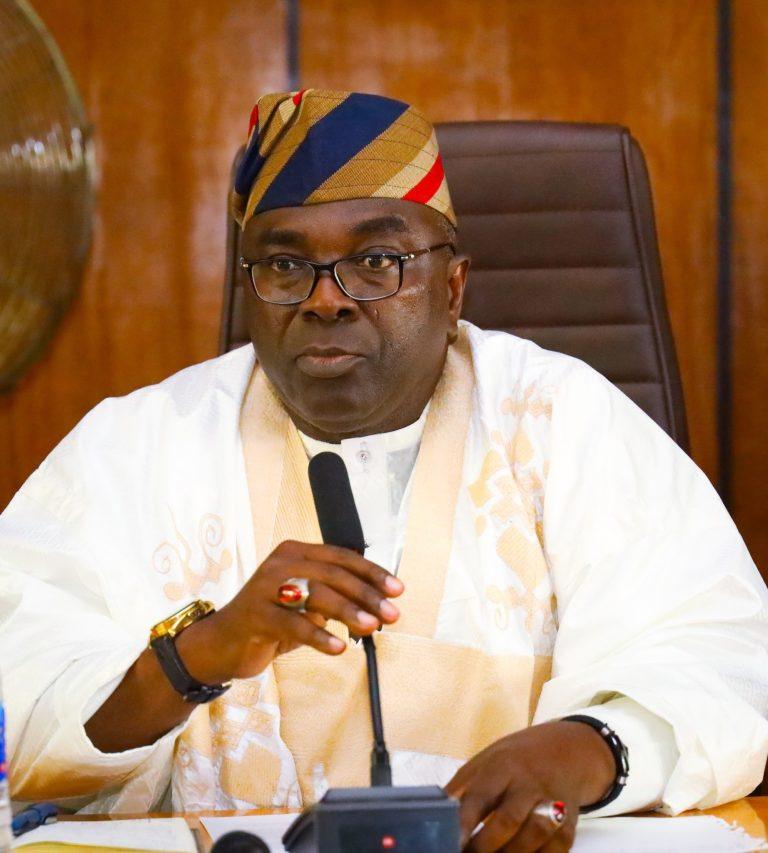
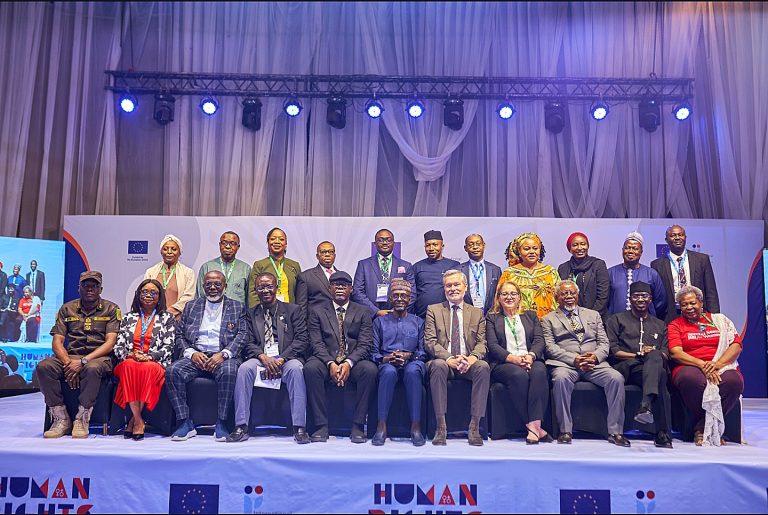
The Attorney-General of the Federation and Minister of Justice, Lateef Fagbemi, says the Constitution of the Federal Republic of Nigeria guarantees the right to receive and impart information.

Delivering the keynote address on Wednesday at a high-level national conference commemorating the 2025 International Human Rights Day in Abuja, he stressed that freedom of expression is the “lifeblood of democracy,” warning that “in a democracy, silence is not golden; it is dangerous.”

Represented by Garba Godwin, the head of the freedom of information unit in the ministry, he noted that “this year’s theme, Our Everyday Essentials, reminds us that these two rights are not abstract ideals but practical necessities that empower citizens, strengthen institutions, and uphold the very fabric of democratic governance.”

Fagbemi added that while the government is committed to safeguarding free expression, “this freedom must be exercised with responsibility” in view of the rise of misinformation and hate speech.

On access to information, he described it as “the oxygen of transparency,” reaffirming the Federal Government’s commitment to fully implementing the Freedom of Information Act.

“We are working to strengthen institutional frameworks… and foster a culture of openness and accountability,” he said.
The EU Ambassador to Nigeria and ECOWAS, Gautier Mignot

The EU Ambassador to Nigeria and ECOWAS, Gautier Mignot, in a goodwill message, linked the event to the end of the 16 Days of Activism and the 77th anniversary of the Universal Declaration of Human Rights.

He noted that freedom of expression and access to information “underpin democracy, accountability, and social progress,” stating that they are “not a privilege granted by the state – but an inherent right essential for every person to live freely and safely.”

Mignot said acts of threats against journalists are “a clear assault on freedom of expression and on democracy.”

He urged the government to strengthen the legal system for prosecuting crimes against journalists.

Danladi Plang, Head of Programmes, International Institute for Democracy and Electoral Assistance (IIDEA)

Earlier in his welcome remarks, Mr Danladi Plang, Head of Programmes, International Institute for Democracy and Electoral Assistance (IIDEA), said the organisation adapted the 2025 theme to “Our Everyday Essentials: Freedom Of Expression And Of Information”, emphasising how free expression and access to information enable other rights.

Citing UNESCO data, he noted that countries with higher levels of free expression enjoy “a significantly higher level of protection of civil, political, economic and social rights.”

“While the digital age should make easy access to information, it comes with its many challenges, including the misuse of digital platforms and the restrictive laws enacted by governments to curb such abuses,” he added.

Speaking on “A Decade of Access to Information,” Dr Emmanuel Uche, Project Manager, Anti-Corruption, Rule of Law and Anti-Corruption Programme (RoLAC), said the FOI Act is “the oxygen of democracy,” adding that despite progress, “too many institutions still resist openness” and “too many FOI requests go unanswered.” 

He urged stronger enforcement, digitalisation of public records, and broader public awareness.

“The right to information is the right that protects all other rights,” Uche concluded. “Let us defend it… Let the work begin.”

The National Conference, organised by the International Institute for Democracy and Electoral Assistance with support from the European Union, provided a platform for national dialogue on free expression, information, and access to law, identifying challenges, fostering collaboration, and producing actionable strategies for future reform.



President Tinubu Constitutes Committee To Resolve Contractors Payments

0

President Bola Ahmed Tinubu has constituted a high-level Ministerial Committee to resolve the long-standing issue of unpaid payments for projects executed for more than 2,000 federal contractors.

The Committee comprises the Minister of Finance, Minister of Budget and Economic Planning, Director-General of the Budget Office; Minister of Works, Minister of Education, Minister of Housing and Urban Development, and the Chairman of the Federal Inland Revenue Service.

Special Adviser to the President on Information and Strategy, Bayo Onanuga, disclosed this on Wednesday while briefing State House Correspondents, following what he described as “a very productive discussion” with Ministers after receiving an updated briefing on the scale and implications of the outstanding payments.

To tackle the challenge, Mr Onanuga said “the President has approved a coordinated mechanism to verify claims, reconcile records, and propose sustainable financing options.”

According to him, the ministers and senior officials are expected to “sit together, harmonise data, and develop a comprehensive solution that will determine how and when the outstanding payments will be settled.”

He said; “the situation has created bottlenecks and undermined service delivery in critical sectors where contractors had executed government-approved projects.”

“The committee has the President’s full backing to resolve this matter decisively,” Onanuga assured.

He stressed that President Tinubu remained committed to restoring transparency and order to the contractor-payment process, ensuring that genuine contractors are paid promptly while blocking abuses and irregularities.

Contractors had protested delays of project funds, saying it has led to loan defaults, loss of property, deteriorating health conditions, and, in some cases, deaths among affected members.

The Minister of Finance, Wale Edun, had outlined a structured pathway for sorting the debts, following directives from President Tinubu to commence payments.

PIAK


Mali, US Meet To Revitalise Economic Ties

0

Mali’s Prime Minister has met with the United States Ambassador, Rachna Korhonen, in Bamako, as part of ongoing diplomatic engagements between both countries.

For several years, Mali has been listed at the highest alert level in U.S. travel advisories, with recommendations against travel due to security concerns, including attacks, kidnappings, and instability in parts of the country.

In 2025, the advisory was updated, with U.S. authorities urging citizens “to avoid travel and, for some categories, to leave when possible, citing repeated attacks by armed groups in several regions.”

Bilateral relations were further tested in October 2025 following changes to U.S. visa regulations.

The U.S. government introduced a “visa bond,” programme requiring certain non-immigrant visa applicants from countries with high overstay rates to pay a security deposit of up to $10,000.

Mali responded by announcing a reciprocal deposit requirement for American applicants seeking Malian visas.

These developments occurred against a backdrop of broader sanctions and restrictions imposed by some Western partners since Mali’s political transitions in 2020. During this period, Malian authorities have also expanded cooperation with other international actors across the security and economic sectors.

Despite the challenges, both countries have continued to maintain channels of communication.

Throughout 2025, Ambassador Korhonen reiterated “the United States’ commitment to working with the Malian people, particularly in development, governance and support for vulnerable groups. Malian and American officials also held discussions on economic and security-related issues in Bamako and abroad.”

According to a statement from the Malian Prime Minister’s office, “the meeting on December 8 included a message from the U.S. administration expressing interest in cooperation opportunities, including partnerships between Malian and American business stakeholders.”

The statement did not reference the visa and travel advisory issues but placed the discussion within the context of strengthening economic ties.

The meeting also reflects continued collaboration between both countries in areas such as countering armed groups in the Sahel, facilitating regional movement of goods and people, and addressing humanitarian needs in affected communities. U.S. assistance programmes, both humanitarian and technical, have remained active, though adjusted to political and security developments.

The latest engagement therefore comes at a time when relations between Mali and the United States continue to alternate between policy-related restrictions and efforts to sustain cooperation in key development and economic areas.


APA/Oyenike Oyeniyi 


SEC Moves To Freeze CBEX Accounts Over N1.3tn Fraud

The Securities and Exchange Commission (SEC) has approached the Investments and Securities Tribunal (IST) to freeze all bank accounts belonging to Crypto Bridge Exchange (CBEX) and other defendants with commercial banks or other financial institutions in Nigeria.

The Investments and Securities Tribunal (IST) on Tuesday commenced proceedings in the landmark case of SEC & Anor v. Crypto Bridge Exchange (CBEX) & 25 Others, marking the first matter before the 6th Tribunal under its new Chairman, Hon. Aminu Jinaidu.

In the case of IST/OA/02/2025 Securities and Exchange Commission & Anor v Crypto Bridge Exchange (CBEX) and 25 others, the Commission is also requesting the Tribunal to confiscate the houses and other assets of the defendants acquired from the proceeds of the monies invested by the general public in the CBEX scheme acting as digital assets, platforms/capital market operators.

Available records indicate that the case is the first brought before the 6th Tribunal presided over by Hon. Aminu Jinaidu, as the new Chairman of IST.

Importantly, the SEC maintained in its plea that CBEX is an unregistered platform promising its users 100 per cent return on investments within 30 days, which is unlawful and contrary to section 3 (b) of the Investments and Securities Act 2025.

The Commission also disclosed that the Securities and Futures Commission of Hong Kong had, on April 23rd, 2024, issued an advisory note against CBEX, indicating that it is a suspicious virtual asset company and adopted a name that was similar to that of a property rights trading organisation based in China, when in fact they are not associated in any way.

Meanwhile, in order to further proceed with the case, the IST has ordered that a hearing notice be served on CBEX through national newspapers because, as the defendants in the case, they have not put up any appearance nor were represented in court.

Launched in Nigeria around July 2024, CBEX has been operating through a website and mobile app, claiming to use advanced Artificial Intelligence (AI) to generate significant profits from crypto trading.

Additionally, the platform promises returns of up to 100 per cent on investment within a 40- to 45-day lock-in period.

CBEX, which is the acronym for Crypto Bridge Exchange, was exposed as a Ponzi scheme, leading to an estimated loss of over N1.3 trillion (approximately $800 million) for investors.

Recalled that the SEC had, in April 2025, issued a statement denying CBEX’s registration as a government-recognised entity and further pledged that “Pursuant to the provisions of Section 196 of the Investments and Securities Act 2025, the Commission would collaborate with relevant law enforcement agencies to take appropriate enforcement action against the CBEX, its affiliates and promoters.”

In a related development, other cases presided over by the IST Chairman include Benue Investments Property Co. Ltd & Anor v Securities and Exchange Commission & 6 others and Maven Asset Management Ltd v Securities and Exchange Commission.

Also listed for adjudication are John Makinde Onade & Anor v First Registrars & Investors Services Ltd & Anor; and Securities and Exchange Commission and Anor v Tourist Company of Nigeria PLC and 6 Others.

All the cases were adjourned to January 27, 2026, for further mention and hearing by the Tribunal.


Senate Orders Probe Into Selective Withdrawal of Police Escorts

0

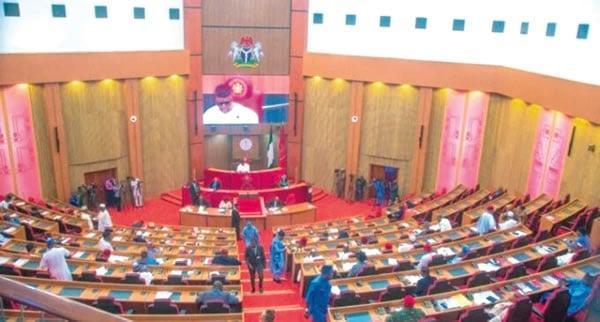
The Nigerian Senate has directed its Committee on Police Affairs to investigate the alleged selective implementation of President Bola Ahmed Tinubu’s order withdrawing police escorts from VIPs.

The decision followed complaints that lawmakers were being singled out while other influential individuals continued to enjoy full security cover.

The resolution was reached after Senator Abdul Ningi (Bauchi Central) raised a point of order under Order 9 during plenary, expressing outrage that his only police orderly had been withdrawn despite the continued protection of ministers, business executives, political families, and celebrities.

Senator Ningi warned that the uneven enforcement of the President’s directive could expose lawmakers to security threats and undermine the intent behind the order, issued in November as part of a broader national security strategy to improve police efficiency and public safety.

“It should be done across the board. I have seen ministers with heavy security, business concerns with their orderlies, children of political office holders with orderlies, and even singers enjoying full protection. But a Senator of the Federal Republic cannot have even one orderly? This is unheard of in any democracy,” he stated.

He stressed that he had no objection to complying with the President’s policy, provided it was implemented fairly.

“Let me not see governors, ministers, and business concerns being covered by the security establishment while the National Assembly is made a scapegoat. This is not right, and it should be taken seriously,” he said.

Responding, the Deputy Senate President, Senator Barau Jibrin, confirmed that the leadership had already discussed the matter and taken steps to address the concerns raised.

He acknowledged that the President’s directive appeared to be selectively enforced.

“We expect a reaction regarding the police orderlies withdrawn from senators. Why is the directive of the President being flouted, underpinned that the President issued the order in good faith to strengthen the police and tackle internal security issues,” he said.

Senator Jibrin assured lawmakers that efforts were underway to resolve the situation.

“The issue raised to protect you is being taken seriously. The leadership agreed yesterday that action should be taken to restore your police orderlies. We have a listening President, and I am sure he will act,” he added.

He further noted that while the Senate fully supported the President’s reforms, any breach of the directive should be investigated. He, therefore, instructed the Committee on Police Affairs to conduct a proper investigation into why some individuals continued to retain police escorts despite the presidential order.

The committee is expected to report back within four weeks.

Managing Nigeria’s Population Requires Resources – NPC Chairman

0

The Chairman of the National Population Commission in Nigeria, Mr Aminu Yusuf, says managing Nigeria’s population requires resources, political will and national ownership.

He made the statement during the 13th Annual Population Lecture Series in Abuja, Nigeria’s capital.

Mr Yusuf called on “Policymakers, private sector leaders, and civil society to listen, to engage, and to commit to the recommendations that will emerge from this hall.”

The NPC Chairman also urged stakeholders to “Work together to build a funding framework that is resilient, homegrown, and sustainable.”

He said the series marked a significant milestone in the Commission’s “journey to place population management at the very heart of Nigeria’s development agenda.”

The NPC Chairman reiterated that “Since its inception in 2012, the APLS has served as a premier policy dialogue forum, bringing together the finest minds to interrogate Nigeria’s demographic dynamics.”

He added that the stakeholders were gathered not “just to observe tradition, but to confront one of the most pressing challenges of our time—the sustainability of our population and development agenda.”

Mr Yusuf said the Commission had chosen for this year’s lecture the theme: “Emerging global funding realities: Impact on population activities and need for innovative domestic resource mobilisation.”

He further stated that “The context and the Theme” were apt, as “Nigeria’s rapid population growth places immense pressure on our economy, infrastructure, and our collective progress toward the Sustainable Development Goals (SDGs).”

For decades, the National Population Commission, working with the Federal Government, had strived to manage these dynamics, focusing on fertility management, maternal health, child survival, and the pursuit of a demographic dividend.

Police Redeployment Order Non-Negotiable – President Tinubu

0

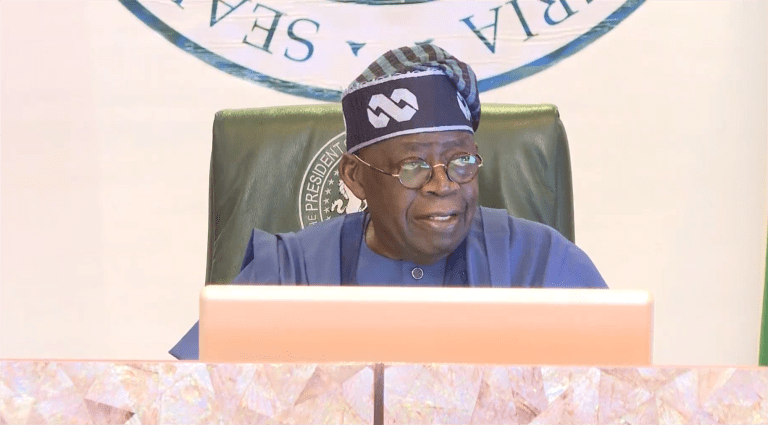
President Bola Ahmed Tinubu has stated that his directive ordering the redeployment of police officers assigned to VIPs, VVIPs and ministers is non-negotiable, directing all ministers to ensure full and immediate compliance.

The President reaffirmed his directive on Wednesday during the Federal Executive Council meeting held at the Council Chambers of the State House, Abuja.

President Tinubu further instructed the National Security Adviser and the Directorate of State Services to constitute a committee to review the existing security structure in line with his order.

“I honestly believe in what I said and I call on the IGP, and I hope the minister of police affairs is here. If you have any problem of security because of the nature of the assignment, please contact the IGP and get my clearance.

“The minister of interior should liaise IGP and the Civil Defence structure to replace those police officers who are on special security duties. So that you don’t leave people exposed.

“NSA and DSS to provide further information and form themselves into the committee and review the structure.” The President added.

Acknowledging that public office holders may be exposed and may require exceptional protective measures, President Tinubu added that the Nigeria Security and Civil Defence Corps is adequately equipped to assume such responsibilities.

He further directed the National Security Adviser to prioritise the arming and effective deployment of forest guards, emphasising that the matter should be treated with utmost seriousness.

President Tinubu emphasised that the directive must be fully implemented, citing the country’s ongoing battles against kidnapping and terrorism.

He noted that Nigeria requires the optimal deployment of all available security personnel to confront these threats.

It should be effective. We face challenges of Kidnapping and terrorism, we need all the forces that we can utilise.

I know some of our people are exposed and I understand that we have to make exceptional provision for them, and civil defence are equally armed, and I want to know that from NSA to arm our forest guards too; take it very seriously.”

The Nigerian leader further called on state governors to rehabilitate existing ranches or designate specific communities for livestock resettlement.

The President added that Nigeria must eliminate the potential for conflict and transform livestock reform into a viable economic enterprise, stressing that the opportunities are clear and should be fully harnessed.

He noted that the framework already exists within the National Economic Council and that the Constitution vests land in the states.

“Especially livestock reform, I think the Vice President should get the NEC first of all to see which village or grazing reserves can be salvaged or rehabilitated into ranches or livestock settlements.

We must eliminate the possibility of conflicts and turn the livestock reform into economically viable development. The opportunity is there; let’s utilise it.

And it is in NEC; if we exercise the constitutional requirement which states that the land belong to the states, whichever one they can salvage, convert it to a livestock village. Let us stop this conflict area and turn it to economic opportunities and prosperity.” The President added.

The Federal Executive Council meeting currently chaired by the President started at 01:50pm with Vice President Kashim Shettima, National Security Adviser Mallam Nuhu Ribadu, Chief of Staff to the President Femi Gbajabiamila, the Representative of the Secretary to the Government of the Federation, and the Representative of the Head of the Civil Service of the Federation.

Also present were the newly sworn-in Minister of Defence, General Christopher Gwabin Musa, Minister of Solid Minerals Development, Mr Dele Alake, and other Special Advisers to the President.

President Bola Ahmed Tinubu’s latest directive on the withdrawal of police officers from VIP protection comes as part of a broader national push to strengthen frontline security operations and redeploy law-enforcement personnel to areas of more public need.


Portugal Unveils Credit Line For Mozambique Investment

0

Portugal has announced a €500 million credit line to support Portuguese companies investing in Mozambique in what officials described as a major show of confidence in the southern African nation’s political stability and economic potential.

The pledge was unveiled by Prime Minister Luís Montenegro at the conclusion of the sixth Portugal–Mozambique Bilateral Summit in Porto on Tuesday, where he was joined by Mozambican President Daniel Chapo.

The summit also produced 22 cooperation agreements focused on trade, development and economic diversification.

Montenegro said the financing facility is designed to encourage Portuguese firms to expand into Mozambique, highlighting the country’s stabilisation process and economic ambition.

We want to show our confidence in Mozambique’s economy and tell Portuguese companies that we are supporting them in the process of internationalisation,” he noted.

The new credit line is expected to provide Portuguese companies with greater confidence to enter or expand operations in sectors such as energy, construction and agribusiness.

Officials from both sides said technical teams will now work on implementing the financing facility to ensure that investment projects contribute to job creation, sustainable growth and stronger bilateral economic relations.

The final declaration of the summit placed economic and sustainable development at the top of the bilateral agenda.

Both governments are committed to strengthening coordination mechanisms to maximise financing instruments and promote business partnerships that can drive growth and diversification in Mozambique.

The announcement underscores the depth of ties between Portugal and its former colony, which have evolved from historical links into a modern partnership centred on investment, trade and development cooperation.

Portugal has long been one of Mozambique’s key European partners, supporting infrastructure projects, education and governance reforms while encouraging private sector engagement.

Mozambique, rich in natural resources including coal and natural gas, has sought to attract foreign investment to rebuild its economy after years of conflict and instability.


Nigeria Unveils Incentives To Attract Global Mining Investors

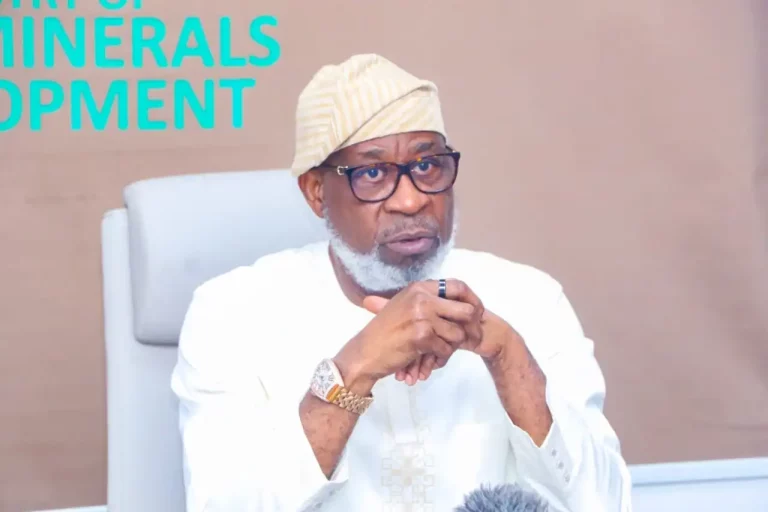
Nigeria has unveiled incentives, including seamless transfer of profits and duty waivers on imported mining machinery, to attract global investors.

The incentives were announced by the Minister of Solid Minerals Development, Dr Dele Alake, who led the Nigerian delegation to the Resourcing Tomorrow annual exhibition and conference recently held in
London.

According to a statement by his Special Adviser, Mr Kehinde Bamigbetan, the Minister used the platform to assure international mining companies that Nigeria is open and ready for investment.

At the opening ceremony, Alake highlighted Nigeria’s recent investment breakthroughs in mineral processing, disclosing that the country has attracted over $2 billion in investments into lithium and rare earth projects in the past two years.

He explained that these inflows are the direct result of the Tinubu administration’s policy on value addition, aimed at ending “pit-to-port” exports and promoting local beneficiation.

He noted that since last year, companies including Canmax Technologies, Jiuling Lithium, Avatar New Energy Nigeria Limited, and the ASBA Group have collectively invested more than $1.3 billion in lithium processing projects across Nigeria, stressing that the investments are tangible and ongoing.

Alake further revealed that construction has commenced on a $50 million lithium processing plant near Abuja, which will serve as the first in a chain of industrial clusters planned across Nasarawa, Kogi, Kwara, and Ebonyi states.

In addition, Nigeria recently broke ground on a $400 million rare earth processing plant by the Hasetins Group, expected to be completed within 15 months, while a multi-billion-dollar iron ore-to-steel project is also in the pipeline.

To improve security and regulatory compliance, the Minister said the federal government has established mining marshals to enforce mining laws and protect operators, while deploying satellite technology to monitor mining activities nationwide.

He also presented the Nigeria Solid Minerals Company (NSMC) as the government’s preferred joint venture partner, leveraging mineral assets inherited from the former Nigerian Mining Corporation to meet investor needs.

According to him, the NSMC represents a model of shared prosperity through shared investment, co-investing in high-value projects, reducing exploration risks, and promoting downstream processing.

Assuring over 1,000 conference participants of Nigeria’s preparedness
For investment, Alake disclosed that more than 80 per cent of the country has been covered by geological mapping through the Nigerian Geological Survey Agency and private exploration investors. He added that the government has finalised Solid Minerals Export Guidelines to align exports with global traceability, environmental, and governance standards.

Addressing global supply chain concerns, the Minister advocated local value addition in mineral-producing countries as a sustainable solution, noting that the Africa Minerals Support Group—formed by African mining ministers—is already shaping beneficiation policies across the continent.

He also cited Nigeria’s domestic integration efforts, including state-owned mining companies and the signing of 427 Community Development Agreements between host communities and mining firms, as measures to ensure that economic, social, and governance principles are upheld in the sector.


Amazon, Microsoft Pledge Mega AI Investments in India

0

Tech giants Amazon and Microsoft have announced a combined $52.5bn (£39.4bn) investment plan for India over the coming years.

Amazon disclosed on Wednesday that it was pumping in $35bn into India by 2030 to advance AI-driven digitisation, export growth and job creation, a day after Microsoft committed $17.5bn to strengthen the country’s AI ecosystem.

India, which is an emerging AI and cloud infrastructure hub, has witnessed a surge of global tech investments recently.

In October, Google disclosed a $15bn investment to build an AI data hub, and earlier this week, Intel announced a collaboration with Mumbai-based Tata Electronics as its first major customer in the latter’s $14bn semiconductor manufacturing plans.

When it comes to AI, the world is optimistic about India,” Indian Prime Minister Narendra Modi said in a post on X after meeting Microsoft CEO Satya Nadella on Tuesday.

Amazon’s $35bn investment will build on the $40bn already invested in India – establishing the company as “the largest foreign investor” in India, the company said in a statement.

A key component of it will go into the local cloud and AI infrastructure.

Microsoft’s fresh commitment follows a $3bn investment announced by the company earlier this year.

It includes a new “hyperscale cloud region“—a cluster of data centres—in the southern Indian city of Hyderabad, set to go live in mid-2026, the company said in a statement.

Data centres have centralised physical facilities that host computer servers, IT infrastructure and network equipment and are a key component of the AI value chain that India is focusing on despite concerns around water shortages.

India will also be given access to Microsoft’s “sovereign public cloud“, which offers tools to help organisations run their data and applications while keeping sensitive information within the country.

The India investment is part of Microsoft’s $23bn AI expansion across countries, including Canada, Portugal and the UAE, as the company vies with rivals such as Amazon and Google.

In a statement by Microsoft, it aims to integrate AI into Indian government platforms, supporting around 310 million informal workers.

The announcements came as India steps up activity in semiconductor manufacturing, with several state-backed and private projects aiming to build a domestic chip-making industry.

While India is a big market for AI – with a billion internet users and a big tech talent pool – it still lags behind global leaders like China and the US.

However, the country has been drawing billions in investments in key computing technologies such as chips, with the government’s semiconductor mission offering generous subsidies to firms setting up chip-making facilities.

India’s sovereign AI model is also expected to be unveiled in February next year.