Home Blog Page 624

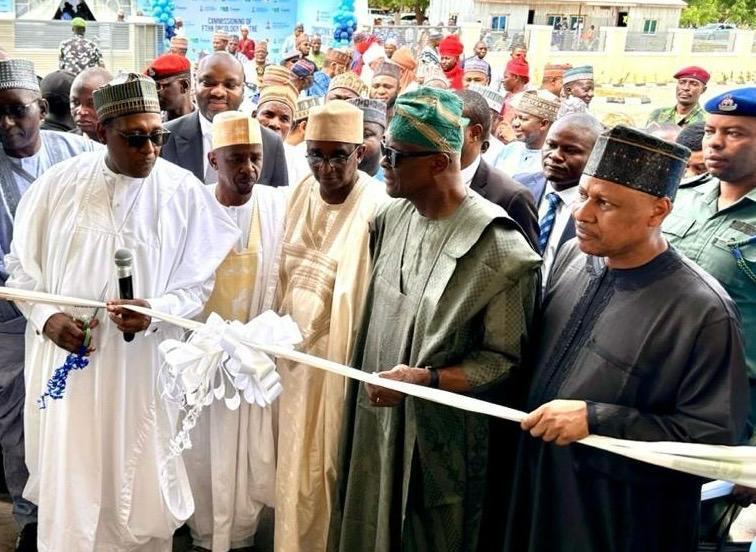
Nigeria Commissions Cancer Centres in Katsina, Enugu, Edo States

Nigeria’s Minister of Information and National Orientation, Mohammed Idris, says the Federal Government is advancing medical industrialisation at an unprecedented pace through the commissioning of new cancer centres across the country.

The Minister, who made this known during the inauguration of newly constructed Clinical Oncology Centres at the Federal Teaching Hospital Katsina, University of Nigeria Teaching Hospital Enugu, and University of Benin Teaching Hospital, Edo, explained that the initiative was part of President Tinubu’s efforts to reposition Nigeria as a hub for medical production.

“What President Tinubu is doing is not just about improving Medicare in Nigeria, but most importantly about positioning the country for medical industrialisation,” Idris stated.
“This is not just bringing in drugs or equipment but creating the enabling environment for these drugs and equipment to be produced here in Nigeria.”

He described the three oncology centres as world-class facilities aimed at reducing medical tourism and making cancer treatment accessible and affordable for Nigerians.

“Today, if you go outside for cancer treatment, it’s because that’s your choice and not because there is not an option provided by President Bola Ahmed Tinubu,” he added.

Idris commended the Minister of Health and Social Development, Professor Ali Pate, and the Minister of Finance and Coordinating Minister of the Economy, Mr. Wale Edun, for their roles in the delivery of the six new cancer centres.

While commissioning the Enugu facility, Idris said it was one of the most significant dividends of democracy in the state, noting that the installed equipment ranks among the best globally.

“President Bola Ahmed Tinubu has delivered to you the people of Enugu and to the people of Nigeria what has been a dream for more than thirty years,” he said.

He added that Nigerians were beginning to witness tangible benefits of the administration’s reform agenda, which initially posed challenges but is now yielding improved outcomes.

Also speaking, the Minister of Health, Professor Ali Pate, said cancer remains a significant burden in Nigeria, with 127,000 cases and 80,000 deaths recorded annually.

He said President Tinubu had doubled Nigeria’s cancer treatment capacity overnight by establishing six new centres and expanding diagnostic screening to 350,000 cases annually.

“To take care of someone who has cancer costs families their investment, savings and can tip households into poverty in addition to the huge impact that can reverberate in terms of trauma to families and societies,” Prof. Pate said.

He also noted the government’s plan to support families through the 2025 Catastrophic Health Insurance Fund.

On his part, the Finance Minister, Wale Edun, said Tinubu’s determination had moved healthcare projects from planning to execution.

“It is across the board that the type of transformation that we are seeing and we are witnessing in the health sector ably led by the Honorable Minister of Health,” he said.

Edun added that the upgraded Enugu centre, although not newly built, had been raised to global standards to offer world-class cancer care.

At the Benin facility, Idris reiterated President Tinubu’s commitment to delivering on the Renewed Hope Agenda and praised the partnerships between federal and sub-national governments, as well as private investors, in realising the cancer centres.

PIAK
Sports Capable of Transcending Barriers – NOA

0

The National Orientation Agency (NOA) have underscored sports as a powerful and unifying force capable of transcending barriers of tribe, religion, and political affiliation, with which the collective desire to win often brings people together under a common purpose.

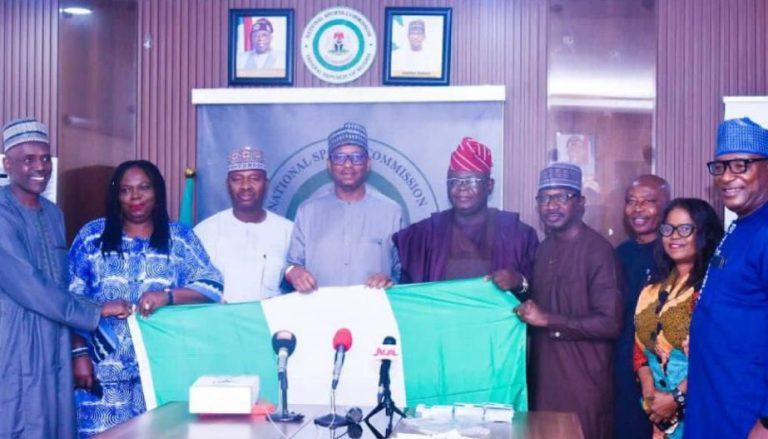
The Director General of NOA, Lanre Issa-Onilu, stated this in Abuja , while presenting 5,000 copies of the reintroduced national anthem, the Nigerian national flag, and a plaque highlighting the National Values Charter to the National Sports Commission.

READ ALSO: NOA to honour olympians, sports icons

The aim of the presentation is to  deepen national consciousness and promote the use of key national symbols, amongst Nigerian citizens.

The Director General NOA,  Lanre Issa-Onilu, who was represented by the Director, Special Duties and State Operations, Mr David Akoji, explained  that the agency had received complaints and video clips showing athletes struggling to accurately sing the national anthem, prompting him  to approve the donation of anthem copies to the commission to enhance correct understanding and performance.

While presenting the plaque containing information on the National Values Charter, he said:   “the charter serves as a vital social contract between the government and citizens, adding that it encompasses the Nigerian Promise, the Citizens’ Code, and key institutional policies designed to guide the behavior and responsibilities of all Nigerians”.

Responding, the Chairman, National Sports Commission, Mr. Shehu Dikko, emphasised the significant role of sports as a key driver of the country’s economy, highlighting that : “beyond fostering national unity, sports also create employment opportunities and stimulate economic growth” .

The Chairman, who described the gesture as timely and impactful, especially as the Nigerian Falcons prepare to face Morocco in the Women’s Africa Cup of Nations final, also added that the materials would be distributed at the event to help strengthen national pride and ensure proper rendition of the anthem.

The NOA delegation, was led by the Director of Special Duties and State Operations, Mr David Akoji, comprised other senior officials including the Director of Communication and Media, Mallam Bala Musa; Director of Civic, Values and Democracy Education, Dr Olukemi Afolayan; Director of Youth Engagement and Inclusion, Mrs Blessings Oyem; Director of Legal Services, Mr Dogo Williams; and Director of Environment, Energy and Climate Change, Mr Emeka Egbugara.

UK Backs Future Palestinian Statehood

0

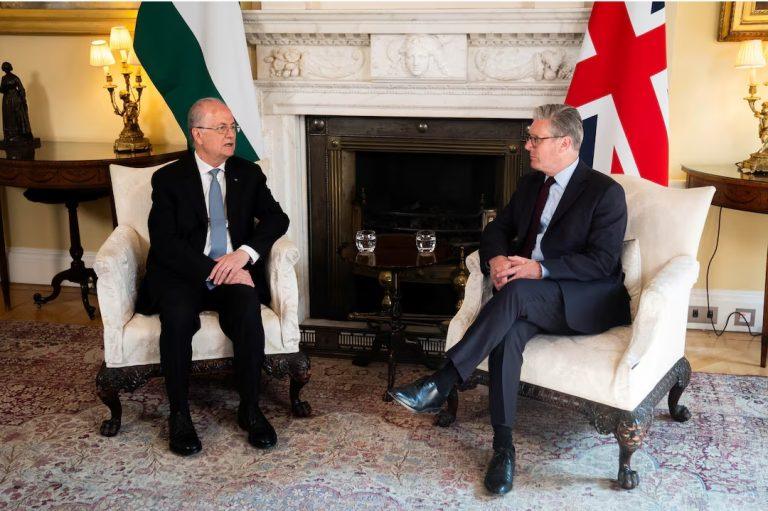
Britain supports eventual recognition of a Palestinian state, but the immediate priority should be alleviating the suffering in Gaza and securing a ceasefire between Israel and Hamas, a British cabinet minister said on Friday.

Successive British governments have said they would formally recognise a Palestinian state at the right time, without ever setting a timetable or specifying the conditions for it to happen.

“We want Palestinian statehood, we desire it, and we want to make sure the circumstances can exist where that kind of long-term political solution can have the space to evolve,” British science and technology minister Peter Kyle told Sky News.

“But right now, today, we’ve got to focus on what will ease the suffering, and it is extreme, unwarranted suffering in Gaza that has to be the priority for us today.”

His comments came after French President Emmanuel Macron said France intends to recognise a Palestinian state in September at the U.N. General Assembly, a plan that drew strong condemnation from Israel and the United States.

In a statement on Thursday, British Prime Minister Keir Starmer said statehood was the “inalienable right of the Palestinian people”, reiterating his call for a ceasefire as a necessary step towards achieving a two-state solution.

Speaking during a visit to Australia, foreign minister David Lammy echoed Starmer’s ceasefire call and described the situation in Gaza as “indefensible”.
Gaza health authorities say more than 100 people have died from starvation, most of them in recent weeks.


Source:Reuters/Ejiofor Ezeifeoma

ActionAid Advocates Agric Insurance for Farmers 

ActionAid Nigeria (AAN) and other stakeholders have urged all tiers of government to promote the enrollment of smallholder farmers in agricultural insurance schemes.

They noted that the measure would help mitigate risks associated with insecurity and climate-related challenges.

The call was made in a communiqué issued at the end of the annual National Consultative Meeting on the 2026 Agriculture Budget, and made available to the Newsmen on Friday in Abuja.

The stakeholders noted that many farmers were discouraged from continuing agricultural activities due to insecurity, including cattle rustling, kidnapping, farm raids, and climate-induced disasters.

READ ALSO:Farmers’ Association Urges Unity to Reposition Agricultural Sector

They urged governments to invest in early warning systems and take timely action to address security threats affecting rural communities and national food security.

“To reduce farmer-herder conflicts, government should initiate hybrid pasture development projects that offer alternative, secured, and sustainable sources of feed for livestock,” the communiqué stated.

According to the document, such projects would help mitigate movement-related tensions and contribute to stability in both farming and pastoralist communities.

The communiqué also revealed the underrepresentation of youth and Persons with Disabilities (PWDs) in agricultural investment in spite of their large population.

The communiqué called for adequate funding of the National Centre for Agricultural Mechanisation (NCAM).

It said the funding would enable the development and commercialisation of inclusive, labour-saving technologies such as motorised shellers, grinders, and dryers tailored for women, youth, and cooperatives led by Persons with Disabilities (PWDs).

“These tools are essential for reducing drudgery, improving productivity, and making agriculture more attractive and accessible,” it said.

The stakeholders further recommended the establishment of state-level youth farm clusters with access to land, inputs, and mechanisation services, alongside regional agri-innovation hubs for digital agriculture training, agro-processing, and climate-smart practices.

“These platforms must intentionally include young women and PWDs, fostering their leadership in modern agri-business,” the communiqué added.

RCCG Leaders Donate Lifesaving Medical Facility To OAUTHC

0

The General Overseer of the Redeemed Christian Church of God (RCCG), Pastor Enoch Adeboye, and his wife, Pastor Folu Adeboye, on Thursday donated a dialysis centre to the Obafemi Awolowo University Teaching Hospital Complex (OAUTHC), Wesley Guild, Ilesa.

The facility, donated in celebration of Pastor Folu Adeboye’s 77th birthday, was officially inaugurated by the Osun State Governor, Senator Ademola Adeleke.

Adeleke commended Adeboye and his wife for their consistent kind gestures in the education and health sectors as well as humanitarian relies, all of which, he said, had touched several lives across the world.

READ MORE:Nigerian Army Trains Troops on Mental Health, Emotional Intelligence

According to him, kidney-related ailments have been on the rise in the country, with many patients who cannot afford the treatment.

He appreciated to the general overseer and his wife for filling the gap, thus bringing hope to the hopeless and help to the helpless.

The governor, who was represented by the Commissioner for Health, Jola Akinsola, urged other organisations, NGOs, philanthropists and other kind-hearted individuals to support the hospital.

He appealed to the management of the hospital management to ensure proper maintenance of the centre.

Adeleke pledged that the state government would collaborate with the Federal Government to ensure that the centre was not closed down and that necessary consumables were provided.

Earlier, the RCCG Continental Overseer, Pastor Johnson Odesola, had described Adeboye as a pathfinder who was not only preaching the gospel but also demonstrating the preachings.

Odesola, who represented Pastor Adeboye, said that the general overseer had been showing care to several people to ensure their welfare and well-being.

He appealed to the country’s leaders still travelling abroad for medical attention to emulate Adeboye by prioritising the health sector for the betterment of the generality of the people.

Earlier, Pastor Kayode Pitan, the Assistant National Christian Social Responsibility Coordinator (CSR) of RCCG, said that the various charity activities of the church were being handled by His Love Foundation” (HLF), an arm of the church.

Pitan, represented by Assistant CSR Coordinator, Pastor Detola Akinyemi, stated that the dialysis centre would be the 13th to be donated by RCCG across the country.

He said that a total 207,761,297 people had benefitted from the facilities in the last eight years, with over N110 billion committed to the projects.

According to him, the centre has three dialysis machines, beds, one water reverse osmosis purification system; one 30 KVA generator and air conditioners.

In his remarks, the Chief Medical Director, OAUTHC, Prof. John Okeniyi, appreciated God for giving everyone the grace to witness the occasion, congratulated Mrs Adeboye and thanked her and the husband for the donation of the centre.

Okeniyi said that the centre would serve patients across the six states in the South-West and even beyond, while it would complement the facilities already on ground at the hospital for treatment of kidney diseases.


Experts Advocate Sustainable Agriculture Practice in Nigeria

FutuX Agri-Consult, a private agricultural extension service provider, has called on the stakeholders in the sector to push for sustainable agriculture practice in Nigeria.

Mr Babatunde Olarewaju, Lead Strategist, at FutuX Agri-consult Ltd., said this at the biannual Nigeria Sustainable Agriculture Conference (NSAC) on Thursday in Lagos.

Olarewaju, the Convener of NSAC, stressed the need for stakeholders in the sector to collaborate to ensure sustainable food security in the country.

The NSAC is a premier multi-stakeholder platform dedicated to advancing the future of agriculture in Nigeria.

Since its inaugural edition in 2023, NSAC has served as a critical space for government representatives, private sector leaders, food producers, agri-investors, development partners, and sustainability advocates to discuss solutions that enhance the resilience, productivity, and profitability of Nigeria’s agricultural ecosystem.

READ ALSO:Agriculture Stakeholders Recommend Enhanced Agricultural Security Measures

Olarewaju in his welcome address noted that Nigeria must bridge the gaps in the agriculture space for economic growth and development.

He spoke on the theme: “Sustaining Ecology for Food: The Role of Food Producers, Agri-investors and Policy Makers.”

“This theme is not just timely; it is the very bedrock of our nation’s enduring prosperity.
“Nigeria, a nation blessed with vast agricultural potential faces a stark reality.

Our population is projected to reach over 400 million by 2050, demanding a staggering increase in food production.

Yet, our ecological foundation is under immense pressure.

“Despite our potential, Nigeria still spends billions annually on food imports underscoring a critical gap in our domestic capacity and resilience.
“The production capacity is not merely an economic challenge: it is a human issue. Our smallholder farmers, the custodians of our land and the backbone of our food system, bear the brunt of these ecological shocks,” Olarewaju said.

He noted that their resilience which passed down through generations was being stretched to its limit.

“But in this challenge lies our greatest opportunity. Imagine a Nigeria where our farms are not merely for producing food, but vibrant ecosystems, contributing to biodiversity, clean water, and healthy soil. Imagine a future where our food systems are not just secure, but naturally regenerative, a legacy we would proudly pass to the next generation.

“This future is within our grasp, and it demands the collective ingenuity and unwavering commitment of every one of us gathered here.
“So, we must continue to embrace innovation. From precision agriculture to responsible input use, ensuring our farming methods and practices align with nature and not against it,” he said.

The expert said that government policies must align with the current realities being faced by local farmers in the sector.

“For too long, policy has sometimes lagged behind the urgent ecological realities our farmers face daily. Our on-the-ground experience in guiding farms to sustainable food production and implementing various food safety systems gives us a unique vantage point.

“We see where the current frameworks shine, and critically, where they inadvertently create bottlenecks for sustainable practices. Therefore. We need to build a resilient and enabling policy environment that actively promotes ecological stewardship for sustained food production. This conference is beyond sharing knowledge: it is a call to collaborative action, let us leave with concrete pledges as food producer adopting a new regenerative practice. That is the key message is that these efforts are not just about today’s harvest; they are about cultivating a generation of environmentally conscious farmers, attracting sustained green investment, and shaping a policy landscape that guarantees food security and ecological health for a millennium,” the expert said.

On his part, the Minister of Agriculture, Sen. Abubakar Kyari, represented by Mr Iwara Edet, Director at the Federal Ministry of Agriculture and Food Security (FMAFS), commended the group for its intervention in the agriculture space.

Kyari assured the Federal Government’s continuous support to the sector.
He also disclosed the review of Nigerian agricultural laws are being revised as he asked participants to share their contributions to the Ministry’s correspondences.

“This role of food producers, agri-investors and policy makers resonates deeply with the Federal Minister of Agriculture and Food Security’s recent interventions in Nigeria.
“As we gather here today, we are faced with a pressing challenge ensuring food security for Nigeria’s growing population, while preserving the ecological while preserving the ecological integrity of our environment.

“Food producers must be supported with the knowledge tools and technologies to implement sustainable farming practices.
“So, I want to appreciate the organisers of the conference and also appeal to all the participants, especially those that fall within the youth bracket to venture into agriculture,” he said.

Kyari called for food producers, agri-investors, policy makers and other stakeholders collaboration and partnership to drive the sector.

“For collaboration and partnerships, we must work together, food producers, agri-investors, policy makers and other stakeholders must drive sustainable agriculture forward by sharing knowledge, resources and expertise.
“The ministry is in the process of reviewing all agricultural laws in the country, so, I want to call on the participants of this conference today, that if there is any area you know or things that should be reviewed they should write to us.

“Please write formally to the permanent secretary of FMAFS and it will be addressed. It is a collaborative effort, if we work together, we will achieve our aim which is attaining food security and food sovereignty,” he said.

NHRC Urges Religious Leaders to Promote Human Rights

0

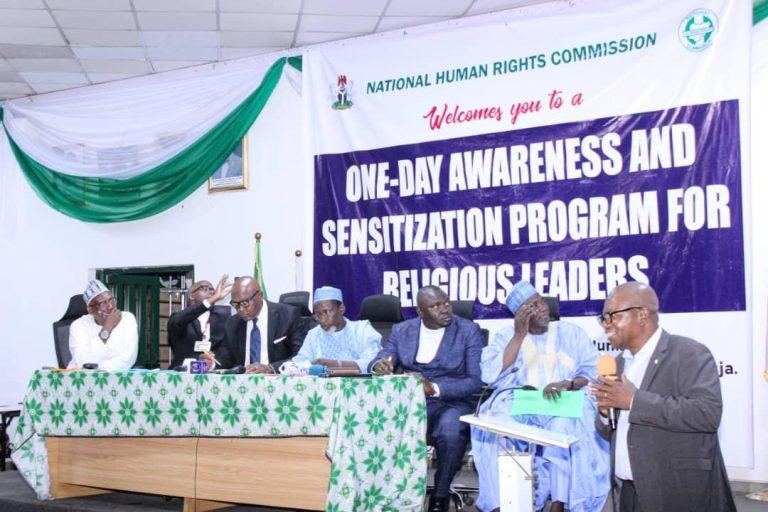
The National Human Rights Commission (NHRC) has urged religious leaders across Nigeria to champion human rights, tolerance, and peaceful coexistence in their communities, stressing their strategic role in uniting a diverse nation.

The call was made during a one-day sensitisation programme held in Abuja, which brought together Christian and Muslim leaders from the Federal Capital Territory (FCT) to explore the intersection of faith and human rights.

Representing the Executive Secretary of the Commission, Tony Ojukwu, the Head of the Monitoring Department, Mr Benedict Agu, described religious leaders as influential voices capable of reshaping public attitudes towards dignity and respect.

“Your voices carry immense weight in your communities. Your teachings inspire millions to uphold dignity, compassion, and mutual respect,” he said.

The event, which focused on peacebuilding, conflict resolution, and human rights education, aimed to deepen understanding among faith leaders and promote sustained interfaith dialogue.

Ojukwu reaffirmed the NHRC’s mandate to promote and enforce human rights through public enlightenment, research, mediation, and direct intervention. He noted that the teachings of all major religions aligned with the core principles of human rights.

“Religious teachings and human rights are not contradictory but complementary,” he said, stressing the importance of partnering with faith communities to foster a peaceful and inclusive society.

He further noted the Commission’s engagement in conflict-affected regions such as Benue and Plateau States, where it continues to condemn violence and encourage mutual tolerance. He urged participants to become frontline advocates for peace and defenders of rights.

“Leave here committed to becoming ambassadors of peace and defenders of human rights,” Dr Ojukwu charged.

In a keynote session, human rights consultant Mr Saka Azimazi, speaking on “The Role of Religious Leaders in Promoting Human Rights and Peaceful Coexistence,” encouraged clerics to build bridges across communities rather than reinforce divisions.

Director for Education, Youth and Women Development at the Christian Association of Nigeria (CAN), Rev Emmanuel Nicodemus, also stressed the duty of religious leaders to promote dialogue, justice, and inclusive understanding.

In his remarks, Imam Tamim Alhasan of the Muslim Community Centre Mosque in Zone 3, Abuja, called on religious figures to lead by example in compassion and tolerance, leveraging their moral authority to combat discrimination and violence.

PIAK

Agrishine School Initiative will Promote Climate Literacy – Foundation Reveals 

Luchipu Foundation for Food, Energy and Water Sustainability (LIFEWS) has introduced Agrishine school initiative to promote climate literacy by focusing on growing food in schools across the country.

The Founder of LIFEWS, Mr Gabriel Ayayia, said this on Thursday during train the trainer training programme, hosted by FCT Department of Science, Technology and Innovation (DSTI) in Abuja.

According to him, the Agrishine school initiative is an initiative that will help the schools, the school kids to rethink how we grow food.

“We are in a difficult moment where we are confronted with the problem of climate change. So, how can we help the kids, the children, to adapt to the threat of climate change? They are most vulnerable people affected by climate change.

“So, the Agrishine school initiative is basically to promote climate literacy, focusing on growing food more smartly.

“This is imperative because if we want to think about addressing the problem of food insecurity, energy poverty and water crisis, then we need a climate literacy initiative,’’ LIFEWS founder said.

According to him, this initiative will help the kids to think about how they can grow food more smartly and then live more sustainably as they grow into the future that is unknown to them.

“We need to prepare these kids for the future so that the future will not just be a shock to them.

“So, what LIFEWS Foundation is trying to do in Nigeria and Africa is to concentrate and prepare them for what lies ahead, helping them to build what we call livelihood resilience and adaptive capacity to cope with what lies ahead.

“And that is about intergenerational ethics, which is about taking care of, making sure that we put into consideration the unborn kids into the framework of what we are doing today.

Ayayia added that the initiative was to promote that objective by catching them young as they grow into the future.

READ ALSO:Foundation Partners India’s Agrictech To Drive Climate-Smart Agriculture

According to him, they should not grow into more difficult future, they should grow into a future that will give them more clean energy, give them more access to food.

“And for them to do that, they should know how to grow food. And the basic tool to use is education. So, we are leveraging this education on technology. You know, we are in the age of Artificial Intelligence (AI).

“We aim to help these kids by leveraging on what they have been taught in school? And they are bringing climate-smart agriculture into the classroom, rethinking how we grow food.

“So, this Agrishine initiative is to awaken the consciousness of climate-smart agriculture.

“We are at the stage where we have to look beyond the traditional way of farming. We have to start thinking about climate-smart farming practises. That is one of the ways to secure the unknown future.”

He said that the foundation also needs the institutional support to build demonstration models in all the schools across the country.

“Our plan is to build demonstration models in all the schools across Nigeria. We have the expertise, we have the skills, we have the books that have been made available.

“We are working on the books that align with the school curriculum. So, what we need is the support from the government, so that every school in Nigeria will no longer become a classroom that is just based on theory.

“We want to marry theory with practice, as an attempt to address the interrelated problems of food insecurity, energy poverty, and water crisis.”

The LIFEWS founder emphasised the need for teachers to have an open mindset and pass the innovation to their students.

According to him, this technology is new, but it is not new in the world. It is been done in many countries in the world, but Nigeria is the giant of Africa.

“And my effort, before I came to Nigeria, to promote this technology, is that Nigeria should be at the forefront of this technology.

“This technology was tested in 2021 in Kenya, but Nigeria has all the infrastructure, all the capacity to be the leader in using this technology. So, our expectation would be that the teachers should be open to change.

“Change is the only constant in the world. We are in the era where the traditional way of farming is no longer sustainable. We are in the era where we are talking about agroecology, agro-routine and integrated way of farming.

“We cannot be parochial or be stagnated with our mindsets if we are not open to this change. So, what we expect the teachers to do is to work with us.

“We are bringing the curriculum to them, but we cannot do it alone. And that’s why everything we are doing is founded on our philosophy called Luchipu, that is, we need to do it together.

“Every student should be able to grow his or her own food, no matter how small it is. Nothing stops a student to be able to grow a tomato using a water bottle or using a pot,”Ayayia said.

Also, the Coordinating Director of DSTI, Mr Kolawole Olobasola, lauded the agrishine technology initiated by the foundation.

Olobasola said, I encourage the foundation very well because this is a technology age. And the foundation’s purpose is to study the relationship between the sun and the soil, which have given us setback.

“In Nigeria, you see a whole maize with only one step, but in some other countries, you see one stick of maize with five or six. What is the problem? What is happening?

“With this, the student will be aware and take consciousness. And not only the student. I also recommend it to other stakeholders in the farm such as crops producers.

“How do we encourage our plants? And how do we have maximum yield from some of these crops?

“So, the programme is to reinforce the conception of the students in agric, and to wake them up technologically”.

Registrar Seeks Law to Make Skills Acquisition Compulsory

0

The Registrar of the Institute of Advanced Vocational and Technology Education of Nigeria, Ene Wannaji, has urged the Senate to enact legislation mandating compulsory skill acquisition in secondary schools across the country.

Wannaji made the call while commemorating the World Youth Skills Day, which the Institute rescheduled from 15 July in honour of late President Muhammadu Buhari.

He emphasised the importance of equipping Nigerian youths with artificial intelligence (AI)-enabled skills to meet global demands, noting that the world is rapidly becoming digital.

“The world is going digital, and we will be doing ourselves and the nation and the generations on board disservice if we shield the youths from acquiring AI-enabled skills,” he said.

The Registrar, who also runs the Starlight Education Centre in Madalla, Niger State, urged lawmakers to integrate practical skill acquisition into school curricula alongside academic studies, to promote entrepreneurship and economic development.

He outlined the key benefits of compulsory skills training in schools to include youth empowerment, job creation, self-reliance, and the development of a workforce tailored for the modern economy.

Wannaji also called for collaboration between the National Assembly and his institute to implement this initiative, stressing that a skilled population is critical to national growth.

He further appealed to the media to support the nationwide campaign for skill acquisition.

“Let the press do what they know how to do and ensure that project skill acquisition is not just a lawful duty, but a patriotic duty,” he added.

Also speaking, the Local Organising Committee Chairman, Jibo Idris Talib, backed the call for legislative action and encouraged the government to prioritise youth skill development as a tool for economic transformation.

Other notable attendees at the event included Mrs Titilayo Olayande, Director of Quality Assurance, FCT Education Secretariat; Igweonu Kenechukwu, CEO of SMNK Limited; and Mrs Nwankwo Nkechinyere Angela from the Technology Acquisition Promotion unit of the FCT Department of Science and Technology Information (DSTI), Utako.

The ceremony drew wide support from key stakeholders, including the Speaker of the House of Representatives and the Governor of Zamfara State, who both attended and commended the institute’s efforts in advancing youth skills acquisition.

PIAK

Nigeria Government Delivers 500 Health Projects In Two Years

0

The Minister of Health and Social Welfare, Prof. Muhammad Ali Pate, has announced that Nigeria has executed over 500 health-related projects within the past two years, alongside the establishment of three world-class cancer centres.

Prof. Pate made this known on Thursday during the inauguration of a state-of-the-art Oncology Centre at the University of Benin Teaching Hospital (UBTH) in Benin City.

According to him, Nigeria’s health sector has undergone a historic transformation in the last two years under the administration of President Bola Tinubu.

The minister described the achievements as a bold shift from rhetoric to action in Nigeria’s healthcare delivery.

READ MORE:Nigerian Government Signs Tripartite Health Agreement

“In two years, we have embarked on a landmark transformation of Nigeria’s health sector.

“We have delivered three world-class oncology centres, with the one here in Benin as the third, and three others are ongoing and ant advanced stages in Zaria, Jos, and Lagos,” he said.

The minister explained that the Federal Government had so far implemented 501 projects across 61 federal tertiary hospitals and revitalised so many primary healthcare centres nationwide, including those in Edo.

Prof. Pate said that the infrastructure revolution in the sector was made possible by President Tinubu’s decision to prioritise the wellbeing of ordinary Nigerians.

“This President chose the sector that affects the lives of the ordinary citizen and decided to make that impact

“We have spent decades without investing in this manner. But this President decided to take the bull by the horn,” he said

The minister also credited the success to recent economic reforms, which had expanded fiscal space for public investment.

“Thanks to the coordinating minister of the economy and his economic management team, the painful reforms have borne fruit.

“That is how the resources are now available for the Federal Government to invest in health, education, and for states to invest in other ways.”

Highlighting the efficiency of the cancer centre project, Pate disclosed that through the Nigeria Sovereign Investment Authority (NSIA), world-class equipment was procured at significant savings.

We got a 30 per cent discount from the original equipment manufacturers. Imagine the savings to the Nigerian public and it was delivered and executed on time,” he added.

Also speaking at the event, Mr Wale Edun, Minister of Finance and Coordinating Minister of the Economy, said President Tinubu’s reforms were yielding tangible results in the health sector, with Nigerians no longer needing to travel abroad for cancer treatment.

“Today, the Nigerian no longer has to look abroad, has to look to a far distance in order to get treatment, to prevent, to treat and to help them survive this dreaded disease called cancer,” Edun said.

He said the six geopolitical zones of the country were benefiting from similar oncology projects, with strong partnerships between federal and subnational governments as well as the private sector.

“Our duty is to sustain this effort. We must look after these facilities and machines and ensure that they deliver what they were built for,” he stated.

On his part, the Chief Medical Director of UBTH, Prof. Darlington Obaseki, said the newly commissioned oncology centre was a product of “visionary leadership, strategic partnership and deliberate investment.”

According to him, the centre will be a game-changer for cancer treatment in southern Nigeria and beyond.

He revealed that over 4,300 cancer patients were seen at UBTH in 2024 alone, underscoring the urgent need for functional radiotherapy equipment.

“For 10 years, our cobalt radiation machine was down. Today, that challenge has been solved. This centre will serve not just Edo people, but all Nigerians,” he said.

Prof. Obaseki added that more than 259 patients had benefited from the National Cancer Access Programme, with over N430 million spent on treatment and diagnostics in recent years.

He praised the Minister of Health and partners like the NSIA, MedServe, and the Federal Government for their commitments to the health sector.

The report say that the new UBTH Oncology Centre is equipped with modern radiotherapy and chemotherapy facilities, positioning it as one of Nigeria’s most advanced cancer treatment hubs.