Home Blog Page 695

Customs Reaffirms Commitment to CITES with Major Wildlife Seizure

The Nigerian Customs Service (NCS) has announced its commitment to fulfilling its obligations under the Convention on International Trade in Endangered Species of Wild Fauna and Flora (CITES).

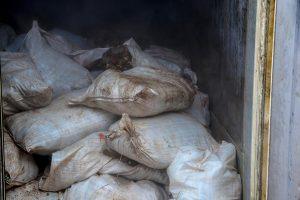
The Comptroller-General of Customs, Bashir Adeniyi, made this known during the handover of a seized 40-foot container loaded with donkey genitals to the National Environmental Standards and Regulations Enforcement Agency (NESREA) at the NCS Government Warehouse in Karu, Abuja.
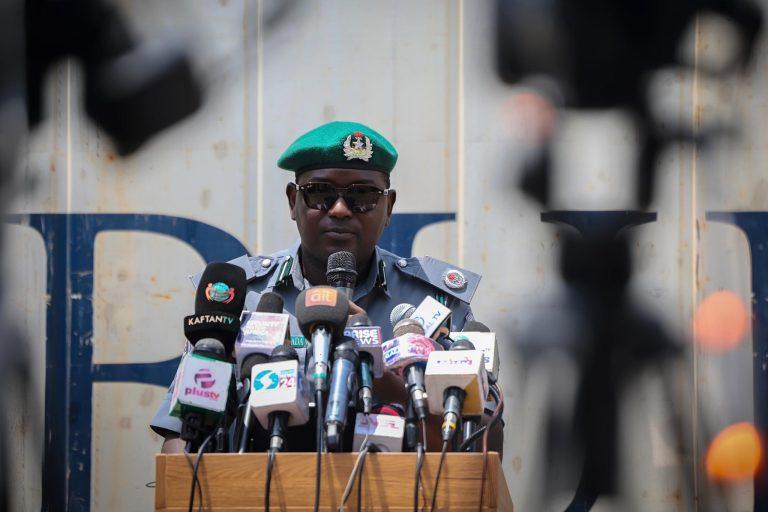
Represented by the National Public Relations Officer of the NCS, Assistant Comptroller Abdullahi Maiwada, the CGC stated that the Service is leveraging technology to ensure Nigeria’s borders are not used as transit routes for the trafficking of prohibited items.

In recent years, the Nigeria Customs Service has intensified its anti-wildlife trafficking operations through the establishment of the Special Wildlife Office (SWO), housed within the Customs Intelligence Unit (CIU).

This specialized unit is responsible for intelligence gathering, profiling, investigation, and coordinated enforcement actions targeting transnational criminal networks that profit from the exploitation of endangered wildlife species.

With support from local and international partners, the SWO has recorded commendable successes.

We work actively with the Wildlife Conservation Society (WCS), which has provided secure storage warehouses for intercepted specimens in selected locations across Nigeria.

The Service also collaborates with Focused Conservation and the Wildlife Justice Commission (WJC), and engages in joint task force operations with domestic and international security agencies, including the NDLEA, EFCC, Nigeria Police Force, INTERPOL, and the Office of the National Security Adviser (ONSA), among others.

These partnerships have strengthened intelligence sharing, resulting in high-profile interceptions and successful prosecutions,” he said.

Presenting the 40-foot container—loaded with 10,603 donkey genitals intercepted along the Kaduna–Abuja Expressway on Friday, July 5, 2025—to NESREA, Maiwada revealed that the interception occurred on Friday, June 5, 2025, at approximately 9:00 p.m., following credible intelligence and coordinated surveillance by operatives of the SWO and CIU.

“This seizure is not an isolated incident. Over the past 12 months, the Special Wildlife Office has uncovered and disrupted numerous illicit wildlife trafficking operations nationwide.

Notable among these are the recovery of six African Grey Parrots and the arrest of a suspect on December 10, 2024, in Kano; the interception of two live pangolins, five Mona monkeys, two Tantalus monkeys, one baby baboon, and an African Grey Parrot at Lagos Airport in May 2025.

In another operation, a suspect was arrested in the Ikom area of Cross River State in connection with the seizure of 213 parrot heads, six eagle heads, 128 hornbill heads, and other exotic species. On January 13, 2025, the Service handed over rescued tortoises to the National Park Service in Oyo State. Other significant seizures included taxidermy specimens such as life-sized lions, zebra hides, gorilla parts, and pangolin scales at various ports and logistics routes nationwide.

One such case involved 119.4 kg of pangolin scales concealed in sacks within a container around the Calabar area of Cross River State.

In another case, 120 African Grey Parrots were rescued and a suspect was arrested in the Fufore area of Adamawa State.”

The Officer-in-Charge of the Special Wildlife Office, Assistant Comptroller Anuhu Samaila Mani, emphasized that as wildlife crimes continue to evolve, the NCS will further strengthen legal frameworks and foster greater regional and international cooperation to protect biodiversity and promote conservation.

Our efforts have been enhanced through strategic partnerships with the Federal Ministry of Environment, Nigeria Police Force, NESREA, National Park Service, the World Customs Organization (ICCWC), INTERPOL, UNODC, and NGOs such as Focused Conservation, Wildlife Conservation Society, World Parrot Trust, Greenfingers, and Pandrillus, as well as enforcement agencies in neighboring countries.

We have established a dedicated intelligence unit that utilizes modern technology, including surveillance and forensic analysis.

Additionally, several Customs officers and prosecutors have received specialized training in wildlife crime detection and investigation, courtesy of Focused Conservation, Wildlife Conservation Society, and the Environmental Investigation Agency.”

The Nigeria Customs Service reiterated its investment in capacity building, digital surveillance, species identification, and cross-border enforcement mechanisms to combat wildlife trafficking—an activity increasingly linked to other forms of organized crime, including money laundering, arms smuggling, and illicit financial flows.


Victoria Ibanga

Nigerian Government Supports Kebbi Flood Disaster Victims

The Federal Government, through the National Emergency Management Agency (NEMA), has officially handed over relief items to the Kebbi State Government for distribution to persons affected by recent rainstorms, windstorms, and flood disasters in seven local government areas.

The handover ceremony took place at the Government House in Birnin Kebbi, with NEMA’s Director General, Zubaida Umar, formally presenting the relief materials to Governor Nasir Idris.

The relief materials include food and non-food items, aimed at supporting families displaced by the disasters.

The affected local government areas are Shanga, Suru, Bunza, Danko-Wasagu, Koko-Besse, Augie, and another unspecified local government area.

The Director General of NEMA, Zubaida Umar, emphasised the Federal Government’s commitment to disaster relief under the leadership of President Bola Ahmed Tinubu’s “Renewed Hope Initiative.”

She commended the Kebbi State Government for its proactive efforts in managing disasters and supporting the people of the state.

Zubaida Umar acknowledged that Kebbi State has faced serious challenges, including banditry, natural disasters, and insecurity, which have displaced thousands of families, disrupted livelihoods, and increased vulnerabilities.

Governor Nasir Idris appreciated NEMA’s efforts and promised to ensure the distribution of the relief items to the affected people.

He also pledged to support NEMA in flagging off 200 housing units for those affected by the disasters in the state.

The handover of relief items is a testament to the Federal Government’s commitment to supporting states affected by disasters and promoting the well-being of its citizens.


Olusola Akintonde

AMWE Convener Urges Nigeria Government To Improve Healthcare Quality

0

The Convener of the All-Africa Medical Wellness Expo (AMWE), Mr Usman Isah, has called on Nigeria Government to implement effective policies and make strategic investments to improve the quality of healthcare across the country.

Isah stated that such efforts would help position Nigeria as a leading hub for medical excellence, innovation, and advanced healthcare delivery.

Isah, who also serves as Executive Chairman of the AMWE Medical and Wellness Foundation, made the call in a statement issued in Abuja on Friday.

Read More:BOSCHMA Set To Roll Out Formal Health Sector In Borno

This followed a press conference held on June 28 ahead of the third edition of AMWE, which is scheduled to take place in Abuja.

He stressed that Nigeria had the potential to offer world-class medical services and become a premier destination for medical tourism in Africa.

He called for a deliberate and actionable policy framework that would prioritise the development of a robust healthcare tourism industry through strategic partnerships and collaboration with key stakeholders across the health and wellness ecosystem.

“To improve the standard of service delivery and attract medical tourists, Nigeria must evolve into a high-quality healthcare destination through intentional investment and innovation,” he added.

Isah also urged the government to maintain its support for local healthcare providers by tackling financial and operational barriers, and by promoting specialisation in advanced medical services.

He said such support would help grow both inbound and intra-African medical tourism.

Speaking on the upcoming AMWE 2025 event, he described it as a premier conference and exhibition aimed at uniting healthcare professionals, investors, policymakers, innovators, and wellness practitioners from across Africa and beyond.

“It is designed to offer long-term solutions to Nigeria’s health sector challenges and advance the goal of universal health coverage in a globally competitive manner,” he stated.

The reports said that the three-day event will feature keynote addresses, paper presentations, and a Gala and Awards Night.

The theme for 2025 event is: “Medical and Wellness Tourism: Bridging Global Healthcare Gaps.”


Greek Lawmakers Approves North Africa Asylum Ban

Greek lawmakers voted on Friday to temporarily stop processing asylum requests from migrants arriving from North Africa by sea in a bid to reduce arrivals into Europe’s southernmost tip, a move rights groups and opposition parties have called illegal.

The ban comes amid a surge in migrants reaching the island of Crete and after talks with Libya’s Benghazi-based government to stem the flow were this week.

It marks a further hardening of Greece’s stance towards migrants under Prime Minister Kyriakos Mitsotakis’ centre-right government, which has built a fence at its northern land borders and boosted sea patrols since it came to power in 2019.

Human rights groups accuse Greece of forcefully turning back asylum-seekers on its sea and land borders. This year, the European Union border agency said it was reviewing 12 cases of potential human rights violations by Greece.

The government denies wrongdoing.
The law, which received 177 votes in favour and 74 against, halts asylum processing for at least three months and allows authorities to quickly repatriate migrants without any prior identification process.

“Faced with the sharp increase in irregular arrivals by sea from North Africa, particularly from Libya to Crete, we have taken the difficult but absolutely necessary decision to temporarily suspend the examination of asylum applications,” Mitsotakis was quoted by his office as telling the German newspaper Bild on Friday.

“Greece is not a gateway to Europe open to everyone.”
Greece was on the front line of a migration crisis in 2015-16 when hundreds of thousands of migrants from the Middle East, Asia and Africa passed through its islands and mainland.

Since then, flows have dropped off dramatically. While there has been a rise in arrivals to the outlying islands of Crete and Gavdos – those numbers have quadrupled to over 7,000 so far this year – sea arrivals to Greece as a whole dropped by 5.5% to 17,000 in the first half of this year, U.N. data show.

Rights groups and opposition parties said the ban approved by parliament violates human rights.

“Seeking refuge is a human right; preventing people from doing so is both illegal and inhumane,” said Martha Roussou, a senior advocacy adviser for aid group IRC.

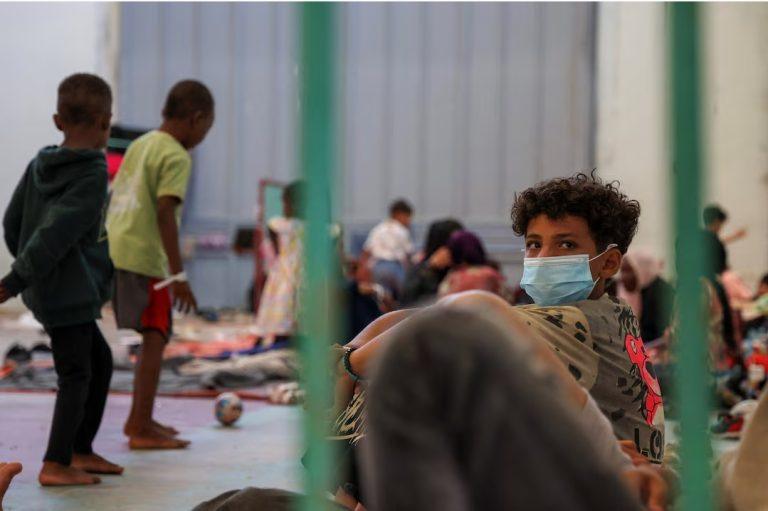
Thousands of irregular migrants have been rescued by the Greek coastguard off Crete in recent days, the Athens government said. Hundreds of them, including children, were temporarily housed at an exhibition centre in Agyia, near the city of Chania in western Crete, amid sweltering summer temperatures.

Crete lacks an organised reception facility. The government said it would build a migrant camp there but the local tourist industry is worried the plan could harm the island’s image.

“The weight is too great, the load is too big, and solutions now have to be found … at a central level,” said George Tsapakos, a deputy governor for Crete.


Source: Reuters/Ejiofor Ezeifeoma

Bauchi Assembly Pledges Stronger Oversight On Healthcare, Immunisation

0

The Bauchi State House of Assembly has pledged its commitment to strengthening oversight functions to enhance healthcare delivery and improve Immunisation coverage across the state.

Speaker of the House, Abubakar Sulaiman, gave the assurance on Friday in Bauchi while receiving representatives of the Africa Health Budget Network (AHBN) and the Zero Dose Learning Hub (ZDLH) Community of Practice (CoP) during an advocacy visit.

He stated that the Assembly, through its Committees on Health and Appropriation, had consistently advocated for increased budgetary allocations to the health sector.

Read More:Customs, NAFDAC Inaugurate Committee To Tackle Fake Drugs

“We acknowledge health as a foundation for societal development. Without good health, no society can function effectively,” he emphasised.

The speaker also reaffirmed the House’s readiness to conduct oversight visits to health facilities across the state to directly engage communities and assess healthcare service delivery.

He added that the Assembly remained committed to gender inclusion and the protection of women’s and children’s rights in all health-related policies.

Dr Aminu Magashi, Coordinator of AHBN, commended the Assembly for its leadership role and urged lawmakers to strengthen their oversight and resource-tracking mechanisms to ensure every child in Bauchi was immunised.

“Bauchi is leading among the four states where we work, and this is because of the strong political will from both the assembly and the executive arm,” he noted.

Also speaking, Dr Hassan Musa, Bauchi State Focal Person for AHBN, appreciated the state government for creating a dedicated budget line for Immunisation.

He noted that N870 million had been earmarked in the 2025 budget as a basket fund to combat zero-dose prevalence in children.

He highlighted gaps identified in the District Immunisation Monitoring (DIM) report and the scorecard, calling for greater focus on gender mainstreaming, community engagement, and social protection.

Co-chair, Mr Jinjiri Garba, lauded the Assembly for being responsive to the health sector’s needs and emphasized the importance of sustained collaboration to improve the state’s health indicators.


Lawmakers Warn Polytechnic Rectors Against Misconduct

0

The House committee on Polytechnic Education and higher technical Colleges, has expressed dissatisfaction over the poor attitude of Rectors of Polytechnics to House invitations.

The chairman of the committee, Mr. Fuad Laguda gave the Rectors of Federal Polytechnics four days ultimatum to provide all accreditation status of courses and their financial information to the committee.

The Chairman who lamented the Numbers of turnouts by Invited Polytechnic Rectors under its purview despite several invitations, stressed that their actions were a disservice to the nation.

He said that out of thirty six rectors, only about forty percent of them came for the scheduled meeting.

He stressed that the Committee would not hesitate to invoke appropriate sanctions as enshrined in the Constitution.

This has been a continuous attitude from them which we have put an end today. And we transmitted out displeasure to them. And which we won’t hesitate to invoke all relevant laws within our reach,”. Mr. Laguda said.

He said that after the long discussion held during the executive session, he expects a change of attitude.

Mr. Laguda extended the date for submission of every required document to July 15th, 2025.

Lateefah Ibrahim

Loan Scheme: NELFUND Resumes Upkeep Disbursements for Students

0

The Nigerian Education Loan Fund (NELFUND) has announced the successful commencement of upkeep disbursements to student beneficiaries who have updated their bank account details from digital wallet platforms to commercial bank accounts.

Director of Strategic Communications of the fund, Mrs. Oseyemi Oluwatuyi, in a statement, noted that the development marks a significant breakthrough in resolving earlier disbursement delays.

Over 3,600 students who previously registered with digital-only banking platforms have now successfully received their backlog of upkeep payments after updating their details to conventional commercial bank accounts on the NELFUND portal.

“We appreciate the patience and understanding of all affected students during this period. Your resilience and cooperation have made this progress possible,” she said

She advised Students who are yet to receive their upkeep payments and are still using digital wallet accounts to raise a support ticket via the official NELFUND portal to request access to update their bank details.

Alternatively, students may report through the IT office of their institution, which will compile and forward all related cases to NELFUND for resolution.

“NELFUND remains committed to ensuring that no eligible student is left behind. This resolution process is part of our broader effort to enhance the efficiency, transparency, and student-centered delivery of our support services,” she said

She urges all students to continue engaging only through official NELFUND channels and to assist peers who may require help navigating the update process.

Once again, we thank you for your patience and support as we continue working to deliver a more inclusive and reliable student loan experience,” she said

She added that for further inquiries or assistance, public’s can contact them via email at info@nelf.gov.ng or reach out through the official social media platforms:
X (formerly Twitter): @nelfund, Instagram: @nelfund, Facebook & LinkedIn: Nigerian Education Loan Fund, NELFUND.

Lateefah Ibrahim

Presidency Clarifies VP Shettima’s Book Launch Comments

The Presidency has reacted to reports making the rounds in some quarters of the media concerning the remarks made by Vice President Kashim Shettima on Thursday at the public presentation of a book written by former Minister of Justice Mohammed Adoke.

In a message he issued on Friday, Spokesperson to the Vice President, Mr Stanley Nkwocha, said contrary to insinuations, VP Shettima’s remark at the book launch had nothing to do with the current situation in Rivers State.

 He said: “The office of the Vice President has noted with serious concern the gross misrepresentation of remarks made by His Excellency, Senator Kashim Shettima, Vice President of the Federal Republic of Nigeria, during the public presentation of the book “OPL 245: The Inside Story of the $1.3 Billion Oil Block” by Mohammed Bello Adoke (SAN), held at the Yar’Adua Centre, Abuja, on Thursday, July 10, 2025.

“Certain online news outlets and individuals have distorted the Vice President’s comments in pursuit of a mischievous agenda, twisting his account of how the administration of former President Goodluck Jonathan considered removing him from office—then as Governor of Borno State—at the height of the insurgency in the Northeast region.”

Mr Nkwocha described the sensational misrepresentation of the VP’s remarks as the fiction of mischief makers.

“This sensational reporting, which strips the Vice President’s remarks of their proper context, ventures into fiction by drawing false equivalence between his personal experience and the state of emergency declared in Rivers State, as well as the subsequent suspension of Governor Siminalayi Fubara by His Excellency, President Bola Ahmed Tinubu, GCFR, President and Commander-in-Chief of the Armed Forces of the Federal Republic of Nigeria.

“We wish to state categorically that Vice President Shettima’s comments were made within the context of acknowledging the author’s professional conduct during his tenure as Attorney General of the Federation—a tribute to his public service record. His remarks were historical references to events during the Jonathan administration and were intended as a discourse on Nigeria’s constitutional evolution. They served to highlight how complex federal-state tensions have been managed through legal mechanisms and the country’s progress in that regard,” he added.

The Vice President’s media aide further stated that the current situation in Rivers has no connection with the situation in Borno State when Kashim Shettima was its governor.

“For the avoidance of doubt, President Tinubu did not remove Governor Fubara from office. The constitutional measure implemented was a suspension, not an outright removal. This action, along with the declaration of a state of emergency, was taken in response to the grave political crisis in Rivers State at the time. The situation was unprecedented, with the State House of Assembly complex under demolition and the Governor facing a looming threat of impeachment by aggrieved members of the legislature. No objective observer can deny that this decisive intervention by the President brought stability and calm to Rivers State.

“This situation is not comparable to that of the Northeast under the Jonathan administration, where violent non-state actors were directly challenging the sovereignty of the Nigerian state, demanding unified action by both federal and state authorities to confront terrorism. In contrast, President Tinubu acted strictly within constitutional limits and in consultation with relevant stakeholders to preserve democratic institutions and restore order in Rivers State,” said the spokesperson.

He also quotes some laws that give backing to the action of the President on Rivers State, saying: “Nigeria’s laws provide a clear framework for addressing such matters. Section 305(3)(c) of the Constitution authorises extraordinary measures when there is “a breakdown of public order and public safety in the federation or any part thereof to such extent as to require extraordinary measures to restore peace and security.”

The situation in Rivers State met this constitutional threshold, with persistent politically motivated violence, systematic attacks on federal institutions, and near-complete paralysis of governance, conditions intolerable in any democratic society. According to credible security reports, these acts even escalated into attacks on national assets.

President Tinubu acted with constitutional fidelity. His proclamation invoking Section 305(2) was ratified by an overwhelming bipartisan majority in the National Assembly, as required by Section 305(3).

“Clearly, without mincing words, the action of President Tinubu in suspending Mr Fubara and others from exercising the functions of office averted the Governor’s outright removal. To conflate suspension with removal is misleading. Therefore, interpreting Senator Shettima’s remarks as commentary on current events is either a wilful misrepresentation or a deliberate neglect of constitutional context.”

Giving more clarification on the remarks made by the Vice President at Thursday’s book launch, Mr Nkwocha said it was borne out of appreciation for the high principle of the Author and former Attorney General, Mohammed Adoke.

“The Vice President, speaking extemporaneously, focused on the importance of public officials documenting their stewardship and on the enduring principle of accountability in public service. His historical references were made to illustrate the principled stands taken by past public servants, as well as his ties to Mohammed Bello Adoke and former Speaker Aminu Waziri Tambuwal. His remarks were not in any way a criticism of President Tinubu’s actions, which the Vice President and the entire administration fully support and stand by without reservation.

“Vice President Shettima stands in loyal concert with President Tinubu in implementing these difficult but necessary actions to safeguard our democracy. We urge media organisations and political actors to desist from the destructive practice of wrenching statements from context to fabricate nonexistent conflicts,” Nkwocha concluded.


Germany Renews Commitment to Northeast Nigeria Recovery

Germany has launched a second phase of the resilience and peace building project in the Northeast region of Nigeria.

This Follows a successful first phase that supported over 150,000 beneficiaries, including under-five children, pregnant and breastfeeding women and girls, out-of-school children, and food-insecure households

The programme is funded with 20 million euros by the German Federal Ministry for Economic Cooperation and Development (BMZ) through KfW Development Bank.

The joint project, focusing on resilience and peacebuilding, is being implemented by UNICEF and WFP in partnership with the governments of Borno and Yobe states.

The second phase will expand the achievements of the first intervention by increasing access to essential services, food security and peacebuilding initiatives, reaching more than 200,000 people. To broaden its impact, the project will extend into four additional local government areas: Bama and Konduga in Borno State and Potiskum and Jakusko in Yobe State.

Years of armed conflict in Northeast Nigeria have taken a devastating toll on livelihood opportunities, social cohesion and the well-being of children and women. Insecurity, combined with the escalating effects of climate change, has displaced families, destroyed agricultural livelihoods—the region’s economic mainstay—and contributed to growing food insecurity among vulnerable households and acute malnutrition among children.

The protracted conflict has also deepened mistrust within communities, making resettlement and peacebuilding efforts difficult. Despite the efforts of government authorities and security forces to restore stability, rebuilding trust and economic opportunities remains a gradual process.

The project will deliver a range of essential services and resilience-building interventions, including child protection, food security, safe water supply, nutrition, improved access to education and vocational skills for out-of-school children, promotion of locally produced nutritious foods, strengthened food systems, conditional cash transfers, livelihood opportunities, environmental regreening efforts, and the establishment of peace clubs in schools.

WFP Country Director in Nigeria, David Stevenson said Food insecurity in Northeast Nigeria remains one of the most critical challenges, exacerbated by climate and economic hardship.

“Thanks to the support of the German government, climate-adaptive food systems have been revitalised, improving nutrition and economic outcomes for the most vulnerable. Phase II will ensure these gains are extended to additional communities in Borno and Yobe states,” he said

UNICEF Nigeria Representative, Cristian Munduate said Nigeria’s Northeast region remains one of the toughest places to be a child or a woman. This is why UNICEF is excited that the impact of phase one of the joint project is improving the wellbeing and resilience at the household level, one child and woman at a time.

“UNICEF appreciates the German government for the continued investment to support the protection of children and the most vulnerable populations in Borno and Yobe states,” she said.

Head of Development Cooperation, German Embassy Abuja, Dr. Karin Jansen said German government is to support long-term, community-led recovery in Northeast Nigeria.

“By working with trusted partners like WFP and UNICEF, we are helping build resilience against conflict and climate-related challenges, especially for children and women,” he said.

Since inception, the project has delivered tangible results: over 60 solar-powered boreholes and 18 hand pump boreholes have been constructed or rehabilitated, providing safe water to nearly 300,000 people. Nearly 40,000 out-of-school children have regained access to education through formal and informal learning centres.

Additionally, to support year-round food production for over 6,000 smallholder farmers, the project supplied drought-resistant seeds and solar-powered irrigation pumps. The project has led to increased crop yields, improved household consumption of nutritious food, and higher household incomes.

Sustained collaboration and investment hold the potential to shift the trajectory from crisis to recovery, and from survival to self-reliance, thereby securing a resilient and dignified future for communities in Northeast Nigeria.

Lateefah Ibrahim

Chevron, NUJ FCT Train Over 70 Journalists On AI 

0

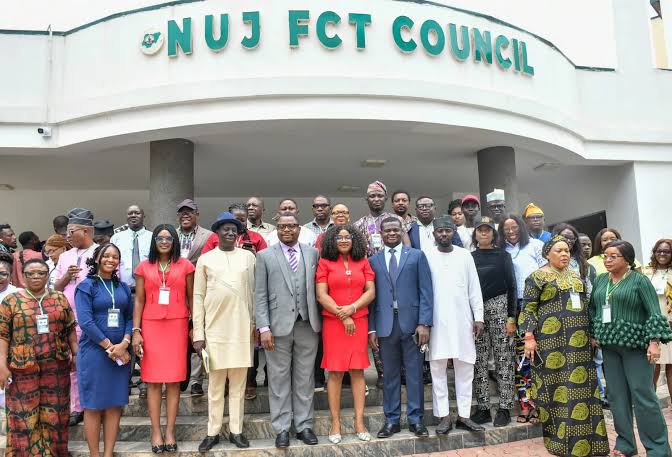
No fewer than 70 journalists in the Federal Capital Territory have received training on the use of Artificial Intelligence (AI) to boost their efficiency, quality reportage, and curb misinformation.

The training was organised by Chevron Nigeria Limited (CNL) in collaboration with the Nigeria Union of Journalists (NUJ), FCT Council.

Olusoga Oduselu, General Manager, Policy, Government and Public Affairs, Chevron Nigeria Limited, represented by Mr Victor Anyaegbudike, stated that the one-day media training in Abuja aimed to enhance media practitioners’ skills.

He emphasised Chevron’s belief in human capital development, seeing it as the “engine room of any organisation and society’s success,”.

The general manager stressed the media’s crucial role as agenda-setters and opinion moulders.

Highlighting the success of previous training editions held between 2023 and 2024, Oduselu pledged Chevron’s ongoing partnership with the media, acknowledging their impactful role in reporting the oil and gas industry.

He mentioned CNL’s pioneering Advanced Writing and Reporting Skills (AWARES) programme, which had benefited over 120 journalists since 2014, and reaffirmed the company’s commitment to building professional capacity and lasting partnerships.

Oduselu urged journalists to uphold ethical principles and make their mark in Nigeria’s development, noting Chevron’s support for Nigerian content development through employment and contract opportunities.

Grace Ike, Chairman of the NUJ FCT Council, urged journalists to embrace AI to enhance performance and productivity, recognising its widespread adoption by colleagues globally.

Commending Chevron for sponsoring the event, she emphasised that “AI is a powerful tool reshaping news gathering and delivery, enhancing data analysis, misinformation detection, and audience engagement.

Ike highlighted AI’s crucial role in fact-checking, verification, and personalising content, which boosted credibility and readership.

She also noted how AI tools efficiently transcribed interviews, saving journalists time for deeper analysis and storytelling.

The chairperson called on journalists to “embrace innovation boldly but responsibly” and uphold integrity to lead journalism’s transformation.

A resource person, Busola Ajibola, Deputy Director, Centre for Journalism Innovation and Development, urged journalists to be proactive in embracing trending innovations and technologies to improve their skills and knowledge.

Speaking on the topic, “Leveraging Artificial Intelligence to Enhance Journalism in Nigeria,” Ajibola warned that journalists who failed to leverage AI would find their jobs threatened.

Dr Emman Usman Shehu, Director, International Institute of Journalism (IIJ), represented by Dr Simon Musa Reef, discussed “Freedom of Information and Media Accountability.”

He tasked journalists to utilise the Freedom of Information Act (FOIA), which empowered them to hold public officials accountable, emphasising a recent Supreme Court ruling extending its applicability to all tiers of government.

However, he also pointed out implementation challenges like limited awareness, official secrecy, harassment, and bureaucratic delays.

Dr Lemmy Ughegbe addressed “Mental Health of Journalists in the Era of Social Media,” highlighting both the opportunities (faster news dissemination, direct engagement) and threats (harassment, misinformation, surveillance, identity theft) posed by social media.

He stressed that online attacks could cause significant psychological harm and that protecting journalists’ mental health was a professional responsibility, as their well-being was vital for public trust in journalism.

NAN/Jide Johnson.