People with special needs are increasingly becoming successful farmers in Kaduna State after scores of them embraced modern agriculture as a means to improve their livelihoods.
This effort is part of a specially designed farming initiative aimed at helping them become self-reliant, rather than depending on charity or handouts from people.
On a dedicated farmland located in Kaduna town, a group of Persons with Disabilities (PwDs) farmers have adopted modern farming techniques to support themselves, especially during this rainy season. Which the aim is to produce farm products to feed themselves and the families.
A visually impaired farmer William Makia who uses simple farm tools, said he has been farming in the area for a long time with the sole purpose of providing for his family.
According to him, “I am blind. The reason I farm is to feed my family. I don’t beg, and I have never begged in my life. I do not like begging.”
Makia added that he enjoys farming and even shares his harvest with able-bodied neighbours, which helps strengthen community bonds and cooperation.
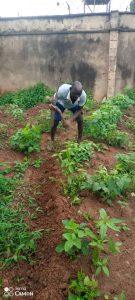
“I use a hoe for farming. I use a cutlass and other hand tools for weeding and general farm work,” he said.
READ ALSO:Kaduna State Government To Prioritize Mechanized Farming Initiatives.
His farm is neatly organized, with rows of beans, sweet potatoes, groundnuts, and vegetables like tomatoes and okra, located at the Rehabilitation Board School premises.
He emphasized that embracing smart farming practices is essential to bring down high cost of food affecting everyone in the society.
On the other hand, Joshua Mathew, a man with paraplegic, who is also part of the group. Despite limited mobility, always drags himself across his farm to tend to his crops. He said, “What people should understand is that I farm intensively to feed my family. I grow maize, rice, and other food crops to reduce the high cost of living.”
He stressed that despite his condition, farming is not as difficult as many people believe.while called on the government to support them so they can continue to be self-reliant.
Due to the high cost of fertilizer, many farmers in the area have resorted to using organic manure as a more affordable alternative.
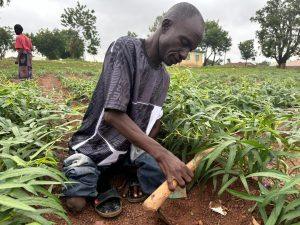
Even with low rainfall this year, these farmers remain committed. They continue to work diligently, applying modern farming techniques to ensure quality food sufficiency.
“We all agree that we are physically challenged, but the fact is we can produce food crops to feed our families. Yes, we need fertilizer support to boost our morale and improve our farming,” said the group.
This inclusive farming initiative, known as Inclusive Smart Farming, aims to integrate the PwDs into agriculture as a strategy to combat hunger and poverty in Nigeria. The programme is already showing promising results.
The President, Association of People with Special Needs in Nigeria, Rilwan Abdullahi emphasized the importance of inclusive smart farming systems in boosting agricultural production among the PwDs.
According to him, “This is an effort to become self-reliant, therefore, we call on the authorities to support these farmers and ensure they are included whenever agricultural inputs like fertilizers are distributed.”
He added that across Nigeria, many PwDs are actively engaged in serious farming—producing both food and cash crops and should be supported with fertilizers and appropriate farming implements.
Currently, these resilient farmers are fully dedicated to agriculture as a means of sustaining themselves, refusing to resort to begging.
The PwDs in Nigeria are becoming successful farmers. However, they often express frustration at being excluded from government distribution programmes of fertilizer and other agricultural inputs.
A Science and Environment Journalist from the African Climate Reporters (ACR), who visited these farms noted that, despite their disabilities, this farmers maintain exceptionally clean and organized fields due to the time and effort they dedicate to weeding and maintaining their farmlands