

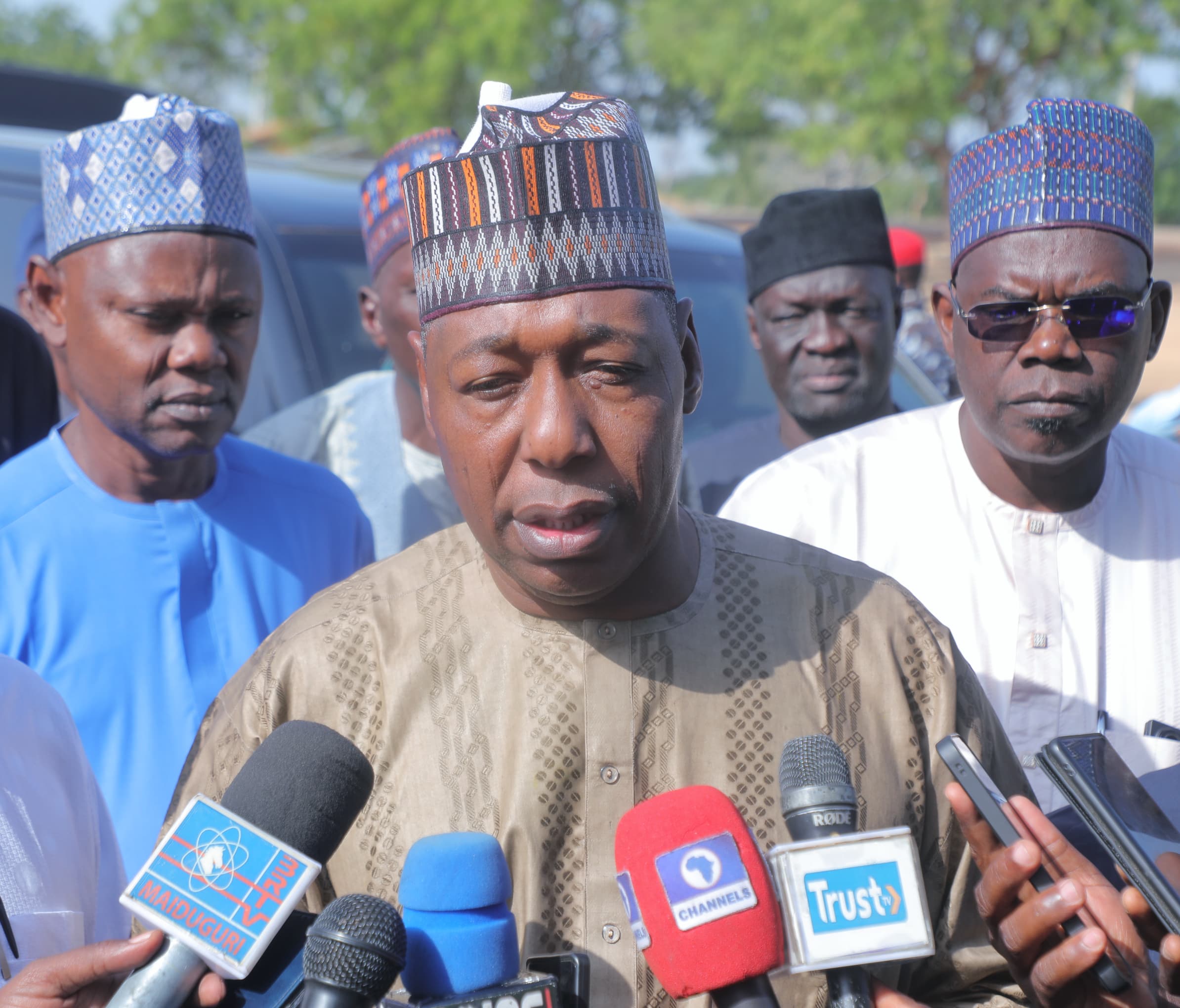
The Borno State Governor, Babagana Zulum, has visited four communities—Gwoza, Askira, Chibok, and Damboa—to commiserate with residents and security personnel following recent attacks that claimed lives and left several others injured.
During the visit, Zulum expressed deep sympathy to families affected by the tragic incidents and reaffirmed his commitment to supporting the Nigerian Armed Forces, the Civilian JTF, hunters and vigilantes in the ongoing fight against Boko Haram and ISWAP.
The Governor noted that the primary purpose of the visit was to console the military and the communities over the losses suffered and to strengthen the resilience of the people by boosting cooperation with security agencies.
End of the crisis
According to the leadership, discussions with the military, volunteer groups and community structures revealed a strong determination to bring an end to the crisis.
Zulum, in a brief interview with newsmen, said, “Security matters cannot be openly discussed, but key recommendations include the fortification of vulnerable villages and taking sustained, offensive operations directly into terrorist enclaves.”
The team also underscored the need to enhance the capacity of local volunteer forces through better equipment, mobility support and training.
These measures were agreed upon with senior commanders of Sector 4, the 25th Task Force Brigade and the 28th Task Force Brigade.
Governor Zulum commended the Federal Government and frontline security personnel for their renewed commitment to restoring peace in the region.
Beyond security, the Borno State Government highlighted several development projects aimed at improving living conditions in the affected communities.
In Gwoza, which now has a population exceeding 200,000, the government noted the absence of a major healthcare facility and announced the imminent commissioning of a new modern hospital.
“Water supply challenges in Gwoza have also been addressed with the completion of a new water network system, while in Chibok and Damboa, the rehabilitation of the Water Project is at its final connection stage.”
The government also inspected hospitals in Gwoza and Lassa, giving assurances that full reconstruction, rehabilitation, modern equipment and recruitment of adequate health personnel would be carried out to ensure effective service delivery.
Lateefah Ibrahim