

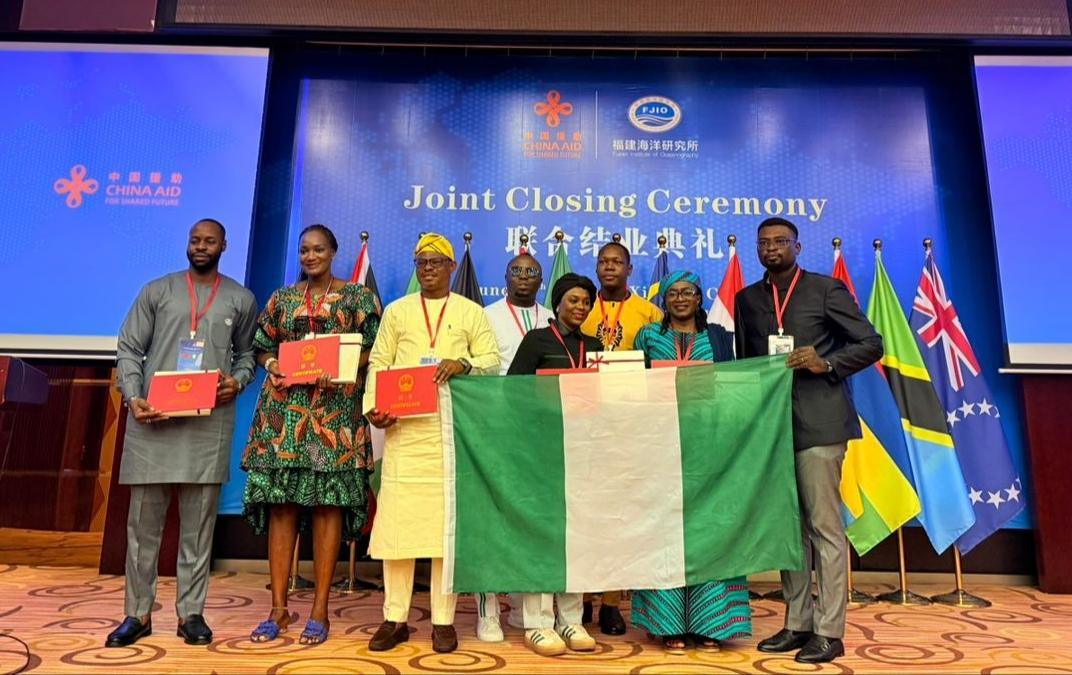
Two major international seminars on the Blue Economy and Marine Spatial Planning (MSP) for Belt and Road Initiative (BRI) countries and other developing nations have concluded in Xiamen, China, with a strong call for concrete action, strengthened cooperation, and shared solutions for sustainable marine economic development.
Organised by China’s Ministry of Commerce, the Xiamen Municipal Bureau of Commerce, and the Fujian Institute of Oceanography, the joint seminars brought together participants from across Africa, Asia, and other allied regions.
Attendees engaged in intensive training and participated in field visits to marine industrial parks, research institutions, and port facilities, gaining exposure to China’s innovative marine governance models and practical tools for promoting sustainable growth in the ocean economy.
At the closing ceremony, the Director of Foreign Economic Cooperation at the Xiamen Municipal Bureau of Commerce, Mr Xu Zhenbo, underscored the importance of international partnerships in realising the full potential of the blue economy. “Though oceans separate us, our destinies are intertwined,” he said. “This programme reflects our shared vision for sustainable marine development and international collaboration. We hope participants will become Friendship Ambassadors, applying what they’ve learned to enhance marine economic growth in their countries.”
Mr Xu added that the seminars had laid a solid foundation for future cooperation in technology sharing, joint research, talent development, and project execution—fostering a maritime community with a shared future.
Echoing this, the Deputy Director of the Fujian Institute of Oceanography, Mr Hu Dengjin, said: “The ocean is our common link—one that can bridge cooperation and mutual growth. The blue economy represents a strategic path that harmonises economic advancement, environmental stewardship, and social well-being.”
Mr Dengjin urged participants to translate their newfound knowledge into tangible actions that will drive blue economy transformation in their home countries and promote global marine sustainability.
Speaking on behalf of the participants, Mr Hans Magaya from Gabon’s Ministry of the Sea, Fisheries and Blue Economy said: “This seminar has been eye-opening. We’re leaving empowered to become ambassadors of Marine Spatial Planning (MSP), sharing insights, influencing policy, and improving marine governance back home.”
Similarly, Mr Ibrahim Mohamed Abdalla Said, a Chief Officer from the County Government of Mombasa, Kenya, praised China’s participatory and integrated approach to MSP as a valuable model for shaping Kenya’s marine framework. “We’re better equipped, more inspired, and more committed to driving sustainable marine development,” he said.
For Nigerian participants and others across the continent, the seminar marks a turning point in blue economy engagement, blending diplomacy, training, and shared solutions for national progress.
“This is not just the end of a seminar,” one Nigerian participant noted, “it is the beginning of a new chapter in international maritime cooperation and sustainable nation-building.”
The seminar reaffirmed the urgency of strengthening global partnerships to manage marine resources wisely, bridge policy gaps, and drive ocean-based economies, anchored in innovation, sustainability, and collective responsibility.