

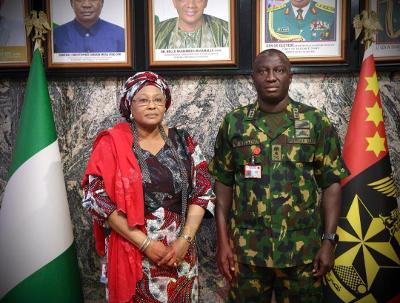
The Chief of Army Staff (COAS), Lieutenant General Waidi Shaibu, has emphasised that the sustainable welfare of veterans must be anchored on deliberate policy frameworks, predictable funding structures, and coordinated institutional mechanisms capable of delivering long-term impact.
Lieutenant General Shaibu made the assertion while receiving the Chairperson of the National Council of the Nigerian Legion, Ms Grace Morenike Henry, during a courtesy visit at the Army Headquarters, Abuja.
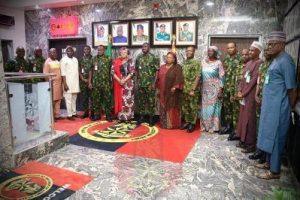
In a statement issued by the Acting Director, Army Public Relations, Colonel Appolonia Anele, the COAS noted that the strength of any professional military institution lies not only in its operational effectiveness but also in the dignity with which it treats its veterans.
He emphasised that the sacrifices of officers and soldiers, many of whom served in complex operational theatres across the country, must be matched with resilient post-service support systems that reflect national gratitude and strategic foresight.
Lieutenant General Shaibu observed that leading military institutions globally have institutionalised comprehensive veterans’ welfare systems backed by law, policy clarity, and budgetary guarantees. He stressed that Nigeria must consolidate and expand its existing frameworks to ensure that retired personnel transition from active service into purposeful civilian engagement without socio-economic vulnerability.
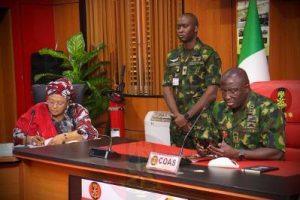
Positioning veterans as strategic national assets, the COAS encouraged retired personnel to actively participate in politics, governance, and policy advocacy. He averred that their leadership acumen, discipline, crisis-management skills, and exposure to national security dynamics uniquely qualify them to contribute meaningfully to legislative and executive processes.
Also Read: Legion Chair, Military Pension Board Meet On Veterans’ Welfare
The COAS further urged constructive engagement with the National Assembly, particularly the Senate and the House of Representatives, to champion legislative initiatives that strengthen veterans’ welfare and reinforce national security architecture. He noted that numerous retirees, especially those with administrative, logistics, and clerical expertise, possess competencies that can be redeployed as human resource consultants, management professionals, and institutional advisers across public and private sectors.
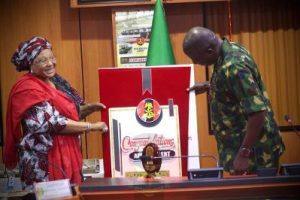
He encouraged veterans to document and publish their professional experiences, noting that such intellectual contributions would preserve institutional memory, enrich strategic discourse, generate sustainable income, and inspire emerging generations of service personnel.
Structural Challenges
Earlier, the Chairperson of the Nigerian Legion, Ms Grace Morenike Henry, outlined key structural challenges confronting retirees and personnel approaching discharge. She identified low public awareness of the Legion’s statutory mandate and limited societal appreciation of its responsibilities as significant constraints.
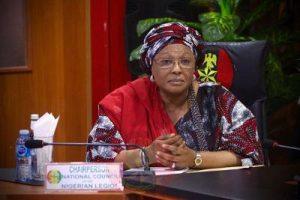
She further observed that national attention to veterans’ welfare often intensifies mainly during the annual Armed Forces Celebration and Remembrance Day, rather than being sustained throughout the fiscal and policy cycle.
The Chairperson also pointed to the absence of a dedicated budget line for veterans’ affairs within the national appropriation framework, resulting in reliance on ad-hoc interventions and inconsistent funding streams.
She therefore advocated the establishment of a fully funded ministry dedicated exclusively to veterans’ affairs, which would provide a clear governmental anchor, institutional coherence, and structured policy direction for veteran-focused initiatives nationwide.
The engagement reaffirmed the Nigerian Army’s commitment to advancing a holistic, policy-driven approach to the welfare of veterans, one that integrates legislative support, fiscal responsibility, institutional coordination, and national recognition of service.