

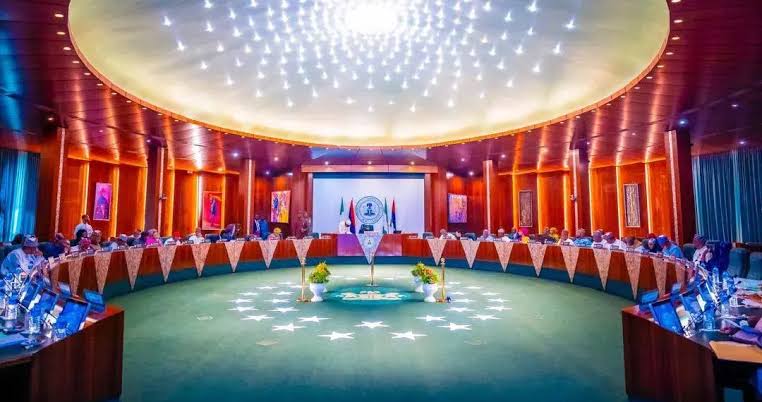
The Federal Executive Council (FEC) has approved the restoration of the National Commission for Mass Literacy, Adult and Non-Formal Education as an autonomous body.
It also approved a six-year moratorium on the establishment of new tertiary institutions and endorsed reforms recognising medical fellowships as equivalent to PhD qualifications.
Briefing State House correspondents after the Council meeting presided over by President Bola Ahmed Tinubu, the Minister of Education, Olatunji Alausa said; “the decisions were part of broader reforms in the education sector.”
He explained that the commission, which had earlier been downgraded to a department within the ministry at the start of the administration, would now regain its independent status.
Alausa said; “the upgrade was necessitated by President Tinubu’s expansive agenda to educate more than 50 million young adults over the next two to three years and equip them with digital literacy skills.”
He explained that “the Council therefore sought approval to restore the body to the status of a commission, a proposal which President Tinubu, as Chairman of the Council, approved.”
Alausa emphasised the urgency amid Nigeria’s literacy crisis, saying, “Today, we have about 56 million Nigerians that are illiterate. We can’t continue to have a high number of citizens that are illiterate.”
The commission, established in 2013, will now intensify efforts in rural areas using radio, TV, public advocacy, and community schools.
Alausa said; “The National Commission for Mass Literacy, Adult and Non-Formal Education has done a good job in educating people in the rural areas, So we’re happy today that this commission is back as a commission. Thanks to Mr. President for that.”
On medical education, Alausa announced amendments to the National Postgraduate Medical College Act, developed with the Attorney General, to eliminate barriers for super-specialised doctors.
“We need to remove the dichotomy of doctors who spent almost 16 years from medical school and their residency, and then doing their fellowship, becoming super specialized.
“The kind of degree we need in Nigeria today for doctors is MBBS, Master of Medicine and Bachelor of Surgery,” he explained.
The changes address issues where medical professionals require a PhD for professorship despite equivalent expertise.
The Minister said; “This set of people in the medical sector have spent more than the year that average candidate spent getting a PhD. So we need to harmonise that… After this executive bill has been sent to the National Assembly, the National Postgraduate Medical College will now act as a PhD equivalent.”
He also announced Council’s major decision which imposes a six-year moratorium on establishing new universities, polytechnics, and colleges of education to prioritise quality and sustainability.
“Today, access is not easy in the country. We have lots of tertiary institutions, both public and private. We need to help these private institutions be sustainable financially,” Alausa stated, citing last year’s JAMB over 2.3 million applicants for fewer than 228,000 university spots in public institutions.
With solutions like affordable options reducing private university enrollment, he said, “Just last year, we had 2.3 million Nigerians apply to JAMB… What will now happen is that there will be less people going to private universities. We need to make private educational institutions sustainable. As we improve quality in public and private universities.”
The Minister reaffirmed his commitment to excellence, saying, “I am going to make sure that every single child in this country, every single citizen of this country, get the highest quality of education that is comparable to anywhere in the world. When you are bringing a country as a gold standard, we’re advancing Nigeria’s education system to meet that.”
The fourth approval covers insurance for the 180 Federal Unity Schools, including engagement of underwriters for comprehensive and general coverage of critical assets.