

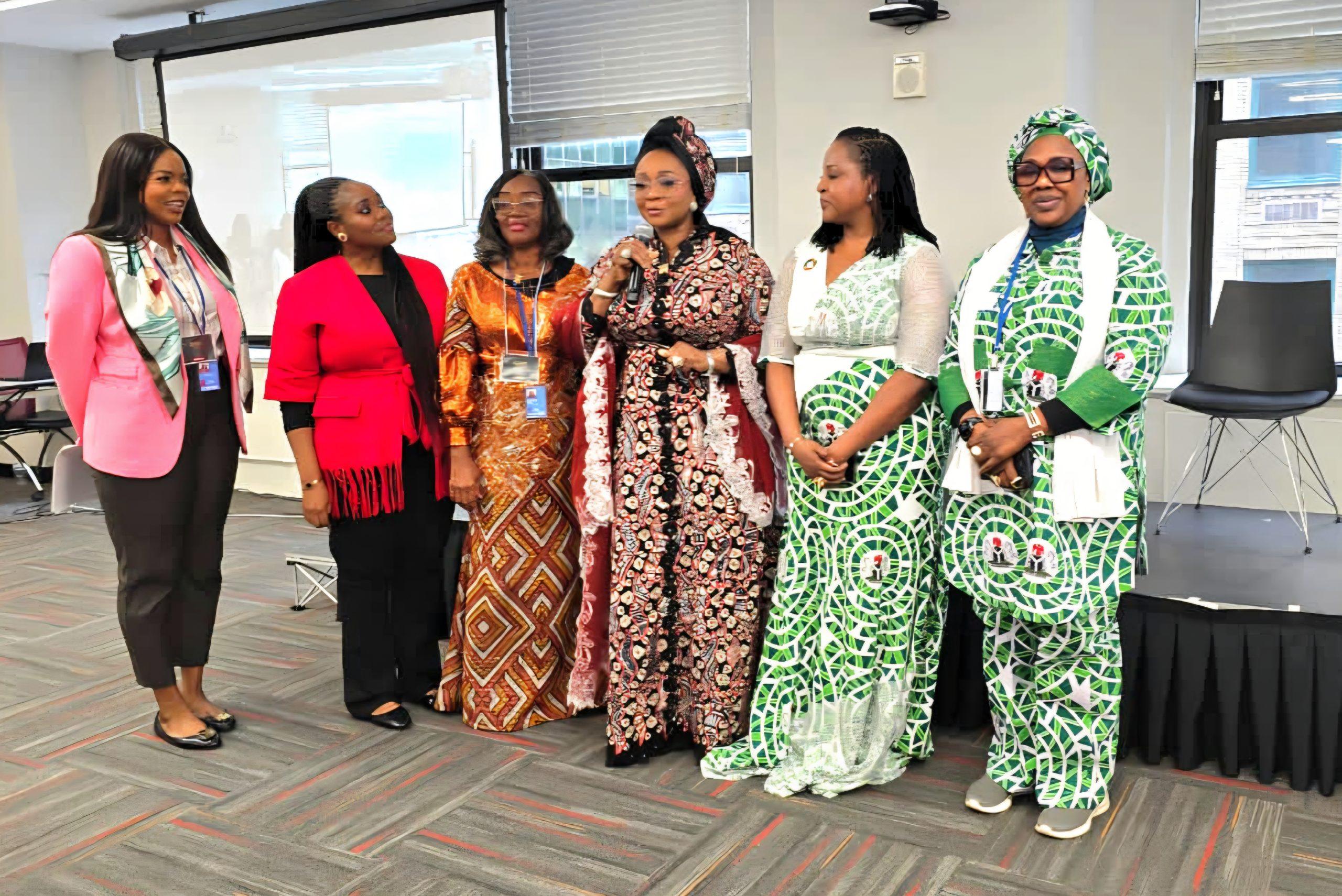
Nigerian women leaders have called for deeper reforms in governance, security, and economic systems, warning that without stronger investment in women and structural policy change, peace and security will remain fragile.
The call came during a panel organised by the Federal Ministry of Women Affairs at the Nigerian Women’s Day event on the margins of the 70th Session of the Commission on the Status of Women in New York.
Moderated by Seun Okediran, the session, themed “Women’s Leadership, Peace and Security for Social Impact,” examined how women are shaping institutions, influencing policy, and strengthening democratic systems.
Setting the tone, Okediran highlighted the stark global leadership gap facing women despite their central role in peacebuilding.
She said; “Globally, only about 24 per cent of leadership positions are held by women, and out of 193 countries only 27 are headed by women.
“We talk about peace and security, but women are not in the rooms where decisions are made.”
Panellist Abosede George-Ogan captured the urgency for bold reforms linking civil society, economic power, and governance.
George-Ogan stressed that collaboration between civil society and government remains essential to scaling women’s leadership.
“If you want to achieve scale and sustainability, then you’re going to have to do it with government, but if you want to influence policy and legislation, there’s something fundamental we must change: we must learn how to work with government. It’s a skill set that we need to learn,” she said.
Drawing from nearly three decades in policing, Force Gender Adviser Aishatu Abubakar-Baju reflected on navigating institutional barriers while advocating reform from within the security sector.
She noted that policing mirrors Nigeria’s broader social structure; “Working in the police… it has been just like the Nigerian society, patriarchal, male dominated.”
“The Nigeria Police Force is expanding mentorship programmes for younger female officers.” she added.
For Enene Ejembi, constitutional reform and political participation remain central to closing the leadership gap, noting that Nigeria currently has less than seven per cent female representation in parliament.
She said; “Countries like Rwanda and Senegal have used affirmative action,” she said. “Unless the parties themselves are no longer boys’ clubs, it is a non-starter for us.”
She urged women to nurture ambition and remain economically active even during family-building years.
Participants stressed that the Women, Peace and Security agenda cannot succeed without structural reforms that expand women’s participation in decision-making and strengthen inclusive leadership across institutions.