


The Nigerian Customs Service (NCS) has announced its commitment to fulfilling its obligations under the Convention on International Trade in Endangered Species of Wild Fauna and Flora (CITES).
The Comptroller-General of Customs, Bashir Adeniyi, made this known during the handover of a seized 40-foot container loaded with donkey genitals to the National Environmental Standards and Regulations Enforcement Agency (NESREA) at the NCS Government Warehouse in Karu, Abuja.
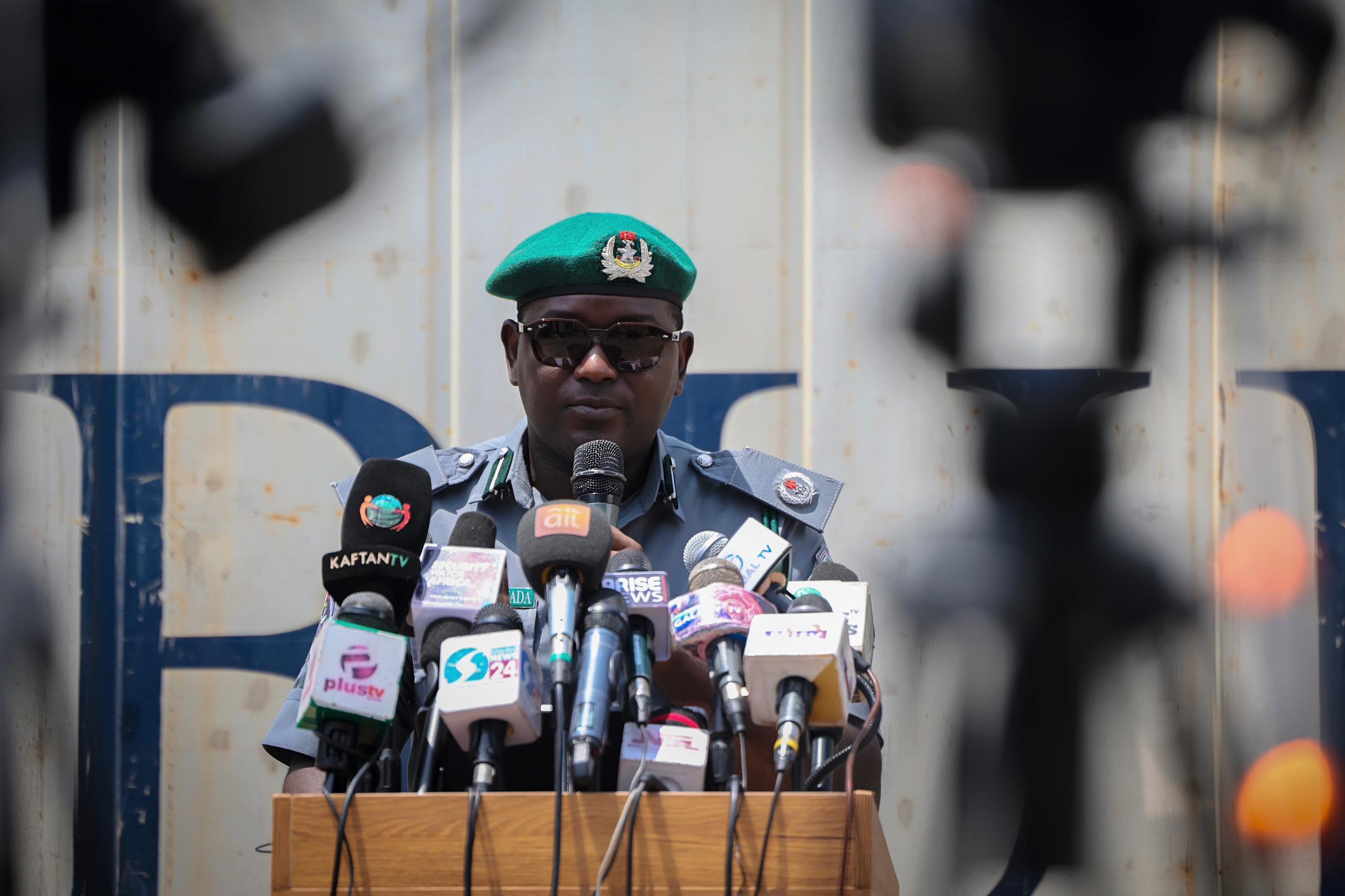
 Represented by the National Public Relations Officer of the NCS, Assistant Comptroller Abdullahi Maiwada, the CGC stated that the Service is leveraging technology to ensure Nigeria’s borders are not used as transit routes for the trafficking of prohibited items.
“In recent years, the Nigeria Customs Service has intensified its anti-wildlife trafficking operations through the establishment of the Special Wildlife Office (SWO), housed within the Customs Intelligence Unit (CIU).
This specialized unit is responsible for intelligence gathering, profiling, investigation, and coordinated enforcement actions targeting transnational criminal networks that profit from the exploitation of endangered wildlife species.
“With support from local and international partners, the SWO has recorded commendable successes.
We work actively with the Wildlife Conservation Society (WCS), which has provided secure storage warehouses for intercepted specimens in selected locations across Nigeria.
The Service also collaborates with Focused Conservation and the Wildlife Justice Commission (WJC), and engages in joint task force operations with domestic and international security agencies, including the NDLEA, EFCC, Nigeria Police Force, INTERPOL, and the Office of the National Security Adviser (ONSA), among others.
These partnerships have strengthened intelligence sharing, resulting in high-profile interceptions and successful prosecutions,” he said.
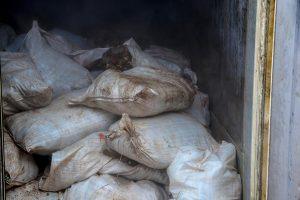
Presenting the 40-foot container—loaded with 10,603 donkey genitals intercepted along the Kaduna–Abuja Expressway on Friday, July 5, 2025—to NESREA, Maiwada revealed that the interception occurred on Friday, June 5, 2025, at approximately 9:00 p.m., following credible intelligence and coordinated surveillance by operatives of the SWO and CIU.
“This seizure is not an isolated incident. Over the past 12 months, the Special Wildlife Office has uncovered and disrupted numerous illicit wildlife trafficking operations nationwide.
Notable among these are the recovery of six African Grey Parrots and the arrest of a suspect on December 10, 2024, in Kano; the interception of two live pangolins, five Mona monkeys, two Tantalus monkeys, one baby baboon, and an African Grey Parrot at Lagos Airport in May 2025.
“In another operation, a suspect was arrested in the Ikom area of Cross River State in connection with the seizure of 213 parrot heads, six eagle heads, 128 hornbill heads, and other exotic species. On January 13, 2025, the Service handed over rescued tortoises to the National Park Service in Oyo State. Other significant seizures included taxidermy specimens such as life-sized lions, zebra hides, gorilla parts, and pangolin scales at various ports and logistics routes nationwide.
One such case involved 119.4 kg of pangolin scales concealed in sacks within a container around the Calabar area of Cross River State.
In another case, 120 African Grey Parrots were rescued and a suspect was arrested in the Fufore area of Adamawa State.”
The Officer-in-Charge of the Special Wildlife Office, Assistant Comptroller Anuhu Samaila Mani, emphasized that as wildlife crimes continue to evolve, the NCS will further strengthen legal frameworks and foster greater regional and international cooperation to protect biodiversity and promote conservation.
“Our efforts have been enhanced through strategic partnerships with the Federal Ministry of Environment, Nigeria Police Force, NESREA, National Park Service, the World Customs Organization (ICCWC), INTERPOL, UNODC, and NGOs such as Focused Conservation, Wildlife Conservation Society, World Parrot Trust, Greenfingers, and Pandrillus, as well as enforcement agencies in neighboring countries.
We have established a dedicated intelligence unit that utilizes modern technology, including surveillance and forensic analysis.
Additionally, several Customs officers and prosecutors have received specialized training in wildlife crime detection and investigation, courtesy of Focused Conservation, Wildlife Conservation Society, and the Environmental Investigation Agency.”
The Nigeria Customs Service reiterated its investment in capacity building, digital surveillance, species identification, and cross-border enforcement mechanisms to combat wildlife trafficking—an activity increasingly linked to other forms of organized crime, including money laundering, arms smuggling, and illicit financial flows.
Victoria Ibanga