


The founder of Dangote Group, Alhaji Aliko Dangote, has encouraged the Nigerian government to focus on policies that promote productivity, innovation, and competition.
He also cautioned against the use of a monopoly to discourage indigenous investment and industrial growth in Nigeria.
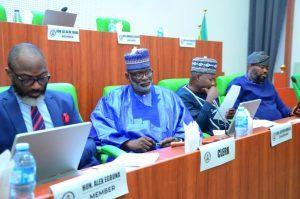
Mr Dangote made this known at the 2025 Inaugural Annual Downstream Petroleum Week, which was organised by the House of Representatives Committee on Petroleum Resources (Downstream).
Represented by the Group Chief Strategy Officer at Dangote Industries Limited, Mr Aliyu Suleman, he said that rather than address the issue of monopoly with the refinery, too many people with the means to build industries chose to invest abroad.
“ We decided to add value to our economy. We have chosen differently. We have chosen to go to Nigeria. We have chosen to build here, to employ here, to produce here. So let us not use the cry of monopoly to start from growth. No one is prevented from investing. We welcome others to build their own refineries, and we will offer support in whatever way we can.
“Nigeria holds the natural competitive advantage in refining. We enjoy proximity to oil and gas supply. We should therefore work together to develop this sector.
“We should work to enact and implement laws that will help this sector to prosper. Let us protect our industries and deliver the economic transformation this country deserves.” He said.
He also said that today, the Dangote Refinery can meet all of Nigeria’s demand for diesel and jet fuel and still have a surplus for exports.
Mr Suleman said that soon, the refinery would be listed on the stock exchange to give Nigerians the opportunity to become shareholders of this national asset.
He noted that Africa’s refining sector remains underdeveloped, both relative to its consumption and the volume of crude produced in Africa.
“While Europe and Asia refine over 95% of their petroleum product requirements, Africa refines only 40%. In sub-Saharan Africa, there are very few large functional refineries today.
“This is understandable because refining is capital-intensive, technologically complex, and often a low-margin business. So as a result, many entrepreneurs and governments have chosen to stay away. But at Dangote, we are known for taking bold steps. We are known for making large-scale investments to substitute imports and create value in the country.
“Therefore, this is a challenge that we were happy to take. When it came to tackling the refining challenge, we decided to do it even though it was not easy. Building a world-class refinery anywhere in the world is a huge task. It is capital-intensive and very demanding.
“To build ours, we collected over 2,700 hectares of land, pumped 65 million cubic metres of sand to stabilise the site, installed over 250,000 foundation bars, and laid millions of metres of piping, cabling, and wiring.
“At peak, we had over 60,000 people on site, of which 50,000 were Nigerians. We had these people working around the clock across hundreds of disciplines and nationalities”.
He noted that the refinery produces high-quality products sold below import prices, offering Nigerians significant cost benefits despite previous fuel subsidies masking true market prices.
Dangote called for policies that protect local refineries from unfair competition caused by cheap imports, particularly from Russia, and urged for stronger incentives and protection to support the sector’s growth.
The theme of this year’s conference is ‘Celebrating Our Successes, Confronting Our Challenges, and Finding Solutions’.