


Nigeria’s participation in the recently concluded Second World Summit for Social Development (WSSD) in Doha, Qatar, from November 4–6, 2025, has forged new alliances and reaffirmed its leadership role in inclusive social transformation.
Every submission and new partnerships has projected the nation’s commitment to people-centered governance and data-driven progress under the Renewed Hope Agenda of President Bola Ahmed Tinubu, GCFR.
Representing the President, the Minister of Women Affairs and Social Development, Hajiya Imaan Sulaiman-Ibrahim, outlined Nigeria’s priorities — gender equality, decent work, disability inclusion, child protection, and poverty alleviation — anchored on rebuilding strong families and resilient communities.
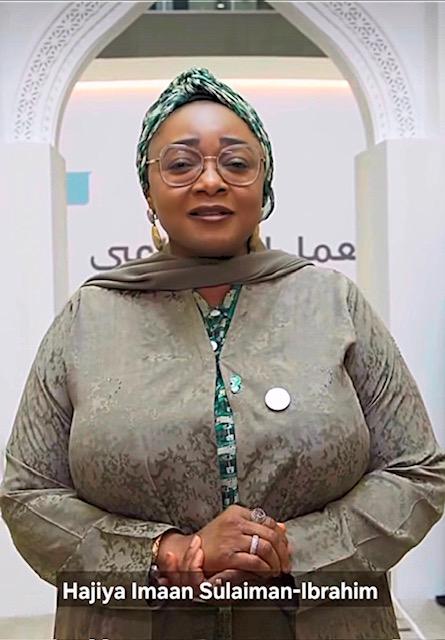
Delivering the Country’s statement, the Minister declared that “social development is securing human well-being and social justice for all.”
Digital Transformation
At the launch of the Digital Economy Navigator (DEN) 2025, Sulaiman-Ibrahim, reaffirmed Nigeria’s commitment to a human-centered digital transformation, stressing that “technology must serve people, driving inclusion, transparency, and social progress while ensuring dignity and shared prosperity for all.”
Nigeria alongside the Digital Cooperation Organization and the Kingdom of Belgium, also co-hosted a remarkable “Solutions Session” themed “Data-Driven Strategies to Address the Gaps in Social Development and Accelerate an Inclusive Digital Economy” where Sulaiman-Ibrahim pointed to data as “an instrument for justice” that exposes inequalities and ensures no one is left behind.
On the sidelines, Nigeria also deepened its cooperation with global partners with a landmark collaboration announced with the General Women’s Union (GWU) of the United Arab Emirates, led by Her Highness Sheikha Fatima bint Mubarak, focusing on digital inclusion, women’s entrepreneurship, and child protection.
The Minister also engaged the Disability Inclusion Lead at the UN Secretary-General’s Executive Office, Mina Mojtahedi, where Nigeria’s implementation of the Discrimination Against Persons with Disabilities (Prohibition) Act, 2019 was commended.
Read Also: Nigeria Showcases Inclusive Growth Agenda in Qatar
Advancing Gender Equality
Nigeria’s participation at the 3rd edition of the Princess Sabeeka Bint Ibrahim Al Khalifa Global Award for Women’s Empowerment marked a major global recognition of the country’s progress in advancing gender equality and women’s economic inclusion and reaffirmed the nation’s leadership in promoting innovative, women-led solutions for sustainable development.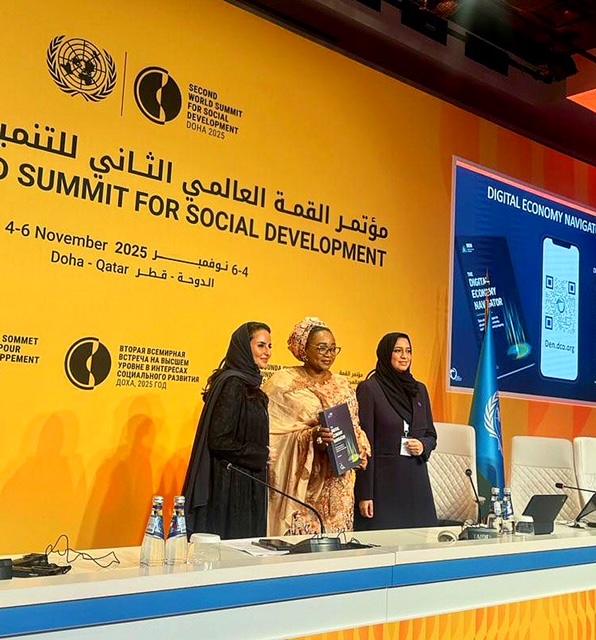
Nigeria’s D-Olivette Global Enterprise clinched the global award in the Private Sector category for pioneering clean technology and empowering rural women entrepreneurs—an achievement hailed as a testament to the impact of the Renewed Hope Agenda and the National Women’s Economic Empowerment framework.
The Minister described the win as “a victory for Nigerian women driving innovation, resilience, and sustainability on the world stage,” adding that it reaffirms Nigeria’s place as a continental leader in women’s empowerment and inclusive social development.
The Second World Summit for Social Development, held three decades after the landmark Copenhagen Summit, has renewed global resolve for equity and social progress.
Nigeria, under President Bola Ahmed Tinubu’s Renewed Hope Agenda, showcased concrete progressive gains in poverty reduction, digital inclusion, and gender equality; anchored on the vision of “building a future where every woman, every child, and every family thrives in dignity.”
Through the Renewed Hope Social Impact Intervention 774, Nigeria showcased a national drive at empowering over 10 million women, strengthening care systems, and expanding social inclusion at community level.
The Minister affirmed: “We are turning global financial pressures into opportunities and mobilizing domestic energies to meet our people’s needs,”.
While affirming the Nations’ sovereignty, she called for partnerships aligned with Nigeria’s “People First” agenda and urged ; “May the spirit of solidarity and shared humanity guide our collective journey toward inclusive social development for all.”
Nigeria’s remarkable participation reiterates that inclusive social development “is not an aspiration but an obligation,” an indication of the nation’s focus on fiscal reforms, non-oil revenue generation, and data-driven impact.
Victoria Ibanga