

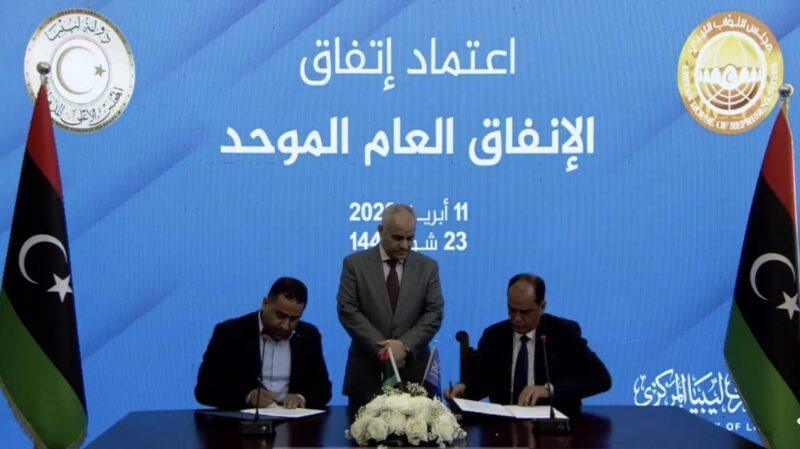
Libya’s rival eastern and western legislative bodies have signed a United States-mediated agreement to unify public spending, marking the first such consensus in more than a decade, according to the country’s central bank.
The breakthrough follows years of political division after the 2011 Arab Spring uprising that toppled longtime ruler Muammar Gaddafi.
Libya remains split between the UN-recognised Government of National Unity led by Prime Minister Abdulhamid Dbeibah in Tripoli, and a parallel administration in Benghazi backed by military commander Khalifa Haftar.
The agreement, signed by representatives of the Benghazi-based House of Representatives and the Tripoli-based High Council of State, seeks to harmonise fiscal policy and improve the management of public finances.
The central bank described it as “the first consensus on unified spending across Libya in over 13 years.”
Despite generating about 22 billion dollars in oil revenues last year, Libya continues to grapple with a foreign currency deficit estimated at nine billion dollars. In January, the central bank devalued the dinar by nearly 15 per cent for the second time in under a year, citing the absence of a unified national budget and other economic pressures.
Officials say the deal could strengthen financial stability and pave the way for more coherent economic governance. The central bank also acknowledged the role of the United States in mediating between the rival factions.
Libya, which holds Africa’s largest proven oil reserves estimated at 48.4 billion barrels, currently produces about 1.5 million barrels of crude per day, with plans to raise output to two million barrels.
Prime Minister Dbeibah welcomed the agreement, expressing appreciation for U.S. support, but stressed that its success would depend on sustained commitment from all parties to deliver tangible improvements in citizens’ daily lives.
Africa news