

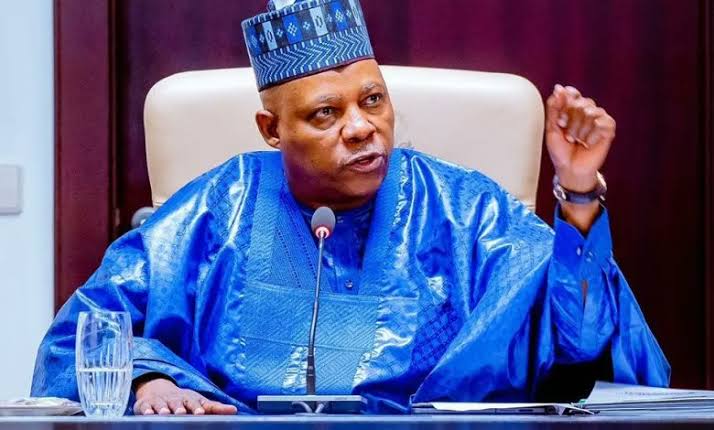
Vice President Kashim Shettima has called for immediate and united action to close Nigeria’s widening skills gap, describing it as a national priority critical to economic transformation.
This is just as the Nigerian government has hinted at a proposal for the review of existing skills training centers across several Ministries, Departments, and Agencies (MDAs) of government to align their work and functions with national development goals.
The Vice President, who spoke on Thursday during the 6th meeting of the National Council on Skills (NCS) at the Presidential Villa, noted that the council’s mandate is to develop a strategic workforce capable of meeting Nigeria’s evolving economic demands.
“What binds us together supersedes whatever divides us. We have to make this country work. We need to fill in the skills gap,” he said.
VP Shettima pointed out that the council has a mission to strategically position Nigeria’s workforce to meet the demands of a rapidly evolving economy.
“This council was established with a clear mandate to drive the strategic development of the skilled workforce that can contribute meaningfully to national growth and prosperity,” he added.
The Vice President described the session as an open forum where positions were aired and important decisions were taken, emphasizing that stakeholder engagement, consensus-building, and decisive leadership are essential to fixing Nigeria’s skills and employment crisis.
A major highlight of the meeting was the proposal for a National Skills Infrastructure Audit to create a centralized database of all training facilities, verify their functionality, and identify gaps or overlaps in infrastructure.
The audit will also involve physical verification of centers and a detailed cataloguing of operational training facilities, ensuring alignment with national occupational standards and labour market needs.
Minister of Housing and Urban Development, Ahmed Dangiwa, made a presentation on the National Artisan Skills Acquisition Programme (NASAP), an initiative aimed at training 10,000 artisans annually in high-demand construction trades.
The programme is designed to formalize Nigeria’s informal artisan sector by providing certification and onboarding qualified artisans onto a Digital Artisan Marketplace.
“The overall goal of NASAP is to establish a reliable and competent artisan workforce to drive the Ministry’s housing and infrastructure agenda while empowering Nigeria’s youth with employable skills,” the Minister said.
He noted that NASAP seeks to tackle youth unemployment while simultaneously addressing the skilled labour shortage in the construction sector, just as he said it is projected to have a significant impact on both job creation and long-term infrastructure development.