

The Economic Community of West African States (ECOWAS) has been advised to prioritise a citizen-centred approach that addresses regional integration and the real concerns of ordinary West Africans, rather than focusing mainly on the interests of political leaders.
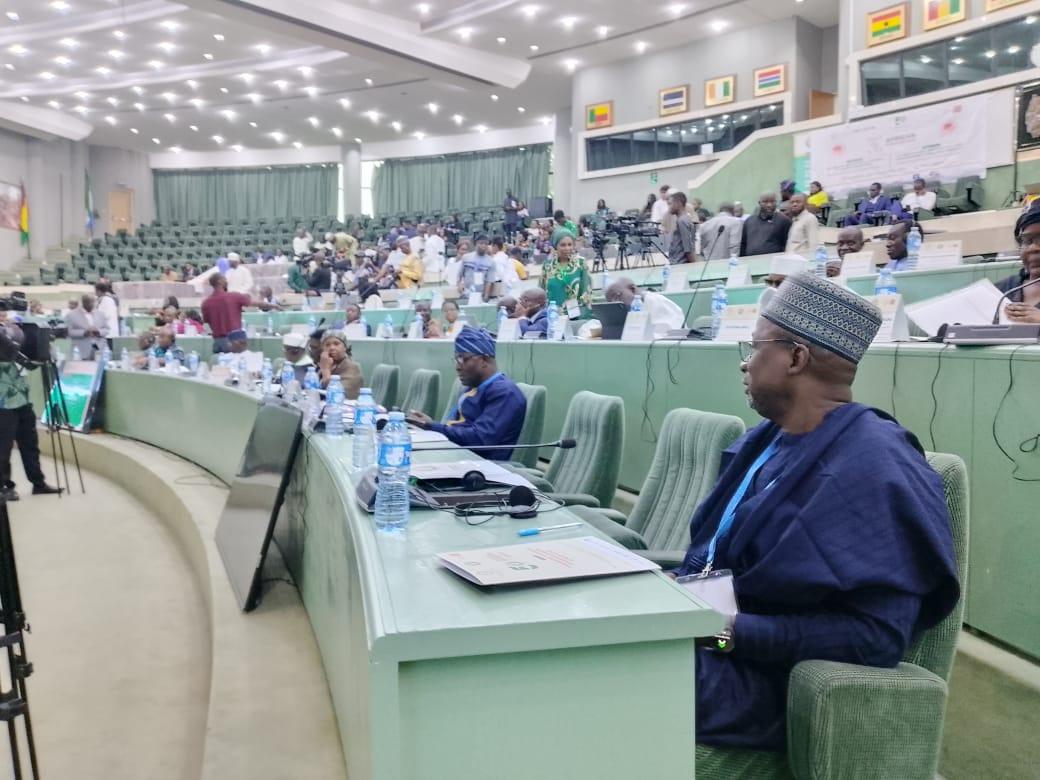
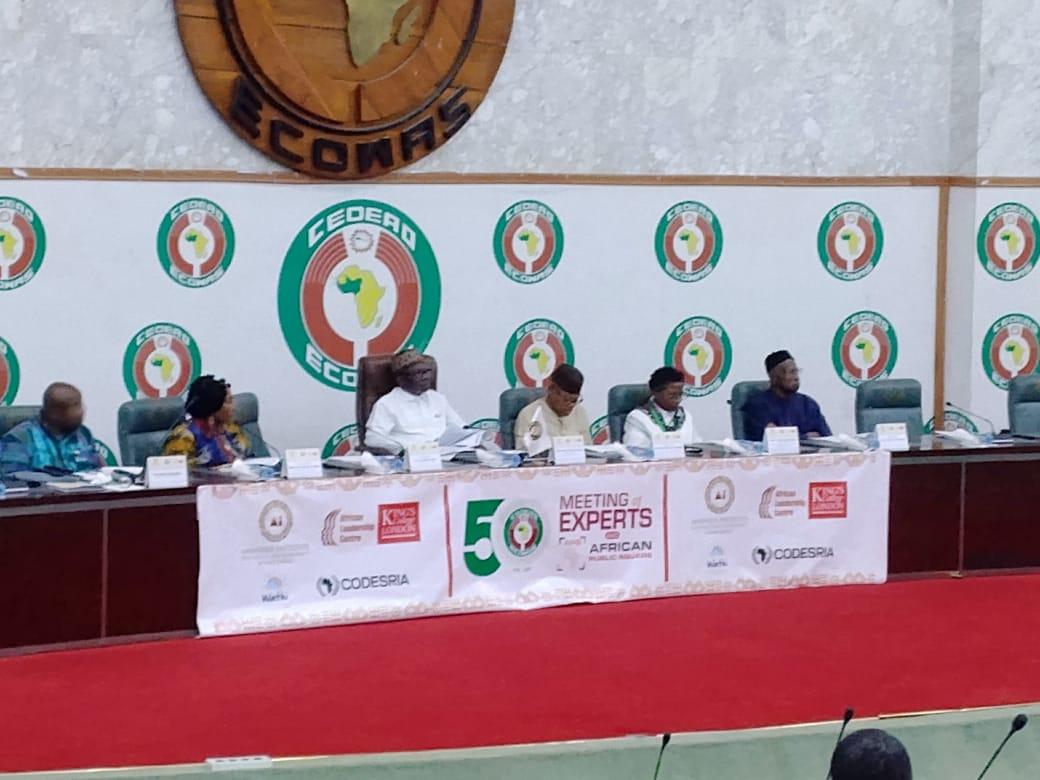
This call was made at the opening of the African Public Square Second Continental Edition, held as part of activities marking ECOWAS at 50 in Abuja, Nigeria’s capital.
The President ECOWAS Commission Dr. Omar Touray, represented by the Commissioner for Political Affairs, Peace and Security, Ambassador Abdufatah Musah, described the moment as “one demanding “deep introspection and honest self-assessment.”
Touray said; “ECOWAS today faces a crisis of democracy and security. Manipulation of constitutions and exclusionary politics have become fashionable. Democracy is in crisis, and insecurity has worsened.
“Clearly, the current state of the regional body underscores the need for deep reflection on how ECOWAS can move beyond being an elite-driven institution to one that truly represents and serves its people,”
Ambassador Musa explained that “the bloc’s history had passed through three phases: formation amid Cold War divisions, the peacekeeping era of the 1990s, and the current struggle with insecurity and governance.
“It was visionary leadership that created ECOWAS in 1975,” he recalled. “At that time, bringing together francophone, anglophone, and lusophone states was itself a miracle. Now, after 50 years, we must ask whether we are still faithful to that vision.”
According to him, external shocks and internal weaknesses had combined to create a turning point for West Africa.
He said; “The world is no longer bipolar; it is multipolar even multicultural.
“Countries now have choices based on their interests and values. West Africa must also choose — between people-centred democracy and authoritarian regression.”
The Commissioner disclosed that ECOWAS had launched “a series of introspections” across its structures to redefine its strategy for the next 15 years.
“Citizens must be at the heart of this new ECOWAS. They must decide the direction we take. Every generation must discover its mission, fulfil it, or betray it. For West Africa, this is that defining mission,”he said
 .
.
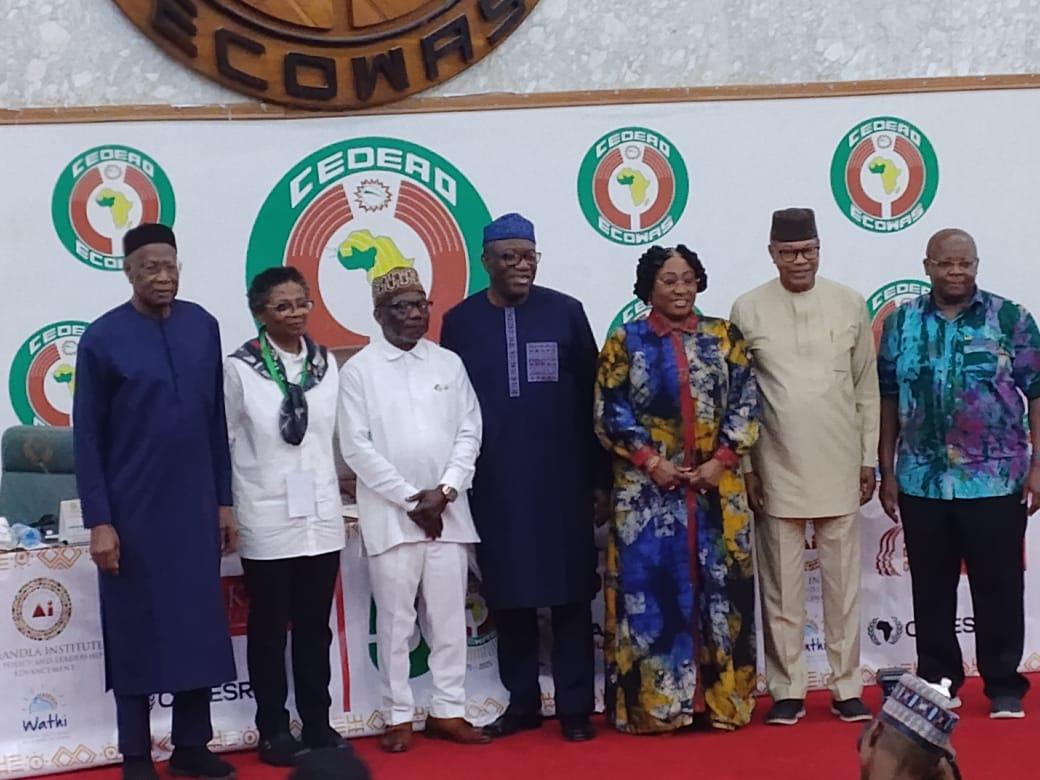
The Vice President (International Engagement) at King’s College London and Founding Director of the African Leadership Centre, Professor Funmi Olonisakin said “the 50th anniversary should provoke a fundamental rethink of the regional body’s purpose and structure, as the promised reforms have over stayed.”
Professor Olonisakin said; “Even without the current crises, a strong case exists for a reinvention of the West African integration project. The transition from an ECOWAS of rulers — an elite club of political leaders —to a community of the people has not happened as hoped.The organisation is becoming remote from the people it was meant to serve. It risks being reduced to a wobbly bureaucratic juggernaut.”
Speaking on economic performance, she noted that progress had been slow despite multiple policy frameworks. While criticising the bloc’s dependence on foreign funding.
Professor Olonisakin said; “The much-heralded ECOWAS single currency has become an endless wait. Obstacles to intra-West African trade and investment persist because of a deficit of political will. Under-funding and donor dependency have left ECOWAS vulnerable to external manipulation. The disarray that greeted the EU’s Economic Partnership Agreements showed how easily outside interests can shape our regional agenda.”
Professor Olonisakin, further called for bold, imaginative re-engineering.
“This is the time to draw on our history, reclaim our agency, and project a future integration model that is truly self-determined, inclusive, and audacious,” she said.
The Co-Founder of the Amandla Institute and the Former Governor of Ekiti State, Dr. Kayode Fayemi said; “the 50th anniversary was not just a time for celebration but also “for sober reflection.”
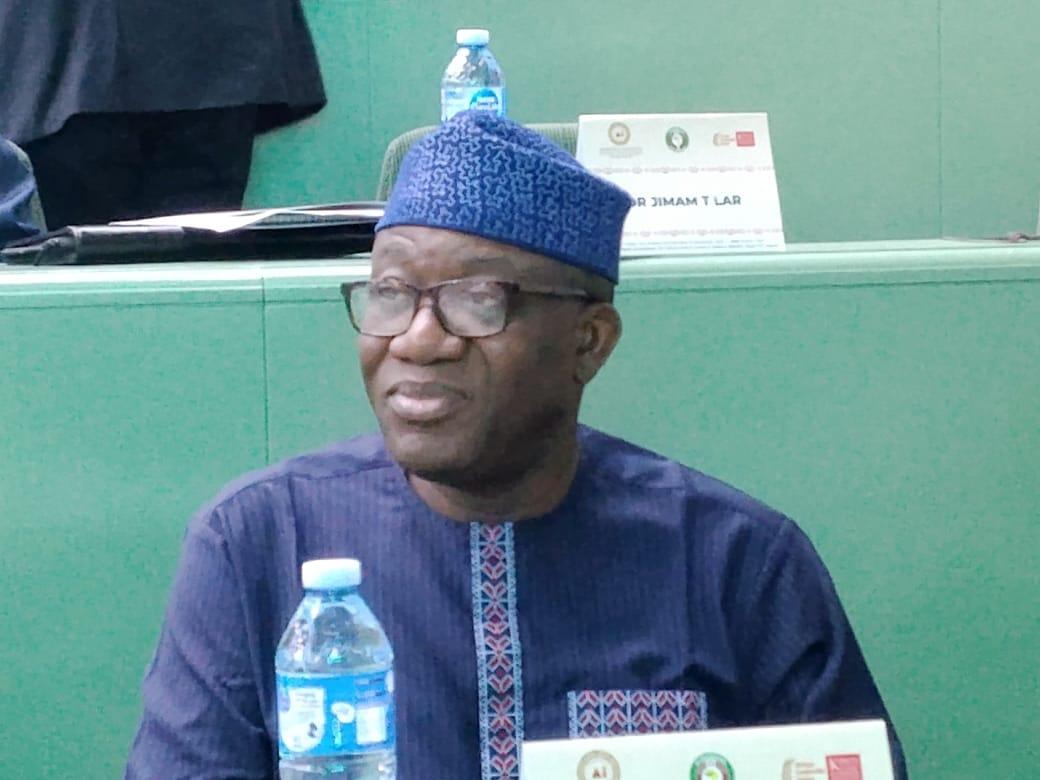
Dr Fayemi commended the bloc’s achievements in handling security issues and conflict resolution, but however cautioned that it could not continue with business as usual.
He said; “Fifty years is a significant milestone. ECOWAS has achieved a lot, particularly in peacekeeping and democratic transitions, but we must admit that the promise of an ECOWAS of the people remains largely unfulfilled. The regional body cannot remain an elite institution remote from the frustrations of its citizens.
“It must evolve into one that truly reflects the aspirations of West Africans.”
Dr. Fayemi said insecurity, poverty, and governance deficits were the greatest threats to integration.
“Traditional military strategies have failed to tackle terrorism. We need intelligence-driven and human-security approaches that address poverty, inequality, and governance deficits the very roots of extremism.”
He noted that military regimes were not viable alternatives to civilian failure, calling for sustained diplomacy.
“In the three countries now under military rule, insecurity has worsened, not improved. The challenge for ECOWAS is how to re-engage these regimes while preserving the community’s integrity. The focus should be reintegration, not isolation.
“Even if they insist on a separate identity, dialogue must continue. The goal must be to preserve regional cooperation, stability, and development,” Dr. Fayemi noted.
The Executive Director of the Council for the Development of Social Science Research in Africa (CODESRIA), Professor Godwin Murunga said regional integration in Africa was being driven “not by states but by people.
Murunga stressed that the legacies of colonial borders still constrained regional unity but could not suppress the realities of modern interdependence.
“State-led integration is lagging behind people-led integration. Technology, mobility, and youthful energy are weaving a web of connections that governments can no longer control. Colonial boundaries have created tension between states and communities. But despite these artificial divisions, West Africans continue to connect, trade, and move — asserting a reality that predates the borders,” he said.
Dr. Murunga added that Africa’s youth were now the true drivers of integration. He urged leaders to see the current crisis as an opportunity.
“There is a youthful population in a rush for regional unity. They will not wait for governments. The question is whether our institutions will catch up. State institutions must stop seeing citizens as afterthoughts. People are already integrating socially and economically. ECOWAS must align itself with that unstoppable force,” he said.
The high-level Meeting of Experts and African Public Square with the theme : “Reimagining West African Regional Cooperation and Integration: Alternative Futures” was , jointly organised by the African Leadership Centre and the Amandla Institute.
Mercy Chukwudiebere