

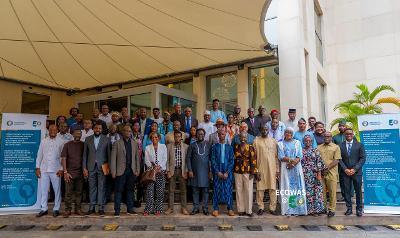
The Economic Community of West African States, ECOWAS has launched a landmark three-day thematic consultation focused on the intersection of technology, communication, and regional development.
The theme of the event: “Dialogue on ECOWAS Vision 2050 and New
Technologies, Artificial Intelligence, Digital Transformation,
Communication, and Social Media,” serves as a critical precursor to
the upcoming Special Summit on the Future of Regional Integration held
in Lagos State, Nigeria.
Delivering the opening remarks on behalf of President of the ECOWAS
Commission, Dr mar Alieu Touray, the ECOWAS Director of Cabinet,
Abdou Kolley, emphasized that the region stands at a defining
crossroads.
Following the 50th-anniversary celebrations of the ECOWAS
Treaty originally adopted in Lagos in 1975 the Commission is now
shifting from celebration to sober introspection.
Mr. Kolley said Artificial Intelligence, Data Governance,
Cybersecurity, and Digital Trade increasingly shape global systems,
“ECOWAS should position itself to harness these domains”
“Digital transformation should become a catalyst for inclusive
development as we embrace the opportunities of our shared future.” Kolley added.
The Lagos dialogue is the latest in a series of bottom-up
consultations mandated by the Authority of Heads of State and
Government.
The sessions are designed to ensure that the future of the
regional bloc is “of the people, by the people, and for the people.”
The thematic areas under review include: Peace and Security:
Stabilizing the regional political landscape. Democracy and
Governance: Strengthening constitutional order. Economic Integration:
Accelerating sustainable development. Emerging Technology: Integrating
AI and digital innovation into the West African economy.
The findings from the three days of expert deliberations will be
synthesized into a Single Compact. “The strategic document will be
presented for adoption at the Special Summit on the Future of Regional Integration”.
Once ratified, the Compact will establish the long-term strategic direction and implementation mechanisms required to transform ECOWAS into a resilient, people-centered community capable of navigating 21st-century challenges.
The ECOWAS Director of Cabinet reminded participants that while the
regional journey has not always been linear, the commitment to
solidarity remains unwavering.
The Commission aims to use these consultations to rectify past
challenges and renew the regional commitment to a prosperous, secure,
and technologically advanced West Africa.
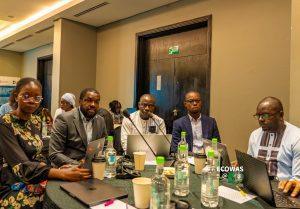
The deliberations will continue to bring together regional experts,
policymakers, and digital innovators to redefine the ECOWAS mandate
for the next generation.
Hauwa M.