

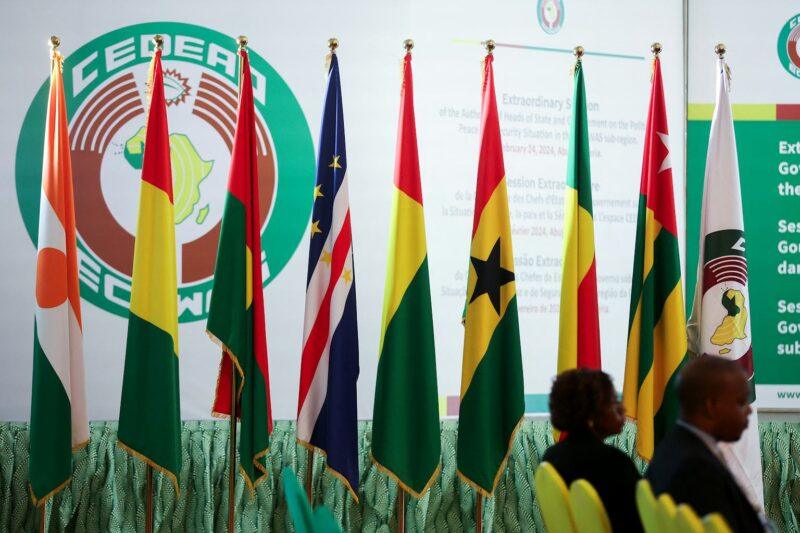
The ECOWAS Council of Ministers has called for renewed commitment to democratic governance, economic integration, and collective security across West Africa.
Declaring the session open, the Nigerian Minister of State for Foreign Affairs, Ambassador Bianca Odumegwu-Ojukwu, welcomed delegates to Abuja for the 95th Ordinary Session of the ECOWAS Council of Ministers, conveying President Bola Ahmed Tinubu’s appreciation for their commitment to regional cooperation and the ECOWAS vision of peace, security, and shared prosperity.
Ambassador Odumegwu-Ojukwu noted that 2025 marked ECOWAS’ 50th anniversary, celebrated across Member States, offering a moment to reflect on major achievements in free movement, economic integration, peacekeeping, and collaboration in critical sectors.
She stated that: “The successes affirm the founders’ vision of unity and solidarity, while inspiring renewed ambition for a peaceful and prosperous region.”
She highlighted the current challenges, saying: “The current challenges, including political instability, unconstitutional changes of government, prolonged transitions, and governance deficits in some Member States.”
The Nigerian Minister stressed that these developments undermined democracy and threatened development gains, calling for collective resolve to defend constitutional order, promote inclusive dialogue, and support credible transitions.
She emphasised that: “Economic integration remains central to ECOWAS,” urging deeper trade, stronger value chains, and increased opportunities for the region’s young population.
Ambassador Odumegwu-Ojukwu noted that the Ministers’ deliberations would cover governance, integration, humanitarian issues, peace and security, agriculture, and institutional reforms, guiding recommendations to the heads of state.
Expressing confidence in the Council’s wisdom and cooperation, the minister called for actionable, forward-looking outcomes that reinforce citizens’ confidence in ECOWAS. She concluded by urging renewed commitment to shared values and welcomed participants to Abuja, wishing them fruitful deliberations.
The President of the ECOWAS Commission, Dr Omar Alieu Touray, acknowledged Nigeria’s hospitality at the recent meeting, where the Council would address key topics such as the annual work programme, budget, financial status of ECOWAS institutions, community levies, and quality assurance reports.
He highlighted ongoing efforts to boost regional resilience and resource mobilisation for counterterrorism. Dr Touray urged support for restoring financial stability in the West African Power Pool, stressing the need for collective responsibility to sustain regional energy cooperation amidst challenges from national electricity company debts.
In his remarks, the Chairman of the Council of Ministers and Sierra Leone’s Minister of Foreign Affairs, Musa Kabba, underscored Sierra Leone’s commitment to regional collaboration with ECOWAS as part of the integration vision established in the 1975 Treaty of Lagos.
He highlighted pressing challenges such as unconstitutional government changes, terrorism, and organised crime, particularly noting recent coups in Guinea-Bissau.
Mr Kabba praised ECOWAS’s unified response to these challenges and stressed the need for sustained pressure on transition authorities to restore constitutional order.
He called for increased investment in regional security initiatives and highlighted the importance of improving intra-ECOWAS trade by leveraging existing trade agreements and frameworks. As the 95th Ordinary Session commenced, he urged delegates to engage in constructive dialogue, reaffirming ECOWAS’s commitment to democratic governance, regional stability, and economic transformation in West Africa.