


Ministers in charge of Telecommunications, Information and Communication Technologies and Digitalisation from across the Economic Community of West African States, ECOWAS have agreed toImprove the region’s Digital Economy
They met in Freetown, Sierra Leone for their 20th Ministerial session which was held in a hybrid format, bringing together participants both physically in Freetown and virtually via online platform, and focused on advancing the region’s digital transformation and deepening regional integration.
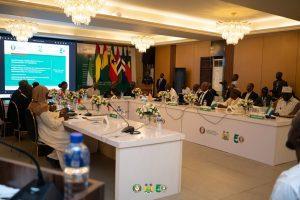
The meeting marked the culmination of several days of technical deliberations by experts, whose work helped shape the key issues presented to Ministers. “It also reflected a growing recognition across West Africa that digitalisation is central to economic growth, innova-tion, and inclusion”.
Opening the session, the Sierra Léone Minister of Planning and Economic Development, Kenyeh Ballay, underscored the broader development impact of digital trans-formation, noting that “the investments in digital infrastructure and services are essential to unlocking productivity, improving public service delivery, and creating opportunities for citizens across the region”.
This meeting is particularly significant in that the Sierra Leone’s President, Julius Maada Bio holds the ECOWAS Authority of Heads of State and Government Chairmanship, the Digital Transformation is central to one of the President’s Four Priority Areas of focus Unlocking Economic Integration-Bearing in mind the vision of an “ECOWAS of People”.
“A harmonized digital market allows our youth, our entrepreneurs, and our SMEs to trade across borders as easily as they do within their own communities.” She said
The Director General and CEO of Smart Africa, Mr. Lacina Konè, emphasized that a successful digital transformation should be grounded in regional coordination, policy harmonization, and shared infrastructure.
He highlighted “the importance of sustaining the momentum of the Cotonou Declaration, where Ministers reaffirmed their commitment to accelerating digital transformation through stronger regional cooperation, aligned policies, and coordinated implementation. In this context, ECOWAS plays a critical role”.
In his remarks, the ECOWAS Commissioner for Internal Services, Dr. Habib Yaya Bappah, he expressed gratitude to President Julius Maada Bio, the Government and People of Sierra Leone, for their leadership in hosting the event, emphasized the transformative role of telecommunications, ICT, and the digital economy and highlighted their potential to drive regional development, foster integration, and unlock new opportunities for growth and innovation across West Africa.
Also,he noted the region’s steady progress in modernizing policies, laws, and regulatory frameworks, which have positioned the digital sector as a key pillar of economic and social development.
Dr. Bappah also “underscored concrete regional achievements, including the operationalisation of Cyber/ICT Confidence Building Measures, the establishment of an Information Sharing and Analysis Centre, bilateral roaming agreements, and the consolidation of ECOWAS Common Positions for international spectrum discussions”.
The Institutional and technical advancements, such as the West African Parliamentary Network on Internet Governance, Digital Forensics Laboratories, upgraded national CSIRTs, regional hackathons, and a harmonized e-government strategy, were highlighted as steps toward a more resilient, integrated, and secure digital ecosystem.
The Sierra Léone Minister of Communication, Technology and Innovation, Salima Monorma Bah, believed that West Africa’s digital future depends on the ability to move beyond isolated platforms toward a truly seamless regional ecosystem.
“While we have built innovative systems in Sierra Leone, the real challenge lies in integration, ensuring our digital payments and services speak the same language across borders. By aligning our policies on data protection and cyber-security, and collectively tackling the growing threat of disinformation, we aren’t just connecting technologies; we are securing a resilient and inclusive digital economy for every citizen in the ECOWAS region.” She emphasized.

Setting the tone for the Ministerial discussions, Vice President of the Republic of Sierra Leone, Dr. Mohamed Juldeh Jalloh, who chaired the opening ceremony of the ministerial meeting, called for practical and forward-looking decisions that would translate regional commitments into real impact for citizens.
He reiterated the need to expand access, strengthen digital trust, and ensure that no one is left behind in the digital transition.
At the heart of the discussions were a series of important policy and regulatory instruments aimed at creating a more harmonized and secure digital space across ECOWAS Member States.
The Ministers considered updated regional frameworks on data protection and cyber-security, alongside new approaches to regulating electronic communications and expanding digital public services through a regional e-government strategy.
The meeting also examined forward-looking initiatives designed to strengthen the region’s digital infrastructure and resilience, including the establishment of a Regional Cyber-security Coordination Centre and a Regional Internet Exchange Point.
The regional initiatives were expected to improve connectivity, enhance cooperation, and reinforce the region’s ability to respond to emerging cyber threats. Progress in implementing regional roaming regulations was also reviewed, with the aim of making communication services more accessible and affordable across borders.
The Ministers focused on practical steps to expand broadband access, build capacity, strengthen regulatory frameworks, and foster innovation ecosystems that can support long-term growth.