


 Parliament, has called for urgent reforms to dismantle structural barriers preventing women and informal traders from fully participating in regional commerce under the African Continental Free Trade Area (AfCFTA), stressing that inclusive trade policies are critical to unlocking West Africa’s economic potential.)
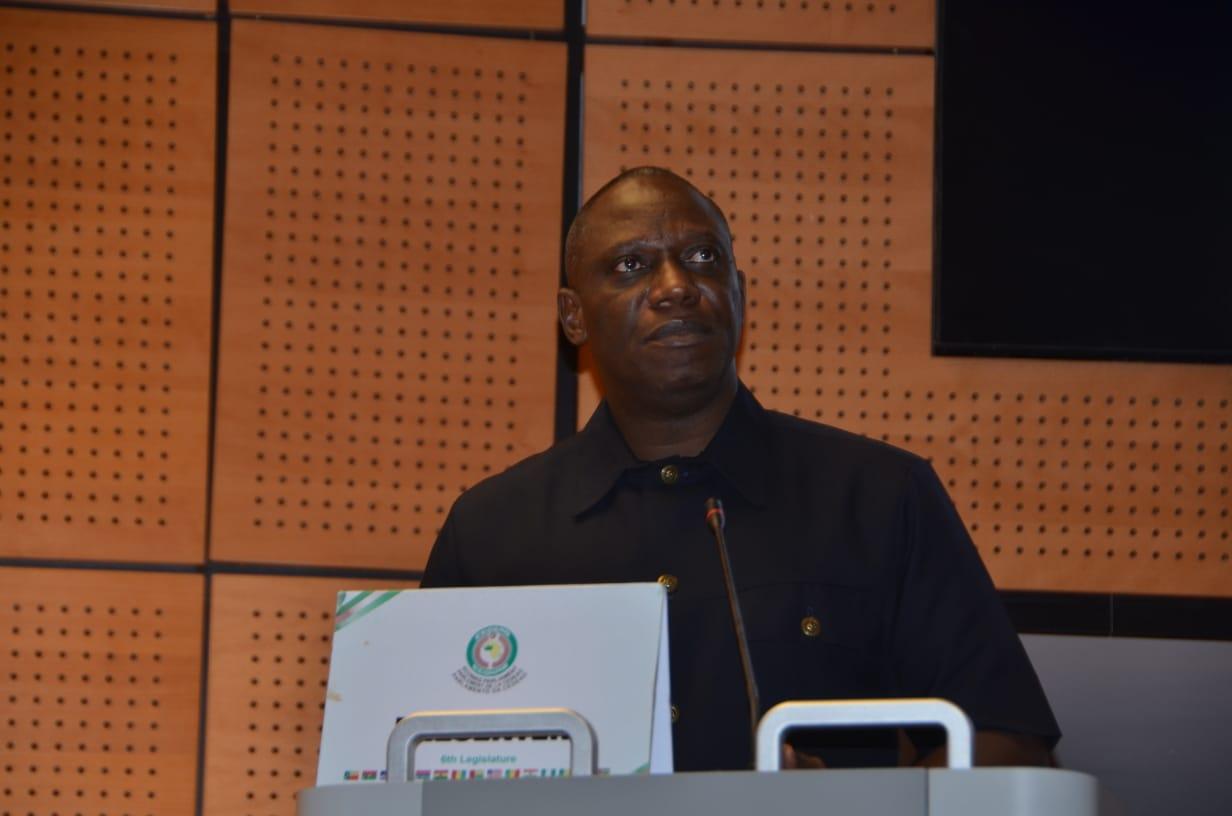
The Economic Community of West African States (ECOWAS) Parliament has called for urgent reforms to dismantle structural barriers preventing women and informal traders from fully participating in regional commerce under the African Continental Free Trade Area (AfCFTA), stressing that inclusive trade policies are critical to unlocking West Africa’s economic potential.
Speaking at the Extraordinary Session and Parliamentary Seminar in Abuja, Nigeria, the Programme Officer, Trade Development, at the ECOWAS Commission, Christopher Mensah-Yawson, said women and youth remain at the heart of informal cross-border trade but continue to face systemic obstacles that limit their economic advancement.
“Women and youth face multiple obstacles, including cumbersome customs procedures, limited awareness of trade regimes, inadequate access to finance and storage facilities, gender-insensitive border infrastructure, harassment, extortion and security risks,” he said
He revealed that women account for 74 per cent of informal cross-border trade operators in West Africa, while young people under the age of 25 also form a significant proportion of those who depend on informal trade for their livelihoods.
Highlighting the region’s demographic structure, Mensah-Yawson noted that West Africa’s population exceeds 456 million, with nearly half being women and a median age of 18.2 years.
He described this as both an opportunity and a challenge for regional integration and economic transformation.
He said, “These are enormous opportunities, but also serious challenges for integration and development, stressing that AfCFTA must work for those historically excluded from formal markets”.
According to him, AfCFTA provides a framework for inclusive trade through instruments such as the Protocol on Women and Youth in Trade, simplified trade regimes, digital trade initiatives and small and medium-scale enterprise support programmes.
Mensah-Yawson also outlined several ECOWAS initiatives aimed at empowering women and youth entrepreneurs, including the Informal Trade.
Regularisation Support Programme, the Trade and Gender Framework (2024–2030), and the Regional E-Commerce Strategy.
He added that digital skills training for rural women and partnerships with Ecobank and the International Trade Centre are helping to strengthen women-led businesses and youth enterprises across the region.
“Member States must accelerate reforms to formalise informal trade, protect vulnerable traders, and dismantle barriers to formal markets. Women and youth are central to economic resilience, food security and sustainable development in West Africa.”
Participants at the seminar, which forms part of broader parliamentary deliberations on expanding intra-regional trade, emphasised that informal trade, often underrepresented in official statistics, sustains millions of households, particularly in border communities, and plays a vital role in food security, market stability and regional connectivity.
The Lawmakers maintained that without deliberate, gender-responsive and youth-friendly reforms, the promise of AfCFTA to drive inclusive and sustainable growth across West Africa may remain unrealised.
Hauwa M.