

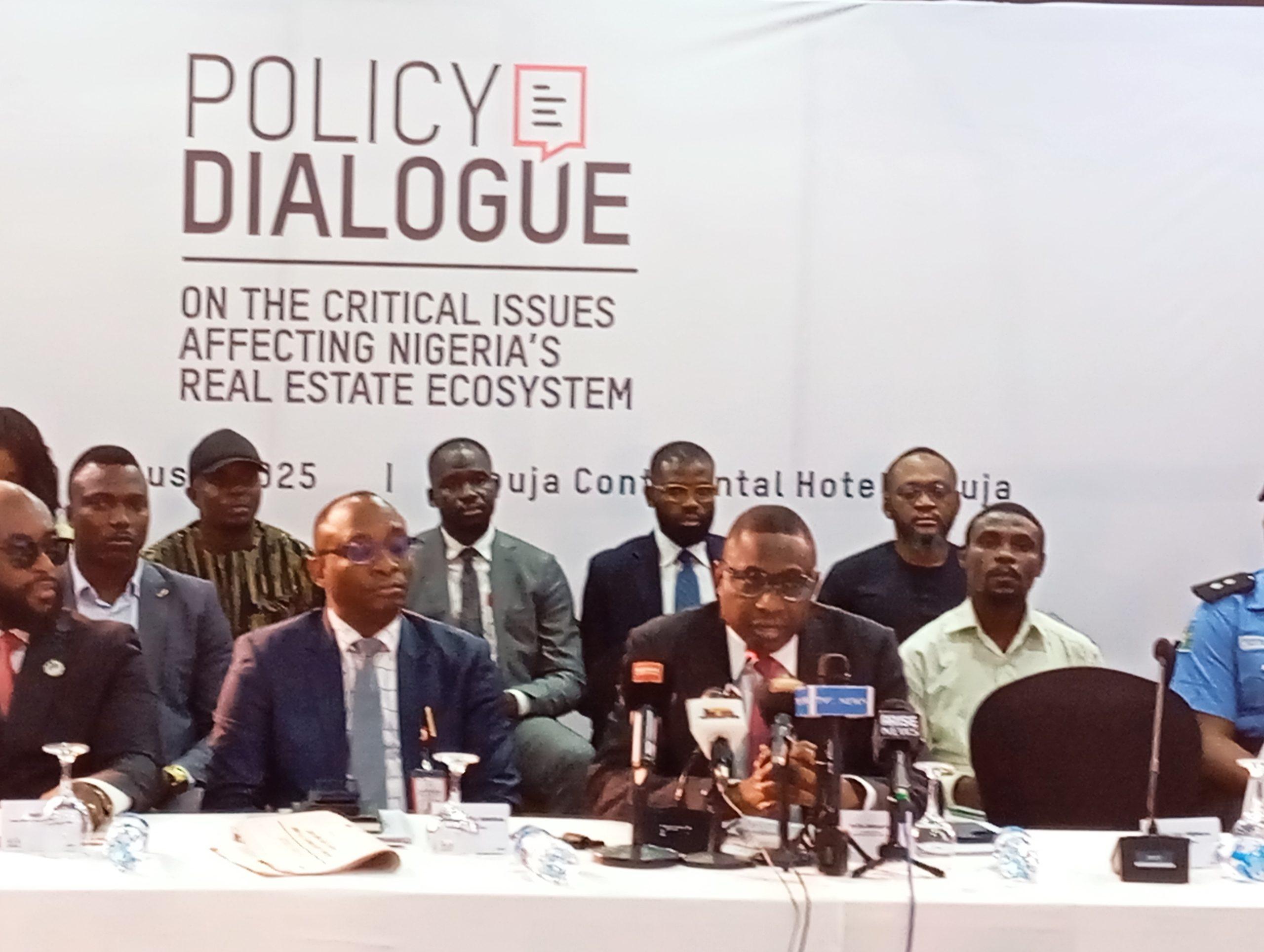
Nigeria’s top anti-corruption agency, the Economic and Financial Crimes Commission (EFCC), has announced plans to launch a sweeping probe into the country’s real estate sector as part of its efforts to curb corruption.
During a high-level policy dialogue on real estate regulation held in Abuja. EFCC Chairman, Ola Olukoyede, said the investigation would begin in the Federal Capital Territory, focusing on uncovering the true ownership of properties and tracing potential links to illicit financial activities.
“We’ve seen too many abandoned estates funded through stolen public funds.
“Civil servants, having lost access to these corrupt funds, are unable to complete the projects. We must trace and dismantle such structures built on fraud,” Olukoyede stated.
He emphasised that the real estate market, while critical to economic growth, has increasingly become a conduit for corruption, scamming unsuspecting Nigerians and laundering stolen wealth. Preliminary investigations, he added, already indicate that many ventures were set up with fraudulent intent.
“I’ve set up a team. We’ll start visiting all the estates across Nigeria, not only in Abuja, across Nigeria. We want to know who owns what. It will shock you that some of these estates have been abandoned for 20 years, 10 years. They just take it to a level and they abandon it,” he said.
While reaffirming the EFCC’s commitment to prosecuting fraudulent developers, Olukoyede reassured the business community that the agency fully supports legitimate enterprises.
He urged foreign and local investors to follow due process and assured that clean, law-abiding businesses have nothing to fear.
“We are working with Nigerian banks to reduce lending rates. A 30% interest rate is unsustainable for any business. We are advocating single-digit interest rates to support real growth and reduce youth unemployment,” he said.
Olukoyede also called on the federal and state governments to create dedicated funds to support real estate development, stressing the need for a transparent ownership registry and robust operational frameworks.
“In no other country do civil servants openly own N500 million properties without scrutiny. That must change. Nigerians must stop normalising corruption.
“We need to organise ourselves into pressure groups to make the fight against corruption effective,” Olukoyede said.
The event’s host, Ayokunle Erin, a legal expert and Practice Group Lead at Law Corridor, described the forum as a turning point for Nigeria’s real estate landscape. He noted that the sector represents far more than land and structures—it is a powerful engine for economic transformation.
“Nigeria’s housing deficit stands between 17 to 20 million units. To bridge that gap, we need 700,000 new units annually. Yet, in Abuja this year, just 5,000 were built—barely 10% of the city’s needs,” Erin revealed.
He attributed the shortfall to weak policies, poor regulation, and the proliferation of unlicensed agents and fraudulent developers, all of which stifle trust and investment.
“We must act with clarity, courage, and coordination.
“The real estate sector can no longer remain a grey zone—it must become a symbol of integrity, growth, and opportunity for all Nigerians,” Erin urged.