

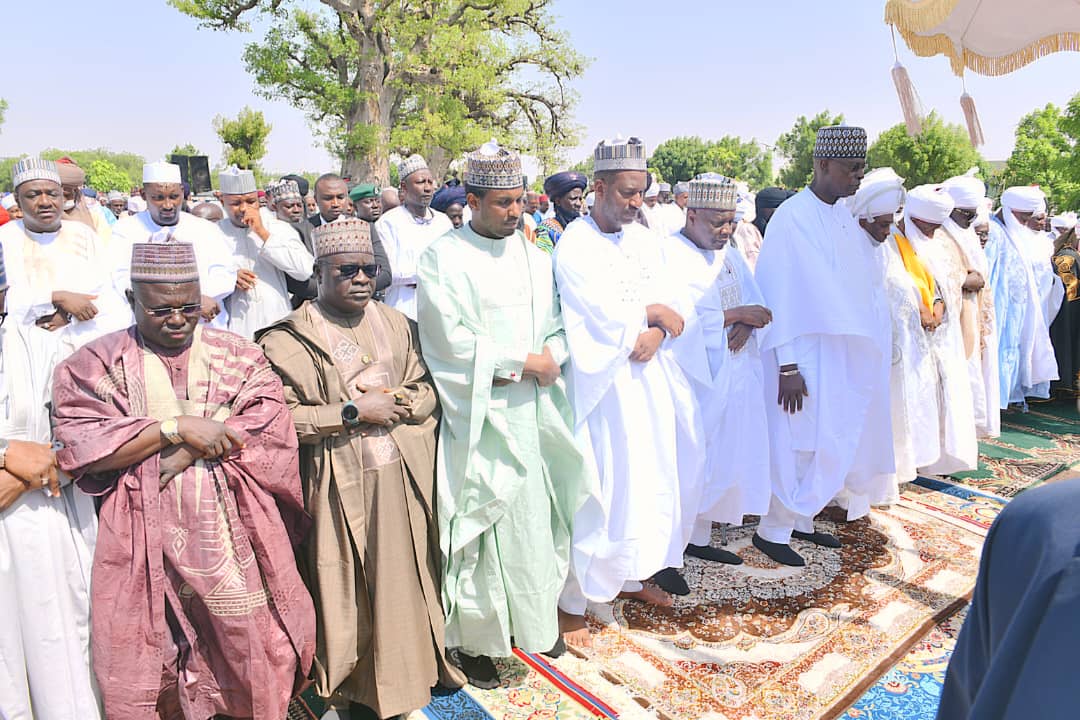
Gombe State Governor, Muhammadu Inuwa Yahaya, CON, on Friday joined thousands of Muslim worshippers, including the Emir of Gombe, Alhaji (Dr) Abubakar Shehu Abubakar III, CFR, and the United Nations Assistant Secretary-General and Resident Coordinator in Nigeria, Mr Mohammed Fall, to observe the Eid-el-Kabir prayers at the Central Eid Ground in Gombe.
The two raka’at congregational prayer, which heralded the commencement of the Eid festivities, was led by the Deputy Chief Imam of the Gombe Central Mosque, Ustaz Aliyu Hammari.
The Governor took part in the prayers alongside senior government officials, traditional rulers, and invited dignitaries.
This year’s celebration was notably marked by enhanced safety measures and improved crowd management.
Widely commended
In a bid to prevent the type of crowd-related incidents recorded in previous years, Governor Yahaya instructed that worshippers be allowed to exit the Eid ground in an orderly fashion before his own departure, a gesture widely commended as a mark of responsible leadership and concern for public welfare.
Following the prayers, the Governor hosted a modest Sallah reception at the Government House Banquet Hall, welcoming guests from within and beyond the state, including the visiting UN official and other high-ranking personalities.
Speaking during the reception, Governor Yahaya expressed gratitude to Allah for the blessing of witnessing another Eid and extended his best wishes to the people of Gombe and Muslims around the world.
In an earlier goodwill message, the Governor congratulated the Muslim Ummah in Gombe State and across the globe on the occasion of Eid-el-Kabir. He urged the faithful to uphold the virtues of sacrifice, obedience, and tolerance—core values embodied by the festival.
“As we mark this year’s Eid-el-Kabir, let us reflect on its core message, which is total submission, obedience, selflessness, and unwavering faith,” he said.
The governor added that islam teaches peace, tolerance, modesty, and love as the values must guide individual conduct and collective aspirations as a people.
Lateefah Ibrahim