

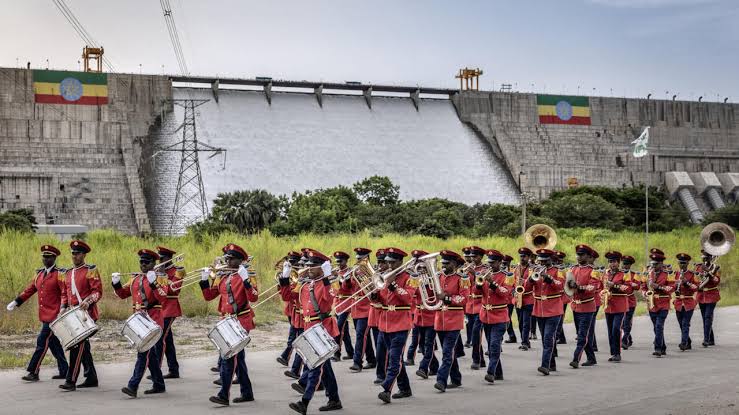
Ethiopia has inaugurated the Grand Ethiopian Renaissance Dam (GERD), Africa’s largest hydroelectric project, marking a historic milestone in the quest for energy self-sufficiency.
Built at a cost of $5 billion on the Blue Nile, the GERD is designed to generate over 6,000 megawatts of electricity, providing power for millions of Ethiopians and boosting industrial development.
With a population of more than 120 million, Ethiopia is Africa’s second most populous nation, and officials say “the project is central to its long-term economic growth.”
The dam is also expected to supply electricity to neighbouring countries, strengthening Ethiopia’s role as an emerging energy hub in the region.
READ ALSO: Ethiopian Airlines Expands Abuja Flights to Boost Tourism
However, the project has also deepened long-standing tensions with Egypt and Sudan, which rely heavily on the Nile for water supply. Cairo, in particular, fears that the dam will significantly reduce its share of Nile waters, posing a threat to agriculture and livelihoods. Diplomatic efforts to resolve the dispute have so far yielded little progress, leaving the region on edge.
For Ethiopia, the inauguration is being celebrated as a national achievement and a step toward regional influence, even as questions over water security and geopolitical stability remain unresolved.
Construction of the dam began in 2011, with plans for power generation to eventually reach 5,150 megawatts. For now, its two operating turbines are producing 750 megawatts, already supplying a significant boost to Ethiopia’s energy grid.
Prime Minister Abiy Ahmed said “the GERD will not only expand electricity access across Ethiopia but also allow the country to export surplus power to neighbors, strengthening regional economic ties.”
Reuters