


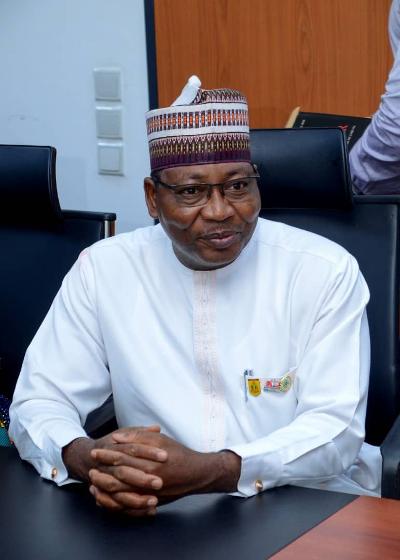
Former Army Public Relations Director, Brigadier General Sani Usman (Retired), has highlighted the sweeping reforms introduced during General Murtala Mohammed’s brief rule from 1975 until his assassination in 1976, noting their enduring influence on Nigeria’s governance and military unity.
In a telephone interview with Voice of Nigeria, Brigadier Usman recalled that General Murtala Mohammed’s administration embarked on bold reforms aimed at restructuring Nigeria’s civil service for greater efficiency and accountability.
“Among the most notable measures was the dismissal of over ten thousand public officials in a bid to combat corruption, alongside the creation of new states to strengthen national cohesion,” he said.
These reforms, though impactful, were not without criticism, particularly the civil service purge, which drew mixed reactions from the public.
Brigadier Usman emphasised that while the reforms were dramatic, their enforcement became less pronounced as national stability became the immediate priority.
He explained that balancing reform with unity was crucial, especially in a diverse country where tribal and regional interests often shape governance.
“The administration’s actions reflected a determination to instil discipline and order, even if some measures were controversial,” he said.
Reflecting on the aftermath of Murtala Mohammed’s assassination in 1976, Usman noted that the military acted swiftly to preserve Nigeria’s unity and prevent fragmentation.
With General Olusegun Obasanjo succeeding Mohammed, the emphasis shifted from reform to stability.
Usman described this approach not as politics in the conventional sense, but as “military in governance,” underscoring how the armed forces decisively moved to safeguard national cohesion during a turbulent period in Nigeria’s history.
He spoke on the enduring legacy of General Murtala Mohammed, emphasising how he has been remembered both officially and among ordinary Nigerians.
“His contributions to the nation were immense, setting the tone for reform, patriotism, and decisive leadership,” Usman said.
Officially, Mohammed’s name is immortalised in key national symbols, such as the Murtala Mohammed International Airport in Lagos, alongside military and national references that portray him as a figure of courage and integrity.
“The family has also played a role in preserving his memory through various initiatives,” Usman added.
Also Read: Defence, Interior Ministers Meet To Strengthen Nigeria’s Security
He highlighted that Mohammed’s leadership style was marked by boldness, incorruptibility, and a deep commitment to Nigeria’s progress, qualities that made him stand out as one of the most courageous leaders in the country’s history. His short but impactful tenure left a lasting impression on governance and military reforms, inspiring generations of leaders and citizens alike.
However, Usman lamented that the remembrance of Mohammed among ordinary Nigerians has not been as strong as it should be. He noted that the removal of history from the educational curriculum has contributed to a decline in awareness among younger generations.
“As a result, many young Nigerians today are unfamiliar with Mohammed’s contributions and the values he embodied. This gap in historical knowledge weakens the collective memory of one of Nigeria’s most iconic leaders,” he said.
Despite these challenges, Usman affirmed that many Nigerians still hold Mohammed in high regard.
“His reputation as a fearless, incorruptible, and patriotic leader continues to resonate with those who lived through his era and those who have learned about him through stories and memorials,” he said.
“For Usman, Mohammed’s legacy remains a beacon of courage and integrity, reminding Nigerians of the kind of leadership that can inspire unity and progress in the nation,” he added.