

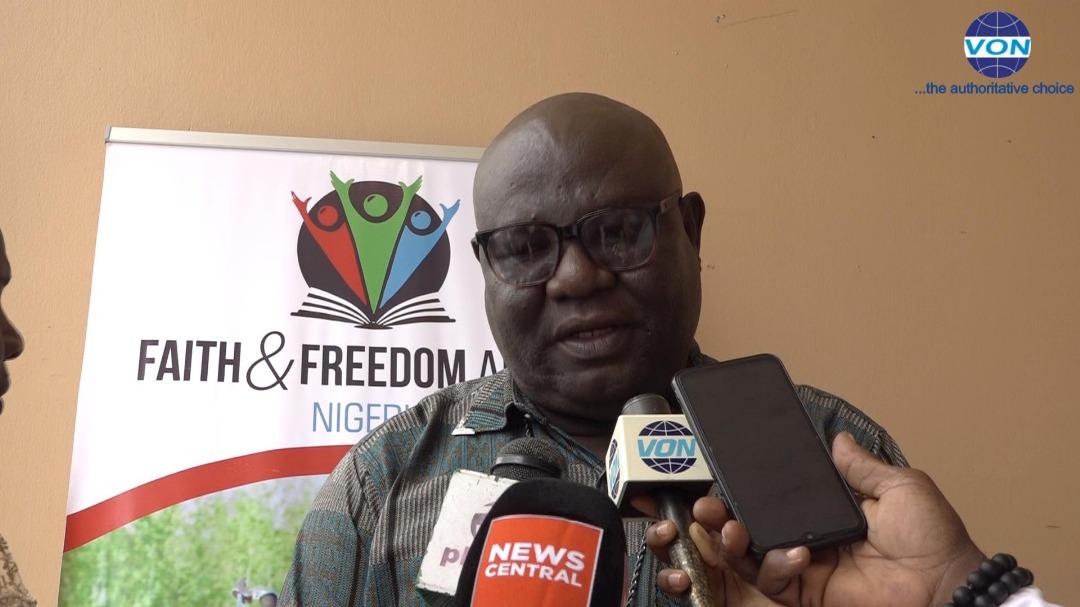
Faith and Freedom Africa (FFA), a project of the faith-based human rights organisation AFLAME, has launched a free micro-course on freedom of religion, reinforcing its commitment to advancing education and human rights across the continent.
The course, an upgraded version of last year’s e-learning programme, is designed to help participants appreciate religious liberty as a fundamental human right. It also demonstrates how freedom of religion interconnects with other rights, including freedom of speech, association and movement.
The programme featured distinguished religious and community leaders across Nigeria, who collectively called for greater respect for human rights and religious freedoms.
Ambassadors and leaders from both Muslim and Christian traditions emphasised that the principle is not about defending any particular religion but about protecting people. Bishop Benjamin Jonathan of the Lutheran Church of Nigeria explained:
“Freedom of religion or belief does not protect any religion at all. It is a human right. It protects human beings. It is about you making the choice, not about protecting one religion over the other.”
Contributors also acknowledged the difficulties faced by individuals who choose to leave or change their faith, noting the societal pressures that compel many to conceal their true beliefs.
From an interfaith perspective, participants were urged to respect diverse beliefs and recognise their responsibility in upholding the rights of others. Habib Ibrahim, one of the participants, remarked:
“As a Muslim, you are expected to understand from your perspective where the Islamic lens is, without diminishing the fact that another person has the right to practise his religion either alone or in a group. We have even made a lot of people afraid to tell us who they are.”
FFA plans to broaden its reach with additional training opportunities, youth-focused workshops and community dialogues across Africa. Organisers explained that the ultimate goal is to foster a culture of respect for religious diversity while equipping the next generation with the knowledge and skills to safeguard fundamental freedoms.
The discussions drew from international and national legal frameworks, the Universal Declaration of Human Rights and Section 38 of the Nigerian Constitution, which guarantee freedom of thought, conscience and religion.