

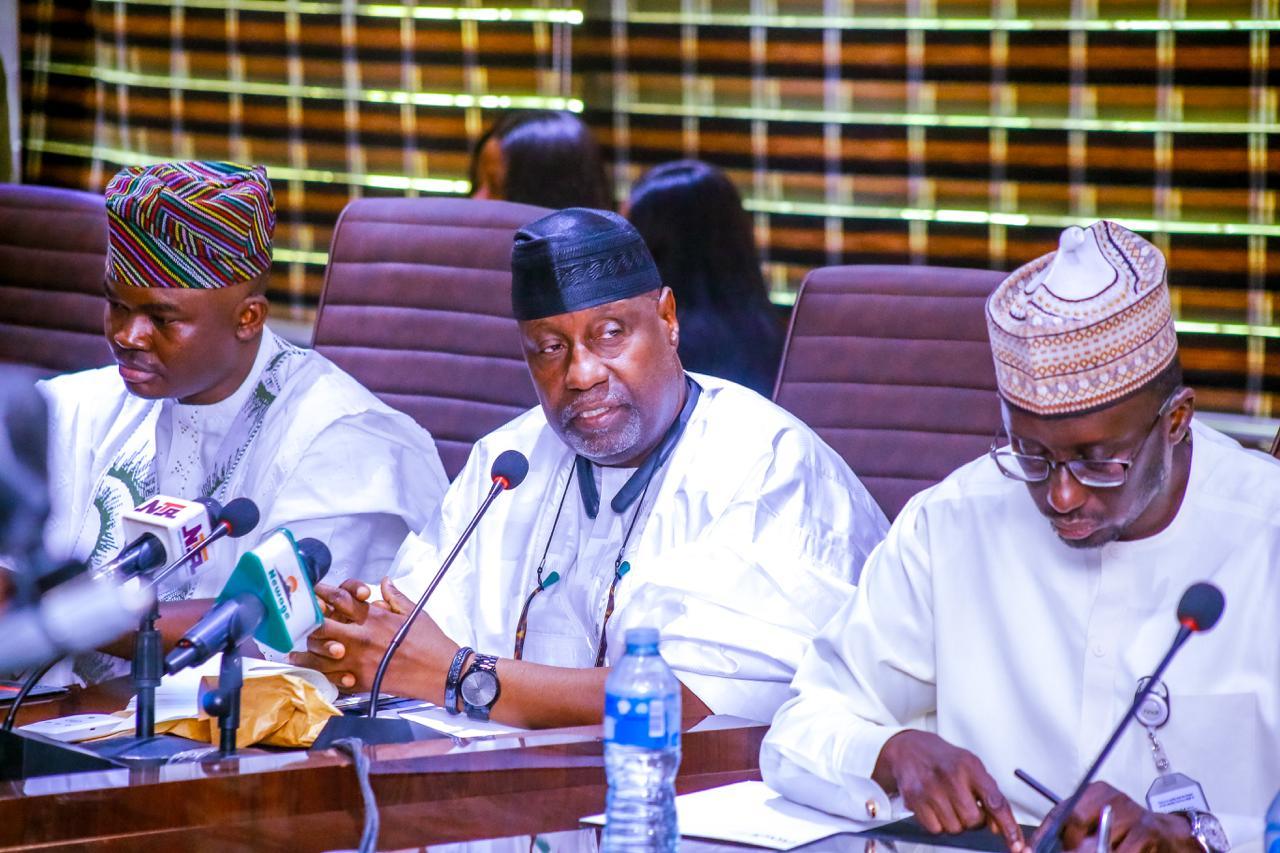
Nigeria’s Minister of Agriculture and Food Security, Sen. Abubakar Kyari, has said that private sector participation remains the engine that will drive investment, innovation, and inclusive growth across the country’s agricultural ecosystem.
The minister stated this during a courtesy visit by a delegation of the Food and Agriculture Organisation (FAO), led by the FAO Chief for the Investment Centre in West and Central Africa, Alessandro Marini, at the Ministry’s Conference Room in Abuja.
Sen. Kyari said the Federal Government is committed to creating an enabling environment for agribusiness by establishing clear policies, regulatory frameworks, and a stable business climate that incentivises private investment and mitigates risk.
“During previous meetings, we presented some key partners and highlighted the shared belief that the private sector is the primary engine of growth. You agreed that the focus of the European Bank for Reconstruction and Development (EBRD) investment should be on strengthening private sector participation,” he said.
He added that the meeting would offer an opportunity for FAO to interact with department directors, technical teams, and private sector stakeholders to gain deeper insight into opportunities across agricultural value chains.
“We also have with us the Executive Secretary of the National Agricultural Development Fund, a three-year-old institution designed to support agricultural financing and innovation,” he said.
The minister noted that priority investment areas had been discussed and potential partnerships explored, stressing the government’s readiness to support FAO and EBRD in advancing shared objectives.
He further noted that the FAO Investment Centre, working in partnership with EBRD, had expanded its footprint with the opening of a new office in Lagos earlier this year.
Kyari observed that a field visit to production sites across the country would have provided firsthand exposure to the scale and diversity of Nigeria’s agricultural activity, from staple crops to livestock and beyond.
He stated that the visit aligns strongly with President Bola Tinubu’s directive mandating the Ministry to strengthen Nigeria’s food systems and build a sustainable pathway toward food sovereignty.
“Nigeria remains one of the most promising agricultural markets, with immense potential supported by a young, rapidly growing population. We are currently around 232 million people, and the World Bank projects that we will reach 400 million by 2050. That is only 25 years from now, a period that will pass quickly, just as the year 2000 feels like yesterday. The urgency is clear,” he added.
In his remarks, FAO’s Alessandro Marini stated that the organisation would work closely with the Federal Government to unlock agribusiness investment opportunities in line with Nigeria’s economic diversification agenda.