


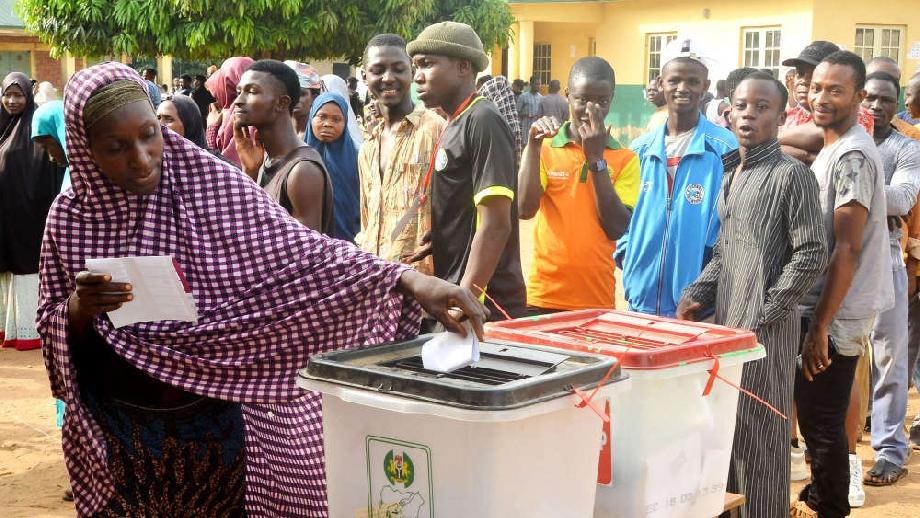
Voting for the Area Council Election in Nigeria’s Federal Capital Territory (FCT) has begun at various polling units across the territory’s six Area Councils.
Residents are voting to elect Chairmen and Councillors across the Area Councils.
The elections, to be conducted by the Independent National Electoral Commission (INEC), will take place in Abaji, Abuja Municipal (AMAC), Bwari, Gwagwalada, and Kwali Area Councils.
Structure of the FCT Administration
The Federal Capital Territory FCT, is administered by a Minister appointed by the President, supported by a Minister of State and a Permanent Secretary. The Minister serves as the Chief Executive of the FCT Administration, while the Permanent Secretary acts as the Accounting Officer and Head of the Civil Service.
The Federal Capital Development Authority (FCDA) oversees physical infrastructure development in the territory.
To enhance efficiency, the FCT Administration operates through mandate secretariats, departments and agencies. Unlike states that have separate state and local government structures, the FCT combines responsibilities typically shared between state and local governments, while remaining directly accountable to the Federal Government.
Each of the six Area Councils is governed by an elected Chairman and Councillors. They function like local governments, with responsibilities spanning primary healthcare delivery, infrastructure development and grassroots administration.
Scope of the Election
Although Area Council elections are traditionally off-season polls, the February 21 exercise carries national significance because, unlike states that use independent electoral bodies, the FCT conducts its council elections under Independent National Electoral Commission (INEC), giving the process the structure and visibility of a federal election.
INEC documents indicate that about 1.6 million registered voters are expected to participate across 2,822 polling units in the six Area Councils. A total of 570 candidates are contesting 68 positions, comprising six Chairmanship seats, six Vice-Chairmanship seats and sixty two Councillorship seats.
Abuja Municipal Area Council (AMAC) has the highest number of registered voters, with over 841,000 voters and 1,401 polling units.
INEC has accredited 89 observer groups and 700 journalists for the exercise. To facilitate logistics, the Commission has deployed 1,132 vehicles, 620 motorcycles and 14 boats.
INEC Assures Readiness
INEC has assured residents of adequate preparations and security arrangements for the polls, adding that results will be transmitted in real time using the Bimodal Voter Accreditation System (BVAS).
The INEC Chairman, Prof. Joash Amupitan, gave the assurance after inspecting preparations in Kuje, Gwagwalada and Bwari.
He expressed satisfaction with the Commission’s level of readiness, stating that “INEC would not compromise standards” . According to him, “both sensitive and non-sensitive materials have been batched and verified” he assured.
Prof. Amupitan has directed security personnel and poll officials to report early to Registration Area Centres to ensure timely deployment.
“Voting will commence at 8:30 a.m. and conclude by 2:30 p.m,” he said.
He added that results would be uploaded to the INEC Result Viewing Portal (IReV) and cross-checked at collation centres.
“INEC remains committed to conducting a credible and transparent election in the FCT and rebuilding public confidence in the electoral process,” he said.
Major Contenders
The race for AMAC Chairman has attracted candidates from major political parties, including the ruling All Progressives Congress (APC), the opposition Peoples Democratic Party (PDP), the Labour Party (LP) and the New Nigeria Peoples Party (NNPP).
In AMAC, incumbent Christopher Maikalangu (APC) remains a dominant figure following the withdrawal of the PDP’s Zadna Dantani, leaving Moses Ogidi (ADC) as a key challenger.
In Abaji, leading contenders include Umar Abdullahi (APC, incumbent), Sokodabo Bilyaminu (PDP) and Mohammed Ibrahim (ADC).
In Bwari Area Council, the APC candidate, Joshua Ishaku, is considered to be in a strong position following a Supreme Court victory and the withdrawal of the PDP candidate.
Meanwhile, keen contests are expected between APC and PDP candidates in Gwagwalada, Kuje and Kwali, where no incumbents are seeking re-election.
The APC candidate has campaigned on continuity and infrastructure development, promising improvements in primary healthcare centres, road rehabilitation and sanitation services.
The PDP flagbearer has focused on transparency, youth empowerment and improved revenue management within the council.
Candidates of the Labour Party and NNPP have also pledged to prioritise community-based development, strengthen market regulation and improve waste management systems.
Security and Voters’ Expectations
Security agencies have pledged to ensure the peaceful conduct of the polls, with personnel to be deployed to strategic locations across the council areas.
Many residents say they expect credible, free and fair elections that reflect the will of the people. Youth groups and civil society organisations have also called for transparency in the collation and announcement of results.
With AMAC remaining the most populous Area Council in the FCT, the outcome of Saturday’s election is widely regarded as politically significant ahead of future electoral contests in the territory.
INEC has urged eligible voters to turn out en masse and participate peacefully in the democratic process.