

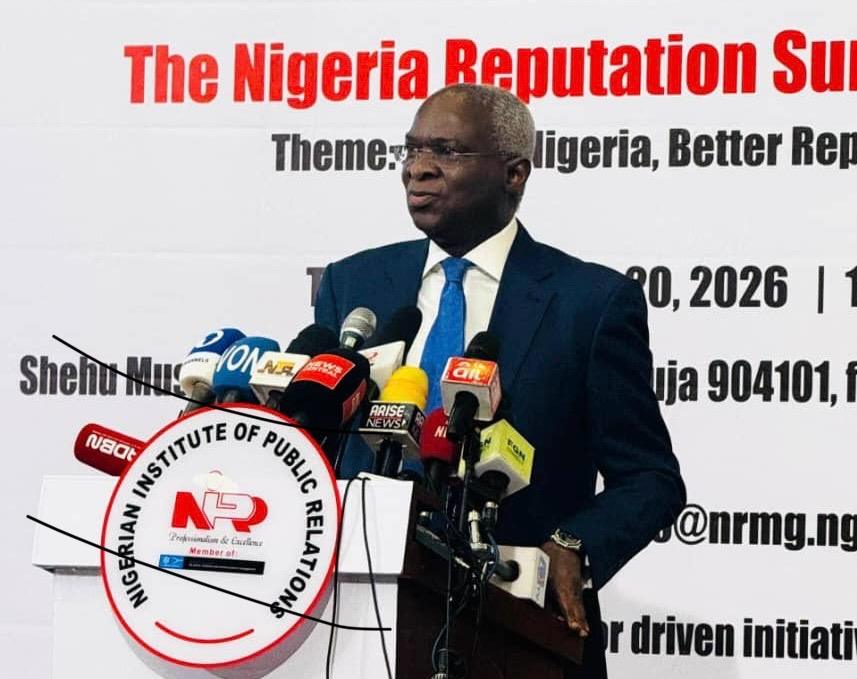
Former Minister of Works and Housing, Babatunde Fashola, has urged Nigerians to distinguish between legitimate criticism of the government and damaging narratives about the country.
He warned that careless words and negative framing have become a significant threat to Nigeria’s global reputation.
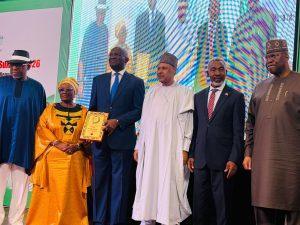
Mr. Fashola made the call at the Nigerian Reputation Summit 2026 in Abuja, Nigeria’s capital.
Fashola, who was the guest lecturer at the summit, also stressed that Nigeria’s greatest reputational challenge is not a lack of achievement, but a failure of common ownership and positive, deliberate communication about the country.
“We must understand that government is different from a country. We must criticise government and politicians without throwing our country under the bus. Governments will change, politicians will come and go, but the territory of the Federal Republic of Nigeria will outlive all of us”, he said.
Drawing from personal experience, Fashola said Nigerians too often internalise and amplify negative descriptions of themselves, sometimes unconsciously.
“I hear some of our colleagues who have dual citizenship say, ‘Your country has stopped. I tell them: it’s our country. Your problem is our problem, national challenges can only be solved when citizens see themselves as co-owners of Nigeria’s future”, he said.
According to him, reputation management is not abstract, but a powerful force that influences beliefs, behaviour and even criminal myths. While acknowledging that governments sometimes fail, he warned against generalising those failures into national self-hate.
He described Nigeria’s entertainers, athletes, designers, filmmakers and chefs as non-appointed ambassadors who are already projecting the country positively, calling for greater attention to national symbols, particularly colours and identity.
“Anything that represents Nigeria internationally must be our green, not just any green, identity consistency matters in reputation building”, he said.
Hosting More International Event
Fashola called for Nigeria to deliberately host more international events, conferences, sports and concerts, describing it as a global strategy known as Meetings, Incentives, Conventions and Exhibitions (MICE).
Speaking on law and order, he said predictability and respect for the rule of law remain Nigeria’s most valuable potential reputational assets.
“If there is one reputation I would love Nigeria to have, it is that contracts are enforced, police are law-abiding, and life is predictable, investors first examine whether governments obey court orders and basic rules”, he said.
The President of the Nigerian Institute of Public Relations (NIPR), Dr. Ike Neliaku, disclosed that the Institute has been ranked as the world’s leading public relations association, emerging top ahead of its counterparts in the United States, the United Kingdom, and other countries.
According to Dr. Neliaku, the recognition is a major milestone for Nigeria’s public relations profession and a validation of years of reforms, professional engagement, and global collaboration by the Institute.
The NIPR President further called for the need to deepen leadership through consistency, protecting social equity, and managing communication with coherence and singleness of purpose to drive the right narrative for Nigeria and help citizens experience fairness and inclusion.
Speaking earlier, the Chairman of Channels Media Group, Dr. John Momoh, said Nigeria’s reputation debate must be grounded in evidence, not pessimism, noting that Nigeria’s reputation is “dynamic, not fixed,” and increasingly shaped by viral moments and consistency of action.
“Nigeria is a powerhouse, no disputing that fact, Nigeria has achievements in music, technology, education, sports and philanthropy. Nigeria ranks first in the 2025 World Giving Report for generosity. That tells you something about our people. Investors now price trust alongside interest rates”, he noted.
Dr. Momoh expressed optimism that the summit would strengthen collective resolve to align policy with practice, aspiration with accountability, and communication with conduct.
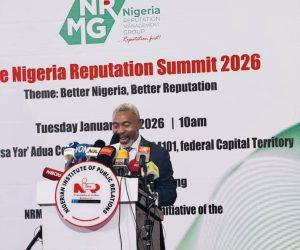
The Chairman of the Nigerian Reputation Management Group, Yomi Badejo-Okusanya, said reputation has become a strategic national asset that affects investment, diplomacy and security.
“Reputation is not cosmetic and not optional. A nation that does not manage its reputation leaves its story to chance and to others”, he said.
Badejo-Okusanya announced October 15 as Nigerian Reputation Day and said the group was working to institutionalise reputation management through professional training and leadership development.
“If we fix what we do, the world will see us,” he said.
The inaugural summit, with the theme ‘Better Nigeria, Better Reputation,‘ was organised by the Nigerian Institute of Public Relations under the leadership of the Nigerian Reputation Management Group.