

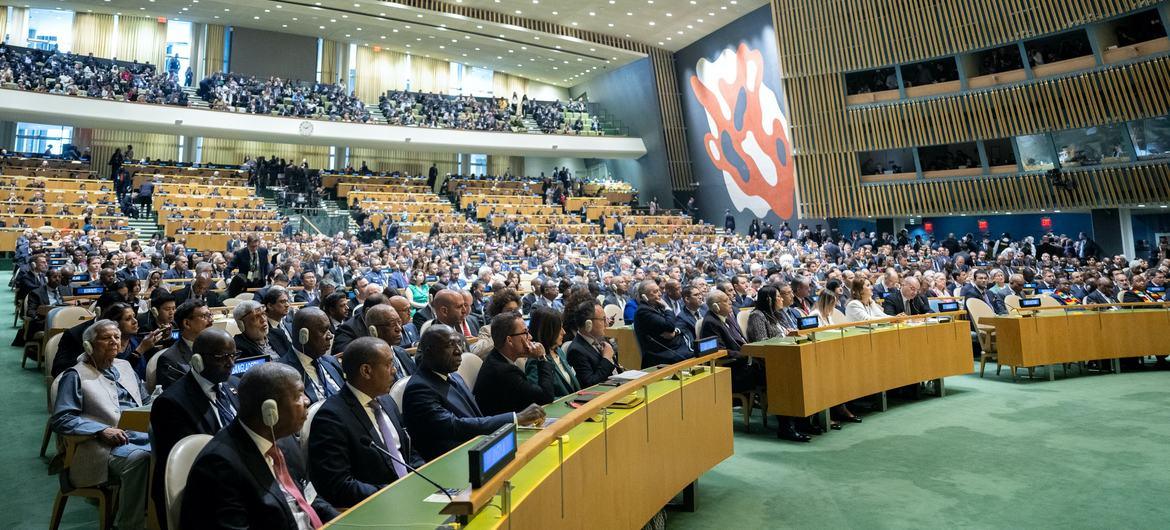
Global leaders in the United Nations (UN), African Union (AU), and European Union (EU) have reaffirmed their commitment to peace and sustainable development in Africa.
The leaders of the three organisations issued a joint communiqué on Sunday after their sixth trilateral meeting at UN Headquarters in New York, which was held on the margins of the General Assembly’s high-level week.
Pledging deeper cooperation towards ending conflicts, supporting stability, and tackling global challenges ranging from debt to climate change, they reiterated their support for multilateralism as “the most effective way to address today’s challenges”.
They stressed adherence to the UN Charter and voiced concern over rising disregard for international humanitarian law and human rights worldwide.
Much of the communiqué focused on African crises, notably the devastating war in Sudan, now in its third year.
The three organisations called for intensified collective support to secure “an immediate cessation of hostilities and a sustainable solution” through inclusive political dialogue.
They also pledged stronger coordination in the Sahel, where armed violence continues to destabilise communities and reaffirmed support for reconciliation and development efforts.
On Libya, they endorsed the UN roadmap to revive the stalled political process, while urging continued efforts to address migration challenges in line with humanitarian standards.
The communiqué also expressed support for ongoing peace initiatives in eastern Democratic Republic of the Congo (DRC), backing both the AU Peace and Security Council and the UN Security Council’s recent resolution.
In Somalia, the three organisations reiterated support for the AU Support and Stabilisation Mission, stressing the need for sustainable financing to ensure effective operations.
Looking ahead, the AU, UN and EU said they would deepen trilateral cooperation to advance African-led solutions to peace and security challenges.
They highlighted Africa’s Agenda 2063 and the UN’s 2030 Agenda for Sustainable Development as guiding frameworks and noted preparations for the AU-EU Summit in Angola in November.
The leaders emphasised financing as a key priority and called for full implementation of the Sevilla Commitment to unlock investment, address debt burdens and reform multilateral development banks.
They also warned that climate-induced disruptions are hitting vulnerable communities hardest, urging ambitious commitments at COP30 in Brazil this November.
NAN