

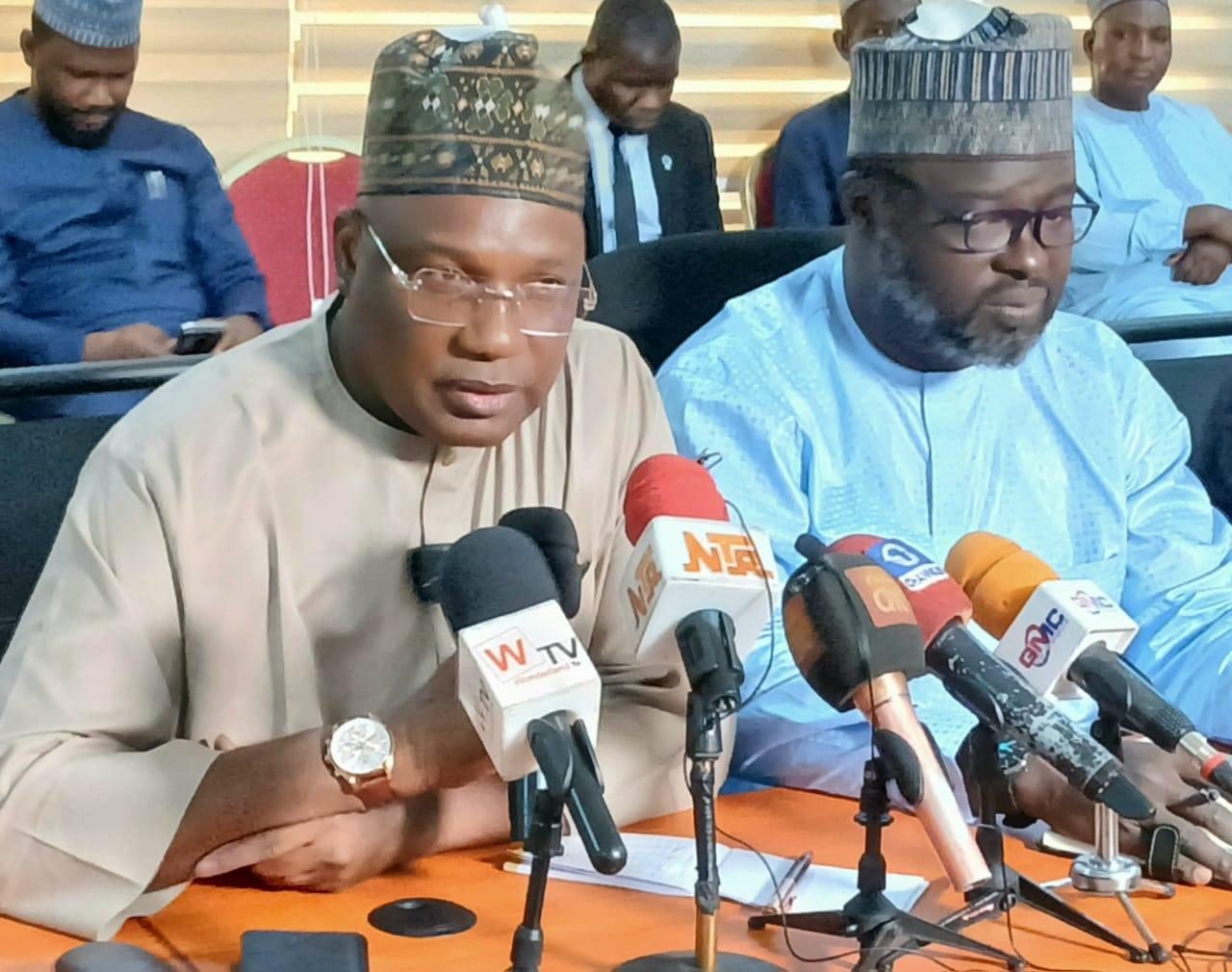
A Memorandum of Understanding (MoU) between the Gombe State Government, the Tunisian Consortium for African Development (TUCAN), and the Harmonia Consortium is set to address the state’s longstanding water and energy challenges.
Officials of the state government and representatives of the Tunisian consortium disclosed this at a joint press conference, describing the agreement as a strategic partnership designed to deliver short-, medium-, and long-term solutions to the persistent water supply and power deficits in Gombe State.
They noted that the collaboration will focus on sustainable infrastructure development, improved service delivery, and innovative energy solutions aimed at boosting economic growth and improving the living conditions of residents.
During an inspection of the water treatment facility, the team found 64 million litres of fully treated water stored underground and ready for distribution, but stranded due to inadequate power supply.
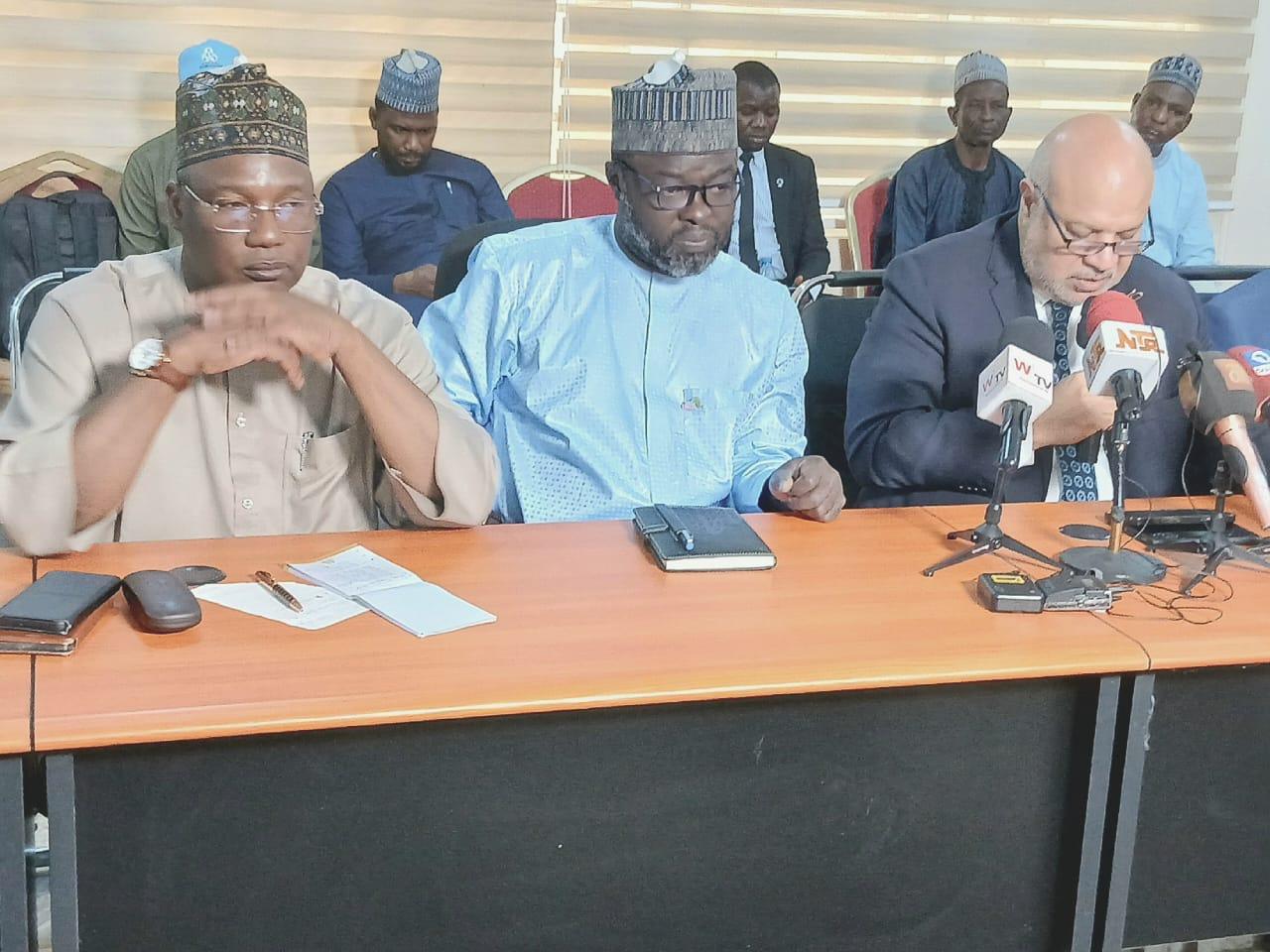
Speaking for the consortium, the Vice-President and delegation leader, Issam Ben Youssef, said the visit was designed to deepen technical collaboration, promote technology transfer and strengthen South–South cooperation in priority sectors such as water, energy, infrastructure and sustainable development.
He said that “the team would submit a technical report offering practical and achievable solutions after assessing the state’s drinking water, energy and infrastructure needs.”
Chief Executive Officer of the African Network Centre, Mr. Shua’ibu Ahmed Gara, noted that beyond the existing 64 million litres capacity, “the facility could store an additional 40 million litres, bringing potential supply to about 100 million litres.”
Mr. Gara stressed that the major challenge now lies in distribution and sustainable power for pumping.
He explained that “the current reliance on four diesel-powered generators was costly and unsustainable,” urging the adoption of alternative energy.
Supply Excess Energy
According to him, electricity generated near the Dadin Kowa Dam could partly support water production if dedicated supply arrangements were secured. He said; “experts were ready to partner with the state to install an independent 100-megawatt solar plant to power water production and supply excess energy to off-takers.”
Mr. Gara also highlighted the need for improved water reticulation and metering, noting that although the state had invested nearly ₦9 billion in water infrastructure, returns remained low due to poor distribution and limited consumer connectivity.
Proper reticulation, he said, would ensure reliable supply and encourage residents to pay for water services.
The Gombe State Commissioner for Water, Environment and Forest Resources, Mr. Mohammed Saidu Fawu, said the partnership followed years of persistent water and electricity challenges spanning more than three decades.
He noted that “Governor Muhammadu Inuwa Yahaya had prioritised a lasting solution since assuming office in 2019.”
According to the Commissioner, the Tunisian delegation conducted extensive inspections of water facilities and classified interventions into three phases: immediate actions within six months, medium-term measures over five years, and long-term solutions over ten years.
He said the core objective was to ensure that water produced in sufficient quantity is efficiently delivered to consumers while improving the supporting electricity supply.