

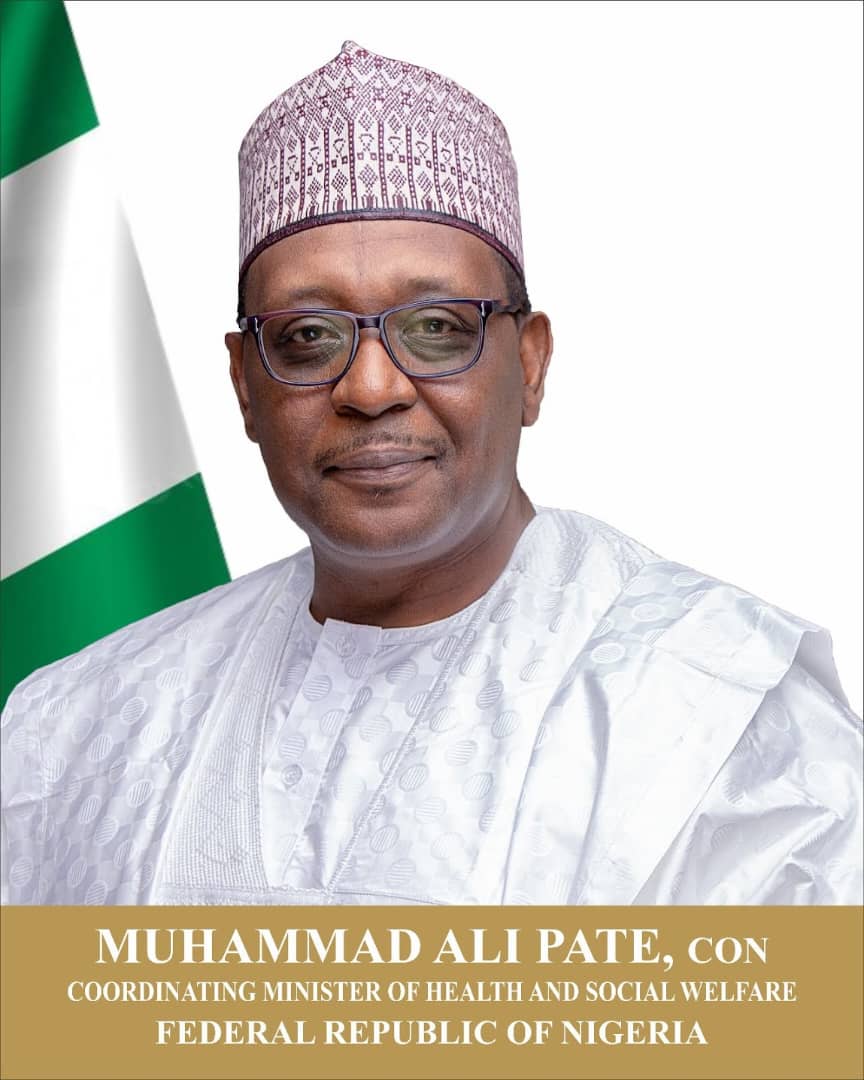
Nigeria is moving towards mandatory health insurance as part of efforts to reduce the heavy reliance on out-of-pocket spending by citizens, which has dominated health financing for over two decades.
Speaking during a health financing dialogue in Abuja, the Coordinating Minister of Health and Social Welfare, Prof. Ali Pate said that the Nigerian government had increased its contributions to healthcare funding.
He urged state governments and other actors in the health sector to match this commitment in order to achieve a more equitable and sustainable system.
The Minister revealed that recent reforms have already yielded tangible results, with over four million Nigerians newly enrolled in health insurance schemes within the last 18 months.
READ MORE:Minister Advises Nigerians To Embrace Health Insurance Scheme
He noted that if such momentum had been sustained for two decades, more than 60 million citizens would already be covered.
“We are seeing a change in direction, and we hope that direction will continue until health insurance becomes truly mandatory for all Nigerians,” he stressed.
Prof. Pate emphasised that universal enrolment is central to building larger risk pools capable of protecting citizens from catastrophic health expenditures.
He called on employers to take responsibility for enrolling their workers, while urging individuals to also find ways of joining health insurance schemes.
According to him, “this collective approach will enable Nigerians to access quality care without falling into poverty due to high medical costs.”
Highlighting interventions by the Nigerian government, the Minister pointed to the reimbursement of obstetric complications and the expansion of specialised treatment facilities as landmark initiatives targeted at the poorest and most vulnerable groups.
He noted that resources have been set aside to scale up these services, but cautioned that without strong complementary efforts from state governments, the overall impact would remain limited.
The dialogue, which brought together civil society organizations, policymakers, development partners, and the media, is structured to generate fresh ideas and perspectives on how to strengthen health financing.
Over the course of the week, participants will discuss governance, innovative funding models, and strategies for mobilizing resources at all levels.
The meeting will conclude with a call to action, where state governments are expected to make commitments towards closing gaps in healthcare financing.
Prof. Pate expressed optimism that the discussions would yield concrete outcomes.
“Our goal is to ensure that Nigerians no longer face the choice between seeking medical care and falling into financial ruin”.
“With collective action, we can build a system that protects every citizen and guarantees access to quality healthcare,” he added.