
 has renewed its collective commitment to breaking systemic barriers)
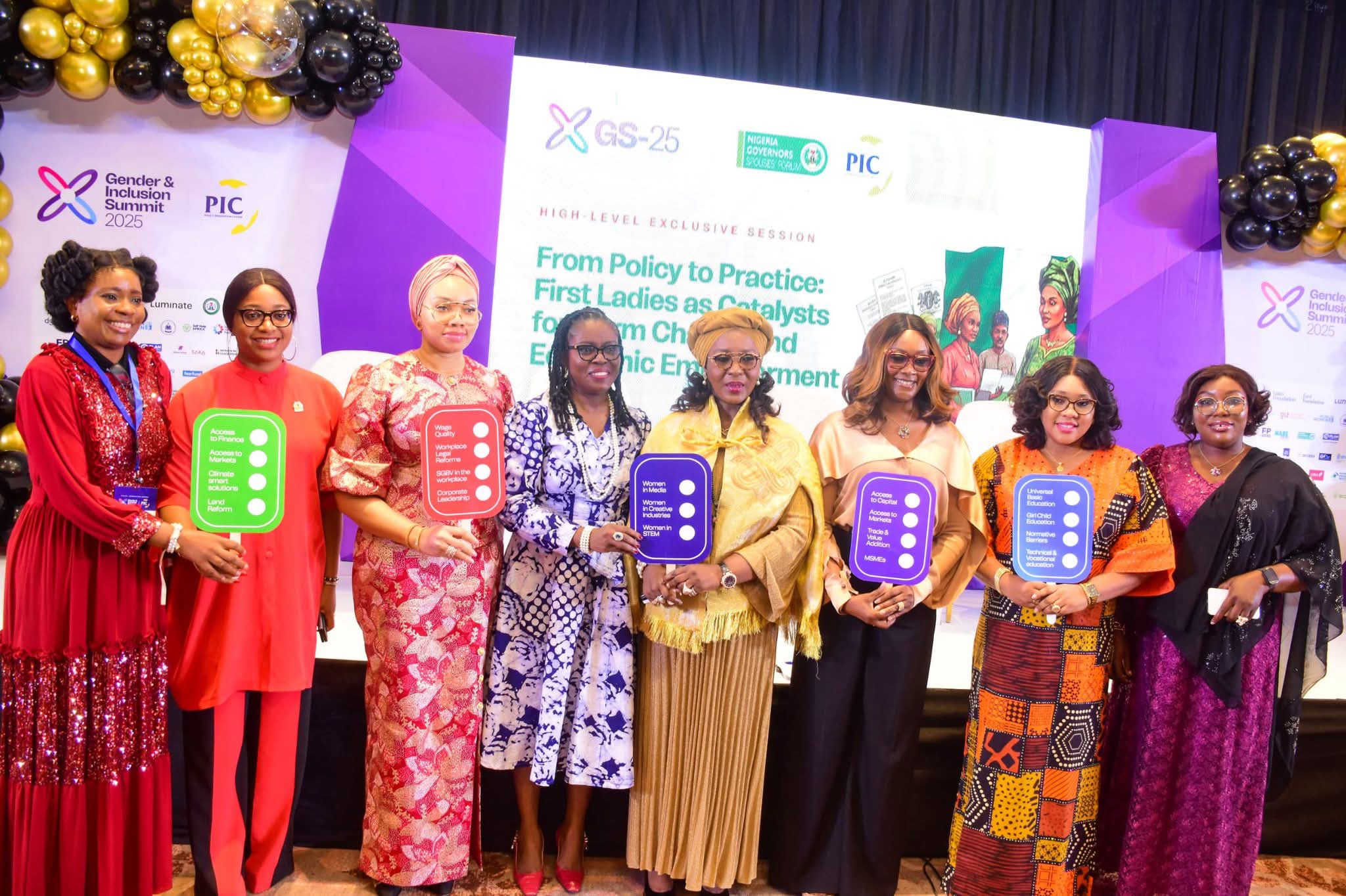
The Nigeria Governors’ Spouses Forum, NGSF, has reiterated its commitment to breaking down systemic barriers that hinder gender equality and social inclusion.
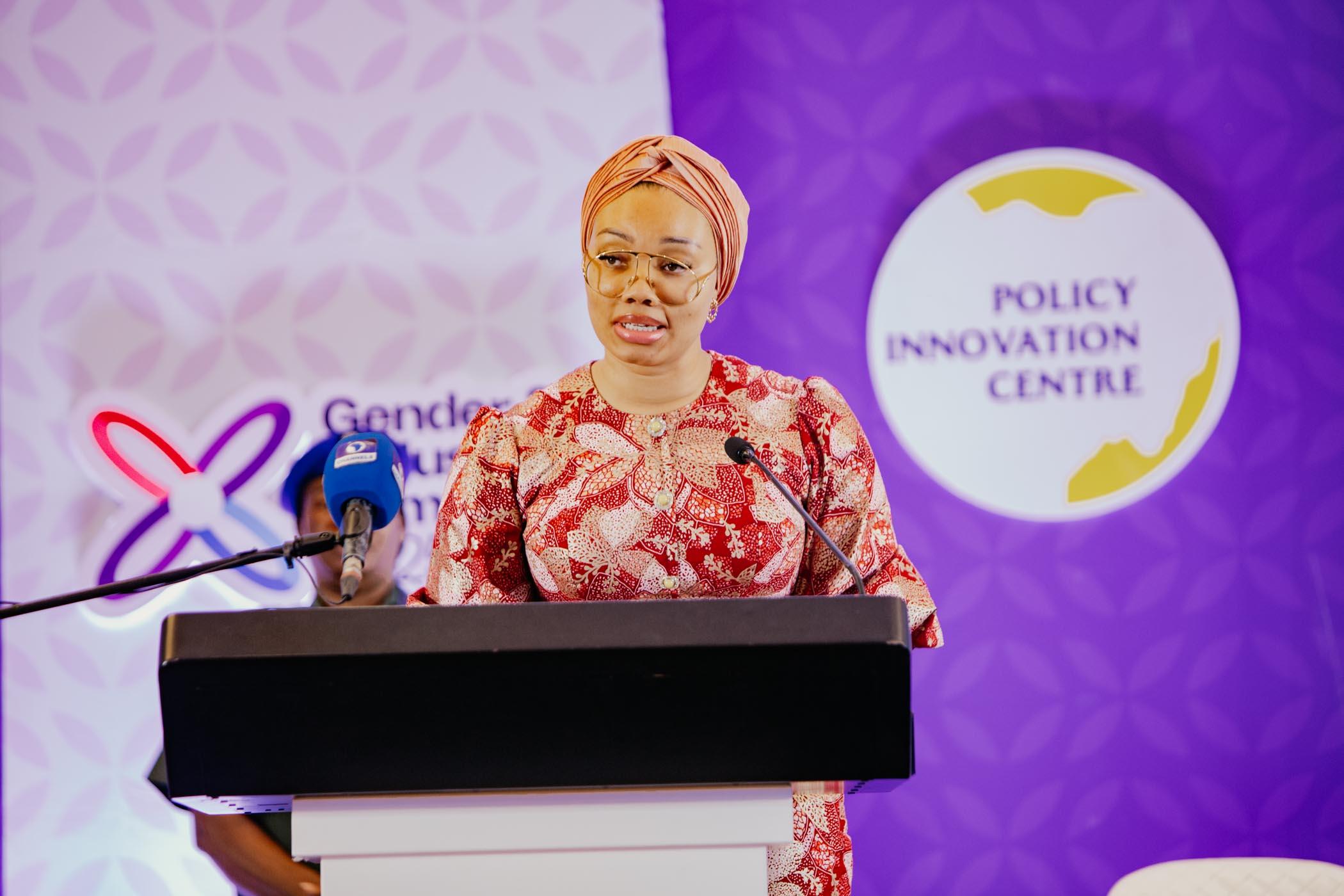
Speaking at the Gender and Inclusion Summit (GS-25) in Abuja, NGSF Chairperson and wife of Kwara State Governor, Professor Olufolake AbdulRazaq, emphasized the urgent need to turn policies into meaningful actions, particularly in promoting economic empowerment and enhancing political representation.
Professor AbdulRazaq said; “Gender inequality remains a major barrier to economic growth and social progress. Despite numerous interventions targeting gender disparities, significant gender gaps still exist, limiting the full potential of individuals and societies.”
She referenced glaring statistics, noting that as of 2024, women held only 27.3% of parliamentary seats in Sub-Saharan Africa, while “roughly 95% of CEOs among Africa’s largest companies are men.”
According to her, these realities “speak to the need for a norm change in all facets of endeavour, one that supports gender inclusion.”
Professor Abdulrazaq outlined the measurable results being achieved by Governors’ Spouses through grassroots outreach, women’s empowerment and advocacy, including the landmark reforms in Kwara State.
“The Kwara State Governor, Mallam Abdulrahman Abdulrazaq, signed the 35% gender inclusion bill into law and approved six-month maternity leave for working mothers. We also have five women in the state assembly out of 24 members and 50% of women in the cabinet,” she affirmed.

Professor Abdulrazaq however said that while progress has been made, urgent investments, partnerships, and innovative strategies remain crucial.
“Through strategic investments and innovative initiatives such as this event presents, opportunities abound to break barriers and create enabling environments where women, girls and youths can thrive as entrepreneurs, workers, and leaders.” she said.
Similarly, the First Lady of Imo State, Chioma Uzodimma, shared her state’s progressive strides in inclusivity under the administration of Governor Hope Uzodimma.
“Being a strong believer in gender equality, His Excellency has given Imo women remarkable opportunities to serve and lead. Imo State recorded a historic milestone with the appointment of its first female Chief Judge. We also have a female Deputy Governor, women commissioners, and council leaders,” she noted.
Mrs Uzodimma further said the recent domestication of the Disability Inclusion Bill in Imo State, describing it as a significant policy shift that ensures no one is left behind.
She commended the First Lady of Nigeria, Senator Oluremi Tinubu, for her N1 billion donation to the National Cancer Fund through the Renewed Hope Initiative.
“This call to action is an inspiring reminder of what is possible when leadership meets compassion and action,” Mrs Uzodimma said.
She disclosed that “more than 6,000 women and youth had been directly empowered across Imo State, while her mentorship programme, “Reaching Forward”, has also connected over 360 young women with accomplished leaders, preparing them to become “confident change agents in their communities.”
“We have supported over 2,500 women and youth with vocational training and entrepreneurship support, facilitated the re-enrolment of 500 out-of-school children, and provided agricultural inputs to more than 1,200 rural women farmers,” Mrs Uzodimma said.
Holistic and Inclusive
She described her GoodHope Women Flourish Initiative, as “holistic, inclusive, and people-centred programme resting on the belief that “every woman and every vulnerable person deserves the opportunity to live with dignity, health, and purpose.”
Mrs Uzodimma said: “We’ve reached over 4,000 women and girls through sensitisation on menstrual hygiene, reproductive health, mental health, and cancer prevention.”
On education, she stated; “Our off-street outreach programme has helped enrol over 5,000 out-of-school children, restoring their right to learn.
“In Imo State, the Child Protection Bill has been passed, and recently, the Governor passed the Disability Inclusion Bill.”
Policy to Practice
Addressing a Plenary session “From Policy to Practice: first ladies as Catalysts for norm Change and Economic Empowerment”, the Governors’ Spouses and representatives spotlighted how they were advancing health, education, economic empowerment, and inclusive governance.
They stressed that their unique role allows them to translate policy into practice at the community level, through their various initiatives.
The wife of Ogun State Governor, Bamidele Abiodun declared that her State empowerment is anchored on legal protection and practical access to opportunities.
“In Ogun State, we believe that real empowerment should begin with protecting women’s rights and opening doors to opportunity,”Mrs Abiodun said.
She outlined the four pillars of her work; education, finance, opportunity, and health—emphasising that “we are committed to ensuring that every girl is not only enrolled in school, but also supported to complete her education.”
On financial inclusion, she explained, “we have trained over 33,000 women in business and financial literacy and disbursed over ₦500 million in revolving grants.”

She added that access to finance must translate into access to markets and jobs, while insisting that “healthy women means stronger families and stronger economies.”
Lofty frameworks
Similarly, the Coordinator, office of First Lady Designate of Akwa Ibom State, Helen Obareki, underscoring the pivotal role of First Ladies as catalysts for translating policy into tangible impact said “Our role is not ornamental; it is catalytic. We are the bridge between lofty frameworks and real lives.”
Obareki called for a shift from charity-driven gestures to sustainable empowerment, insisting that “we don’t just want to give women fish, we want to teach them how to fish, ensure they own the pond, and have access to the market.”
On digital and financial inclusion, she highlighted her plans to expand training opportunities for women and girls, declaring that “the future is digital, and in Akwa Ibom we are investing in training 1000 women with digital skills so that they are not spectators but active participants in the new economy.”

Linking gender equality with justice, Obareki stressed, “true equality cannot exist in the absence of justice.”
She also threw her weight behind the Reserved Seats Bill, describing it as a lifeline for democracy.
“This is not a favour. At 5% representation, what we are asking for only raises it to 20%. It provides hope and legitimacy for the girl children we are raising,” she said.
“The girl child is powerful. What we demand is not sympathy but a platform to thrive. Give her the space, and she will change the world,” Obareki posited.
Representing the Spouse of Cross River State Governor, her delegate, Dr Inyang Asibong noted that Eyoanwan Otu drives interventions through her Humanity Without Borders Empowerment Initiative.
She described Otu as a “Humanity Champion,” explaining that the NGO delivers impact in health, education, agriculture, social welfare, and environmental sustainability.
“Her Excellency has touched at least 30,000 lives in the past two years through free medical outreaches,” she said.
On education, she disclosed that “every September, we roll out 5,000 back-to-school packs with uniforms, shoes, and books for public school children while on agriculture, we work with women in agriculture on 20 hectares of cluster farming, supported with tractors and inputs.”
Asibong also spotlighted Otu’s intentionality in driving equity, saying “we are intentional about making sure that every girl child is educated, no child is out of school… We are just aiming to attain sustainable development goals.”
Interventions from Benue State indicated increase in women empowerment in leadership, while Edo State spotlighted efforts at ending Gender based violence; “We have given girls the opportunity to speak out… as Chairman for the GBV committee, I am enforcing the law… we will name and shame.”
Collective Resolve
The session closed on a strong note of collective resolve, with speakers insisting that women’s empowerment must move from rhetoric to results.
Echoing this vision, the First Ladies aligned their commitments to President Bola Ahmed Tinubu’s Renewed Hope Agenda, which places women at the centre of national development. They stressed that by breaking barriers in health, education, finance, and political participation, Nigeria can accelerate inclusive growth.
Hauwa Abu