

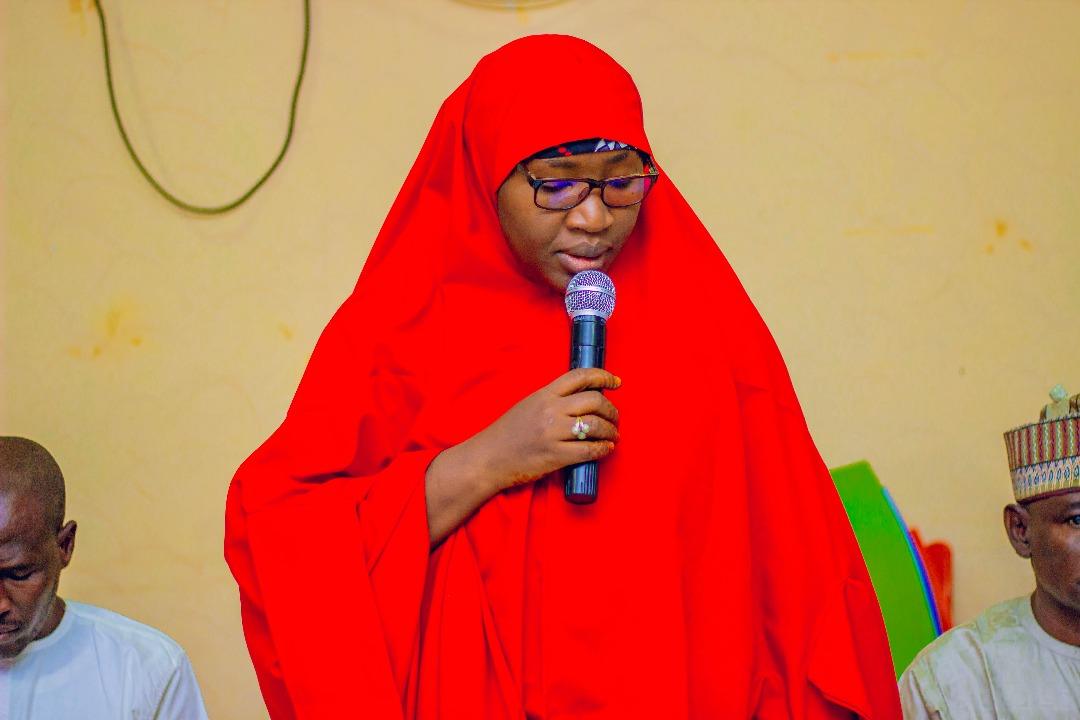
Faith and Freedom Africa, FFA is advocating for alternative dispute resolution, where community leaders would be empowered with the knowledge of freedom of religion and belief to intervene during violations of such rights, without going to courts to seek redress.
The recommendation was made by FFA during a Town Hall Meeting with religious and traditional stakeholders in Gombe State, where they adopted a seven-point resolution aimed at strengthening the protection and promotion of Freedom of Religion or Belief, FoRB, in Nigeria.
The Country Representative of Faith and Freedom Africa, Mr. Felix Joseph Samari told Voice of Nigeria that “this resolve issues on time and prevent escalation of violence and promote peace in the communities.”
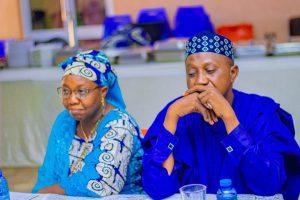
“If there is a FoRB matter that is in a society, we expect religious leaders in that community, Christian and Muslim leaders, traditional worshipers, all of them come together and address this issue according to how it is prescribed in the constitution of the country,”Mr. Samari said
The Country Rep of Faith and Freedom Africa said “the meeting was one of the projects executed by the organisation in Nigeria, which are Campus Campaign and Townhall Meeting.”
Mr. Samari said “the Townhall Meeting underscored the need to foster harmony within religious communities in Northern Nigeria, noting that strengthened intra-religious cohesion is essential for effective inter-religious dialogue and sustainable peace building.”
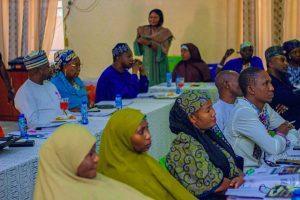
“What we do at the Town Hall meeting is to first of all introduce people to what Freedom of Religion means, according to Article 38 of the Nigerian Constitution and then also introduce them to the possibility that the Freedom of Religion or Belief is a duty for all of us as Nigerians to be able to work together to promote religious freedom to ensure peaceful society,” Mr. Samari said.
He said that after Faith and Freedom Africa sensitised stakeholders on freedom of religion as a constitutional right—which guarantees everyone the liberty to practise a religion of their choice, alone or in a group, as well as the right to change their faith—they were expected to further enlighten other members of the public.
“They are expected to go back to their communities and also promote the fact that there is a constitutional right that guarantees one freedom of religion,” Mr. Samari emphasised.
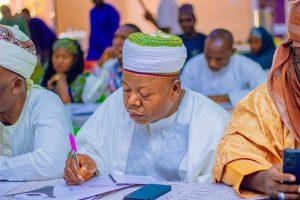
The meeting, which brought together 46 representatives from government, legal, religious, traditional, women’s and youth groups, focused on strengthening public understanding of freedom of religion or belief and fostering peaceful coexistence.
Religious freedom
Participants reaffirmed the importance of constitutional rights, particularly Section 38, which guarantees religious freedom and stressed that all institutions must uphold these protections.
They urged religious leaders to promote peace and tolerance, and called for joint efforts to curb hate speech and inflammatory rhetoric.
Attendees were also committed to taking the discussions to grassroots communities through sensitisation and ongoing dialogue as a means of preventing conflict and building trust.
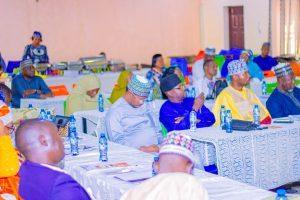
The communiqué further appealed to the government to protect religious freedoms, prevent discrimination and act swiftly on violations.
FFA expressed appreciation to stakeholders and reiterated its commitment to supporting initiatives that advance peace, religious freedom and social cohesion nationwide.
Some participants expressed appreciation to Faith and Freedom Africa for the enlightenment and pledged to help spread the message within their communities.
Reverend Abare Kalla described the training as the first of its kind on Freedom of Religion or Belief and a welcome development for religious communities, who, he noted, expressed satisfaction with the programme and considered it an asset to Gombe State.
“We feel, this is a situation where these faiths need to come together and be talking to each other, sharing their own perspective on how they can co-exist peacefully within fractured environment that we are passing through in this country,” said Rev. Kalla.
He emphasised that Christians and Muslims can live side by side, each practising their religion while remaining brothers and sisters within the same community.
“Look at it from the angle of creation by God. We are sharing one sun, we are sharing one light, we are sharing one moon, we go to the same market, the same environment. Everything God has blessed us with, we share it in common,” said Rev. Kalla.
He noted that God allows diversity to strengthen humanity, not to create division, and said that by embracing and channelling this diversity into pluralism, society can function more effectively, enabling everyone to contribute their expertise towards growth and development.
Mr. Audu Abubakar, a retired court registrar praised the gathering and said he looked forward to sharing the knowledge with the people in their various communities.
“Definitely, we are educated. And we shall go to our people to educate them to know their interfaith or about their religion. No fighting, nothing,” said Mr. Abubakar.
He called on both Christians and Muslims to be tolerant of one another, saying if there is patience, there is tolerance.
“I think with all that, there is nothing that is going to happen in Gombe State. And we are going to live peacefully in the state,” said Mr. Abubakar.
Zuwairatu Usman, Secretary of the Gombe State Chapter of the Federation of Muslim Women’s Associations in Nigeria, FOMWAN, expressed her appreciation for the interactive session between Christians and Muslims, noting that it provided a valuable opportunity to be trained on respecting each individual’s right to practice the religion of their choice without fear or oppression.
However, Mrs. Usman voiced concern that some individuals who have not fully understood the teachings of their faith often display disdain towards the beliefs of others.
“What worries us is that some people who do not understand the religion throw away food given to them by Christians at Christmas. They should know that the Qur’an instructs Muslims that food offered by Christians is halal and therefore permissible. There is no basis for anyone to discard it,” she said.
She stated that in the past, Muslims freely joined Christians during festivities and occasions such as burials, but some stopped due to remarks made at such gatherings.
She further called for greater understanding and the avoidance of actions or utterances that contribute to conflict within society.
Lateefah Ibrahim