


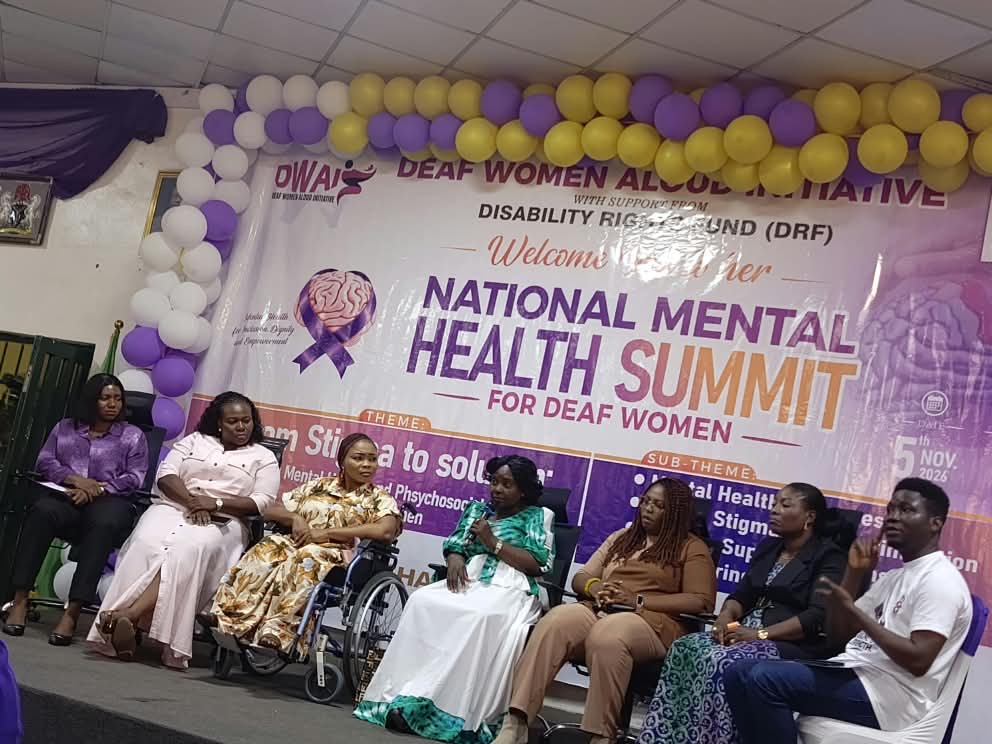
Deaf women and girls in Nigeria have called for more inclusive mental healthcare services that address their specific needs, particularly through improved access to sign language interpreters, counselling and government support.
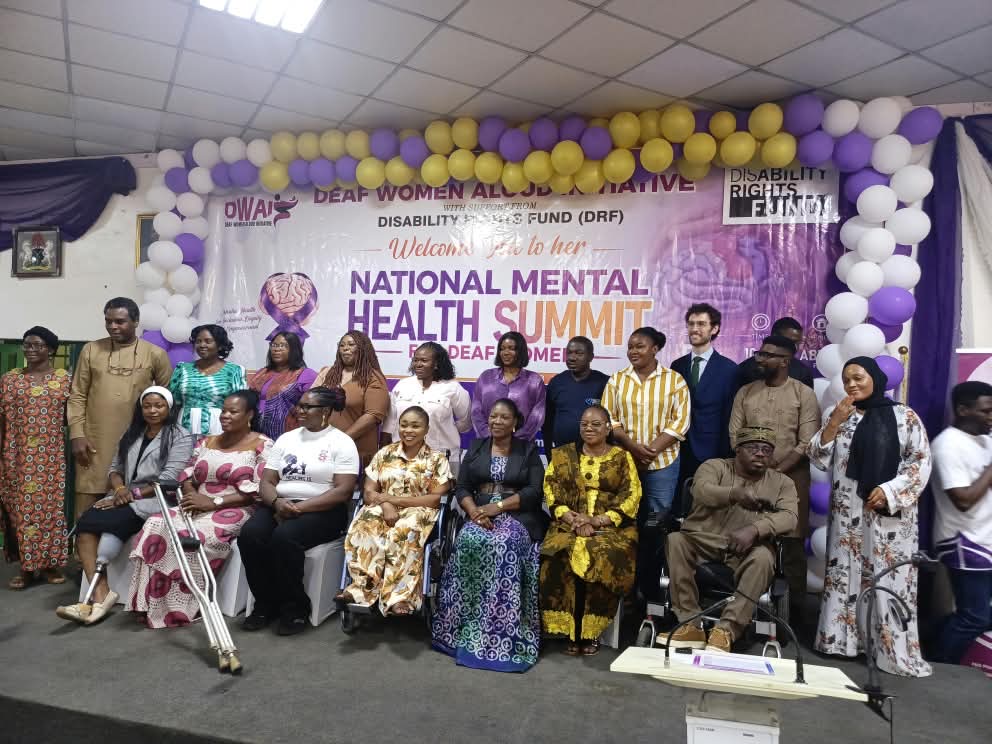
They made the call at the National Mental Health Summit for Deaf Women held in Abuja, organised by the Deaf Women Aloud Initiative (DWAI).
The summit, with the theme, “From Stigma to Support: Advancing Accessible and Inclusive Mental Health Services for Deaf Women and Girls in Nigeria,” aimed to highlight mental health challenges affecting persons with disabilities, particularly deaf women and girls.
The Executive Director of DWAI, Hellen Alase Beyioku, said “the summit was inspired by disturbing experiences shared by deaf women and girls, many of whom struggle with emotional distress without access to appropriate support.”
Beyioku narrated the experience of a young deaf girl who grew up without understanding why she was different, as well as a woman who lost her hearing and an arm in an accident but received no psychological support or counselling.
“The stories broke our hearts. One young Deaf girl told us she has no idea why she is deaf. She just grew up different, and it makes her deeply sad.
“Another woman was in a terrible accident. She lost her hearing and her arm. The hospital gave her no therapy or counselling to help her cope. Now, she feels angry and easily upset.
“Society often calls Deaf people aggressive. But we must ask: is that anger just the result of unanswered questions and deep, hidden pain?” she said.
Beyioku also expressed concern over reports of young deaf women being abused, exploited financially and trafficked by people they trusted.
She said the existing healthcare system often fails deaf women because service providers lack the communication skills and understanding required to attend to their needs.
The DWAI executive director particularly called on government agencies to address gaps in the National Mental Health Act 2021, noting that sign language was mentioned only once in the legislation.
According to her, the Act does not make the provision of sign language interpreters in mental health facilities mandatory or require healthcare professionals to understand Deaf culture.
“How can you treat a Deaf woman if you cannot talk to her?” she queried.
She said Nigeria could adopt best practices from countries such as the United Kingdom and the United States, where specialised deaf-led counselling and sign language services are available.
In her remarks, the Portfolio Director of Shades of Us, Mrs Ramatu Ada-Ochekluye, said her organisation was working to bridge inclusion gaps by using films to tell the stories of persons with disabilities.
She stressed the importance of involving affected communities in developing programmes and initiatives designed to address their challenges.
“There is no movie we have made without going to the community. We need to create something about us, with us,” she said.
In his keynote address, the National Coordinator of the National Mental Health Programme, Federal Ministry of Health and Social Welfare, Dr Tunde Massey-Ferguson Ojo, represented by Mrs Ogunleye Grace Adedunmade, said the relationship between deafness and mental health was influenced by individual experiences and circumstances.
He explained that communication barriers, social isolation, stigma and exclusion could contribute to emotional distress and increase vulnerability to depression.
He stressed that deafness should not be confused with a mental health condition, adding that deaf women and girls, like everyone else, deserve equal access to information, counselling, treatment and psychosocial support.
Ojo said the Federal Ministry of Health and Social Welfare was taking steps to integrate mental health services into primary healthcare through collaboration with relevant partners.
He disclosed that the Ministry had adapted the World Health Organisation’s Mental Health Gap Action Programme (mhGAP 3.0) to the Nigerian context and launched it in 2024.
He also said the Ministry had developed and validated the National Mental Health Costed Strategic Plan for 2027–2031, alongside a disability inclusion policy document for the health sector, with support from the World Health Organisation and other partners.
According to him, healthcare service providers are also taking practical steps to implement the provisions of the National Mental Health Act and improve access to inclusive healthcare for persons with disabilities.
In his goodwill message, Mr Diago Martin of the Spanish Embassy reaffirmed the embassy’s commitment to working with DWAI to build the capacity of deaf women.
Also speaking, Dr Aderonke disclosed that the Federal Capital Territory had established helplines for persons with disabilities.
She further announced that women with disabilities could access healthcare services for one year at a subsidised cost of ₦22,000.
The summit called for concrete commitments from government agencies and other stakeholders to ensure that deaf women and girls receive accessible mental healthcare whenever they seek assistance.
Goodwill messages were also delivered by representatives of She Writes, the National Agency for the Prohibition of Trafficking in Persons (NAPTIP) and other stakeholders.

