


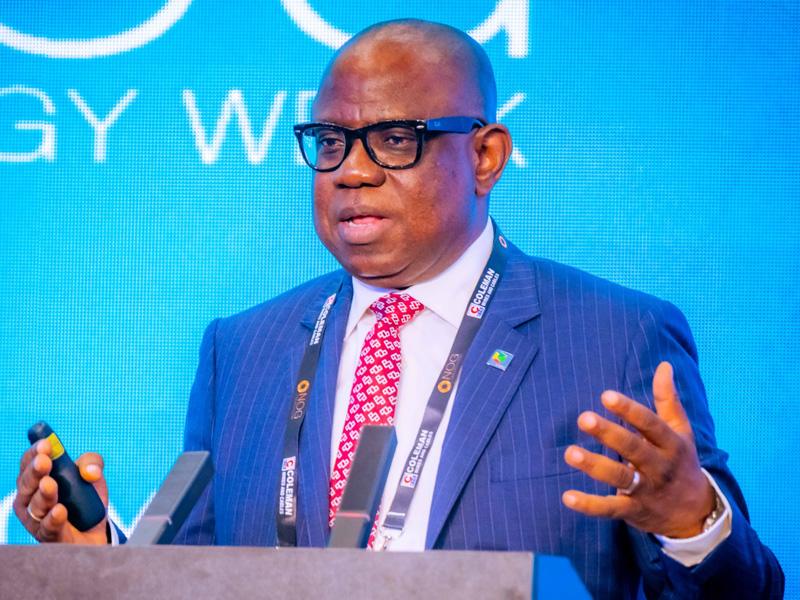
A leading human rights and advocacy group in West Africa, the People’s Wellbeing Association, PWA, has declared Bashir Bayo Ojulari as the best Chief Executive Officer in the history of the Nigerian National Petroleum Company Limited (NNPCL).
The group cited unprecedented reforms and operational achievements since his appointment in April 2025 .
The Head of Communication of the Peoples Wellbeing Association, Comrade Abba Abubakar, gave the commendation in Abuja, saying “despite facing opposition from detractors in the sector, Mr. Ojulari has remained steadfast in his commitment to transparency and commercial discipline.”
Abubakar also lauded Ojulari’s uncommon and courageous reforms.
READ ALSO:NNPC Ltd Engages Partners To Revamp Refineries
According to him, under Ojulari’s leadership, NNPCL has recorded what industry observers describe as ‘transformative milestones across its upstream, midstream, and downstream operations.’
The group’s communication head said that the company’s upstream subsidiary under the GGMD has achieved a daily crude oil production level of 355,000 barrels, the highest in 36 years, surpassing levels last recorded in 1989 .
He said that this achievement has significantly strengthened national output performance and enhanced foreign exchange earnings.
Reeling out Ojulari’s landmark achievements, Abubakar said that ‘moment under Ojulari’s administration was NNPCL’s first-ever Group Earnings Call to publicly disclose audited 2024 financial results – a bold step toward global best-practice transparency.’
He said that the company has also reinstated monthly operational and financial performance reports, a transparency move rarely seen in its history.
Comrade Abubakar identified the introduction of modern Delegation of Authority (DoA) and Delegation of Financial Authority (DoFA) frameworks which has improved decision-making efficiency, accountability, and internal governance standards as one of the landmarks of Ojulari.
He said that governance reforms were further strengthened through the creation of Chief Compliance and Chief Sustainability offices.
Abubakar stressed that In a candid admission at the Nigeria International Energy Summit (NIES) 2026, Ojulari disclosed that intense political pressure had previously kept state-owned refineries running despite monumental losses.
He revealed that the company is now overhauling its refinery rehabilitation strategy, moving away from contractor-led models toward partnerships with established global refinery operators.
“We are not looking for contractors anymore. We want companies that run refineries successfully. They will co-own the assets, lead operations, and help us build the competence to manage them sustainably.
“The strategy aims to attract partners who will acquire equity stakes, ensuring they have “skin in the game” and a direct financial incentive to deliver efficiency, reliability, and profitability,” Abubakar said.
He noted that, beyond endorsing Ojulari’s leadership, the People’s Wellbeing Association also raised concerns about pipeline surveillance contracts.
The group urged President Bola Tinubu not to renew existing surveillance contract arrangements without carrying other stakeholders along.
The group demanded for fairness in pipeline surveillance, saying that contracts be equitably split among Niger Delta stakeholders.
He stressed that equitable distribution of pipeline surveillance contracts among Niger Delta stakeholders would foster peace, enhance security, and ensure that host communities derive maximum benefits from oil and gas operations in their areas.
Abubakar further suggested that the Nigerian Army and Navy should take over pipeline surveillance contracts, noting that security agencies are better positioned to handle such critical national infrastructure.