

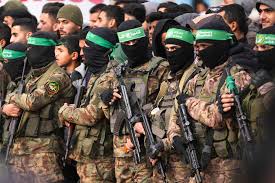
Hamas is facing one of the most severe crises in its history as it battles to retain control of Gaza in the face of mounting Israeli military pressure, rebellious local factions, and waning confidence in sustained support from its key ally, Iran.
According to sources close to the Islamist group, Hamas is short of senior commanders, has lost much of its strategic tunnel network, and is operating under fractured command. Its fighters, now younger and more autonomous, are largely acting under general orders to “hold out as long as possible.”
Despite delivering sporadic blows — including an attack that killed seven Israeli soldiers last week — intelligence assessments from diplomats suggest that Hamas has lost central command and is increasingly reliant on surprise tactics.
One Israeli official estimated that more than 20,000 Hamas fighters have been killed and hundreds of kilometres of tunnels destroyed during 20 months of war. The average age of surviving fighters is said to be dropping, with recruitment now heavily dependent on displaced, unemployed youth in Gaza.
Internally, Hamas faces unrest. Local clans — some now allegedly backed by Israel — are rising in defiance. Among the most prominent is the Abu Shabab faction in Rafah, led by Yasser Abu Shabab, a Palestinian Bedouin leader whom Hamas accuses of collaborating with Israel and organising attacks against the group. Efforts to capture or kill him have failed so far.
While Hamas denies losing control, residents in Gaza City report seeing Hamas fighters sporadically managing bread lines, guarding aid trucks, or punishing looters. “They’re not like before the war, but they exist,” said Essam, a 57-year-old construction worker.
Senior Hamas official Sami Abu Zuhri reiterated that surrender was “not an option.” He said Hamas was committed to negotiations and open to releasing Israeli hostages, but only in return for an Israeli ceasefire and withdrawal.
Clans Gain Ground
The emergence of armed tribal groups represents a shift in Gaza’s power dynamics. Prime Minister Benjamin Netanyahu confirmed that Israel is arming clans that oppose Hamas, though without naming specific groups. Abu Shabab’s faction, which controls parts of eastern Rafah, has denied collaboration with Israel and frames its role as one of protecting humanitarian aid.
Still, Hamas accuses Abu Shabab of attempting to sow chaos and establish an independent authority. In response, it has vowed to “strike with an iron fist.”
Not all clans oppose Hamas. A northern Gaza alliance reportedly supported aid truck distribution with Hamas’ approval. Yet Israel has accused Hamas of commandeering those very trucks — a claim both the clans and Hamas deny.
Tehran’s Role in Doubt
The future of Hamas is also being shaped by the uncertain state of its relationship with Iran. Israel’s recent campaign against Iranian targets — including the killing of Revolutionary Guards officer Saeed Izadi, the key liaison between Iran and Hamas — has raised concerns about continued Iranian support.
A source close to Hamas warned that future backing from Tehran may diminish in scope and expertise. Izadi had reportedly helped develop Hamas’s capacity for advanced operations, including rocket launches and drone warfare.
While Hamas offered condolences and praised Izadi as a “friend of the resistance,” the group is already bracing for the strategic vacuum his death could leave.
A Bleak Outlook
Hamas’s leadership remains adamant it will not accept defeat, but internal sources admit the situation is dire. “We keep the faith, but in reality, it doesn’t look good,” one insider said.
Yezid Sayigh, a senior fellow at the Carnegie Middle East Center, warned that Hamas now faces not just physical survival, but political irrelevance. “They face being eliminated on the ground in Gaza if the war doesn’t stop — and also from any postwar governance framework.”
For now, the Islamist movement is trying to outlast Israeli attacks, contain tribal rivals, and preserve ties to Tehran — all while holding onto whatever power it can in a war-torn Gaza.
REUTERS/S.S